DD
MM
YYYY

PAGES

DD
MM
YYYY

spot_img

PAGES

Home Blog Page 5046

Tekedia Capital Unveils a New Website – capital.tekedia.com

0
Tekedia Capital

We’re making it easier for citizens, groups, investment clubs, companies, organizations, etc to own a piece of early-stage, high-growth technology startups operating across Africa.

Our opportunity antenna and grassroot connections with innovators enable us to see patterns as they develop. We invite you to partner with us as we nurture and build category-king companies in Africa and beyond, and in the process advance citizens, communities and nations.

At Tekedia Capital, we fund the foundations of the NEXT African economy through entrepreneurial capitalism. Visit our new website at capital.tekedia.com.


Solar Panda Raises $8 Million in Series A Funding

0

Africa is grappling with poor electricity supply that has greatly stymied its economic development for years. Except for a few countries, the whole continent is bedeviled with epileptic power supply dragging businesses, especially SMEs down.

In West and Central Africa, only three countries are on track to give every one of their people access to electricity by 2030, according to World Bank data. This means, 263 million people in the region will be left without electricity in ten years. West Africa has one of the lowest rates of electricity access in the world; only about 42% of the total population, and 8% of rural residents, have access to electricity, the World Bank said.

To fill its electricity gap, African countries have been exploring solar-powered technology as an alternative to the grid, creating an emerging market filled with solar-power startups that are increasingly attracting millions of dollars in investment.

Kenya and Canadian-based cleantech startup Solar Panda has secured $8 million in a Series A funding round led by Oikocredit and the EU-funded Electrification Financing Initiative.

“We are excited to partner with leading global impact investors Oikocredit and Electrifi and thankful that this funding will help us accelerate our mission of improving lives,” said Andy Keith, founder, and CEO of Solar Panda. “I’m very proud of the growth and success our team has been able to achieve over the past 4 years and, with nearly 1 billion people in the world without access to electricity, we feel we are just getting started. Seeing signs of pandemic recovery and a return to profitability, we will use the strength from our Series A raise to start work on our Series B round, which will be focused on international expansion. We are grateful to have ElectriFI and Oikocredit joining the team and look forward to working with them to take Solar Panda to the next level.”

Solar Panda sells Solar Home Systems through its own network of 37 storefronts and 1000 sales agents across Kenya, Solar Panda, a 2017 startup, provides Solar Home Systems, which include lighting, mobile charging, radios, and televisions.

Solar Panda designs, manufactures and sells pay-as-you-go (PAYGo) solar home systems in Kenya. With focus on rural areas, the Systems are subsidized to make them affordable for the underserved, thereby improving different facets of their lives, such as lowering the need for risky kerosene lanterns, saving families’ money, fostering education, and allowing higher productivity.

In about five years of its existence, the startup has recorded significant growth. Solar Panda is already operational in more than 200,000 houses in Kenya, and hopes to provide over 1 million Kenyans with clean, inexpensive electricity in the near future.

The firm said it will use this funding to offer more products, reach more people in Kenya, and establish the framework for future expansion into Sub-Saharan Africa and Kenya.

Oikocredit said it is thrilled to partner with Solar Panda.

“In a short period of time, Solar Panda has demonstrated its capabilities in designing and selling quality solar home systems needed by many households across Kenya. We are happy with the strong local talent they have assembled and are certain they can continue delivering positive results. As an equity investor in a partner like Solar Panda, we will collaborate and continue directing our efforts to make clean energy accessible and improving the quality of life of thousands more households for the communities we serve.”

Having seen evidence of recovery from the pandemic and a clear path to growth, Keith said the business will take the strength from its Series A round to begin work on its Series B financing, which will be focused on worldwide expansion.

“We are extremely delighted to become a shareholder of Solar Panda. The company has displayed impressive growth over the last years and demonstrated strong resilience amid COVID. Through this co-investment with Oikocredit, we aim at supporting the company in its next stage of development and realizing its full potential,” Lionel Dieu, ElectriFI Senior Investment Officer at EDFI Management Company, said.

China Regulator Fines Alibaba, Tencent Over Violations on Disclosure Of Transactions

0

China’s top market regulator, the state administration for market regulation (SAMR), has imposed fines on technology giants, Alibaba, Tencent as well as a range of other firms for failing to comply with the anti-monopoly rules concerning the disclosure of its transactions.

The SAMR disclosed that companies that were fined, were found to have not declared the concentration of business operators as per legal requirements. The state administration for market regulation (SAMR), recently released a list of 28 deals that violated the anti-monopoly rules.

Five (5) involved units of Alibaba, including a 2021 purchase of equity in its subsidiary, the Youku Tudou streaming platform. Also Chinese multinational technology company, Tencent was involved in 12 of the transactions on SAMR’s list.

What Is The Chinese Anti-Monopoly Law About?

The Chinese anti-monopoly law was made to beef up antitrust penalties in an explicit push for control over the digital sector in the country. The anti-monopoly law aims to safeguard China against anti-competitive activities.

It prohibits monopolistic conduct under the anti-monopoly law in China, individuals and companies are entitled to bring private actions against undertakings that have engaged in monopolistic conduct. The anti-monopoly law also prohibits “monopoly agreement”.

These are defined as agreements, decisions, or other concerted practices between business operators that have the purpose or effect of eliminating or restricting competition. In the year 2021, China’s President Xi Jinping reviewed and approved measures to fight monopolies in the country.

He stressed on the importance of strengthening the anti-monopoly regulations, a move that has already cost tech giants hundreds of billions of dollars in market value over the past year.

Putting these laws and regulations into practice was an intrinsic requirement for improving the socialist market economic system, as it would create a level playing field for businesses. This law is disclosed to highly benefit consumers and promote “High-quality development and common prosperity, citing a broader drive by the Xi Jinping administration to narrow China’s wealth gap.

Therefore, in a bid to enforce the laws aforementioned, Chinese authorities had to take aim at some of the nation’s largest tech companies such as Alibaba, Tencent, and the likes, citing unease with their rapid growth and influence.

Earlier in January, the SAMR fined a number of companies including Alibaba, Bilibili, and Tencent for failing to properly report over a dozen deals, issuing a fine of 500,000 Yuan per case.

Such fines are said to be the maximum under the country’s existing anti-monopoly law. These laws continue to crack down on monopolistic behavior by companies in the country, most especially companies abusing their dominant market position.

Such law was created to foster a fair, predictable, and transparent market environment for business operations. China on its anti-monopoly law revealed that it will continue to formulate and implement competition rules compatible with the socialist market economy to improve a unified, open, and orderly market system.

These anti-monopoly laws reveal that the Chinese government is hell-bent on maintaining a socialist market economy, a system that has been predicted to be the heart of the nation’s economic transformation.

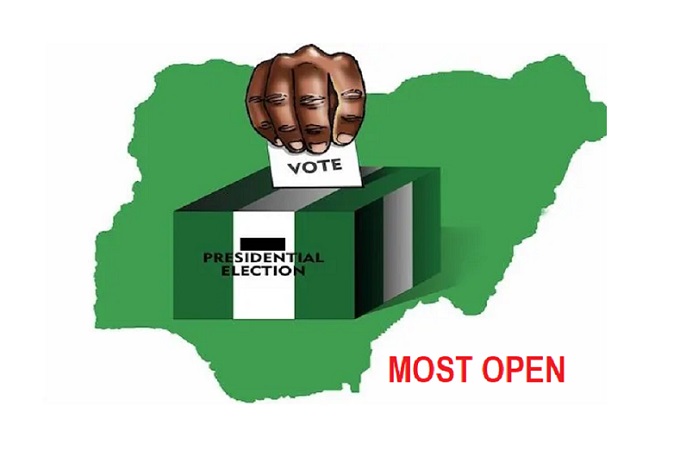
This is the Most OPEN Election where 3 Candidates Have Clear Paths to Nigerian Presidency

2

The Pundits: Peter Obi and Rabiu Kwankwaso do not have nationwide political structures like their APC (Tinubu) and PDP (Atiku) counterparts. 

My Response: Mobile internet is reducing information asymmetry as more voters can bypass the filters and intermediaries to get information from the sources. The existence of information asymmetry makes market systems imperfect.  In politics, it does the same thing – imperfect electoral systems.

But in 2023, Nigeria will have the first mobile internet era election. This is the first app utility-anchored national election. I am not arguing that decades-old political  structures are not important, my point is that disintermediation (cutting out intermediaries) is evident, and general voters have access to more information about candidates now, to make decisions independently, out of the influence of political bundlers and brokers.

The Ezes, Obas, Amanyanabos and Emirs influenced many past elections through zone defense and zone offense (as in football) via block voting, being custodians of information; the village head determined the candidates for most villagers.

In 2023, that will not happen because they do not have exclusivity on the information about candidates. This makes the paths wide open for candidates because the Best Message will WIN depending on how INEC behaves. 

Young People, if anyone tells you that your candidate has no chance; ignore him or her. It is 0-0 at full time and they are getting into sudden-death extra time, with every candidate positioned to score that first goal to win it.

I discussed this deeper here.

Comment on LinkedIn, FB Feeds

Comment 1: This is a position you take when you live far away from Nigeria and not familiar with the demographics of Nigerian voters. From data, majority of registered voters in Nigeria are the uneducated, market men and women, traders, the unemployed and largely the disenfranchised. Majority of this people are living below the poverty line, a large percentage don’t even have access to the internet, electricity or basic amenities of life. They are located in every region but more significantly in the Northern part of the country. They are simply moved by hunger and lack. It will take the right infrastructural amenities (food, money etc.,) to motivate them. They don’t listen to reasoning but rather to the unpleasant sound of their stomach emanating from perpetual hunger. Majority of them won’t even see this post, unfortunately ??…. #my point is this, until we have a good understanding of the Nigerian problem we won’t be able to come up with the right solution to it.

Another member Response to Comment 1: I disagree. The people you mentioned are being kept in those states you talked about by the same politicians. Hunger and poverty in Nigeria has been weaponized since time immemorial by these politiefians.

The advantage of social media here is that it cuts off a large chunk of the middle men who are political jobbers. The sane minds among these poverty stricken areas who are fortunate enough to have access to social media space now carry these good gospel message of redemption to their brothers, sisters, mothers and fathers who in your assertion ‘may not even read this message’.

Comment 2: You have spoken well, prof. Mobile internet system has also played an important role in bypassing conventional media both electronic and print. Governments regulate information broadcast in conventional media. Every citizen is, today, a journalist. Information can be uploaded and accessed at the comfort of our homes, offices and streets. This also makes political campaigning inclusive and relatively cheaper.

Comment 3: Prof. These old men can change the mobile internet strategy if they notice it won’t favour them o… For Tinubu to have opted for a Muslim-Muslim ticket, it simply shows his desperation to win using religious+ethnic blackmail on the emotions of the Northerners… Tinubu and Atiku are friends and have their last shot at the opportunity, so instead of them losing out altogether to Obi, they would rather one of them wins and they share the spoils…

My Response to Comment 3: Let us keep this polite, fact-based without innuendos. This is a contact sport and you play to win. If that is what Tinubu wants to do to win, good luck. Obi has his own, good luck. Atiku has his own, good luck. But all will be evaluated by the Nigerian people. If INEC makes it free and fair, we have democracy.

I have never voted in America. But the day Trump started insulting Africans (1st generation and newbies in America), I decided to vote. He lost. Those insults were strategic for him but he activated more opposing voters. (Till today, Trump is still asking -how did so many Africans (1st gen and new) vote with some precincts 96%? In most areas he contested results, Africans (1st gen and new) outperformed the past).

Like in chess, every move has consequences. BAT, Atiku, Obi, etc must be respected as they deploy their strategies. You have your rights to respond how you want. But they have the right to plan how to win.

Nigerian Presidency is Wide Open As Mobile Internet Could Disintermediate Old Political Structures

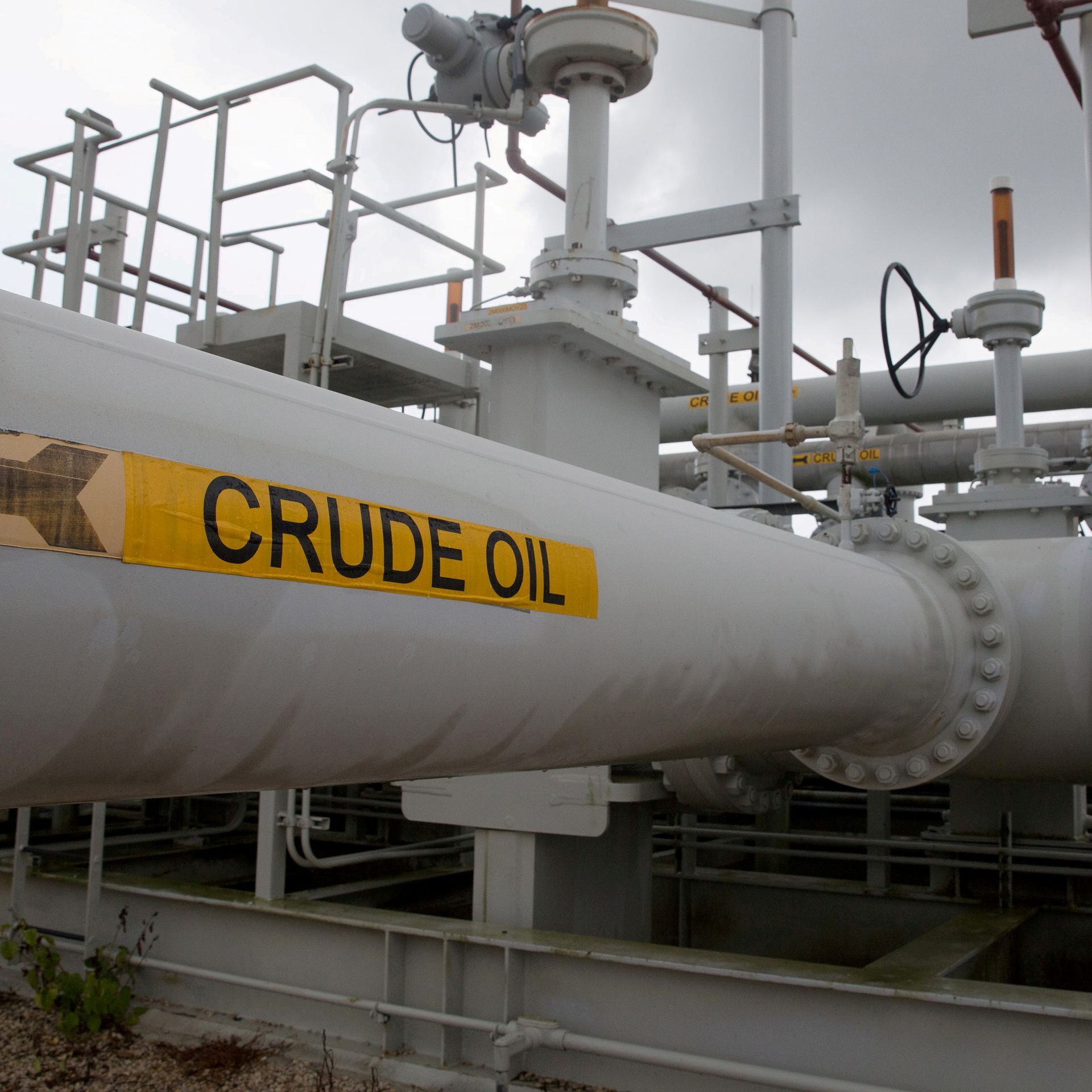
Crude Oil Theft In Nigeria Is An Organized Crime

0

There is no discussing the fact that crude oil theft in Nigeria has been going on for a long time, without any strict measures put in place by the government to curb the dastardly act carried out by some unscrupulous people.

A report released last month reveals that between January 2021 and February 2022, Nigeria lost $3.2bn to crude oil theft which is crippling the economy. The CEO of Chevron Nigeria Richard Kennedy, recently disclosed that crude oil theft in Nigeria is an organized crime and should be differentiated completely from host community issues.

He made this remark when he was asked to comment on the host community provision of the petroleum industry act. He further emphasized the need not to confuse the agitations of host communities of oil-producing areas with the spate of crude oil theft being carried out in the area.

In his words, “From my experience, the issue with crude oil theft should not be confused with host community issues. It is much bigger than that. It is completely different from host community issues. Quite frankly it is an organized crime. The volume of crude oil that is being stolen is well beyond comprehension”.

It is disheartening to note that the high level of crude oil theft in Nigeria, is costing the nation millions of dollars daily, which is lost in revenue that could have been used to help solve the nation’s fiscal challenges.

It has been disclosed that the nation loses about 100,000 barrels per day at $100 per barrel, which is equivalent to $10 million per day that is being stolen. Nigeria has been experiencing this menace for a long time with millions of dollars lost daily.

There have been several agitations made by individuals, companies and communities to the government on the need to secure the pipelines, to secure it from constant vandalism, yet to no avail. This crude oil theft has made the country unable to meet its OPEC production quota of 1.8 million barrels per day, yet the government seems unperturbed by these declining impacts.

Earlier I published an article where the Nigeria security and civil service defense corps, NSCDC, disclosed that some high-profile individuals are behind the crude oil theft and pipeline vandalism in Nigeria.

It is appalling to discover that some high-profile individuals continue to sabotage the growth of the Nation’s economy with constant crude oil theft. It is painful that one major national resource (crude oil) that the nation capitalizes on, is being vandalized with reckless abandon.

Nigeria as an oil-producing state ought to be enjoying the dividends of crude oil due to the rise in price in the international market, due to the Russian-Ukraine war, yet the oil theft in the country has sabotaged that.

Previous and past administrations seem to lack the political will to put this incessant oil theft to a halt. The recent disclosure by the CEO of Chevron stating that oil theft in Nigeria is an organized crime further validates the fact that some high-profile individuals are behind it.

Crude oil theft is not something that is done by a single person, but rather by some group of people. No ordinary person can muster the courage to carry out such an act, rather it is done by high-profile individuals who have the backing of some political leaders and security personnel.

As vandals continue to destroy pipelines, the nation’s account continues to bleed. To combat crude oil theft in Nigeria, all hands must be on deck. The government should collaborate with security agencies, host companies, and oil companies operating in the area with the deployment of the right technologies to curtail the act.

Some stakeholders have also suggested that there should be the installation of LACT units, installation of check meters with flow rate and pressure measures capabilities, and competent entities for pipeline surveillance.

There is also the need for these high profile individuals behind this menace of oil theft and pipe vandalism, to be publicly punished by the government, to serve as a deterrent to all those involved. If the government lacks the will to do that, then it is unfortunate that the illegal act of oil theft will not be put to a halt.