DD
MM
YYYY

PAGES

DD
MM
YYYY

spot_img

PAGES

Home Blog Page 5048

Fintech Start-up, Sendprint Hits The Market With $5 Flat Fee For Money Transfers

0

The most prevalent start-up business models are no doubt Fintech start-ups, as they continue to provide solutions to payments, savings, and mobile money transfers. The Global fintech market size has been predicted to reach USD 332.5 Billion by the year 2028.

Fintech company SendSprint, a money switch start-up based in the UK with operations within the US and Nigeria, has launched with a distinctive feature of a $5 flat fee for all transfers.

SendSprint enters the remittance market that is dominated by business veterans such as MoneyGram and Western Union, as well as the comparatively new fintechs like Zepz, Remitly, and Wise.

However, SendSprint’s $5 flat fee for all international money transfers might give it an edge over its rivals. The company targets three preliminary vacation international spot locations like South Africa, Kenya, and Nigeria.

SendSprint is no doubt coming big into the fintech ecosystem, as it has already partnered with Africa’s highest valued start-up, Flutterwave with the company’s valuation at $3 billion.

This partnership is indeed a strategic one as it will help SendSprint to cross-border transfers to 34 of the continent’s 54 international locations. It will also assist the company in rapidly complying with laws in its international locations of operation.

The CEO of SendSprint Damisi Busari, who has been identified as a former staff of Flutterwave, disclosed that the Fintech start-up was set up to connect Africans in the diaspora to their loved ones, by enabling fast, simple, and hassle-free International transfers. From set up to transfer confirmation within minutes of signing up for an account, transfers with Sprint are completed in minutes.

In her words, “We understand the connection that people have with their home countries and the importance of sending money and gifts home to support loved ones. SendSprint is about connecting the African diaspora to their loved ones at home by enabling fast, simple, and hassle-free international transfers as well as an innovative gifting experience. 

This is a product for the African diaspora. All of us at SpendSprint understand the multiple demands that Africans living abroad need. Our service recognizes and reflects this”

The company has already launched operations in the UK as its first step, as it plans to expand into the U.S and Canada in the coming months. With SpendSprint’s $5 flat fee for money transfers, as opposed to a sliding scale from other providers, it is safe to say that Africans in the diaspora will not hesitate to try them out and possibly make them their preferred option for money transfers back home.

The company has also partnered with top companies like Jumia, Game, Shoprite, St. Nicholas Hospital, Healthplus Pharmacies, and film house cinema among others.

The fintech industry has continued to gain momentous significance in the past few years, as the fintech ecosystem makes up a multi-billion dollar industry, with these start-ups providing high-tech solutions to financial products and services. The fintech market is significantly growing at a fast rate and is expected to reach almost $700 billion by 2030.
The Reason Nations Struggle on the Illusion of Oil Wealth

5

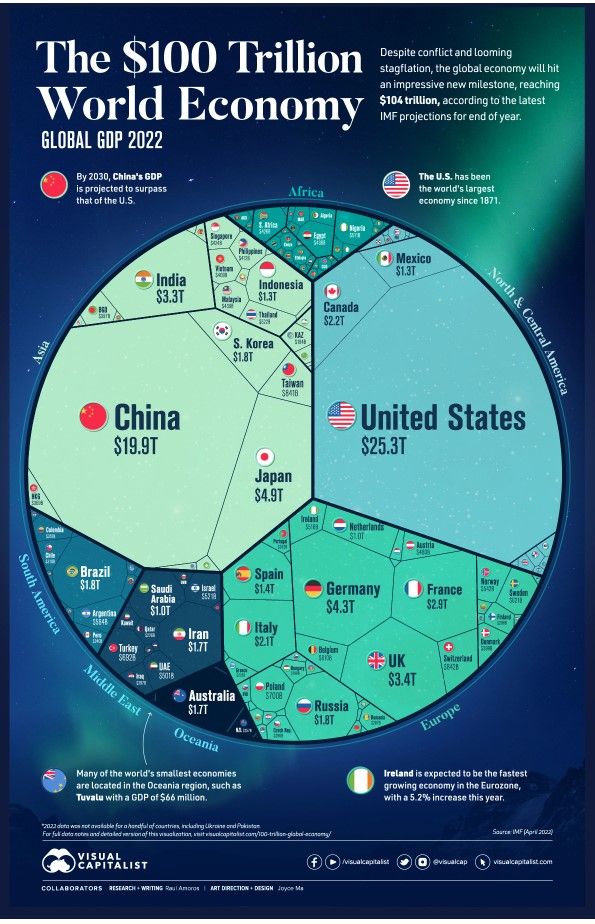
Case A: You sleep in your house, someone pumps oil in your backyard, sells it, and credits you $10 million at the end of the month. The economic activity for the production of the “finished goods”, in this case, crude oil at this phase, is $1 million. That $1m is the GDP – value added, created through the production of goods and services.

Case B: Another person cultivates palm trees, employs many people to weed, trim, harvest, process to palm oil, soaps, sells, ships, etc. The person deposits $2 million at the end of the month. But the economic activity for that translation is worth $5 million because many things are done within the area, generating massive economic activities. Here, there are jobs.

Have that in mind as you look at the GDP map of countries. Africa could be making money on natural resources but we are missing a lot on the economic activities. That explains why our GDP remains very small. We belong to Case A and account for a small component of the global economy.

Businesses In Nigeria Resort To Use Of Solar Due To Hike In Price Of Diesel

0
Concept of house in paper on blue color background for real estate property industry

There has been a surge in the use of solar by businesses in Nigeria, as they seek an alternative to the supply of power due to the rising global oil prices that have led to the hike in the price of diesel and petrol.

Some businesses have suspended operations, while some are struggling to keep their business afloat. Nigeria, which has the largest economy in Africa, with a population of more than 200 million people, has an installed electricity capacity of 12,500 megawatts, but the national grid only supplies 4,000 MW at peak, leaving businesses and households heavily reliant on diesel-powered generators.

This is indeed a challenging time for businesses in Nigeria, as many companies have pruned their number of staff to cut labor costs. Due to the Russian-Ukraine war, that has driven up the international crude oil prices, higher projections are still anticipated which presumes more impending woes for nations.

According to the energy commission of Nigeria, it disclosed that the country spends $22 billion annually on fuel generators. These exorbitant prices spent on petroleum resources, no doubt stifle the growth of businesses in Nigeria, with the price of diesel that has nearly tripled to N800 a litre ($1.93) which has led to the increasing growth in demand for solar as some businesses can’t cope any longer.

Solar power adoption is gradually rising with estimation at below two percent. Some businesses cited some constraints in the use of solar, as they perceive that it is unsuitable for large-scale use.

However, there are claims that big companies can run on solar, although it could not ideally be used as the main source of supply, but rather as a substitute. According to the CEO of Rensource energy, Prince Ojeabulu, he disclosed that the company installed under a megawatt of solar panels, and is currently building a 6MW plant.

He further revealed that going by the trend of solar adoption in Nigeria, there should be an estimation of 12 MW of solar installations operational across the country. A ministry of power also revealed that there was an increase this year of approved solar mini-grids serving industrial users.

Power supply is no doubt the bane of businesses across the globe, without it, businesses will shut down production activities which will have a negative impact on the business revenue.

With the numerous national grid collapses that have been recorded in Nigeria within the first half of the year, households and businesses are turning to solar energy for succor.

Nigeria’s 24 power plants are currently experiencing major power outages due to several reasons such as gas challenges, technical problems, lack of spinning reserves, etc.

The world bank in 2020, disclosed that 50 percent of 202 million persons in Nigeria were not connected to the national grid. This means that half of Nigerians are not connected to the national grid, which has made a large number of them to adopt the use of solar energy for power supply.

Due to the high adoption of Solar Energy among Nigerians, few persons and bodies have urged the government to encourage solar manufacturers by reducing import duties.

Since it is obvious that the national grid cannot reach everybody in the country, the government needs to encourage the sector as the industry has the capacity not only to supply households and businesses with power supply, but also it can create millions of jobs for unemployed youths through manufacturing and installation.

ASUU, Besides Strikes, Provide A Roadmap for Financial Reform of Nigeria’s University System

2

I write to support ASUU as it continues to battle for the future of Nigerian youth. Yet, I want to also tell ASUU that Nigeria is not financially capable to accept some of its demands because Nigeria does not have the funds. We all want our professors, teachers, etc to earn decent wages. We also want the funding of our universities. But the fact is this: Nigeria does not have the funds. And even strikes will not change that state in the short-term.

University strikes decimate local economies. My local government has two universities; we know the contributions those schools provide to the local economy. When students are in town, okada boys have jobs, mama put has buyers, etc. In short, every student could be contributing at least N1,000 to the local economy (food – N800, transport – N200, etc). Multiply this conservative N1,000 by tens of thousands of students, workers and associates, you will see why every community wants a university. With strikes, those opportunities dry up.

ASUU will likely return in weeks since the government understands the political risk as national election arrives. Also, the labour union is planning to join in solidarity. Yet, that return is nothing but a pause of a deep problem which must be fixed.

The current structure we have in the Nigerian university system is not viable. A major tax reform can help so that the private sector and individuals can help support the schools. And besides any tax reform to boost funding, the organization of our school system must evolve. The Ivy League club could soon hit $1 trillion; Nigerian schools can at least hit $50 billion.

The Ivies added $48.6 billion to their endowments this year, and new estimates show their collective endowment could exceed $1 trillion by 2048. Organized as charitable non-profits, the Ivy League is a cash generation machine. Their collective endowment now stands at approximately $192.6 billion, which is up from $144 billion in 2020.

I do believe and continue to posit that Nigeria should thrive to consolidate many federal universities. In Southeast, we can have UNN with many federal universities in Southeast as campuses. For example, Michael Okpara University of Agriculture, Umuahia can be the agriculture school of this new UNN. You do the same across the nation.

Sure, I know that it would not happen because no one would like his or her alma mater to disappear. But one day, whether we like it or not, poor funding will force most schools to collapse and they will now beg some bigger ones to absorb them!

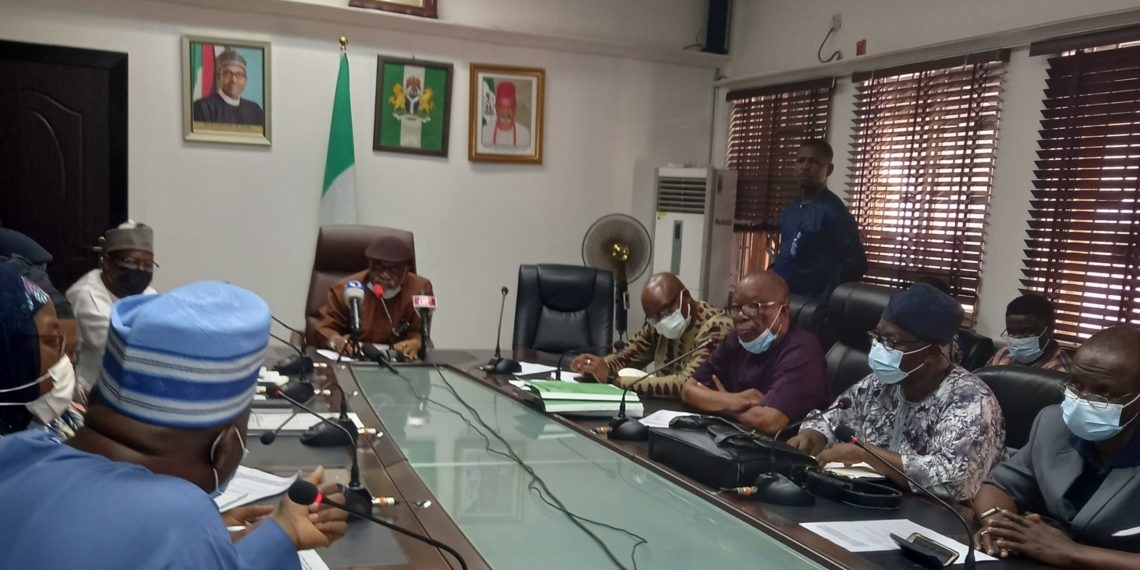
The Nigeria Union of Petroleum and Natural Gas Workers (NUPENG) has thrown its weight behind a planned protest by the Nigerian Labour Congress (NLC) over the ongoing strike by university lecturers under the Academic Staff Union of Universities (ASUU).

NLC President, Ayuba Wabba, had, on July 1, said that the NLC would embark on a nationwide protest if the strike persists.

The strike by ASUU has been on for almost five months since it began on February 14.

Other workers’ unions across the nation’s universities hav also embarked on similar industrial actions, grounding completely both academic and non-academic activities across public ivory towers nationwide.

Comment on Social Feeds

Comment : Cutting down on what the government spends on itself can fund ASUU many times over in my opinion. The problem seems to be how the government places education on the lower rungs of the ladder.

My Response: “Cutting down on what the government spends on itself can fund ASUU many times over in my opinion. ” – it can go both ways. Nigeria needs to trim dozens of our federal universities and cut the number of VCs, provosts, etc. The same problem you saw in government is also in schools. UNN can operate MOUA Umuahia as a campus for agriculture, etc. By the time you are done, Southeast will have only 2 federal universities under two VCs, etc. 

The cost you will save from official cars, duplication of registrars, etc can go into learning, research, etc. I worked on that for Rwanda and converted most of the universities into one leadership, saving $millions. Me with one of the ministers here . Today, most of their funds go into learning and research and not buying official cars for VCs, provosts, etc.

Comment 2: TETF was originally Nigeria University system idea ?. What’s happened to it?

My Response 2: The problem is not just having more money. It is having a reformed structure to make use of money. Nigeria has created more than 20 new federal universities since 2010 when it could have expanded the existing ones. Doing that would have saved more VCs, provosts, official cars, etc. That saved funds would go into learning, research, etc. That is the problem. Today, you have a federal university with 1,700 students with all the officers in a university. The ROC (return of capital) is poor for the Nigerian people.

Comment 3: Sorry sir but you are wrong….DEAD WRONG! Nigeria has the funds

My Response 3: life is at levels. South Africa’s budget is close to $152 billion for 59 million people; Nigeria’s budget is $42 billion for 210 million people. I know that Chinedu will not understand but when you look at things at bigger angle, even if Nigeria is super-prudent, it cannot support 210m with $42b at the same level SA can support 59m with $152B.

But I do not blame your comment “dead wrong” – you have been reading that as a kid and it is hard to think otherwise. But get this from me, your nation is one of the poorest per capita in the world.

Fixing Nigeria’s University Funding Paralysis

Tesla is Laying Off 229 Staff, Shuttering San Mateo, California Office

0

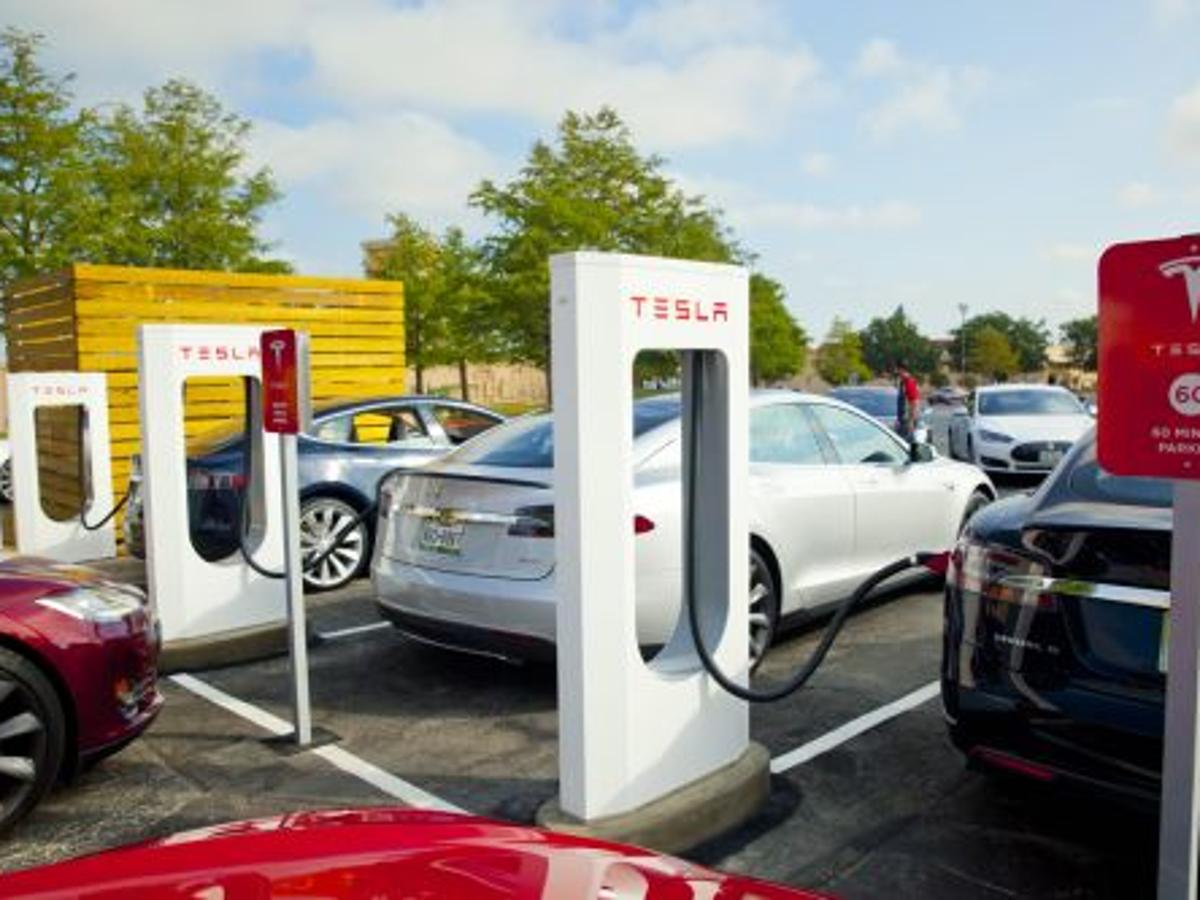
In June, Tesla CEO Elon Musk sent an email to the automaker’s executives, informing them that due to overstaffing, Tesla will be reducing salaried headcount by 10%, and that worldwide hiring should be paused.

Though the email was debated and Musk did not openly admit it, the decision to lay off some employees is materializing.

Now, TechCrunch reports below that Tesla is laying off 229 data annotation employees who are part of the company’s larger Autopilot team and is shuttering the San Mateo, California office where they worked, according to a California regulatory filing.

TechCrunch previously reported that nearly 200 employees were being laid off, according to sources who talked to TechCrunch on condition of anonymity. Bloomberg was the first to report the layoffs, which have now been confirmed via a Worker Adjustment and Retraining Notification Act notice. The WARN ACT requires employers conducting mass layoffs to issue a 60-day notice for affected workers.

The San Mateo office employed 276 workers. The remaining 47 employees may be sent to work in Tesla’s Buffalo Autopilot office, according to sources familiar with the matter. Most of the workers were in moderately low-skilled, low-wage jobs, such as Autopilot data labeling, which involves determining if Tesla’s algorithm identified an object well or poorly, according to one source.

The source noted layoffs of this team were rumored to be on the table for months, and that the work would be offloaded to Buffalo.

The layoffs are part of the 10% reduction in workforce that Tesla CEO Elon Musk announced last month.

The failure to issue a WARN notification has already led to at least one lawsuit. Lawyers representing two former Tesla employees who were terminated in mid-June filed in June a lawsuit in the U.S. District Court for the Western District of Texas that alleges the company did not provide the 60 days of advance notice required by federal law during a recent round of layoffs.

Last week, the plaintiffs’ lawyers filed an emergency motion asking a judge to prohibit the electric vehicle maker from forcing workers to sign releases in exchange for less severance than federal law provides.