DD
MM
YYYY

PAGES

DD
MM
YYYY

spot_img

PAGES

Home Blog Page 5061

Fifth of Food Related Greenhouse Gas Emission Comes From Transportation of Food – Researchers

0

A fifth of food-related greenhouse gas emissions have been proven to come from transporting food across the globe, as researchers have strongly advised that in order for the emission to be curbed, people should begin to eat local, I.e They should eat food planted in their region.

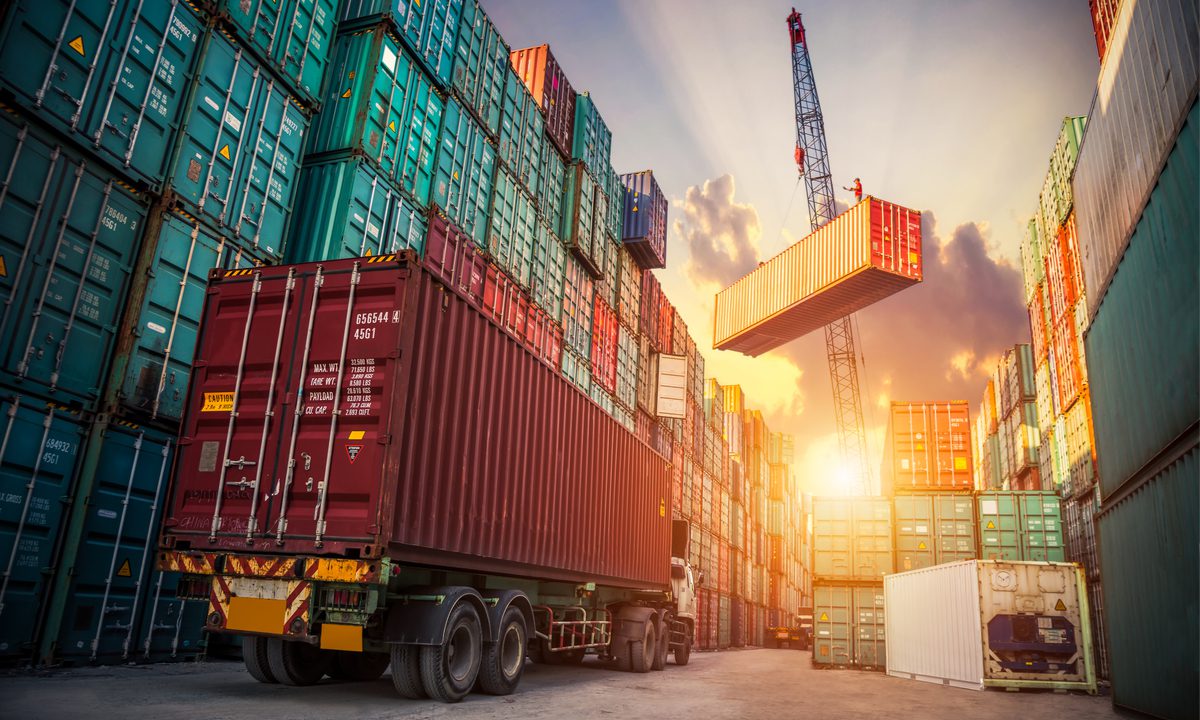
These groups of researchers in Australia disclosed that transporting food products across the globe, causes three gigatons of gasses to be emitted every year, and six percent of all greenhouse gas emissions, are emissions linked to the transportation of food.

It was disclosed that the amount of food emissions linked to trucks, ships, trains, and planes are seven times higher than previously believed. It is said to exceed the emissions from the transportation of other food commodities.

For example, transport accounts for only 7 percent of industry and utilities emissions. Food transport emissions are almost half as high as direct emissions from road vehicles.

It was disclosed that fruit and vegetables make up a third of food transport emissions because they need twice the amount of emissions to transport than to produce. The study conducted revealed that China, The United States, India, and Russia are top food transportation emitters, while rich countries are disproportionate contributors.

Researchers suggest that people should eat locally to reduce emissions. They disclosed that if people ate locally made food products, about 0.38 gigatons of emissions created from driving, which takes about 2,200 pounds to the sun and back, 6,000 times would be saved.

Unfortunately, such a suggestion seems to have some major constraints, because a lot of countries/regions do not have the capacity to produce their food locally. These countries, most especially countries in the African region, largely depend on other regions for food.

Many underdeveloped and developing countries are often ravaged by drought and harsh climatic conditions which affect the planting of crops thereby limiting the availability of food in their region.

However, it is pertinent that the governments of developed countries take this into cognizance to implement practical ways to reduce the amount of imported food they eat, by planting them in their own country.

Many developed countries have the land mass and capacity to cultivate some of the food products they usually import. Rather than constantly importing it into their country, researchers suggest that the government of these rich countries should be intentional about taking more steps to reduce the amount of imported food that they eat by planting it.

One effective way of doing that is to increase the capacity to cultivate food at every corner of the country. Governments of countries are also implored to invest in cleaner energy sources for vehicles and incentivize food businesses to use less emission-intensive production and distributor methods, such as natural refrigerants.

It is known that Carbon dioxide is largely contained in greenhouse emissions which is a major gas that drives global climate change. Greenhouse gasses have been proven to have far-ranging environmental and health effects, as they cause climatic conditions also trapping heat in the atmosphere.This further contributes to respiratory diseases due to air pollution.

There are so many human activities that cause greenhouse gas emissions, but the transportation sector has been disclosed to generate the largest share of greenhouse gas emissions, contributing approximately 20 percent of all carbon dioxide globally. Rich countries might not necessarily have issues eating locally as suggested by researchers, but they also need to transport food commodities to regions for export.
The MTN Mobile Money’s N23bn Lost in “Erroneous” Transactions

1

I can now write about it; someone tipped me that MTN Mobile Money was involved in a potential mobile money fraud with exposures in billions of Naira. He cited a court filing where MTN Nigeria was demanding a reversal of the transactions from many Nigerian banks. Unfortunately for him, I do not break news: I focus on analyzing broken news! (So, if you tell me that Ndubuisi Ekekwe has been simultaneously adopted by APC, PDP and Labour as their respective presidential aspirants, at once, I will still wait for it to become public!)

And even when the news had become public, I insisted for the real journalists to write about it. And they have, and what that means we can discuss it. Yes, “MoMo Payment Service Bank Limited (MPSBL), a subsidiary of MTN Nigeria, has sued 18 Nigerian banks over N23 billion worth of transactions involving their customers … MoMo said the N23 billion belonging to its customers was erroneously transferred into about 8,000 bank accounts in 700,000 transactions – and it is asking the Federal High Court to order the banks to return the money to the owners.”

Nigerian banks are not great on fast reversal. Whenever I’m in Nigeria, I use my local bank debit card in restaurants. Most times, the thing will not work. I had to pay cash. But later in the evening, some debit alerts will drop. Because it makes no sense going to a bank for a reversal of N3,000, that money goes and I never get my refund. (I have posited that our POS/debits should be refigured to avoid those).

For MTN, if the banks refuse, simply ask NCC, the telecom regulator, to “deduct” it and then ask FIRS, the tax agency, to credit you for charitable donations!  Central Bank of Nigeria can add it to the vault for Anchor Borrowers Fund. Good luck, MTN.

For MTN, if the banks refuse, simply ask NCC, the telecom regulator, to “deduct” it and then ask FIRS, the tax agency, to credit you for charitable donations! Who knows it can help the Abia State budget as we need funds to clean Aba. You can declare it Abia State money, and leave it for us to recover it from the banks; yes, it must be left in the bank vaults.

MTN MoMo Sues 18 Nigerian Banks Over N23bn ($55m) Customers’ Fund Lost in Erroneous Transactions

MTN MoMo Sues 18 Nigerian Banks Over N23bn ($55m) Customers’ Fund Lost in Erroneous Transactions

0

MoMo Payment Service Bank Limited (MPSBL), a subsidiary of MTN Nigeria, has sued 18 Nigerian banks over N23 billion worth of transactions involving their customers – a case some analysts said may change the controversial norm in the Nigerian banking industry.

MoMo said the N23 billion belonging to its customers was erroneously transferred into about 8,000 bank accounts in 700,000 transactions – and it is asking the Federal High Court to order the banks to return the money to the owners.

MPSBL, through its legal counsel, Lotanna Okoli, is also asking the court to provide information about the customers who received the erroneous fund transfer as required under the CBN Act.

Under the Central Bank of Nigeria Regulation on Instant (Inter-Bank) Electronic Funds Transfer Services, made pursuant to sections 2(D), 33(1)6) and 47(2) of the CBN Act 2007, banks are under obligation to refund any money that is paid in error and provide information about the recipient.

The banks involved in the legal tussle are: Access Bank, Ecobank, Fidelity Bank, First Bank, First City Monument Bank, Guaranty Trust Bank, Heritage Bank, Polaris Bank, Providus Bank, StanbicIBTC, Standard Chartered, Sterling Bank, Suntrust Bank, Union Bank, United Bank for Africa, Unity Bank, Wema Bank and Zenith Bank.

The Nation reporting on the matter, quoted MPSL’s CEO Anthony Usoro Anthony, as saying in a supporting affidavit that MoMo suffered “a system exploitation” on May 24, 2022, resulting in the transactions being processed erroneously going into wrong accounts.

According to Anthony, MPSBL had shut down the service as soon as it became aware of the error, to limit the impact and triggered engagements with the defendants (the 18 banks) through the Nigeria Inter-Bank Settlement System (NIBSS) for the commencement of recovery activities from the accounts of the various beneficiaries in the various banks.

“We were able, through system checks, to confirm the banks and accounts into which the various sums of money were transferred into.

“We were also able to confirm how much was paid into each bank account in total. The said list of accounts which received the funds was made available to the respective banks as a preliminary step to mitigate the applicant’s losses.

“The transfers were due to the fact that the plaintiff suffered a system exploitation which led to the said debits.

“There is no transaction between the plaintiff and the recipient account holders that warranted the transfer of the funds to those account,” he said.

In addition, Anthony explained that his company was forced to sue due to the affected banks’ insistence that they needed to be ordered by the court before they could act.

“The defendant banks have requested an order of court mandating the defendant banks to reverse the credits made into their customers’ accounts before the defendants can do so. “

“The plaintiff is entitled to a return of its money and has demanded the return of the money into its settlement account in the name MOMO PSB settlement account number: 2041379385 held in First Bank Plc, Samuel Asabia House, 35 Marina, Lagos.

“It is the understanding of the plaintiff that prior to the defendant banks being informed of the fact that the credits into their customer accounts were unauthorized that some withdrawal transactions had already been carried out by some of the customers.

“This has necessitated the application for information regarding these customers and the banks and accounts to which they transferred the said funds in order to enable the plaintiff to trace the funds to those banks.

“By virtue of the provisions of the CBN Regulation on Instant (Inter-Bank) Electronic Funds Transfer Services, made pursuant to sections 2(D), 33(1)6) And 47(2) of the CBN Act 2007 the plaintiff is entitled to a return of its money and the provision of the information which it requires from the defendants,” he said.

MoMo PSB is praying the court to grant the following reliefs:

  • A declaration that the deposits of an aggregate sum of N22,300,000,000.00 erroneously transferred by the plaintiff to the accounts of the customers of the defendant banks, having been done in error, belong to the plaintiff and not the customers of the defendant banks.

  • An order directing the defendant banks to each, individually, account for the sums available in their customers’ accounts and the sums which have been removed by the customers and are no longer available.

  • An order directing the defendants banks to immediately return the aggregate sum of N22,300,000,000.00, less those funds that are no longer available, to the plaintiffs settlement account in the name MOMO PSB settlement account number: 2041379385 at First Bank Plc Samuel Asabia House 35 Marina, Lagos, from where the funds originated.

  • An order directing the defendant banks to release all information, including account name information in respect of the accounts from which the plaintiff’s funds have been transferred to third parties, including the destination accounts and the banks in which they are held to assist in the tracing and recovery of those funds.

In reaction, Nigerians said this development demonstrates what an average Nigerian bank customer goes through in situations like this, when a financial transaction goes wrong – most customers lose their money.

Nigeria’s push for cashless financial inclusion is garnering momentum as the CBN approves more digital-based financial services, including PSB. This means matters like this involving Nigerian banks will continue to be experienced. Thus, the central bank has been repeatedly called upon to enact policies that will change the status quo, paving way for a trusted financial inclusion drive in the country.

Ndubuisi Ekekwe Honoured As “AI Personality of the Week”

0

You can read the citation here.

My comment below….

Good People, I approve this message especially during this season of campaigns in Nigeria.  Thank you DSN – Data Scientists Network/Data Science Nigeria for finding this village guy from Ovim. Respect to DSN: last week, National Basketball Association (NBA) USA signed a mammoth deal with an AI-startup we’ve supported in Lagos; my fund, Tekedia Capital, provided 100% of the funds they needed. The team has also filed a US patent.

Where am I going? Your work/activism on AI is unleashing a cambrian moment in Africa’s entrepreneurial capitalism. And that will lead in building the empires of the future with Africa’s productive participation. Thanks for the recognition.

Young people: love mathematics – the science of numbers.

Source: DSN/LinkedIn

The G7’s $600 Billion Chinese Cheat Sheets To Win Back Africa, Latin America, etc

1

In a functioning market system, products improve because of rivalry. That rivalry is nothing but competition where players work hard to improve products and price positioning.  In geopolitics, that also seems to be the case. When there are choices, good things happen. The news today is that the club of rich nations, the G7, is now being inspired by China’s Belt and Road initiative: “G7 leaders have detailed plans to mobilise $600bn in funding for the developing world in a move seen as a counter to China’s Belt and Road plan.”

Simply, G7 is now getting cheat sheets from China. I have written here that the neglect of the West on the affairs of Africa, Latin America and other developing regions of the world, will hurt them. See the case of Russia in Ukraine, who wants to get entangled by taking a non-neutral position in Africa? Few, despite the pressure from the West. There is a reason for that: Russia feeds most parts of Africa through fertilizers, farming supports and other agro-focused programs.

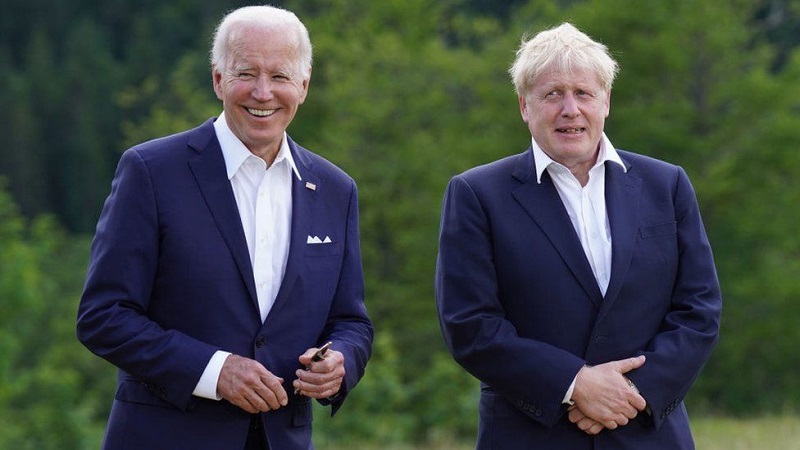
President Joe Biden promised an infrastructure investment for people of “all nations” as the Group of Seven (G7) launched its global infrastructure initiative from the Bavarian Alps, Germany. The plan will see $600 billion ($200 billion from the U.S.) of investment in healthcare, climate and gender equality, among other things. It’s a bid to expand “stability” in developing nations — an increasingly critical move given Russia’s invasion of Ukraine. In contrast to China’s investments in Africa and Latin America, Biden said the G7 investments were based on “global best practices” and “shared values.” (LinkedIn)

Then scale that to China, you have no chance. If China goes to war with Taiwan, the Western world may be surprised that most parts of the non-West alliance will not condemn China. Simply, China has built roads into state capitals around the developing world and has real influence.

But do not count out Washington and London with Brussels: they want a massive reset as they have seen the independence of these “3rd world countries” considering the ways they have cooperated on the Ukraine sanctions. And that reset will mean, matching whatever China is doing in Africa, Latin America, etc.

That is the reason they plan to spend that $600 billion – to buy back African, Latin American, etc capitals. Today, if you travel from Abuja, Nairobi, etc to Beijing, you come back with cash. Try the same to London or Washington, it is a line of credit. These African leaders hate that. Right now, G7 has got the message: if you do not change, the new world order will be built outside your global influence.

Indeed, China has provided alternatives to most parts of the world; G7 now needs to match what China has on the table. That is not bad in the grand scheme of things.

G7 leaders have detailed plans to mobilise $600bn in funding for the developing world in a move seen as a counter to China’s Belt and Road plan. The Partnership for Global Infrastructure and Investment (PGII) relaunches a scheme unveiled at last year’s G7 talks in England. US President Joe Biden said the plan would deliver returns for everyone.

China’s multi-trillion dollar infrastructure initiative is criticised for hitting nations with too much debt. “I want to be clear. This isn’t aid or charity,” Mr Biden said of the G7’s PGII scheme. “It’s an investment that will deliver returns for everyone.” The scheme would allow countries to “see the concrete benefits of partnering with democracies,” the US president added.

The plan calls on G7 leaders to raise $600bn over five years to fund the launch of infrastructure projects in middle and low-income countries.

The US has promised to raise $200bn (£162bn) of the total through grants, federal funds and private investment, while the EU has announced a further 300bn euros (£257bn).

The initiative will be geared towards tackling climate change, improving global health, achieving gender equity and building digital infrastructure.

[…]

The plan has been pitched as a way to counter China’s ambitious Belt and Road Initiative (BRI). Launched by Chinese president Xi Jinping in 2013, the BRI provides financing for emerging countries to build infrastructure like ports, roads and bridges.

Comment on Feed

Comment: Prof…So, what’s the implication of this for the businessmen/women in Alialia, Ogbete, Nkwor-Nnewi, Ochancha, and Alaba international markets?

My Response: Possibly if there are choices, Nigeria can borrow at better rates from London than Beijing. If that happens, our debt servicing load will drop. And if that happens, the Ogbete, etc will be remembered by Abuja since Nigeria will save funds and then invest in things that will help them. Those things include having more funds for universities, water boards, etc. What Nigeria spends servicing its debts can fund a good university system, decent health system, clean water, etc. It is a massive opportunity cost.