DD
MM
YYYY

PAGES

DD
MM
YYYY

spot_img

PAGES

Home Blog Page 5067

Google Reaches $90m Settlement Deal with Developers Over App Store’s Policies

0

Google and US developers have reached a $90 million settlement, ending the class action lawsuit brought by app makers over the tech giant’s practices deemed illegal and oppressive.

Google said in a blog post that the fund, being part of a larger settlement, “allows both parties to move forward and avoid years of uncertain and distracting litigation.”

“As part of the settlement, we’re establishing a $90 million fund to support U.S. developers who earned $2 million or less in annual revenue through Google Play during each year from 2016-2021. A vast majority of U.S. developers who earned revenue through Google Play will be eligible to receive money from this fund, if they choose. If the Court approves the settlement, developers that qualify will be notified and allowed to receive a distribution from the fund,” it said.

In addition to the fund, Google said it will implement new benefits that help developers innovate and communicate with their users. That will include continuing to provide developers with a tiered pricing model, and maintaining Google’s 15% commission rate for the first $1 million in annual revenue earned from Google’s Play Store for US developers.

The settlement was necessitated by app makers’ suit, which accused Google of maintaining policies that effectively forced developers to use its Google Play billing system — which for many years had a default 30 percent charge on all transactions.

Like Google, Apple faced the same issue with developers using the Apple Store, that the iPhone maker doled out $100 million in settlement for, after cutting its fee to 15% in a bid to appease developers.

Google had in July 2021, given a similar concession to smaller developers following this suit, cutting its app store’s fee to 15 percent for the first $1 million earned through any app.

Hagens Berman, the law firm representing the plaintiffs in this class-action, said some 48,000 small app developers in the US will be able to claim a payment from the $90 million fund. The law firm said some claimants could receive as much as $200,000 while the minimum payment is $250.

“Today, nearly 48,000 hardworking app developers are receiving the just payment they deserve for their work product — something Google sought to profit from, hand over fist,” said Hages Berman managing partner Steve Berman in a press statement. “With this settlement, developers will have more room to grow and more money in their pockets to promote their hard efforts.”

Under the settlement agreement, Google included other provisions aimed at helping developers. The web search giant said it’s revising its Developer Distribution Agreement to make it clear that developers can continue to use contact information obtained in-app to communicate with users out-of-app, including about subscription offers or lower-cost offerings on a rival app store or the developer’s website.

In addition, in new versions of Android, Google said it will maintain certain changes implemented in Android 12 that make it even easier for people to use other app stores on their devices, while being careful not to compromise the safety measures Android has in place.

It added that to showcase independent and small startup developers building unique high-quality apps, “we’re creating an “Indie Apps Corner” that will appear on the apps tab on the U.S. Google Play homepage and shine a spotlight on these developers.”

This settlement marks a shift from the app stores’ practices that have pitted Apple and Google against developers, and signals a possibility of further changes in the near future.

The issue came to limelight in 2020 after Apple removed the video game Fortnite from Apple Store. Fortnite had informed players they could purchase in-game currency at a discount from publisher Epic Games’ website, violating Apple’s developer policies. Apple and Fortnite entered a legal battle that the former won, though it has been appealed.

Google and Apple have been accused of abusing their app stores’ duopoly, prompting a proposed legislation by US lawmakers that will force the duo to make room for competition, allowing “sideloading,” or the ability for users to install apps from non-official sources.

Google said Android Operating System already supports sideloading, but Apple’s iOS does not. But the proposed legislation, if passed, and the EU’s Digital Markets Act, if it’s given final approval by the European Parliament for 2023, would make sideloading mandatory.
China’s President Xi Jinping Says “One Country, Two Systems” Is Here To Stay

0

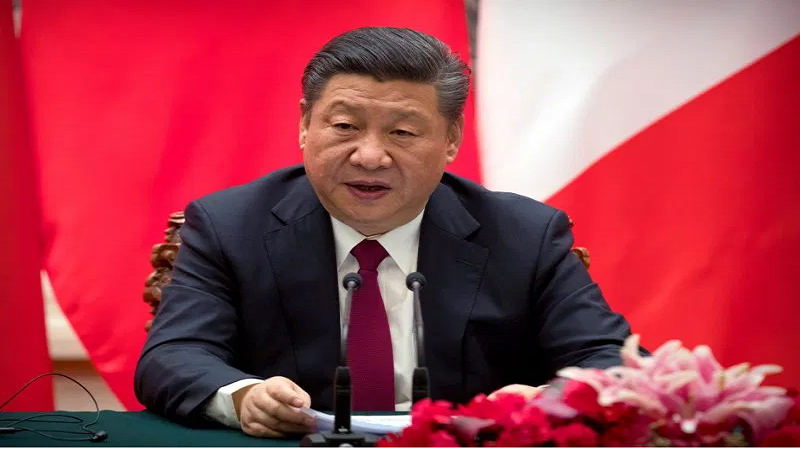
The ‘one country, two systems’ is a basic state policy that the Chinese government adopted to realize the peaceful unification of the country. Chinese President Xi Jinping recently disclosed that there is no reason to change Hong Kong’s “one country, two systems” formula of governance.

The British government on July 1st, 1997 returned Hong Kong to Chinese rule, with Beijing promising wide-ranging autonomy, unsettled individual rights, and judicial independence for at least until 2047.

This sparked the reaction of China’s critics who accused Britain of trampling on those freedoms unavailable on the authoritarian mainland, with a sweeping national security law imposed by Beijing on the city in 2020 after a mass pro-democracy protest the previous year.

The prime minister of Britain Boris Johnson, therefore, came out to say that China had failed to meet its handover commitments on democratic rights it made 25 years ago when Hong Kong was handed back to China.

China has issued a rebuttal to Britain’s statement by rejecting the accusations, stating that the law restored order from the chaos so that the city could prosper.

China’s President Xi Jinping disclosed that the “one country, two systems” formula, was successful under china’s comprehensive jurisdiction, stating that the system is a good one and there is no reason to change it.

In his words, “One country, two systems formula was successful under China’s comprehensive jurisdiction. For this kind of good system, there is no reason at all to change it. It must be maintained over the long term. After experiencing wind and rain, everyone can painfully feel that Hong Kong can’t be chaotic, and must not become chaotic again.

Hong Kong’s development cannot be delayed again, and any interference must be eliminated”. 

Hong Kong continued to flourish, the society remains very stable, and full development is being witnessed in all undertakings. The “one country, two systems has enjoyed widespread popularity in Hong Kong, gaining wholehearted massive support from the Hong Kong compatriots, as well as people in other parts of China, which is also thought of highly by the International community.

Hong Kong continues to actively participate as a separate member in relevant International organizations such as World Trade Organization (WTO), Asia Pacific economic cooperation, and the world customer organizations.

Hong Kong’s legal system is separate from the legal system in mainland China as it maintains its laws, own courts, and independent judiciary system.

No doubt the one country two systems have played an active role in building and advancing socialism in China.

The one country two systems approach both adheres to the spirit of peaceful coexistence applying the norm of international relations to relations between regions of different socio-political systems within one country, achieving peaceful coexistence between the different social systems in one country.

Flutterwave Integrated Finance – From Tekedia DesignLab

0

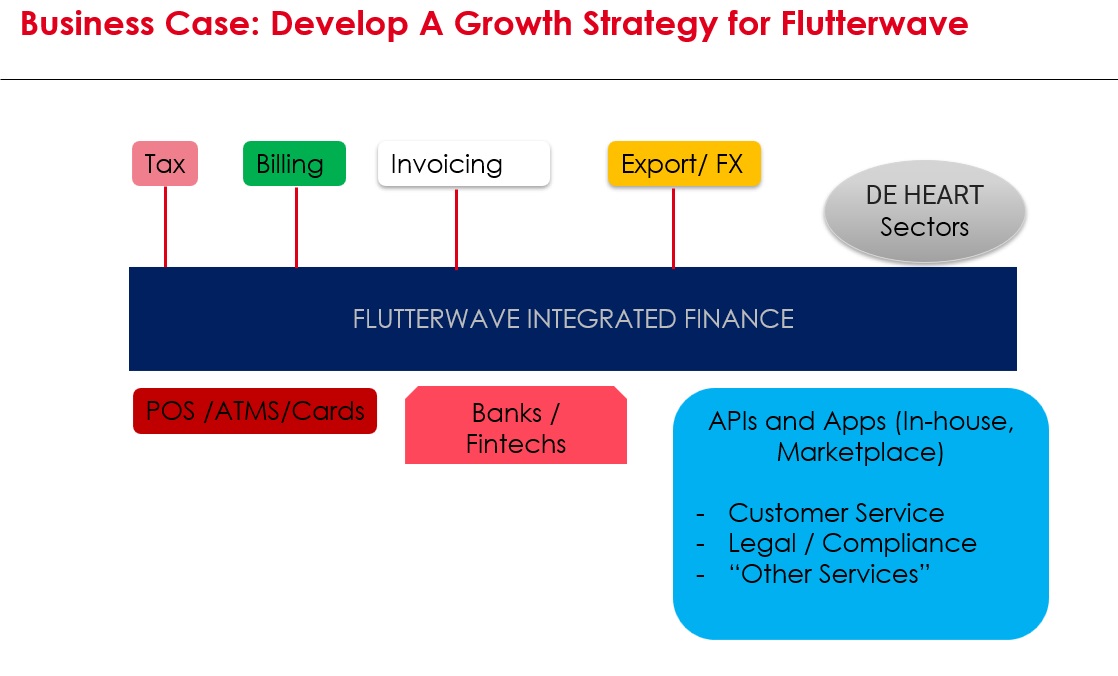
We asked a group of Tekedia learners on how Flutterwave can keep growing, they have this playbook. I explain in the video, introducing a new program from Tekedia Institute called “DesignLab for Companies by Tekedia Learners”. Flutterwave is Africa’s most valued fintech company at $3 billion.

DesignLab for Companies by Tekedia Learners is designed to provide a mechanism for Tekedia learners to work and solve real business frictions which companies want solved. So instead of working on hypothetical or past business cases, the DesignLab will task our learners to solve actual business cases. Companies pay $1,000 (or N450,000) and present a business case. Our interested learners are then organized in groups, and over four weeks, provide solutions to the company.

Learn more and sign up here.


Tekedia Launches “DesignLab for Companies by Tekedia Learners”, Seeks Growth Partners

0

Tekedia Institute has unveiled “DesignLab for Companies by Tekedia Learners”. The strategic aim of this program is to provide a mechanism for our learners to work and solve real business frictions which companies want solved. So instead of working on hypothetical or past business cases, the DesignLab will task our learners to solve actual business cases. Companies pay $1,000 or N450,000 and present a business case. Our interested learners are then organized in groups, and over four weeks, provide solutions to the company.

In the last edition of Tekedia Mini-MBA, Tekedia Institute trialed the process with selected learners and organizations. We found the results very positive, and are happy to launch it to the public. Organizations of different sizes and forms have business challenges, Tekedia learners are available to work with them, in confidence, to provide solutions and roadmaps. These learners are well exposed to cutting-edge business models, frameworks and systems which are redesigning the ordinances of markets and global economies. 

DesignLab focuses on fundamental business management and administration  including business strategy, growth, innovation, product vision, go to market, cost management, etc. If your firm is interested, go here, pay and let our learners fix your frictions.

Program Process Flow:

  • Company makes payment and sends an email with the business case.
  • Tekedia Admin schedules the company for a Zoom session where the business case is finalized with the Tekedia team.
  • Tekedia learners work on business case (your company can be anonymized)
  • Tekedia learners present the outcome, harmonized in case of multiple groups (Live on Zoom or pre-recorded depending on your preference). 

We asked our learners to develop a growth strategy for Flutterwave, Africa’s most valued fintech company at $3 billion; they came up with this plot among others (watch video for explanation) (no coordination with the company)

More Tekedia Updates

Seeking Growth Partners: Tekedia Institute serves companies (all sizes and types), professionals, students and governments through different training programs. We’re looking for growth makers and partners (individuals and companies) to help our expansion across Nigeria, Africa and beyond. If interested, click here 

Tekedia Mini-MBA edition 9 Registration has started: Tekedia has started registration for Tekedia Mini-MBA edition 9 (Sept 12 – Dec 3 , 2022). Beat the early bird deadline, save money and unlock many benefits. Cost is N90,000 or $170; annual plan (three editions for cost of two) is N180k or $340. Begin here.

– Tekedia Institute Team

EU Launches 1.3bn Euro Nigerian Green Energy Project Under Team Europe Initiative (TEI)

0

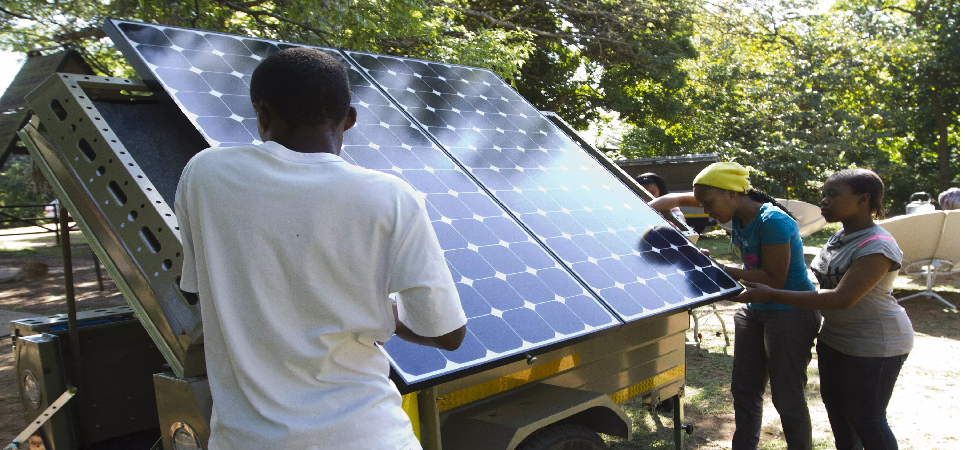
Nigeria’s pledge to join hands with the rest of the world to combat climate change by shifting to green energy through diversification of its economy to align with the global climate goal of keeping the global temperature increase to well below 20C, has got a major boost.

The European Union (EU) has launched the ‘Team Europe Initiative (TEI) Nigeria Green Economy’ project aimed at stimulating sustainable climate-smart agriculture and renewable energy for economic growth and diversification, NAN reports.

The EU ambassador to Nigeria and Economic Community of West African States (ECOWAS), Ms Samuela Isopi, unveiled the project at the 8th EU-Nigeria Business Forum tagged: “Nigeria and the New Economy” on Friday, in Lagos.

Per NAN, Denmark, France, Germany and the Netherlands made up members of the TEI Green Economy Project.

The ambassador said the TEI Green Economy consists of 60 projects of different nature to be executed across the agricultural and energy sectors by 2027 and is valued at 1.3 billion Euros.

Isopi said the project was aimed at improving the competitive advantage of Nigeria’s agriculture and energy sectors, with emphasis on access to clean and renewable energy as well as job creation, skills and capacity development.

She added that the project was a result of collaborative efforts with the EU and member states, private and public sectors and the development financial institutions.

She assured continued support for the Nigerian government in the implementation of its economic diversification policies and new partnerships with the private sector.

“In line with the EU’s Green Deal, the Green Economy Initiative will support the Nigerian government’s efforts to diversify the economy by combining support to enhance access to renewable energy for productive uses and boosting the development of the agricultural sector.

“Collectively, the actions will help Nigeria attain the SDGs and put the country on a sustainable development path.

“The initiative will offer support in areas of expertise and strong European contribution such as climate-smart agriculture, technological and digital solutions, vocational training, employment and entrepreneurship creation as well as access to sustainable energy,” she said.

She said the TEI would forge new partnerships with member states interested in supporting Nigeria’s circular economy efforts.

Markus Wauschkuhn, Germany’s Cluster Coordinator for Sustainable development projects in Nigeria, the project focuses on improving Nigeria’s export potential in the area of ginger, tomatoes, chili, leather and garment and other resources to Europe.

Ms Inga Stefanowicz, EU Team Leader, Green and Digital Economy in Nigeria, said the European Investment Bank (EIB) and the European Development Financial Institutions would assist various players in the value-chains in the agricultural and energy sectors.

“By combining EIB’s investment facilities with the European Development Finance Institutions and EU member states, the flagship initiative will create space for EU trade and investment while generating job opportunities for Nigeria’s youth.

“In agriculture, support will be provided to promote and increase climate-smart agricultural production and value-added creation in selected value chains to address food insecurity, increase agricultural exports, tackle skills gaps and create jobs.

“The Federal Ministry of Agriculture and state institutions will be supported in the delivery of its mandate, and in particular, development of agricultural education, integrating ICT and technical and vocational education and training,” she said.

Stefanowicz added that field interventions would concentrate on creating positive spillover effects through the value chains including smallholder farmers, aggregators, processors, manufacturers, wholesalers, transporters and retailers.

She said interventions in the energy sector would include capacity building, policy dialogue and advisory services with the ministry of power and its agencies, in developing an enabling policy environment, and adoption and implementation of measures.

“They will concentrate on effective delivery of the Ministry’s mandate including the Paris Agreement Commitment, Sustainable Energy for All (SE4ALL) targets as well as the development of new energy access business models with the private sector.

She added that the team would work with the Federal and State governments to address obstacles to ease of doing business and investment.

Minister of Agriculture and Rural Development, Dr. Mohammad Abubakar, who was represented by Dr. Emmanuel Olaleye, Director, Agri-Business and Market Development, lauded the initiative. He said that the agricultural sector had the largest potential to diversify the economy and provide the broad-based growth necessary for development as a “new growth engine.”

He said the Federal Government would continue to prioritize activities in the agriculture sector through targeted policies to attract investments, in line with the diversification drive and achieving food security.

The minister said some of the policies include the National Agricultural Technology and Innovation policy, National Agricultural Resilience Framework (NARF, 2014), Agricultural Promotion Policy, (APP, 2016-2020), and National Livestock Transformation Plan (NLTP, 2019-2025), among others.

The TEI is expected to boost Nigeria’s efforts in implementing its climate agendas. Nigeria developed its Nationally Determined Contribution (NDC) in 2015 towards the ratification of the Paris Agreement on Climate Change. It is part of many policies that made up the 2021 – 2030 National Climate Change Policy for Nigeria.

According to the Federal Ministry of Environment Department of Climate Change, Nigeria intends to reduce its greenhouse gas (GHG) emissions intensity of GDP by 20% by 2030 relative to the emissions intensity of GDP in the base period 2010 to 2014 on an unconditional basis as well as a further 45% on a conditional basis consequent upon receiving climate finance, technology transfer and capacity building from the developed countries.