DD
MM
YYYY

PAGES

DD
MM
YYYY

spot_img

PAGES

Home Blog Page 5070

CFTC Goes After South Africa’s MTI On $1.7bn Fraud As FBI Places $100k Bounty on Crypto Queen

0

For a long time, the United States has been expected to make rules that will regulate the cryptocurrency market, putting an end to fraud and other vices stymieing sustainable growth in the industry. While the regulation lingers, authorities are stepping up crackdown on fraud and malpractices in the cryptocurrency industry.

During the week, the U.S commodities regulator, Commodity Futures Trading Commission (CFTC), filed civil charges against a South African company and its CEO for fraud and registration violations.

The company is accused of running a fraudulent commodity pool worth over $1.7 billion in bitcoin. According to the watchdog, Mirror Trading International Proprietary Limited (MTI), the South African bitcoin pool operator, and Cornelius Johannes Steynberg, its CEO, set up a fraud scheme, soliciting bitcoin online from thousands of people including 23,000 Americans.

“MTI had operated a scheme “to solicit, accept, and pool more than $1.7 billion to trade off-exchange, retail foreign currency (forex) on a leveraged, margined and/or financed basis,” the CFTC said.

It said that instead of trading forex as MIT claimed, the company embezzled pool funds, misrepresented trading and performance, faked account statements and used a fake broker, where the trading happened. Just a fraction of the pooled 29,421 bitcoin was ever invested, the regulator said. Steynberg and the company also lied about using trading “bots”.

Steynberg has been on the run until he was recently nabbed by Interpol in Brazil, according to the CTFC, who added that the ponzi scheme is the largest involving bitcoin fraud that it has ever handled.

“Defendants engaged in an international fraudulent multilevel marketing scheme via various websites, in addition to social media, to solicit bitcoin from members of the public for participation in their pool. At least 23,000 of the pool participants—most, if not all, of whom were not eligible contract participants—were from the United States,” CTFC said in a statement.

“The CFTC’s complaint seeks full restitution on behalf of defrauded participants, as well as disgorgement, civil monetary penalties, permanent trading and registration bans, and other relief.”

The CFTC is seeking full restitution to defrauded investors, disgorgement of ill-gotten gains, civil monetary penalties, permanent registration and trading bans, and a permanent injunction against future violations of the Commodity Exchange Act and CFTC Regulations.

Meanwhile, Ruja Ignatova, also known as “Cryptoqueen,” a German citizen who’s also accused of defrauding investors out of $4 billion by selling a fake cryptocurrency called OneCoin has been added to the FBI’s list of its ten most-wanted fugitives, according to a statement by US officials on Thursday.

She has been on the run since 2017 when she learnt that her American boyfriend was cooperating with the FBI on its investigation on OneCoin. She was charged with eight counts including wire fraud and securities fraud for running the Bulgaria-based OneCoin Ltd as a pyramid scheme.

The FBI has placed $100,000 on Ignatova. She was charged alongside Mark Scott, a former corporate lawyer who prosecutors said laundered around $400 million for OneCoin, and has been found guilty of conspiracy to commit money laundering and conspiracy to commit bank fraud.

The crackdown on fraud in the crypto industry is expected to inspire investors’ faith, especially at a time when the industry is having one of its worst moments that some have attributed to malpractice.

Understand and Map Your Personal Economy At Tekedia Mini-MBA

0

In the university, they prepared you on how to manage the firm’s money and assets. None of those courses prepared you on how to manage your own money. Sure, they expect you to pick the skills on the way, as you advance in your career. That explains my thesis that the best way to begin a career is banking since if we’re in the business of making money, even when schools cannot teach us how to manage them, maybe, starting a career in banking will help!

As economies are being rattled as a result of Russia-Ukraine conflict, inflation, banditry in Nigeria, high interest rates, Naira deterioration, political risk, the stakes are now high and you must pay attention to your Personal Economy.

Tomorrow at Tekedia Mini-MBA, I will anchor a special session on Personal Economy and Scenario Mapping. Our school wants to help because that is what every great school should do. Of course, we already have great courses on Personal Finance and Wealth Management, Retirement Planning, etc. This one is an addition with specific focus on the events of 2022.

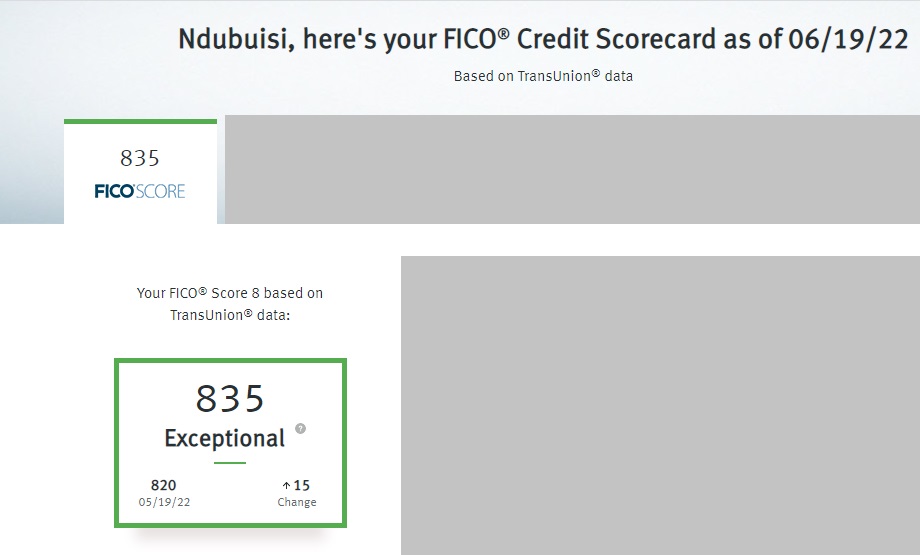
The best way to be out of debt is to pay your bills fast! And the easiest way to save is to have a great credit if living in developed economies.  My FICO score is 835 which is rated exceptional. With that, I get the best interest deals America offers! The implication is huge – what someone pays 21%, you can get it at 5%.

Meanwhile, we have started registration for the next edition of Tekedia Mini-MBA here.

Sankofa Innovation

0

For centuries, Africans devised means to survive. They mastered the herbs and cured the most poisonous snake bites, melted iron and made cutlasses and hoes, and formulated compounds and fixed broken bones. The Ethiopians invented an indigenous way of writing, and documented some of the earliest components of African history.

The ancient trade routes from Accra through Kano to Khartoum were anchored on the ingenuity of Africans who dyed clothes, transformed hides into leather, and improved agricultural yields through self-taught farming mechanisms like fallow and erosion control.

Yet, Africa had a dark period through the vagaries of slavery and self-inflicted tragedies of wars that destroyed a virtuoso system of innovation built and refined over generations. But the good news is that Africa is emerging again, stronger. It is a land of Sankofa innovation where legends painstakingly reach back, pick old ideas on processes, concepts and tools, and improve on them, while applying new techniques.

In the east, west, north and south, the spirit of innovation is being rekindled in the continent. There are sparks of African innovators who want to drive Africa’s future in their hands.

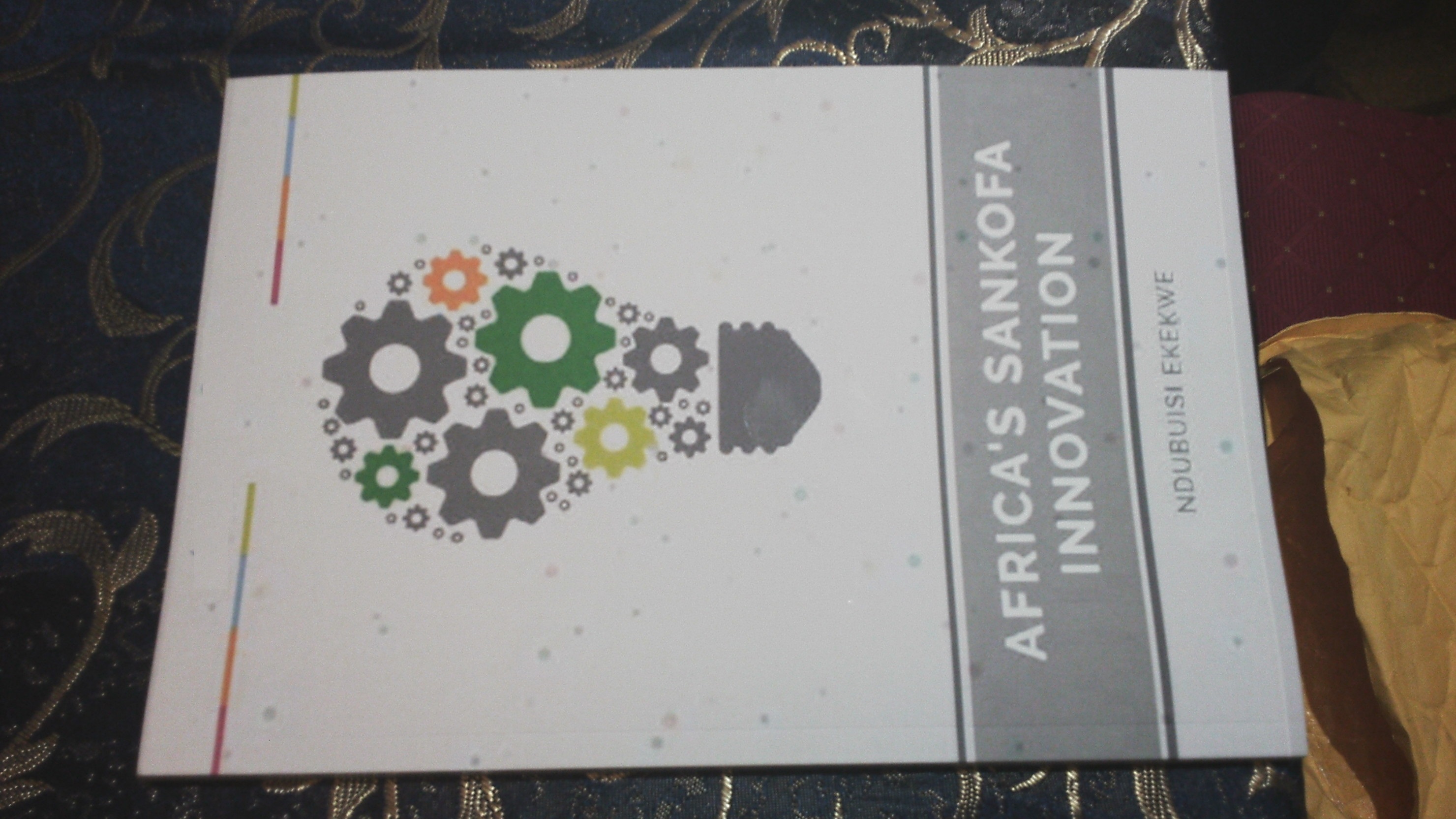
Read my book “Africa’s Sankofa Innovation” here.

Free for all Mini-MBA edition 2 participants

El Salvador Buys Bitcoin on Dip, Again

0

Despite the ongoing bearish market in the crypto world, El Salvador has once again bought the Bitcoin dip with an addition of 80 BTC.

The president, Nayib Bukele announced this via his Twitter handle where he stated “El Salvador bought today 80 BTC at $19,000 each. Bitcoin is the future. Thank you for selling cheap”.

This brings the total amount invested in Bitcoin to $1.52  million. Recall that this is not the first time that El Salvador is buying the dip, as it earlier bought the Bitcoin dip in May, adding 500 Bitcoin for a total of $15.3 million, $30,744 each to the government coffers.

After El Salvador’s adoption of Bitcoin as its legal tender, the economic growth has plummeted with its deficit remaining high. The country’s debt-to-Gdp ratio is set to hit close to 87% this year, raising concerns that the country isn’t well equipped to settle its billion-dollar loan obligations.

The Bitcoin adoption has not favored them in any way, as the country needs a lot of cash to settle its debts of more than $ 1 billion. Since the time Nayib Bukele announced his plan to adopt Bitcoin, the price has fallen more than 70% from the time of adoption.

The country has an unrealized paper loss on Bitcoin of around $50 million, which according to the country’s finance minister, is less than 0.5% of the national budget.

El Salvador is still struggling with distressed debt, as the country is seeking a $1.3 billion loan from the International Monetary Fund (IMF). The country has in the past received loans from the IMF, but currently, IMF has expressed concerns over El Salvador’s growing exposure to Bitcoin’s volatility and urged greater transparency.

International money lenders have also stalled negotiations with El Salvador because they are unwilling to lend money to a nation that is lavishing millions of taxpayers’ money on Bitcoin whose price is prone to extreme volatility.

With the adoption of Bitcoin, it has become even more difficult for El Salvador to borrow money. It is obvious that the government of the country has adopted a “buy the dip” strategy, because they always purchase Bitcoin any time there is a fall in the price. This country is teaching us and answering the question: what is Bitcoin? For it, it is an investment asset class.

Ever since the adoption of Bitcoin in the country, businesses have disclosed that they reverted to accepting cash as they were losing money because of the way the cryptocurrency loses its value.

It’s obvious that President Nayib Bukele’s adoption of Bitcoin is for a selfish purpose, because there are major constraints that have ravaged the country due to its adoption, but he seems unconcerned.

Critics disclosed that the country’s Bitcoin transition leaves behind those who don’t have a smartphone, which is mainly older Salvadorans, and those without internet access. Yet, we cannot count out a nation which baptized Bitcoin when it made it a legal tender.

The government of El Salvador has economically baptized Bitcoin, making it a legal tender in the nation.  That brought some cheers to the world of coins because hedge funds, investors and market makers can safely domicile their “wallets” in El Salvador knowing that if anything bad happens in other places, they can recover by exchanging for El Salvador currency.

Lawyers dressing in “juju worshippers’ attire” to Nigerian courts: The reason.

0

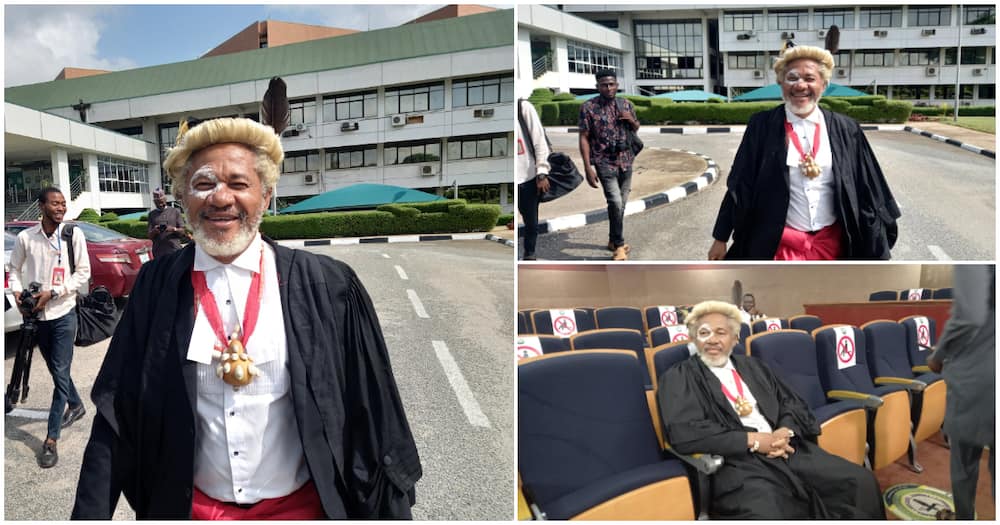
You might have seen the videos of a lawyer appearing in court in a “juju worshipper’ attire, also, the other day, a lawyer appeared in court in a pastoral robe and you may also be wondering what is causing this or giving the lawyers the nerve to embark on this kind of religious activism in courtrooms. 

People who are not conversant with the background story and the development that led to this will be wondering what is going on amongst lawyers because on regular days if a lawyer appears in court in a costume that is not the approved lawyers’ attire that lawyer will be denied the right of audience in court for not being fit and proper to appear in the court and he will also be held for contempt of court with disciplinary actions melted on him. 

                     **************

It all started in 2012 when two-12 years old girls under the aegis of the Muslim Students Society of Nigeria, Lagos State Area Unit approached the court praying the court to hold that the policy of the Lagos state government restricting and banning the use of hijab by Muslim students in schools, especially public primary and secondary school offends their constitutionally provided fundamental human right as provided in S. 38 and that the court should mandate Lagos state government to permit Muslim girls to exercise their freedom of worship as constitutionally provided by allowing them to wear their hijab on their school uniform which is what their religion required of them.

The High Court of Lagos state in 2014 delivered the judgment upholding the ban of the hijab by the Lagos state government in schools. 

Displeased by the judgment of the High Court, delivered by her Lordship, Grace Onyeabo, the plaintiffs went on appeal. They approached the court of appeal to set aside the judgment of the High Court maintaining that ban on the use of Hijabs in schools by the Lagos State government offends the provisions of the Constitution, specifically, S.38 of the Constitution of the federal republic of Nigeria. 

The court of appeal gave judgment in favor of the plaintiff/appellant, taking the stand of the Muslim students, that ban on the use of Hijab by the Lagos state government is in breach of their constitutional rights thereby upturning the judgment of the Lagos state high court. 

The Lagos State government did not accept this judgment of the Court of appeal upturning the judgment of the High Court, so they decided to approach the apex court; the supreme court of Nigeria to appeal against the judgment of the court of Appeal. 

The Supreme Court in a 6:1 justice ratio affirmed the decision of the Court of Appeal, which removed the ban on the use of Hijab in public schools in Lagos State. The Supreme Court held that the ban on the use of Hijab was discriminatory, unconstitutional, and offends the freedom of worship of a particular sect hence the need to set aside the judgment of the High Court that upheld the ban. 

Lawyers and activists have openly and secretly expressed their displeasure with this judgment. This is what led to some lawyers dressing in their “juju worshippers’ attires” and pastoral robes to appear in court, standing on the judicial precedent of the supreme court in the above case that every Nigeria has freedom of religion and on no instance should anyone be denied of that right, not even by the government or the court.

Why I and millions of lawyers support the wearing of juju worshipper’s attire to appear in court

“What is good for the goose is good for the gander”.

If a Muslim faithful’s fundamental right to worship as recognized by the Constitution has been adopted by the supreme court, then juju worshippers’ right to worship should also be recognized and everyone should be allowed and permitted to adorn themselves in whatsoever their spirituality permits in the exercise of that same right.

What seems like a protest amongst the legal practitioners has been going on in the courtrooms in recent times. Lawyers were seen appearing in courtrooms in robes which is not the approved attire for legal practitioners.

This move was started by Chief Malcolm Omirhobo, Esq, a Warri-based lawyer who started attending court hearings in traditional worshippers’ attires in protest of the Supreme Court judgment of upholding the right of Muslim faithfuls to adorn themselves in their Hijabs in public schools and these movements have been joined by other lawyers, some lawyers chose to appear in court in priestly robes and other miscellaneous adornments lately.

It is succinct to point out that what goes for the goose goes for the gander. The Supreme court cannot uphold the rights of Muslim students to adorn their religious apparel on their school uniforms and will want to restrict the rights of any other Nigerian from practicing his or her religion.

It’s either the Supreme subject the judgment to judicial review, and review that judgment or allow every Nigerian to practice his or her religion without any form of limitation or restriction.

In accordance with this judicial precedent, a Nigerian should be able to practice his religion and appear the way the believers that identify themselves with that religion are expected by that religion to appear, be it in public places, courtrooms, schools, or any other place whatsoever and anybody who dare to restrict the right to worship of such individuals can be said to intentionally unlawfully restricting the fundamental human rights of a Nigerian citizen.

Suffice it to say that I am not in any way against the judgment of the Supreme Court of Nigeria upholding the fundamental human rights, specifically the right to worship of Muslim students as provided in S 38 of the constitution of the federal republic of Nigeria thereby removing any restriction or limitations to this right. I am of the view that what is good for Islamic religion faithfuls is also good for Traditional religion faithfuls and also Christians religion faithfuls and any other religion a Nigerian practices.