DD
MM
YYYY

PAGES

DD
MM
YYYY

spot_img

PAGES

Home Blog Page 5084

Honeywell Group Partners With Lagos State Government To Support Development In Tech Ecosystem

0

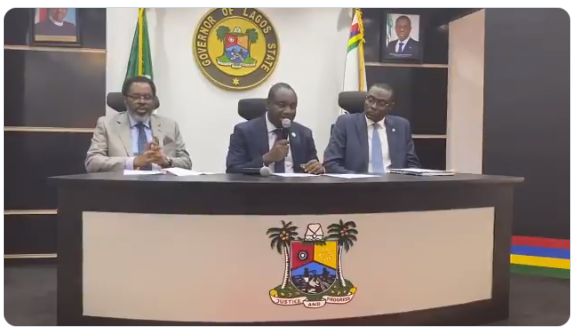
Honeywell Group has partnered with the Lagos state government to support the growth of tech ecosystems. The partnership is executed through a talent development program under ‘Lagos Innovates’, a training program created to ease the process of building successful start-ups in Lagos state.

The program is aimed at providing the necessary tools to young innovative tech-preneurs, to enable them to build successful start-ups within the state. One core objective of the program is to assist the very best tech start-ups and founders in Lagos state who already have the basic requirements to acquire the relevant skills needed to compete in today’s global marketplace.

Speaking about the partnership, the Head of Corporate Services, Honeywell group, Tomi Otudeko stated that it has always been the mission of the company to create long-term value for Nigerians and they feel happy to see them thrive.

In her words;

Creating long-term value for Nigeria and its people has always been at the heart of Honeywell Group’s mission. We are invested in impacting our communities, and the tech ecosystem in Lagos is filled with ideas that can revolutionize how we think and operate as a society.

We also understand that these young minds need support in accessing the tools and the people required to grow their ideas. It is our duty to support them in any way that we can.

We are excited to meet these new faces of technology and to partner with Lagos State and Lagos Innovates in easing the path to success.”

It is very commendable to see that tech start-ups not only in Lagos, but in Nigeria, have been receiving the needed support from not just the government alone, but also support from private companies. It is important to note that start-ups are the driving force of economies across the globe.

They have been estimated to hire an average of 3x more employees than other economic sectors. It is pleasing to know that tech-preneurs have been receiving great support from the Lagos state government. The Lagos state government via the Lagos state employment trust fund has been actively investing in the tech start-up ecosystem over the years through the Lagos innovate program.

No wonder the state has been called the “Silicon Valley” of Africa, because the growth of the tech ecosystem is growing at a very fast rate due to the constant support the sector has been receiving. Most of these tech start-ups have innovative ideas not only to make profit but to also transform the nation’s economy.

Unfortunately, some of them are faced with different constraints to actualize their dreams. One major problem these start-ups are faced with, is knowing where and how to source funds. Truth is, to fully develop a tech start-up vision, money is very essential.

In today’s digital era, technology has significantly shaped and influenced economies and businesses in ways a lot of us could not imagine. With the recent development in the Nigerian tech start-up ecosystem, it is crystal clear that massive support from private companies and the government will immensely benefit both start-ups and the Nigerian economy.

Nigerian tech start-ups are no doubt creating value for the society, including supporting one of the government’s core agenda of job creation, which they are playing an active role in reducing the number of unemployed youths in the country.

Today, Singapore has become a technology powerhouse because of its supportive government. The country’s government policy is to combine business-friendly policies with heavy investment in the tech sector.

In India, the government came up with several innovations to support tech start-ups, and to foster a culture of innovation. The government has also ensured that there are policy initiatives geared toward helping start-ups to raise funds for growth and expansion.

It is therefore pertinent for the Nigerian government to take a cue from these countries aforementioned, and replicate the same in the country. Doing it will no doubt improve the nation’s economy and also move the country from an undeveloped state to a developing or developed one.

Peter Obi Should Choose Abdul Samad Rabiu, Chairman of BUA Cement Plc; Lessons from Nigerian University System

2

Do you have any suggestions who Peter Obi can choose as a vice presidential partner? Yes: Abdul Samad Rabiu, CON. 

He is the Chairman of BUA Cement Plc. He is also the founder and Chairman of BUA International Limited! I understand that his shareholders will not be happy with my suggestion. But truth be told, it is time for Nigeria to get people who understand balance sheets into political leadership. Obi and Rabiu will be a new beginning for Nigeria.

One of the things I admire about the US university system is the magic that any person can be a president (yes, vice chancellor). Most times, they hire businessmen and women as “vice chancellors” to build the university. That they have not taught a day in a classroom is not a problem: they are there as managers, not as academics.

But in Nigeria, only professors can lead a university and just like that a man who studied crop science and has no clue on what a balance sheet is, is tasked to manage a budget. That budget could have more than 3,000 workers! What does he do? He struggles because you cannot promote a baby to become a CEO overnight. 

A university is a big business and someone with no business experience should not run one, whether he has published journal papers or not.

Peter Obi, leave the politicians and get someone that can rebuild the economy. Of course, this is a wishful illusion for me as that will not happen. (Labour Party politicians will strike for that.)

The Playbooks of Business – from Idea to Revenue

0

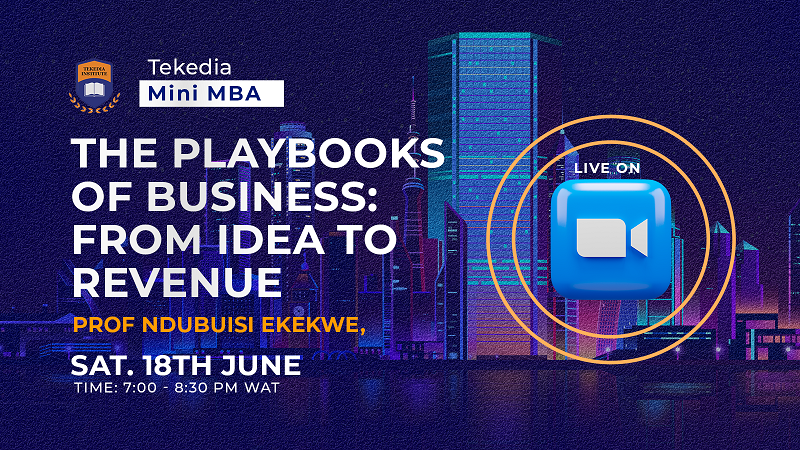
Dear Tekedia Mini-MBA Members, we will continue our academic festival tomorrow. This week, we hosted business leaders  from SAP and Microsoft. Tomorrow, I will lead a session on business playbooks, crystallizing how you can move from an idea into revenue where the digits hit the bank accounts.

We teach practical business reality and the nativity of Africa’s entrepreneurial capitalism. This is the cambrian moment and empires of the future are being built. Join us on Saturday as we discuss how to begin and take off, breaking the inertia, to turn that idea into a great company.

Tekedia Mini-MBA >> master the DNAs of modern business. Registration continues here

India Lifts Restrictions on Mastercard

0

Mastercard business has received a major boost following the decision by Indian authorities to lift a nearly one year ban that has shut the payment giant out of one of the largest markets in the world.

Lifting the business restrictions means that Mastercard can now add new customers in the South Asian market. The central bank said on Thursday that it has demonstrated “satisfactory compliance” with the local data storage rules.

“In view of the satisfactory compliance demonstrated by Mastercard Asia / Pacific Pte. Ltd. with the Reserve Bank of India (RBI) circular dated April 6, 2018 on Storage of Payment System Data, the restrictions imposed, vide order dated July 14, 2021, on on-boarding of new domestic customers have been lifted with immediate effect,” the RBI said in a statement on Thursday.

Below, TechCrunch reported on a series of moves last year that saw the Reserve Bank of India indefinitely barred Mastercard, American Express and Diners Club from issuing new debit, credit or prepaid cards to customers over noncompliance with local data storage rules (PDF). The business restrictions on American Express and Diners Club remain in place in the country, though they are permitted to continue to serve their existing customer base.

Unveiled in 2018, the local data-storage rules require payments firms to store all Indian transaction data within servers in the country. Visa, Mastercard and several other firms, as well as the U.S. government, previously requested New Delhi to reconsider its rules, which they argued were designed to allow the regulator “unfettered supervisory access.”

Mastercard, which prior to the ban commanded roughly 33% market share in India, has identified the world’s second largest market as a key growth region and has invested over $2 billion in the country over the past decade.

“We welcome and are grateful for today’s decision by the Reserve Bank of India (RBI), enabling us to resume onboarding of new domestic customers (debit, credit and prepaid) onto our card network in the country with immediate effect. As we have in our engagement with the RBI, we reaffirm our commitment to support the digital needs of India, its people and its businesses. We are glad we have met this milestone and will continue to ensure ongoing delivery against the goals and regulatory requirements that have been established,” a Mastercard spokesperson said in a statement.

“India is an important market for us, both in terms of the innovation created here and the value we deliver to our customers and partners. We take great pride in being able to contribute to the government’s vision of a Digital India and will continue to invest in the country’s future with the same passion and dedication as we always have.”

The resumption of Mastercard’s business in India will provide a boost to the local banks and fintechs that for the last year have only been able to offer customers debit and credit cards powered by Visa and Rupay, a homegrown card network that is promoted by the National Payments Corporation of India, a special body of RBI.

The business restriction on the global cards giants took many banks by surprise last year. RBL Bank, for instance, scrambled to transition to Visa and took weeks to complete the process.

Rising Oil Prices, Fresh Call to Remove Subsidy, and Nigeria’s Dilemma

0

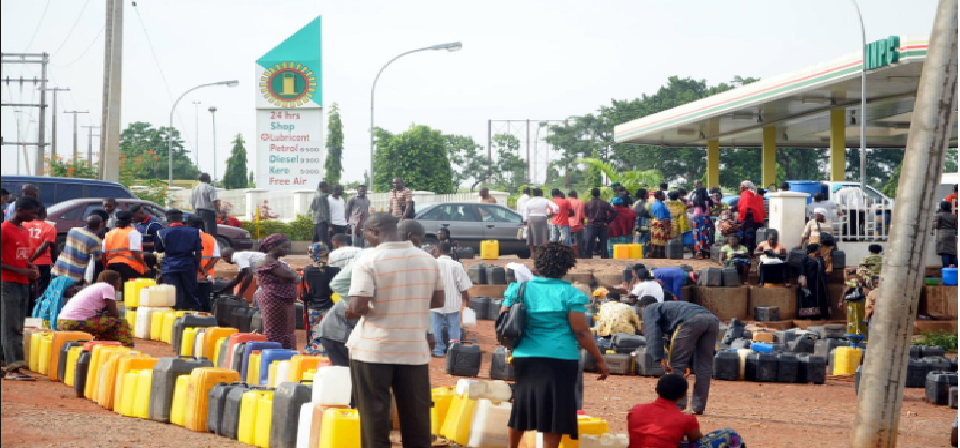
On Tuesday, the Minister of Finance, Budget and Economic Planning, Zainab Ahmed, backed by stakeholders and experts in the economic sector, once again, called for the removal of fuel subsidies.

The call was made in Abuja during the launch of the Nigeria Development Update (NDU) report for 2022, by the World Bank, per NAN.

Ahmed said that the non-removal of fuel subsidy was hurting the nation and impeding investments in human capital development. This is seen in the increasing budget deficit forcing the federal government to borrow more to fund the 2022 Appropriation Act.

Ahmed, a panelist at the launch of the NDU, said the fund could have been channeled to the health and education sectors.

“Nigerians need to understand that this fuel subsidy government is paying now is affecting the nation.  N4.5 trillion spent on subsidies is money we would have invested in health and education, but we are investing it in consumption, which is very wasteful.

“How many Nigerians own vehicles and generators that are benefiting from this subsidy?

“On the fiscal side, this is not something we had planned, but the reality of the times showed increased inflation and food prices are already increasing; so removing subsidy will further escalate the problems,’’ she said.

The appropriation Act originally made provision for the subsidy until April. But the surge in crude oil, which is currently trading around $120 per a barrel and resistance from civil rights organizations, particularly Organized Labour, forced the government to amend the 2022 Appropriation Act to accommodate the exigencies.

Efforts by the Finance Ministry to beat the resistance, including a plan to offer some Nigerians N5,000 monthly stipend, failed. Ahmed said if the subsidy is not removed now, Nigeria will hit an additional N4 trillion deficit.

Other stakeholders who graced the event agreed with the Minister. Gov. Charles Soludo of Anambra State, also a panelist, said the removal of subsidy was long overdue, adding that it benefited nobody.

“Imagine if N2 trillion or N3 trillion is saved today as a result of the removal of subsidy. Each state of the federation could be given about N50 billion to fix roads and the Federal Government will still have some N1 trillion to use.

“If the country continues with the subsidy, the CBN will continue to need money; it is a circuit. That deficit will continue to rise and how does the Federal Government pay its bills,’’? He queried.

The subsidy dilemma, which the federal government has been counting on Dangote Refinery to resolve, has lingered for years. But the solution which hangs mainly on functioning local refineries is usually off the table whenever the debate comes up.

The bone of contention is the amount of suffering the subsidy removal will unleash on common Nigerians who are already barely surviving. With inflation currently at over 17.70%, buoyed by the Russia-Ukraine war that has rattled the global economy, removing the subsidy now will mean pushing more Nigerians into multidimensional poverty. Though the World Bank has long advocated the removal of the subsidy, it has also warned that one million more Nigerians will fall into poverty at the end of 2022, if the current economic trajectory is not overturned.

This is due to rising inflation that is likely going to compound into another recession if drastic measures are not taken to address the economic headwinds.

Presenting his report at the NDU, Marco Hernandez, World Bank’s Lead Economist for Nigeria, said that Nigeria was in a paradoxical situation. He highlighted three policy priorities the country should focus on to rewind the economic downturn. They are as follows: reducing inflation, addressing mounting fiscal pressures at the federal and sub-national levels, and catalyzing private investment to boost job creation.

“The report states that inflation in Nigeria, already one of the highest in the world is likely to increase because of rise in global fuel and food prices caused by the war in Ukraine.

“This is likely to push an additional one million Nigerians into poverty by the end of 2022, on top of the six million Nigerians already predicted to fall into poverty this year due to the rise in prices, particularly food prices.

“The report also states that inflationary pressures will be compounded by the fiscal pressures Nigeria will face in 2022 because of the ballooning cost of fuel subsidies at a time when oil production continues to decline.

“Hence, Nigeria, for the first time since its return to democracy in 1999, and alone amongst major oil exporters, is unlikely to benefit fiscally from the windfall opportunity created by higher global oil price,” he said.

Nigeria has missed the chance to cash in on the oil boom orchestrated by Russia-Ukraine war due to subsidy payments and insufficient oil production that falls short of the output quota set for her by the Organization of Petroleum Exporting Countries (OPEC). Nigeria is among the seven countries that declined in oil production month-on-month. The largest African economy dropped its output from 1,322 thousand barrels per day to 1,258 tb/d, losing its position as the largest oil producer in Africa to Angola, who recorded an increase from 1,168 tb/d in April to 1,176tb/d in May.

This means, replenishing what is lost in subsidy through the oil windfall is out of question as Nigeria’s 2022 budget benchmark was set at $62 and Nigeria is importing refined petroleum products at international market price. The situation inevitably leaves further borrowing as the only way to fund the budget deficit. But that will deepen the N41 trillion public debt crisis that is already gulping nearly 100% of Nigeria’s revenue.

Against this backdrop, the need to remove the subsidy has never been stronger. But it comes with a political consequence that Muhammadu Buhari administration is believed not to have the political will to take on. For a country besieged by mammoth of crises including abject poverty and insecurity, removing the fuel subsidy now is considered political suicide for a-much-criticized government seeking to remain in power beyond 2023.