DD
MM
YYYY

PAGES

DD
MM
YYYY

spot_img

PAGES

Home Blog Page 5092

NITDA Unveils ‘Code of Practice’ to Regulate Social Media in Nigeria

0

About three years after Nigeria’s National Assembly attempted to pass a social media bill, aimed to regulate what people post and how they interact on social media platforms, the National Information Technology Development Agency (NITDA) has issued a Code of Practice for Interactive Computer Service Platforms/Internet Intermediaries and Conditions for Operating in Nigeria.

A draft signed by Mrs. Hadiza Umar, Head Corporate Affairs and External Relationship, NITDA, said the Code of Practice is aimed at protecting fundamental human rights of Nigerians and non-Nigerians living in the country as well as define guidelines for interacting on the digital ecosystem.

The regulatory agency outlined various dos and don’ts for the Nigerian digital ecosystem, especially platforms having more than 100,000 users. The platforms are by the Code, saddled with the responsibility to do the following among others:

  1. Be incorporated in Nigeria.
  2. Have a physical contact address in Nigeria, details of which shall be available on their website or Platform.
  3. Appoint a Liaison Officer who shall serve as a communication channel between the government and the Platform.
  4. Provide the necessary human supervision to review and improve the use of automated tools to strengthen accuracy and fairness, checkmate bias and discrimination to ensure freedom of expression and privacy of users.
  5. On demand, furnish a user, or authorized government agency with information on: a) reason behind popular online content demand and the factor or figure behind the influence. b) why users get specific information on their timelines.
  6. Provide users or authorized government agency, upon request, with report of due process on their activities, and/or open investigation to ensure individuals are not targeted.

“A Platform shall not continue to keep prohibited materials or make them available for access when they are informed of such [prohibited] materials. Prohibited material is that which is objectionable on the grounds of public interest, morality, order, security, peace, or is otherwise prohibited by applicable Nigerian laws,” the Code says.

Government’s move to regulate social media in 2019 met a heavy pushback from civil rights organizations and members of the public as it was seen as an attempt to gag the civic space. However, the government has tried to use its agencies like the Nigerian Broadcasting Corporation to enact the regulatory rules.

NITDA’s Code has come months after the federal government lifted its four-month ban on Twitter. It was a controversial decision that drew condemnation globally. The government had claimed that Twitter agreed to its terms and conditions that include setting up an office in Nigeria and paying taxes. But the said agreement is yet to materialize months after.

Like the 2019 social media bill, the NITDA Code is already riling up the civic space that has described it as an attempt to censor social media through the back door, especially as the 2023 general elections draw near.


Read NITDA’s statement on the Code below:

The National Information Technology Development Agency (NITDA) is mandated by section 6 of the NITDA Act 2007, to standardize, coordinate and develop regulatory frameworks for all Information Technology (IT) practices in Nigeria. In accordance with its mandates, President Muhammadu Buhari, GCFR, directed the Agency to develop a Code of Practice for Interactive Computer Service Platforms/Internet Intermediaries (Online Platforms), in collaboration with relevant Regulatory Agencies and Stakeholders.

In line with the directive, NITDA wishes to present to the Public a Code of Practice for Interactive Computer Service Platforms/Internet Intermediaries for further review and input. The Code of Practice is aimed at protecting fundamental human rights of Nigerians and non-Nigerians living in the country as well as define guidelines for interacting on the digital ecosystem. This is in line with international best practices as obtainable in democratic nations such as the United State of America, United Kingdom, European Union, and United Nations.

The Code of Practice was developed in collaboration with the Nigerian Communications Commission (NCC) and National Broadcasting Commission (NBC), as well as input from Interactive Computer Service Platforms such as Twitter, Facebook, WhatsApp, Instagram, Google, and Tik Tok amongst others. Other relevant stakeholders with peculiar knowledge in this area were consulted such as Civil Society Organizations and expert groups. The results of this consultations were duly incorporated into the Draft Code of Practice.

The new global reality is that the activities conducted on these Online Platforms wield enormous influence over our society, social interaction, and economic choices. Hence, the Code of Practice is an intervention to recalibrate the relationship of Online Platforms with Nigerians in order to maximize mutual benefits for our nation, while promoting a sustainable digital economy.

Additionally, the Code of Practice sets out procedures to safeguard the security and welfare of Nigerians while interacting on these Platforms. It aims to demand accountability from Online Platforms regarding unlawful and harmful contents on their Platforms. Furthermore, it establishes a robust framework for collaborative efforts to protect Nigerians against online harms, such as hate speech, cyber-bullying, as well as disinformation and/or misinformation.

Similarly, to ensure compliance with the Code of Practice, NITDA also wishes to notify all Interactive Computer Service Platforms/Internet Intermediaries operating in Nigeria that the Federal Government of Nigeria has set out conditions for operating in the country. These conditions address issues around legal registration of operations, taxation, and managing prohibited publication in line with Nigerian laws. The conditions are as follows:

  • Establish a legal entity i.e., register with Corporate Affairs Commission (CAC);
  • Appoint a designated country representative to interface with Nigerian authorities;
  • Abide by all regulatory demands after establishing a legal presence;
  • Comply with all applicable tax obligations on its operations under Nigerian law;
  • Provide a comprehensive compliance mechanism to avoid publication of prohibited contents and unethical behaviour on their platform; and
  • Provide information to authorities on harmful accounts, suspected botnets, troll groups, and other coordinated disinformation networks and deleting any information that violates Nigerian law within an agreed time.

The Draft Code of Practice is available on the NITDA website for review and comments from the public.

The Federal Government wishes to reiterate its commitment towards ensuring Nigeria fully harness the potentials of the Digital Economy and safeguard the security and interest of its citizens in the digital ecosystem.


One of Nigeria’s Companies of the Future – Okomu Oil Plc

1

I have written about this amazing Nigerian company named Okomu Oil Plc. It is neither a tech nor a bank, a major reason I respect what it has accomplished at a higher level. Yes, this company has provided a validation that wealth can be built via agriculture in Nigeria. And interestingly, investors like the dance steps the company is showing in the market.

Its market value continues to climb, outperforming the market index: “revenue grew by 63% to N20.49 billion from N12.55 billion in Q1 2021, just as profit after tax jumped by 80.2 per cent to N9.50 billion from N5.27 billion in the same period last year.”

When we talk of GDP, we are talking of the market value of total goods and services produced within a period, usually a year. It provides the aggregate of economic activities which are deployed in the production of goods and services over the period. 

 While oil gives us huge fat foreign bank accounts, the associated economic activities in the sector are limited. You do not need so many (diverse) activities to produce barrels of crude oil. But when you come to agriculture, you see massive activities making it possible that you can use one stone to kill two birds, especially if the agro-products can find export lanes.

Agriculture remains the largest component of our GDP; companies like Okomu Oil deserve to be used as case studies to demonstrate how a future can emerge, if we make agriculture a business, not just activities aligned with ancestral culture! Yes, I am farming because my ancestors farmed in this land even though you are creating more hunger doing it because of archaic practices at play.

Nigeria must make agriculture a business – Okomu Oil is showing how to do just that.

Okomo Oil, Nigeria’s biggest producer of crude palm oil and the second-biggest producer of rubber recently released its Q1 2022 three-month report, which shows it recorded revenue of N20.49 billion, the highest ever quarterly result by the company.

Data sourced from the NGX showed that the growth in revenue is driven by export sales due to the surge in CPO price influenced by the Russian/Ukraine crisis and sustained supply issues in the international market.

A further cursory view of the report shows that revenue grew by 63% to N20.49 billion from N12.55 billion in Q1 2021, just as profit after tax jumped by 80.2 per cent to N9.50 billion from N5.27 billion in the same period last year and thus earnings per share grew by 80 per cent to N9.96 from N5.53 in Q1 2021

Tech Expert Advises Tech Start-Ups To Protect Their Patents

0

Information and Communication technology expert Johnson Anorh has advised start-ups on the need to acquire the requisite education to enable them to engage Nigeria’s legal system to protect their patents.

While speaking at a tech exhibition, he disclosed that start-ups can not work so hard to come up with an interesting innovation, without finding a way to protect it.

In his words, “Our legal system is there already. I mean, we have an adequate legal system, are we taking advantage of it? How do we take advantage of the legal system that we have to protect our innovation and patents? With Nigeria becoming the tech hub in Africa, as one of the ICT investments running into billions of dollars, there is a need to create a platform where these original innovations, original ideas are celebrated, where they are brought together under one roof, and also used to create a learning process”.

He further advised tech start-ups to acquire and have the necessary education, in case people come up with novel ideas or patents, one will not have a choice but to own them and protect them.

Indeed, there is a strong need for tech start-ups to engage a legal system to protect their patents because it prevents the risk of a founder losing his intellectual property to someone else.

Patent registration in Nigeria confers an exclusive right on the founder for 20 years. This right excludes others from making, using, or selling the invention in the country, without permission or consent during the lifespan of the patent.

There is a strong need for intellectual properties to be protected because protecting them is critical to fostering innovation. If tech start-ups do not protect their business, they would likely not reap the full benefits of their inventions.

The main reason why many inventors obtain a patent for their start-ups is because patents provide protection against theft and enable patent holders to sue any infringing parties.

The laws of intellectual property protect the right of inventors by giving them the exclusive right to reproduce, use and exclude others from presenting it as their invention, without the inventors’ permission.

There is a strong need for start-up founders to also engage a legal system, because the legal system can help them to perform a search to see if any other investors have already applied for a patent for the same invention.

Therefore, a patent lawyer can help their clients to enforce a patent once it is obtained, by suing others who infringe upon a patent holder’s right or violate other laws related to the patents and their inventions.

Nigerian Presidency is Wide Open As Mobile Internet Could Disintermediate Old Political Structures

1

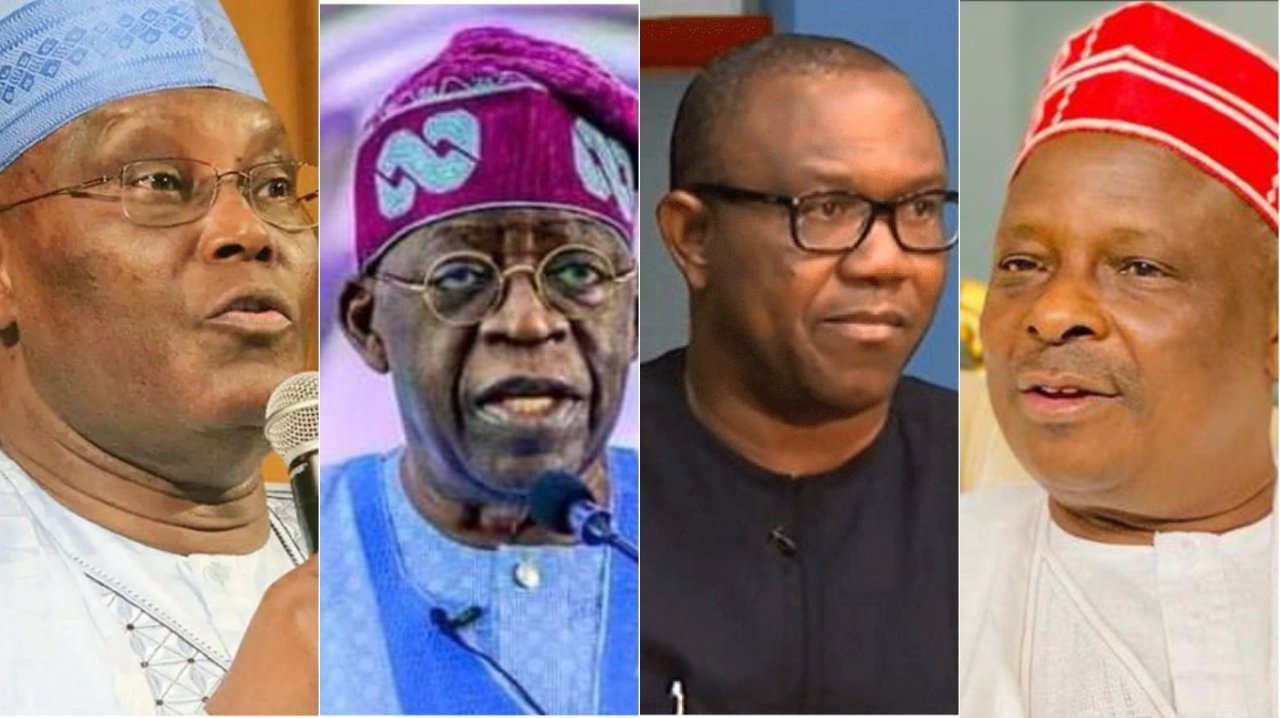
Comment: Peter Obi and Rabiu Kwankwaso do not have nationwide political structures like their APC (Tinubu) and PDP (Atiku) counterparts. My Response below on why you should not discount Obi and Kwankwaso as technology has reduced information asymmetry [‘occurs when one party to a transaction has more or superior information compared to another’] which made local structures very potent.

This is not to say that structures are not important, my point is that disintermediation [“reduction in the use of intermediaries”] is evident, and general voters have access to more information about candidates now, to make decisions independently, out of the influence of political bundlers and brokers.

Technology will create disintermediation that old-style political structures may not matter that much since information asymmetry will be reduced as a result of the ubiquitous smartphones and mobile internet connectivity in Nigeria. Nigeria’s electoral market is becoming more perfect with reduction of information asymmetry (everyone gets the same info about candidates and can make decisions unlike in the past when people relied on emirs, obas, obis, village heads, etc to guide them). 

As digital systems penetrate, the influence of political brokers, bundlers, etc will fade, since those citizens now have access to the right info about candidates and make decisions.

Yes, you can have party chairmen in all local government areas. But if you do not have the message for the citizens, the chairman  will not stop them from learning about those with the right messages. In the pre-mobile internet age, those chairmen were the pipelines to reach the voters. They used their positions to influence how those voters vote. 

Today, do not count on those old-style structures. You can have them – very vital – but if you do not have the right message, you will struggle. It is like in football where some clubs have zone playbooks – defend in zones and attack in zones. You get a village head, and with him, you have cornered everyone in the village politically. Just like playing zone in football which does not guarantee wins, having those village heads when the citizens can get the information directly will cause a dislocation.

With your phone today, there is no information you cannot reach. Many Nigerians are getting the right info and they can independently make decisions. And they have the channels to also express those feelings, recruiting and influencing others, without just relying on what the pundits are telling them. So, a small party with the right message could be a threat because technology can create disintermediation to the old structures we have seen in Nigerian politics.

Of course, this does not mean that a contestant does not need to build the old structures. My point is that those structures will not win elections unless they come with great visions for Nigerians since mobile internet will help voters discover those with the right messages!

Obi, Oba, Emir, etc could influence in the past as custodians of info; today, the youth sabi wetin dey.

Comment on LinkedIn Feed

Comment: America, whose democracy we follow and whose people have the most mobile internet connectivity, in the world has never produced a president outside the two major political parties- Democrats and Republicans. Why is this so? The structures both parties have that are not available to anyone outside the two parties. Without structures that APC and PDP possess, no other party can win the presidential elections in our beloved Nigeria.

My Response: I think you are not doing a good comparison here. If I ask you the logo of Joe Biden’s party, you will struggle. They have attained near zero information asymmetry where you do not even need logos or emblems to know candidates. How do you know them? Their policies or what they stand for. So, it is personalized not “party-nized”.

That is what I am saying. Nigerians will begin to pay attention NOT to party but what the candidates offer them. Interestingly, minor parties in US have nothing new to exploit. But in Nigeria, there are still opportunities as we have not attained policy saturation or stable state in our evolving democracy.

{As late as 1930s, African Americans voted mainly Republican. Later, they moved Democratic as Democrats used voting rights, etc to attract them]

Mobile internet can move us from party to person. That is the message.

Bitcoin Drops to $24k, Adding to Fears that the Crypto Market May Be Heading for Worse

0

Bitcoin went crashing further on Monday below $24,000, hitting a 29-month low. The recent dip was spurred by sustained selloff of crypto assets by investors as it becomes clearer that bitcoin is not a hedge to inflation.

Bitcoin has been on a nosedive performance since mid-last year, following the pullout of Tesla from the frenzy by its major cheerleader Elon Musk. The electric vehicle manufacturer had opted out of using bitcoin as a means of payment due to concern about its carbon footprints, which is contrary to the gospel of cleaner energy that Tesla stands for. The crypto market’s predicament was exacerbated by China’s clampdown on everything crypto.

As a result, the crypto market has lost its glorious capitalization of $3 trillion, costing investors billions of dollars and forcing crypto companies to downsize and to limit their services.

Over the weekend and into Monday morning, more than $200 billion had been wiped off the entire cryptocurrency market. The cryptocurrency market capitalization fell below $1 trillion on Monday for the first time since February 2021, according to data from CoinMarketCap.

Celsius, a crypto lending company has suspended withdrawals for its customers. “Due to extreme market conditions, today we are announcing that Celsius is pausing all withdrawals, Swap, and transfers between accounts,” the company said in a memo to clients on Monday.

Crypto exchange company Crypto.com announced on Saturday that it is laying off 260 workers, 5% of its workforce. CEO Kris Marszalek said in a tweet that the Singapore-based exchange uses the approach to stay focused on executing against [its] roadmap and optimizing for profitability.

“That means making difficult and necessary decisions to ensure continued and sustainable growth for the long term by making targeted reductions of approximately 260 or 5% of our corporate workforce,” he added. The CEO did not specify when the layoffs would be happening.

Others have towed the same path. On June 2, Coinbase said it will freeze hiring and withdraw some job offers. On the same day, Gemini said it was going to cut about 10% of its workforce. Binance has also paused withdrawal.

These drastic measures not only spark fears of contagion into the broader market, but also concern that the crypto crash is far from over.

A CNBC analysis that involves chats with experts in the industry highlights key factors enabling the current downturn.

Macro factors are contributing to the bearishness in the crypto markets, with rampant inflation continuing and the U.S. Federal Reserve expected to hike interest rates this week to control rising prices.

Last week, U.S. indices sold off heavily, with the tech-heavy Nasdaq dropping sharply. Bitcoin and other cryptocurrencies have tended to correlate with stocks and other risk assets. When these indices fall, crypto drops as well.

“Since Nov 2021, sentiment has changed drastically given the Fed rate hikes and inflation management. We’re also potentially looking at a recession given the FED may need to finally tackle the demand side to manage inflation,” Vijay Ayyar, vice president of corporate development and international at crypto exchange Luno, told CNBC.

“All this points to the market not completely having bottomed and unless the Fed is able to take a breather, we’re probably not going to see bullishness return.”

Ayyar noted that in previous bear markets, bitcoin had dropped around 80% from its last record high. Currently, it is down around 63% from its last all-time high which it hit in November.

“We could see much lower bitcoin prices over the next month or two,” Ayyar said.