DD
MM
YYYY

PAGES

DD
MM
YYYY

spot_img

PAGES

Home Blog Page 5099

The Major Contracts and Statutory Compliance Requirements For Techpreneurs And Why You Need Them

0

The Tech sector will always be remembered for its major disruption of traditional business models not just in Nigeria, but all over the world, especially within the last 5 years.

Through the ingenious application of Software programming to everyday activities and functions, mankind successfully survived and even thrived during the Covid-19 pandemic and introduced Business models that have been waxing stronger and stronger even till today.

The Tech Sector has more than proved its almost limitless economic benefit, becoming responsible for the first service to qualify as a daily necessity, facilitating daily functions from booking a cab to checking your personal finances to ordering food and medicines to investing your money and even having romantic dates!

But with this innovation, comes its bad sides. There are many cases of Tech being perverted to carry out illegalities and unethicaly practices from Financial crimes to Privacy violations to Cyber-bullying to Incitements to violence and large-scale theft of Intellectual Property.

This is why the Tech Sector and its subsectors in every country are subject to some of the most rigorous Legal requirements and Statutory compliance requirements. This is also why as a Techpreneur, Tech Start-up or Ongoing Tech business in Nigeria, you need to have a full grasp of the types of contracts and statutory requirements you must have to be in business.

That you might have heard about many or all of these contracts and requirements is a given, but you also need to know WHY they’re necessary and the possible consequences of not having these documentations and requirements, all of which will be explained in this article one by one. They are as follows :-

  1. 1. Registration as a Company:- This is done with the Corporate Affairs Commission (CAC) which is in charge of the registration and regulaton of businesses and companies in Nigeria. Registering a company as a Techpreneur is advantageous because it guarantees:-

– A structure of perpetual succession that will outlive its founders.

– The creation of Limited liability which separates the personalities of the Techpreneur and that of the company under law.

– The satisfaction of a Statutory requirement governing some subsectors of the Nigerian Tech Sector where operating licenses can only be granted to 

Techpreneurs with companies e.g. Digital Moneylending & Digital Banking.

  1. 2. Shareholders Agreements:- These are agreements entered into between the Shareholders of a company that deal with everything from the ratio-based allocation of shares to the power to transfer, transmit or buy back shares as well as the right of first offer, a major source of recent Business disputes in the Nigerian Tech Sector where stock/share options are a regular method of staff remuneration. 

A share is a unit description of ownership interest in a company gotten usually by monetary subscriptions and which entitles the unit holder to payments called dividends.

  1. 3. Promoter’s Agreements:- A Company promoter is a person appointed usually through a Promoter’s Agreement to act as the representative of a company yet to be formed, usually for the purpose of structure and capital sourcing as well as other services such as sourcing for suitable Directors for the company and preparing the Company prospectus for Capital sourcing purposes. 

A promoter is a very important person to have especially as a Tech Start-up because these are usually people that are very experienced in the aspects of business incubation, structure formation and capital round sourcing and funding which is the lifeblood of the Tech Sector. It is also important as a Promoter to insist on this agreement as you might not be able to prove that you are entitled to remuneration especially once the company is formed and operating.

  1. 4. Non-Disclosure Agreements :- In sourcing for funding as a Techpreneur or Tech Start-up, you will be showing and explaining aspects of your product, business plans and projections to a whole lot of potential investors who may or may not decide to double-cross you, an occurrence that’s all too common in business. The sad part is that proving your Intellectual Property was stolen would be next to impossible because Trade secrets can only be deemed so by virtue of Non-Disclosure Agreements which are simply binding contract under which the party to whom the Trade secrets are revealed promises to treat them as specific information not to be revealed unless with the proper authorization of the owner of those Trade secrets.
  1. 5. Trademark Registrations :- If you have released a software program, App, Website, a unique Digital coin product or NFT created by you, USSD service or API or slogan, unique logo, Company name or other symbol , it is best to have this registered as a Trademark because it will not be considered as legally and originally yours if you do not register them as such.

A Trademark(usually gotten within 4 weeks – 6months) is a class of Intellectual Property that describes recognizable designs, presentation formats, slogans, catchphrases, or other symbolisms that pointedly and distinctively identifies a product or service. 

As a result, you need to be very sure that your App name or Slogan or Logo has not been Trademarked as this could lead to serious liability infringement suits, a very good example being the recent 1Billion Naira lawsuit against a Multinational Company by a popular Nigerian Comedian and Online Skit Maker over the unauthorized use of a the latter’s catchphrase “Something Hooge”  that had already been Trademarked.

  1. 6. Patent Registration :- The Tech Sector relies on Intellectual Property and Inventions as its raw materials, and it is a well-known fact that great minds think alike, which is why history is filled with never-ending arguments about who actually created what regarding many scientific and technological breakthroughs and advancements we enjoy today. 

The law has since settled it by legally according the party that succeeds in getting a Patent first with the rightful inventor status.

A Patent is simply a government license(issued via the Trademarks and Patents Registry) granting an exclusive right to a party over an invention while barring other parties from using, producing or transacting in that invention in anyway. Thus, if you’re a Techie or Techpreneur in possession of a new ICT or Digital product, getting a Patent is very advisable.

  1. 7. Copyrights:- A Copyright is an exclusive, lifelong and transferrable right to publish, perform, print or portray via film or other media original works of authorship concerning literary, musical, artistic, graphic, architectural, audiovisual or computer software programming material. 

Getting a Copyright(usually within 60-90days) from the Nigerian Copyright Commission as a Techpreneur or Techie is important especially regarding Software programming architecture and coding information for Apps, APIs, Websites or other Digital or ICT based products, and it should be noted that failing to get this done can result in your Intellectual Property theft and Unauthorized duplication.

  1. 8. A Web / IT Development (Frontend and Back-end) Service Agreement :-

Developing an App or Website might require the services of a Web  or I.T developer for Frontend, Back-end or Turnkey Development services.

It is very important that a contract of this nature which will outline the terms, payment terms and conditions for the provision of IT Development services along with a Non-Disclosure clause is signed with a developer to prevent your Online or Mobile platform coding informationand architecture being indiscriminately duplicated or any Trade secrets being revealed or converted illegally by the Developer.

  1. 9. Debenture Agreements :- A debenture in very simple terms is simply a written acknowledgement of its debt by a company, usually secured by an asset of the company.

In terms of seed funding options, going to a bank or a public unit trust offering might not be the best option for a start-up, especially in its first 6months of operations. A debenture offer to individuals and companies might thus be the safest short-term funding route for a Tech start-up because it is usually documented as a deed, comes with no compulsory legal encumbrances and can be convertible into Share options. 

Debenture Agreements are thus very necessary to legally secure a bridge route to secondary seed funding for many Tech businesses.

  1. 10. Data Policy Compliance Certification :- In Nigeria, all Tech businesses are governed by the National Information Technology Development Agency (NITDA) through the Nigerian Data Protection Regulations 2019 pursuant to Section 6 of the NITDA Act.

As a result, all Tech businesses are to tender compulsory Data Protection Compliance returns as at when due to NITDA through a Data Protection Compliance Organization (DPCO), usually a lawfirm, as well maintain strict compliance with all the requirements of the NITDA Act and Data Protection Regulations to avoid legal sanctions.

  1. 11. Service Level Agreements/Technical Partnership Agreements :- As stated earlier, a lot of Tech businesses, especially in the Fintech subsector, require Regulatory licenses and Minimum Capital requirements that are usually renewable from relevant Government agencies and which for many Tech Start-ups can be very expensive to come up with.

The above thus explains the necessity behind alternative and legitimate methods of getting licensing such as Service Level Agreements & Technical Partnership Agreements which are usually Joint Venture agreements framed as contractual commitments between a Service provider and Client or contractual commitments to implement, optimize and constantly update Technical systems respectively.

So for example, if you’re a Techpreneur with little capital but in possession of a Digital Credit assessment & Loan offer Software program, you can simply engage in a Technical Partnership Agreement or Service Level Agreement with a Company already in possession of Moneylending License, a Microfinance license or a Financial Institution license to render Digital lending services. You can also alternative enter into a license leasing agreement with a licenced Tech business which can be drafted as a Technical Partnership or Joint Venture agreement as well. 

There is also a third way of securing alternative licensing – Franchising.

  1. 12. Franchise Agreements :- A Franchise is a grant by a company or government (the Franchisor) that gives another party (the Franchisee) the right to engage in specifically mentioned business activities such as acting as a sales and service agent for a company’s products and services.

Through this method, Tech Start-ups can leverage on more established licensed Tech companies to provide certain services without necessarily excluding their own service offerings. 

For example, a Tech Start-up with little capital seeking to go into International Money Remittance services or Agency Banking or Payment Service Banking can simply seek for a Franchising agreement with a licensed company in the form of Agency Banking agreements for the provision of Bank Account Number Registration and Issuance or Deposit or Transfer or Remittance services .

  1. 13. IT Policy Documentation :- Every Tech business platform must have a documented IT Policy, especially in a Tech Subsector heavily dependent on licensing such as the Fintech subsector without which a Tech Start-up cannot be granted a license.. This IT Policy must include :

– A Privacy Policy.

– An Information ownership,disclosure and loss policy.

– A Backup & Restore policy.

– A Network Security policy.

– A Confidential Data policy.

– A Password policy.

– An Enterprise Management Framework.

  1. 14. A User Terms And Conditions Agreement:- This is a must-have for every Tech company and is a binding agreement between a Tech company and its potential customers over the rules and guidelines as well as terms and conditions that must be agreed to by the customers, otherwise they will not be able to use or access the app or website or service.
  1. 15. Generic Valid Contracts under Nigerian Law :- These are contracts on specific transactions offered by the platforms owned by the Tech companies that must comply with all requirements of Nigerian Contract law, from user download contracts to Moneylending agreements to Refund agreements to Digital Platform service agreements.
  1. 16. Industry/Tech Subsector Compliance Requirements:- These are Regulatory Compliance requirements that specifically apply to a subsector of the Tech Sector and which all businesses under that subsector MUST comply with. These Compliance requirement frameworks include:-

– The NITDA National Blockchain policy for companies in the Blockchain Subsector .

– Anti-Moneylaundering/Combating the Financing of Terrorism/Know Your Customer(AML/CFT/ KYC) requirements of the Nigerian Financial Intelligence Unit(NFIU) pursuant to the Money-laundering Act and Terrorism (Prevention) Act for all companies in the Fintech subsector and Tech-based Designated Non-Financial Institutions ( DNFIs).

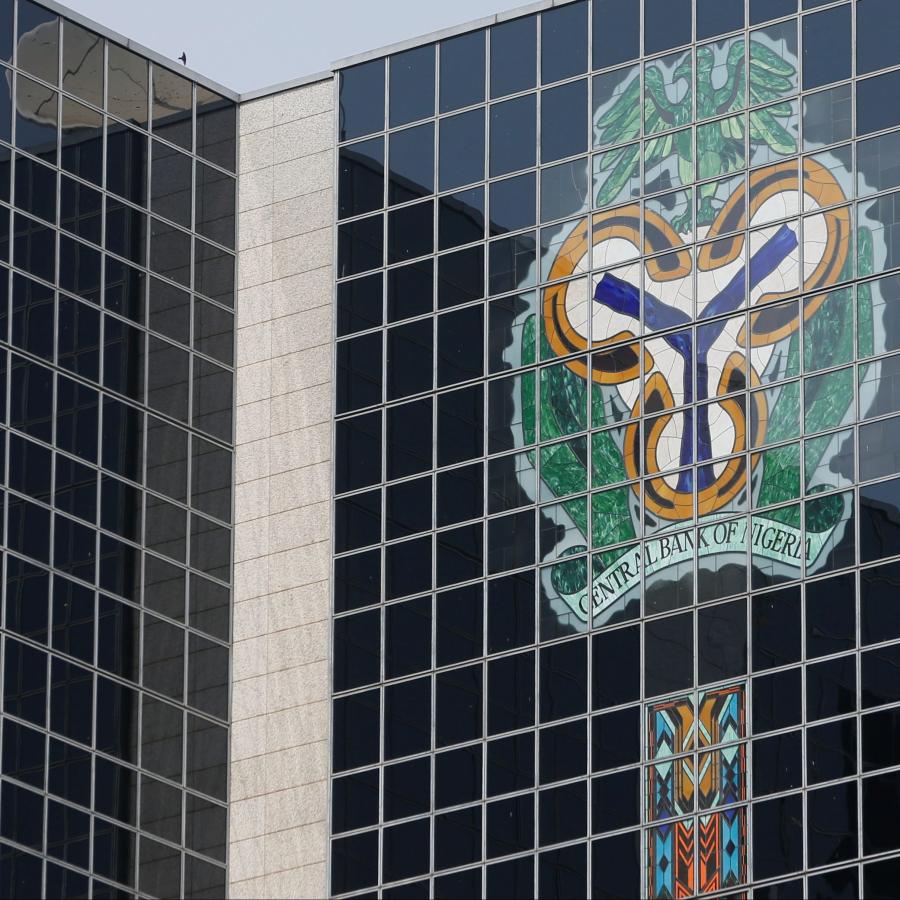
– The Central Bank of Nigeria (CBN) Guidelines For the Regulation and Supervision of Microfinance Banks for Digital Microfinance Banks.

– The Moneylending Laws of Various states for Digital Moneylending Companies.

– The 2021 Securities and Exchange Commission (SEC) rules on Crowdfunding for all Digital Crowdfunding Intermediary portals.

– The Central Bank of Nigeria Regulatory Framework for the use of Unstructured Supplementary Service Data (USSD) for Financial services in Nigeria applicable to Fintech subsector companies.

It is hoped from the above that in whatever capacity you wish to participate in Nigeria’s constantly evolving Tech Sector, you have gotten a clear understanding as to why you need to have a clear understanding of the need to ensure satisfaction of the full spectrum of legal requirements for the smooth operation of your Tech company.

Checking The Dangers Of Tobacco Intake As We Mark World No-Tobacco Day

0

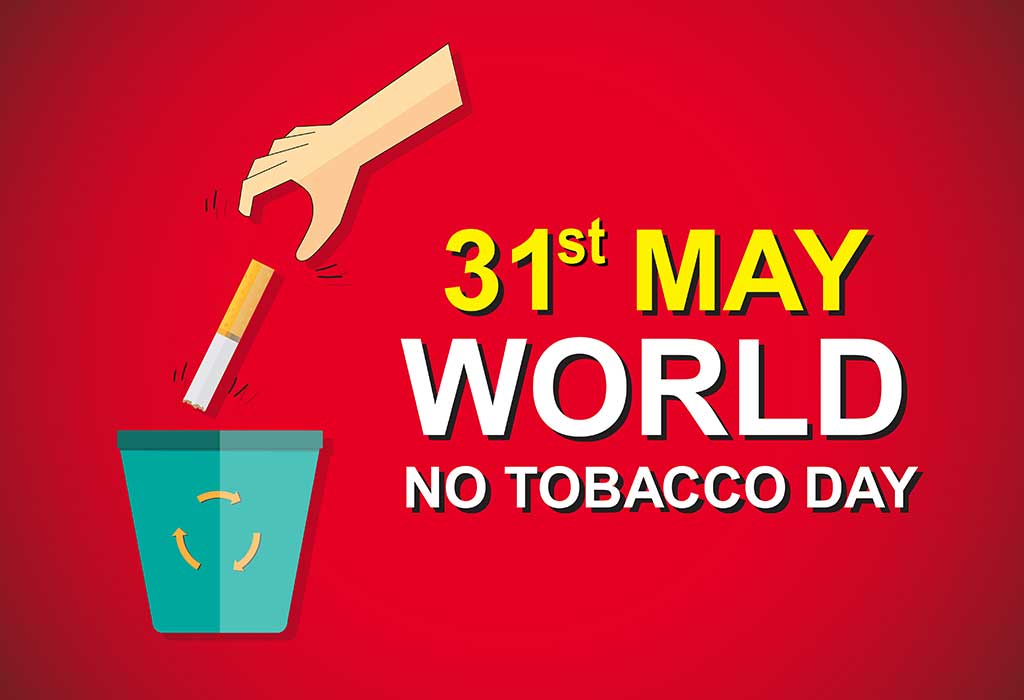
May 31 every year, the global community commemorates World No-Tobacco Day. It is a day set aside by the United Nations (UN) General Assembly to create awareness on the dangers inherent in tobacco intake.

The theme for the No Tobacco Day 2022 is ‘Tobacco: Threat to our planet‘. It marks the impact of tobacco on our environment from cultivation, production, distribution and waste after consuming it.

The BBC English Dictionary defines tobacco as ‘the dried leaves of a particular plant which people smoke in pipes, cigars, and cigarettes.’ The products of the tobacco leaves can also be referred to as ‘tobacco’. In the same vein, tobacco smoking is the act or habit of smoking tobacco leaves or any of its products to include cigarette, cigar, snuff, et cetera.

There are a number of types of tobacco in existence. It is noteworthy that any of the types involved contains unwholesome substances, which cause untold harm to the body. In 2008, the World Health Organization (WHO) named tobacco as the world’s single greatest cause of preventable deaths.

Tobacco smoke contains many chemicals that are harmful to both smokers and non-smokers. Research shows that inhaling even a little tobacco smoke can be harmful to the body. This is why among the various means of consuming tobacco leaves, which include sniffing, smoking, chewing and stuffing, smoking remains the most dangerous and delicate.

Scientifically, the survey indicates that, of the more than 7,000 chemicals in tobacco smoke, at least 250 including hydrogen cyanide, carbon monoxide and ammonia are known to be harmful. Among the 250 known harmful chemicals in tobacco smoke, at least 69 can cause cancer, especially in the lung, kidney, mouth, larynx, esophagus, bladder, pancreas and cervix.

Tobacco smokers are exposed to variety of risks or health complications namely: blood clots and aneurysms in the brain which can lead to stroke, blood clots in the legs which may travel to the lungs, coronary artery disease including angina and heart attacks, high blood pressure, poor blood supply to the legs, problems with erections due to decreased blood flow into the penis.

Other health risks or problems are poor wound healing especially after surgery, asthma, problems during pregnancy such as babies born at low birth weight, premature labour, miscarriage and cleft lip; decreased ability to taste and smell, harm to sperm which contributes to infertility, loss of sight as a result of an increased risk of mascular degeneration, tooth and gum diseases as well as wrinkling of the skin.

Smokers who switch to smokeless tobacco instead of quitting tobacco intake completely still have a number of health risks to include increased risk of mouth or nasal cancer, gum problems, tooth wear, cavities, worsening high blood pressure, and angina. Those who do not smoke or take any form of tobacco but always stay around smokers are also exposed to some health issues such as heart attack and other heart diseases, lung cancer and sudden reactions involving the eye, nose, throat, and lower respiratory tract.

Infants and children who are regularly exposed to secondhand smoke are not left out. They can easily contract asthma, infections like virus-caused upper respiratory diseases, ear infections and pneumonia; lung damage or poor lung function, as well as Sudden Infant Death Syndrome (SIDS).

Obviously, the aforementioned consequences are good reasons to quit the intake of tobacco. Like any addiction, quitting tobacco is not an easy task, especially when the person involved is acting alone. If one intends to quit smoking or intake of tobacco, family members, friends and coworkers may be supportive.

He can also talk to his health care provider concerning nicotine replacement therapy and smoking cessation medications. More so, if he or she joins smoking cessation programmes, which are often offered by hospitals, health departments, community centres and work sites, he would have a much better chance of success.

The bitter fact is that the global tobacco epidemic kills nearly six million people each year, of which more than 600,000 are non-smokers dying from breathing secondhand smoke.

Unless we act, according to WHO, the epidemic is likely to kill more than eight million persons annually by the year 2030; and more than eighty percent (80%) of these preventable mortality rates will be among people living in low and middle income countries like Nigeria.

It is, therefore, the responsibility of every Nigerian to acknowledge that the dangers of tobacco intake can only be avoided if its addicts as well as illicit traffickers holistically desist from such uncalled acts.

Similarly, the National Tobacco Control bill that was recently passed into law by the National Assembly (NASS) is indeed a welcome development that ought to be encouraged by any concerned authority such as National Drug Law Enforcement Agency (NDLEA) or anyone who thinks good of Nigeria.

Betastore, Nigerian-based B2B Retail Marketplace, Raises $2.5m to Expand Across Africa

0

Betastore, a Nigerian-based B2B retail marketplace for informal retailers, has raised $2.5 million in pre-series A funding from 500 Global, VestedWorld and Loyal VC, to expand operations to new markets across Africa.

The B2B marketplace, which was cofounded in mid-2020 by its CEO Steve Dakayi-Kamga and Leo-Armel Tchoudjang, enables informal traders to source fast-moving consumer goods (FMCGs) directly from manufacturers or distributors. The model keeps the prices of the products competitive by eliminating intermediaries. The startup works with logistics partners to ensure the delivery of goods within 24 hours.

Betastore plans to use the new fund to expand operations beyond its current markets – Nigeria, Senegal and Ivory Coast to Ghana, the Democratic Republic of Congo and Cameroon by the end of this year.

“What is really important for us is to be able to continue to scale by leveraging our asset-light model. We plan to enter new markets before the end of the year and to expand to 100 cities across Nigeria, Ivory Coast and Senegal. We are also planning to reinforce our technology and leadership teams and to bring in new products and to improve existing ones,” said  Dakayi-Kamga.

Sub-Saharan Africa has about 80% friction in its retail market, consisting of intermediary challenges such as stockouts and high cost of goods and services. Betastore’s aim is to solve the friction by providing a reliable retail marketplace for informal retailers across the African continent.

Per TechCrunch, Betastore is counting on its asset-light model, which eliminates any capital and labor intensive assets like warehouses or its own fleet of vehicles for delivery. Dakayi-Kamga said that this has helped the startup to optimize its technology to ensure that retailers source goods from the closest distributors. On average, a retailer using Betastore makes 4.4 orders per month.

“Our technology enables retailers to order on demand, access a variety of products and solves logistics headaches for them too. With Betastore, they don’t have to close their shops to go get goods from distributors stores or the market, and do not have to lose close to half of the margins in in the logistics,” said Dakayi-Kamga, who previously worked for Jumia, where he led the e-commerce platform’s logistics, warehousing and marketplace fulfillment department.

Betastore said it has recorded significant growth since it was launched two years ago, multiplying its customer base and revenues by 10 and 12 times, respectively. Having adopted the buy now pay later (BNPL) product, the startup anticipates greater growth as it expands across Sub-Saharan Africa, grabbing a large share of the continent’s retail market valued at $380 billion in 2021.

“We want to simplify access to goods and services for the retailers and for the end consumer because we see the merchant as an agent able to make access to goods and services easier. We started out in Nigeria, and we are expanding within Francophone Africa on our way to being a pan-African player,” said Dakayi-Kamga.

A new model Betastore plans to introduce is financing. TechCrunch reports that it will launch in July, after a pilot program involving 200 retailers that the startup carried out last year.

“We believe Betastore’s talented team is creating market efficiencies that have the potential to boost the growth of Africa’s retailers. With Betastore, merchants can get greater transparency into wholesaler inventories and price points,” Amit Bhatti, the principal at 500 Global said.

The BNPL financing strategy, Tchoudjang says, will be based on retailers’ sales and will go a long way in helping them to grow the value of their shopping baskets and ultimately their businesses. The startup plans to charge an interest based on product margins.

Partnership with payments firms is also a strategy the startup plans use to push its expansion. TechCrunch said Betastore is currently integrating its technology into a network of financing partners including fintechs and banks.

“The mandate of some of the partners we have on board is to support the economy by financing small businesses but are not able to lend to them because they do not have the data to inform decisions. We have the visibility of what is happening in this sector and have data they can use to extend financing,” said Tchoudjang, who previously held executive and leadership roles within the IFC-based AccessHolding AG network in Africa. He has also helped multinationals rollout fintech and microfinance products for emerging markets in the past.

With the financing, retailers use the Betastore wallet to repay loans, deposit money for their operations and to send, receive and save money.

“The wallet helps them separate their business money from their own money, and it is directly connected to the whole banking system, meaning that retailers can receive and send money to any bank and load cash with any agency banking platform,” said Tchoudjang.

CBN Disbursement To Farmers Under Anchor Borrowers’ Programme Hits N1.01tn

1

Under the Anchor Borrowers’ Programme (ABP), the Central Bank of Nigeria (CBN) has reportedly distributed a total sum of N1.01 trillion to over 4.2 million smallholder farmers farming 21 commodities across the country as at May 2022.

The report is in accordance with the data obtained from the CBN.

It’s noteworthy that the ABP evolved from consultations with stakeholders comprising the Federal Ministry of Agriculture & Rural Development, State Governments, agro-processors, commodity associations, financial institutions and smallholder farmers to ramp up agricultural production, boost non-oil exports and diversify the revenue base of Nigeria.

The Bank added that between April and May 2022 alone, it released the sum of N57.91 billion under the ABP to 185,972 new projects within the shores of Nigeria.

The apex bank’s credit is in line with its mandate to give the real sector easy access to credit in order to ensure economic stability, having suffered from a recession during the Coronavirus disease (COVID-19) pandemic.

The mother bank said, “Between April and May 2022, the Bank released the sum of N57.91 billion under the Anchor Borrowers’ Programme (ABP) to 185,972 new projects for the cultivation of rice, wheat, and maize, bringing the cumulative disbursement under the Programme to N1.01 trillion, disbursed to over 4.2 million smallholder farmers cultivating 21 commodities across the country.”

According to the report, the CBN also loaned a total of N21.23 billion under the Accelerated Agriculture Development Scheme (AADS) for 10 state-led and three (3) private sector-led projects.

It said, “The Bank further disbursed the sum of N1.50 billion, under the Accelerated Agriculture Development Scheme (AADS), to one (1) new youth-led project, piloted and funded through the Government of Ondo State for the acquisition of assets for oil-palm cultivation and the establishment of poultry farms. This brings the total disbursement under the Scheme to N21.23 billion for 10 state-led and three (3) private sector-led projects.”

It further hinted that under the Commercial Agriculture Credit Scheme, the Bank issued N21.73 billion to support seven (7) large-scale agricultural projects (CACS).

It would interest us to understand that the core mandate of the ABP is mainly to provide loans to smallholder farmers to boost agricultural production, create jobs, and reduce food import bills for the conservation of the foreign reserves.

The broad objective of the programme is to create economic linkages between smallholder farmers and processors to increase agricultural output and ensure reduction of food prices.

The ABP may have been helpful to the society, but the worry remains the avenue through which the concerned authorities get hold of the farmers who truly and genuinely deserve the available funds.

More so, knowing full well that corruption has overtime hindered several projects initiated across the federation, it’s imperative to implement a measure that would help to aptly monitor the ABP to the letter.

It would be very appalling to realize that the monies meant for poor and struggling Nigerians are being siphoned into private purses as the journey progresses. This is the reason a drastic and candid approach must be initiated to ensure adequate compliance as long as the programme lasts.

Affirm Partners with Stripe Amidst Intense BNPL Competition

0

The buy now, pay later (BNPL) competition is heating up as big players in the fintech space embrace the model. To win more market shares, payment companies are beginning to strike surprising partnership deals.

Two fintech giants, Affirm and Stripe are partnering up to help companies offer BNPL services. Under the deal, Affirm will make buy now, pay later technology available to businesses that use Stripe’s payments tech, enabling them to offer their customers the option to pay for services in installments.

While each of the companies offering BNPL has devised incentives to win the emerging market, partnering with a company with a huge customer-base like Stripe, will likely give Affirm advantage. Below, TechCrunch reports on why the partnership is a huge deal for Affirm.

The deal is significant for Affirm because Stripe, which was valued at $95 billion last year, has “millions” of customers. It processes hundreds of billions of dollars each year for “every size of business — from startups to Fortune 500s.” And this gives Affirm an opportunity to generate more revenue as it makes money in part on interest fees. For its part, Stripe is able to offer prospective, and current, customers more payment flexibility.

Affirm — which was founded by PayPal co-founder Max Levchin — has built technology that can underwrite individual transactions, and once determining a customer is eligible offer them the option to pay on a biweekly or monthly basis. Those that qualify have the option to use Affirm to break up the cost of purchases ranging from as little as $50 all the way up to $30,000. The maximum credit limit is $17,500.

A common misconception about BNPL is that customers don’t have to pay interest. Some customers are in fact charged interest, but Affirm says it doesn’t charge late fees and that there are no surprises with the amount of interest it charges. For example, it presents the exact fixed amount a customer will pay in interest upfront.

In an interview earlier this year, Libor Michalek, Affirm president of technology, emphasized the company’s efforts to be transparent.

“We’ll communicate it to them obviously, as an interest rate as we’re legally required to, but also in dollars and cents,” he said. “A lot of times people get surprised when I tell them that a $1,000 purchase at 15% for a year actually translates to $83 because of the amortization schedules. A calculator on our website lets you play with all of those numbers.”

Affirm stock has taken a huge hit in the last year — along with most other tech companies — and as of today, was trading at just under $30. That’s significantly lower than its 52-week high of $176.65, and means that the company is now valued at about $8.5 billion. Still, the company’s last earnings report beat expectations, with Affirm noting that its active merchants in its fiscal third quarter grew by more than 16x year-over-year (to 207,000) and that active consumers grew by 137% year-over-year (to 12.7 million). It also reported that its revenue was up 54% (to $355 million). Meanwhile, its operating loss widened to $226.6 million compared to $209.3 million in the same period last year — which it says was driven by “continued investment in sales and marketing,” including $102.4 million of expense related to warrants granted to Amazon in November 2021.

The company has also recently announced partnerships with Fiserv, Shopify, WooCommerce and Verifone.

Meanwhile, competitor Klarna has hit some recent bumps — cutting its valuation and laying off staff.