DD
MM
YYYY

PAGES

DD
MM
YYYY

spot_img

PAGES

Home Blog Page 51

Bitcoin Slides For Seventh Straight Session as Trade Tensions Rattle Crypto Markets

0

Bitcoin has extended its decline for a seventh consecutive session, falling as low as $88,861 on Wednesday, its longest losing streak since November 2024, amid rising U.S.-EU trade tensions that have unsettled global risk markets.

The world’s largest cryptocurrency dropped more than 2% intraday, briefly touching $87,794 before staging a modest rebound. At the time of writing, BTC was trading around $88,764, nearly 9.6% below its $98,000 peak earlier this year.

The sell-off followed comments from U.S. President Donald Trump, who said the United States would introduce tariffs on eight European countries, including France, Germany, and the U.K., as part of his controversial bid to acquire Greenland. The announcement sparked a broad risk-off move, wiping nearly $150 billion off the global cryptocurrency market within 24 hours.

Major altcoins were also not spared. Ethereum slipped below the $3,000 mark after falling about 6%, while XRP, Solana, TRON, and Monero posted losses ranging from 4% to as much as 18%. The sharp price decline also triggered widespread liquidations. According to CoinGlass, 183,050 traders were liquidated in the past 24 hours, with total liquidations reaching $1.02 billion. About 90% of these were long positions, amounting to roughly $928.45 million, as bullish bets on a rebound failed to materialize.

Over the past three days, Bitcoin has dropped significantly below $88,000 after it started the new year on a bullish momentum, reaching as high as $97,888. Amidst BTC price rally, sentiment showed signs of improvement, with the Crypto Fear & Greed Index moving into the neutral-to-greed zone for the first time in months.

The index, which tracks overall investor sentiment, reportedly registered a “greed” score following weeks of fear and extreme fear. It reached a reading of 61, reflecting a notable shift in mood after prolonged caution. Meanwhile, the Crypto Fear and Greed Index has currently slid to 32, firmly in the “fear” zone, signaling growing caution among investors.

Adding to the bearish outlook, veteran trader Peter Brandt recently warned that Bitcoin could fall to the $58,000–$62,000 range within the next two weeks. Paul Howard, Director at Wincent, noted that the renewed tariff rhetoric has pressured all risk assets.

“We have seen cryptocurrencies largely follow this trend and can expect that to continue, with European equities trading almost 2% down,” Howard said. “Volatility is back.”

Jeff Mei, COO at BTSE, added that Trump’s tariff threats over Greenland were poorly received by markets. However, he pointed out that many traders still believe the U.S president could soften his stance, as he has done in the past, to avoid severe global market disruptions. Mei further noted that investors are closely watching Europe’s response and whether tensions will escalate, adding that the chances of Europe conceding to Trump’s demands appear slim.

Institutional selling has further weighed on Bitcoin. Spot Bitcoin ETFs recorded nearly $874.4 million in outflows over the past two days, led by Fidelity with $357.3 million, followed by Grayscale, Bitwise, and ARK Invest. These withdrawals reflect rising institutional caution amid geopolitical uncertainty. As a result, capital has been rotating into traditional safe-haven assets such as gold and silver, both of which recently hit all-time highs.

CryptoQuant contributor Darkfost observed a clear decline in whale transactions, particularly BTC inflows to exchanges. This suggests that large holders are sending significantly less Bitcoin to trading platforms, indicating reduced selling pressure from whales. Despite the ongoing downturn, analysts note that similar pullbacks have occurred in the past, often followed by strong rebounds once key technical conditions aligned.

Outlook

If Bitcoin stabilizes above $88,000, analysts see a potential recovery toward immediate resistance at $89,600, followed by a stronger barrier near $90,000. One bullish scenario suggests that Bitcoin could reclaim the $94,000 zone, break through it with strong momentum, and resume its uptrend toward the $100,000 region. In this case, the recent decline would be viewed as a shakeout rather than a full trend reversal.

However, a more cautious scenario points to a potential fake out near $94,000, followed by another rejection and a breakdown below $90,000. This could lead to a liquidity sweep toward the $88,000 area before the market finds a more sustainable direction. For now, Bitcoin remains under pressure, with traders balancing growing macro risks against signs of technical stabilization.

Africa’s Most Important Missing Infrastructure

1

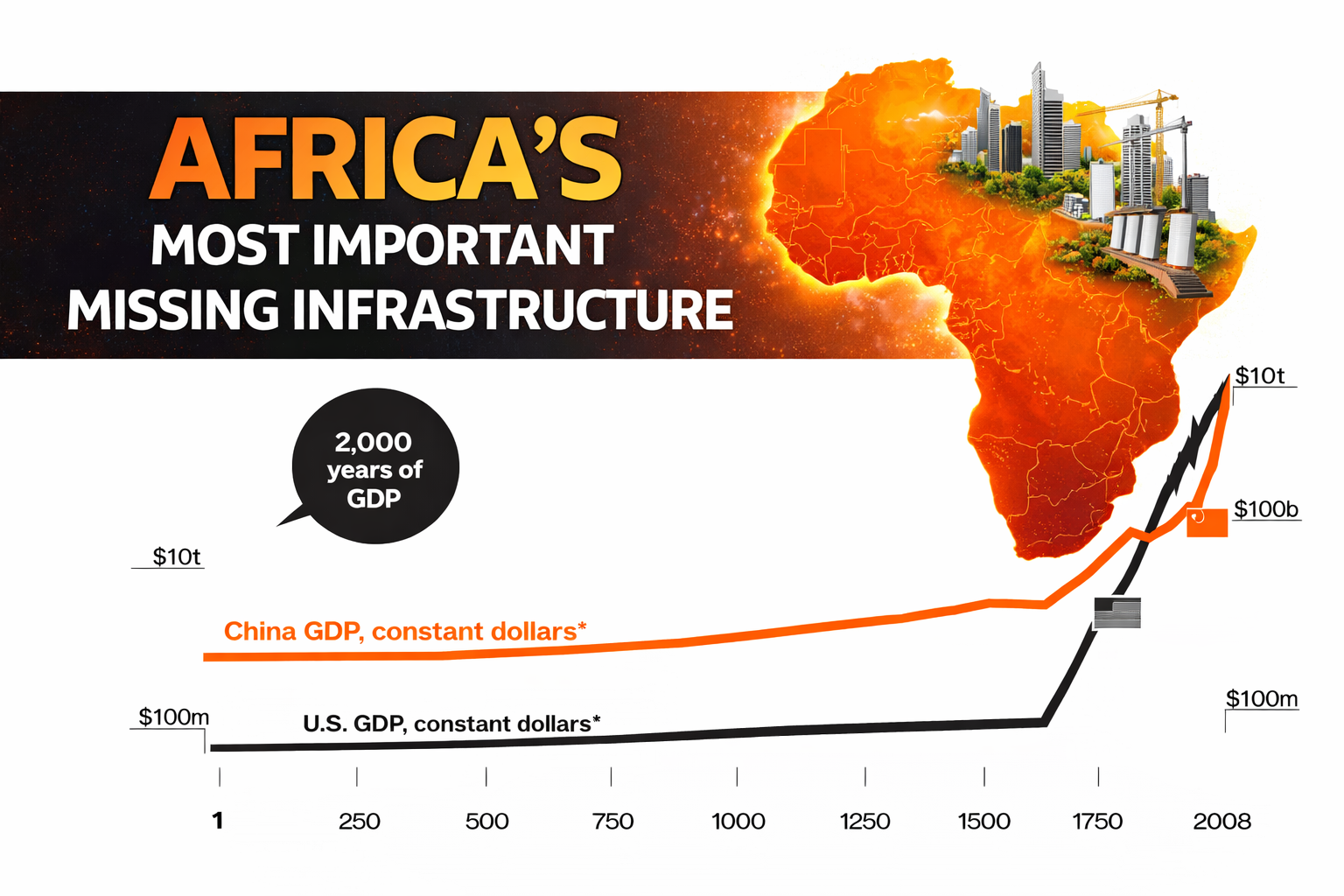
Looking at more than 2,000 years of Gross World Product, three great epochs of human progress emerge. I describe them as the Invention Society Era, the Innovation Society Era, and the Acceleration Society Era. In the Invention Era, humanity generated ideas and established the foundations of natural philosophy, but lacked the commercial and institutional mechanisms to turn ideas into usable products.

In the Innovation Era, those dormant ideas were translated into vaccines, electricity, engines, and industrial systems because policy frameworks and property-rights structures enabled wealthy merchants to fund chemists, engineers, and scientists. Polio, tuberculosis, and many diseases were defeated because compounds discovered in the Invention Era were commercialized in the Innovation Era. And the knowledge of thermodynamics, calculus and understanding of forces enabled designs of industrial systems.

Today, the world has crossed into the Acceleration Era, propelled by autonomous systems, artificial intelligence, and self-orchestrating digital platforms.

China, Europe, and North America built the physical infrastructure of the Innovation Era: roads, electricity grids, water systems, and industrial rail. They now require a new kind of infrastructure to thrive: hyperscale data centers, energy-intensive GPU clusters, and global compute constellations. As Nvidia’s Jensen Huang said at the World Economic Forum, data centers represent “the largest infrastructure buildout in human history.” That is the new scaffolding of prosperity, for them.

But Africa stands at a different junction. The continent has not fully institutionalized the Innovation Era. Without strong, functional property-rights systems, the bedrock upon which money transmutes into capital, innovation stalls. Capital cannot form, scale cannot emerge, and ideas cannot compound. AI, autonomous systems, and data centers cannot catalyze economic emancipation where the rule of law is weak. Until property rights become the bloodstream of the continent’s economic architecture, Africa cannot harness the full promise of the Acceleration Era others will be experiencing.

The message is unmistakable: nations do not rise merely because they adopt new technologies; they rise when they build the institutions that give technology the power to compound wealth. For Africa, the most critical infrastructure at this moment is not the data center or the AI hub, it is the rule of law, framed by strong property rights at the very nucleus of economic life.

These eras are:

  1. The Invention Society: This era focused on discovering the foundational building blocks of science and knowledge, such as gravity, electromagnetism, and calculus. While brilliant, this period lacked the widespread ability to commercialize these discoveries into products.
  2. The Innovation Society: Beginning towards the end of the 18th century, this era took the foundational inventions and converted them into products and services that shaped modern commerce, such as vaccines, light bulbs, and transistors.
  3. The Accelerated Society (Current Era): Our present era, where technology, automation, and AI are compounding at a breakneck speed. This era is characterized by:
    • AI and Automation: A shift from just inventing to using intelligent systems.
    • New Competition: Performance differences between the deployed and non-deployed are increasing by orders of 1000s.


Chipper Cash Hits A Major Financial Milestone in Q4 2025, Following Years of Sustained Financial Pressure

0

Chipper Cash, a cross-border money transfer platform, has reached a major financial milestone, posting its first-ever quarter of positive free cash flow in Q4 2025.

This announcement was made by the company’s CEO and Co-founder, Ham Serunjogi, who described the development as a significant turning point for the fintech, following years of sustained financial pressure and macroeconomic headwinds.

A review of the company’s free cash flow trend in the chart posted by Serunjogi shows the fintech survived a difficult phase to achieve profitability. From Q2 2023 through most of 2024, Chipper consistently posted deeply negative free cash flow, with particularly steep declines in mid-2023.

While losses remained persistent, the chart also reveals a gradual narrowing of the deficit from late 2024 into 2025, signaling steady operational improvement. By early 2025, negative free cash flow became noticeably smaller, reflecting tighter cost controls and improved financial discipline. This slow but consistent progress eventually culminated in a small green bar in Q4 2025, representing the company’s first positive free cash flow quarter.

According to Serunjogi, achieving this milestone was especially difficult for a scaled African fintech with hundreds of employees operating globally. He highlighted the impact of currency instability, particularly in Nigeria, where the naira lost over 70% of its value against the US dollar between 2022 and 2025.

This depreciation significantly widened the gap between Chipper’s costs and revenues, forcing the company to move faster than macroeconomic pressures through disciplined execution and efficiency-driven reforms.

The CEO acknowledged that this turnaround required some of the most difficult decisions in the company’s history, including team restructurings over the past two years.

Recall that Chipper Cash’s first round of layoffs came after its leading investor, FTX, a crypto exchange platform, shut down operations. Due to the incident, the fintech saw its valuation slashed from $2bn to $1.25bn according to documents shared by The Financial Times.

The company was also impacted by another similar incident that saw another of its lead investors, Silicon Valley Bank (SVB), shut down. According to Bloomberg’s report, the unicorn was weighing options, which included exploring a sale or seeking new investors.

Meanwhile, the company later disclosed that it never sought to be acquired, after the CEO and Co-founder Ham Serunjogi said that the collapse of Silicon Valley Bank (SVB), which was one of its investors, had insignificant exposure on the company.

Fast forward to December 2023, Chipper Cash downsized its workforce again, marking the fourth time that the fintech announced layoffs in a single year. Beyond the layoffs, the company also slashed the salaries of its remaining US and UK employees. These measures, though painful, were necessary to secure Chipper’s long-term viability.

With the fintech’s recent first-ever quarter of positive free cash flow, CEO Serunjogi credited the milestone to the resilience and dedication of the team, emphasizing that the positive free cash flow result is a direct outcome of their collective grit and commitment. He described it as proof that Chipper is not just surviving but building a durable institution capable of serving Africa’s financial needs for decades.

Chipper’s path to sustainability was neither quick nor easy. It was marked by prolonged losses, structural challenges, and tough internal decisions. However, the gradual improvement in free cash flow over time suggests a company that has successfully adapted to its environment and is now entering a new phase of financial stability.

Founded in 2018 by Ham Serunjogi and Majeed Moujaled, Chipper Cash launched with the vision to unlock global opportunities and connect Africa to the rest of the world. Its return to positive free cash flow represents an important step forward.

With a leaner cost structure and sharper operational focus, Chipper appears better positioned to refine its product offerings, strengthen its presence in core markets, and explore selective growth opportunities. For the fintech, the next chapter will be about proving that profitability is not an exception but the new normal.

OpenAI’s Hardware Gambit Takes Shape as First Device Nears Launch

0

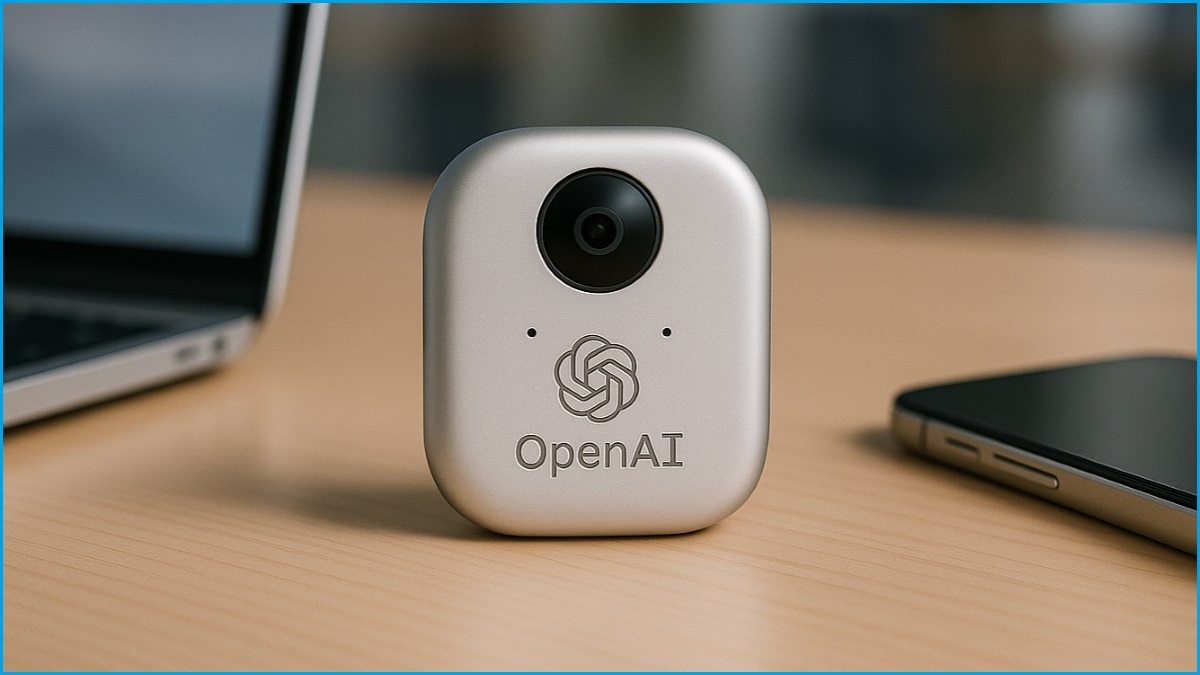
OpenAI’s long-anticipated move into consumer hardware is no longer just an experiment in design or form factor. It is emerging as a strategic response to a harder reality facing the company: how to convert unprecedented scale and investor confidence into durable, long-term profit.

After months of speculation following its acquisition of Jony Ive’s startup, io, the AI company has now confirmed that its first hardware device is on track for release in the second half of the year. The confirmation came from OpenAI’s Chief Global Affairs Officer, Chris Lehane, speaking at an Axios-hosted panel at the World Economic Forum in Davos. While details remain scarce, the timing and context of the announcement point to a broader commercial recalibration underway inside the company.

OpenAI today sits at the center of the generative AI boom, backed by tens of billions of dollars in investment and partnerships, most notably with Microsoft. ChatGPT alone is approaching a billion weekly users, a level of reach that rivals the world’s largest consumer platforms. Yet that scale comes at a steep cost. Training and running large language models requires enormous capital outlay for data centers, specialized chips, and energy. Even with paid subscriptions and enterprise deals, the company remains under pressure to diversify revenue streams beyond software access fees.

Hardware offers one such path. By building its own device, OpenAI can reduce reliance on third-party platforms like Apple’s iOS or Google’s Android, where distribution is mediated through app stores and operating system rules. More importantly, a proprietary device creates room for tighter integration between AI models and the physical world, opening up new categories of paid services, upgrades, and long-term user lock-in.

Hints from OpenAI leadership suggest the company is aiming for something deliberately different from the smartphone. Sam Altman has described the upcoming product as more “peaceful and calm” than the iPhone, language that aligns with earlier reporting pointing to a screen-free, pocketable device. The underlying idea appears to be an AI companion that fades into the background, accessible through voice or subtle interactions rather than constant visual engagement.

Industry reporting from Asia has added further color. Multiple outlets suggest OpenAI’s first device may take the form of AI-powered earbuds, internally codenamed “Sweet Pea”. These earbuds are reported to use a custom 2-nanometre processor, enabling certain AI tasks to be handled directly on the device rather than routed to the cloud. If accurate, this would lower operating costs over time, reduce latency, and address growing concerns around data privacy, all while easing pressure on OpenAI’s server infrastructure.

Manufacturing plans underline the scale of ambition. Reports indicate that OpenAI has explored partnerships with Luxshare, a major assembler of Apple products, and is also weighing Taiwan’s Foxconn as a long-term manufacturing partner. Initial shipment targets of 40 to 50 million units in the first year, if realized, would place OpenAI instantly among the largest players in the global wearables market. Such volumes also suggest that the company is thinking well beyond a niche developer device and aiming squarely at mass adoption.

The commercial logic is that hardware allows OpenAI to capture value at multiple points: device sales, premium AI features, subscriptions bundled with hardware, and potentially a marketplace for AI-driven services built specifically for its ecosystem. In an environment where investors are increasingly focused on revenue clarity and cost discipline, owning both the software and the hardware stack offers a more predictable path to monetization.

However, consumer hardware is a brutally competitive arena, and earbuds in particular are already dominated by incumbents with deep integration into operating systems and existing user habits. Convincing users to replace or supplement devices like AirPods will require seamless cross-platform compatibility and a compelling reason to switch, beyond novelty.

The wider track record of AI-first devices offers cautionary lessons. High-profile launches over the past year have struggled to translate hype into sustained usage. Humane’s AI Pin was eventually sold to HP. Rabbit’s handheld assistant has yet to break into the mainstream. Other AI wearables have faced swift backlash over unclear value propositions.

These outcomes have sharpened investor scrutiny around whether AI hardware can move beyond concept appeal to everyday utility.

At the same time, momentum is building elsewhere. Meta’s Ray-Ban smart glasses are steadily improving, blending AI features into a familiar product category and seeing strong consumer demand. Amazon’s recent acquisition of Bee, an AI meeting recorder, signals interest in ambient assistants that live alongside users rather than compete for attention.

OpenAI’s hardware effort sits at the intersection of these trends. It is a bet that the company’s unmatched AI capabilities, combined with design leadership and manufacturing scale, can succeed where others have faltered. More than that, it is a bet driven by financial necessity.

With vast investment to justify and operating costs that continue to rise, OpenAI’s push into hardware is less about curiosity and more about control: control over distribution, over user experience, and ultimately over how generative AI turns popularity into profit.

As the second-half launch window approaches, the device itself will matter. But the bigger story lies in what it represents — a pivotal shift in OpenAI’s business model, from being a powerful engine inside other people’s products to becoming a full-stack company determined to own its future.

Energy Economics, Not Algorithms, Will Decide the AI Race, Microsoft CEO Says

0

Energy costs are fast becoming the decisive factor in which countries lead the global artificial intelligence race, according to Microsoft CEO Satya Nadella, who warned that cheap, reliable power will increasingly determine whether AI translates into real economic growth or remains an expensive technological promise.

Speaking at the World Economic Forum in Davos on Tuesday, Nadella framed AI not just as a software or innovation challenge, but as an economic system built on a new global commodity: “tokens,” the basic units of computation that power modern AI models. In his view, the ability of nations and companies to convert these tokens into productivity, growth, and competitiveness will hinge directly on the price of energy.

“GDP growth in any place will be directly correlated to the cost of energy in using AI,” Nadella said, arguing that economies with cheaper energy effectively enjoy a structural advantage. “The job of every economy and every firm is to translate these tokens into economic growth. If you have a cheaper commodity, it’s better.”

That framing highlights a critical shift in how AI leadership is being contested. The focus is no longer only on who has the best models or the most data, but on who can operate AI at scale at the lowest total cost. Energy, alongside silicon and data center construction, now sits at the heart of that equation.

Hyperscalers, such as Microsoft, Amazon, and Google, are already reshaping global infrastructure around this reality. Microsoft said at the start of 2025 that it expects to spend about $80 billion on AI data centers this year alone, with roughly half of that investment taking place outside the United States. The scale of that spending underlines how energy availability and pricing are influencing where AI capacity is built.

Nadella stressed that the total cost of ownership, rather than headline electricity prices alone, will determine competitiveness. That includes whether countries can generate energy cheaply, whether they can permit and build data centers quickly, and how efficiently advanced chips can be deployed within those facilities.

“It’s not just the production side,” he said. “Are you a cheap producer of energy? Can you build the data centers? What’s the cost curve of the silicon in the system?”

This calculus has major implications for Europe, which currently faces some of the highest energy costs in the world. Prices surged after Russia’s full-scale invasion of Ukraine in 2022 and the subsequent reshaping of European energy markets. While prices have since eased from their peaks, they remain structurally higher than in the United States or parts of Asia, raising questions about Europe’s ability to host large-scale AI infrastructure competitively.

Beyond cost, Nadella also raised a political and social constraint that could shape AI deployment. He warned that public acceptance of AI-driven energy use is not guaranteed, especially as power grids come under strain.

“We will quickly lose even the social permission to actually take something like energy, which is a scarce resource, and use it to generate these tokens, if these tokens are not improving health outcomes, education outcomes, public sector efficiency, private sector competitiveness across all sectors,” he said.

That comment reflects a growing tension between AI expansion and energy sustainability. As data centers consume increasing amounts of electricity, governments and voters are likely to demand clearer economic and social returns from that consumption. AI projects that fail to demonstrate tangible benefits may face political resistance, stricter regulation, or limits on power allocation.

Nadella’s critique of Europe went beyond energy costs to what he described as a narrow inward focus. He argued that European competitiveness in the AI era cannot be built around regional protectionism or sovereignty alone, but must be measured by the global relevance of its output.

“European competitiveness is about the competitiveness of their output globally, not just in Europe,” he said.

He linked Europe’s historical prosperity to its ability, over centuries, to produce goods and services the rest of the world wanted. In his view, replicating that success in the AI age requires investment not only in regulation and governance, but in the physical inputs of AI: energy, compute capacity, and scalable infrastructure.

Nadella also pushed back against what he sees as an overemphasis on technological sovereignty. “Whenever we come to Europe, everyone’s talking about sovereignty,” he said, adding that access to markets and customers may matter more than insulating domestic industries.

Protecting Europe, he suggested, will not automatically make it competitive if its AI-powered products cannot succeed globally.

In summary, Nadella’s remarks underline a broader shift in the AI debate. Leadership is no longer defined solely by research breakthroughs or startup ecosystems, but by industrial fundamentals: energy pricing, infrastructure speed, capital deployment, and public legitimacy. Countries that can align these factors may find themselves converting AI tokens into sustained economic growth, while others risk being priced out of the race, regardless of their technical ambitions.