DD
MM
YYYY

PAGES

DD
MM
YYYY

spot_img

PAGES

Home Blog Page 5100

The Grand Equations of Business

0

At Tekedia Mini-MBA which begins the Live Zoom session today, I will explain these two equations. Until the market has validated that idea, it remains “inventive”. We believe in the  construct that fixing market frictions must bring growth, and growth can only come when ideas become products to fix frictions customers have.

As that happens, those products must be awesome. There is never going to be a great company without awesome products or services. And to do that, a group of people must have efficiently organized factors of production with tools and processes, and executed at a superior level.

  • 1. Innovation = Invention + Commercialization
  • 2. Great Companies = Awesome Products + Superior Execution

Have a bigger momentum [Impact] in markets; grow your size [mass] and have direction at fast pace [velocity]. Check well, we have solved the analogous physics in markets (Momentum = mass x velocity).

We’re Tekedia Institute. We explain the foundational construct of Africa’s entrepreneurial capitalism in this business cambrian moment. Discover the physics in business. Discover the wealth in nations. Join us here 

Join the Academic Festival Today

0

The academic festival begins today with Innovation, Growth and Mission of Firms. At Tekedia Institute, we’re excited to have you to co-learn with us. Thank you. Zoom link in the Board school.tekedia.com

Tekedia Institute offers Tekedia Mini-MBA, an innovation management 12-week program, optimized for business execution and growth, with digital operational overlay. It runs 100% online. The theme is Innovation, Growth & Digital Execution – Techniques for Building Category-King Companies. All contents are self-paced, recorded and archived which means participants do not have to be at any scheduled time to consume contents. Besides, programs are designed for ALL sectors, from fintech to construction, healthcare to manufacturing, agriculture to real estate, etc.

Insecurity Crisis In Nigeria Tumbles Foreign Investment In The Agric Sector By 99%

0

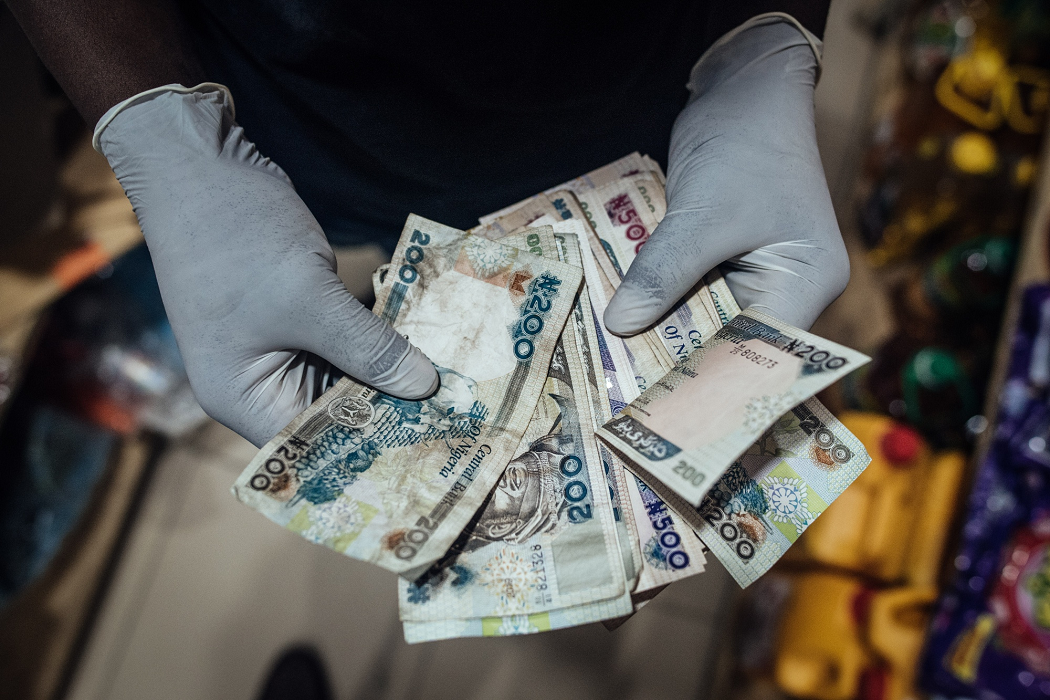
Sources disclose that capital importation in Nigeria’s agriculture sector tumbled by 99.23 percent from $237.83m in the fourth quarter of 2021 to $1.76m in the first quarter of 2022. This signifies that there was a 99.23 percent decline within three months.

This was contained in the Nigerian capital importation report for Q1 2022 released by the National Bureau of Statistics. According to the report, it disclosed that at least 352 farmers had been killed and kidnapped in the past 12 months, amid rising insecurity in Nigeria.

In the figures obtained from the Nigeria security tracker, it showed that the 352 comprised 216 killed farmers and 136 kidnapped farmers. However, the figures are said to exceed 352 as there were cases of killings and kidnappings of farmers by unknown numbers.

Not only is the agricultural sector affected, but the rising insecurity has also affected the ease of doing business in the country, as a 2019 world bank annual ratings on the ease of doing business, ranked Nigeria 131 among 190 economies.

The insecurity challenge has constituted a threat to lives and properties which has seen a large number of farmers killed on their farmlands, while those who narrowly escaped are faced with the fear of returning which has affected food production in the country.

The insecurity crisis has discouraged local and foreign investors from investing in the agricultural sector, which is stifling and retarding socio-economic development as well as posing a serious challenge to the Gross Domestic output

Due to the halt of agricultural activities in some parts of the country, following the insecurity crisis, food Security which is essential for the country, has declined, thereby threatening food supply which has led to the increase in food prices.

Nigeria is known to be one of the largest producers of yam, cassava, and cowpea. Ironically, the country remains a food deficit nation with over-dependence on the importation of food commodities, grains, as well as livestock products.

It is estimated that Nigeria has cultivable land of 71 million hectares, yet only half is currently used for farming. Many have attributed this reason to the worrisome insecurity crisis that has seen herdsmen gruesomely attack and kill farmers, who a large percentage of them helplessly continue to abandon their farmlands.

This has seriously affected the country, as a large percentage of its population continues to groan under soaring food prices, coupled with hunger, malnutrition, and poverty, with an estimated 80 percent of its population living on less than $1 a day.

The government of Nigeria continues to handle the issue of insecurity with levity and disdain which has led to the decline of local and foreign investors in the Agricultural sector in the country.

No investor will be ecstatic to invest in a country that is ravaged by a widespread insecurity crisis, because it will pose a serious challenge to their investments. They will rather avoid such territories than avoid the risk of loss.

There is growing evidence that investing in underdeveloped and developing countries’ agricultural sectors is among the most efficient ways to reduce poverty and hunger, as such investment can generate a wide range of developmental benefits.

Unfortunately, due to the insecurity crisis in Nigeria, it will no doubt lead to lack of investors, especially in the agricultural sector which will no doubt affect the food production output as well as stagnate production.

The state of insecurity is currently at a frightening level which portends serious adverse implications for the country’s economic growth. It’s high time the government does something serious about the insecurity crisis in the country, because it will surely aggravate Nigeria’s capacity to attract and retain new investments if no serious measures are put in place.

INEC Releases 209 More Machines to the Southeast, Lagos and Kano As Huge Turnout Slows PVC Registration

0

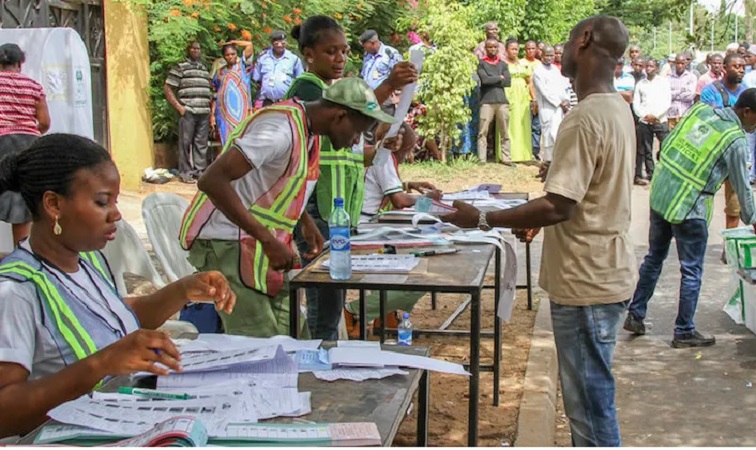
Following reports of glitch-filled voters’ registration across the country, particularly in the Southeast, Lagos and Kano, the Independent National Electoral Commission (INEC) has been propelled to increase the number of voter enrolment machines in the affected areas.

Nigerian youths are coming out in numbers never seen before for voters’ registration as the country’s 2023 national assembly and presidential elections approaches. However, reports from the registration centers suggest that the INEC is unprepared for the huge turnout, resulting in an alleged attempt to disenfranchise some Nigerians.

The development, which came with tribal undertone as many of the complainants’ claim that the INEC personnel are deliberately refusing to register the Igbos, was criticized by well-meaning Nigerians. The Igbos are reportedly trooping out en masse in Lagos and the Southeast for the registration exercise, a development said to be a remarkable shift from their previous insouciant attitude toward elections.

The criticism which was followed by a call on the electoral umpire to urgently address the issue has compelled it to act. A statement signed by the Chairman, Information and Voter Education Committee, Barr. Festus Okoye on Friday, says that the INEC has released additional 209 machines to the areas overwhelmed by the huge turnout.

Read the statement below:

“The Independent Electoral Commission has received reports from our States indicating an unprecedented surge in the number of citizens that wish to register as voters and the challenges they face across the country.

“In some States, the sudden turnout of prospective registrants is overwhelming. Consequently, the Commission convened an urgent meeting with all the Resident Electoral Commissioners (RECs) yesterday Thursday 9th June 2022 to review the situation so that eligible Nigerians who wish to register are able to do so.

“The necessity to urgently deploy more voter enrolment machines to ease the congestion at the registration centres was identified as a priority. In response, the Commission has immediately released additional 209 machines deployed mainly to the five South Eastern States, Lagos and Kano where the pressure is most acute.

“The Commission will monitor the situation over the next few days. Thereafter, it will meet to review the progress of the exercise. Every step will be taken and all options will be explored to ensure that eligible Nigerians are given the opportunity to register as voters. The Commission appeals for patience and understanding of all citizens.

“Every Nigerian who is 18 years of age and above has the constitutional right to register and vote in any part of the country he/she resides without let or hindrance. The sudden surge is an affirmation of the increasing confidence Nigerians have in our electoral process. The Commission will continue to ensure that this confidence is sustained.”

Join Ndubuisi Ekekwe at RECALP 2022 on Monday, June 13 at 9am WAT

0

Good People, join me on Monday (June 13) on Dove TV, the official TV of the Redeemed Christian Church of God, at 9am WAT, as I speak on Careers and Entrepreneurship during RECALP 2022 on the theme “Equipping the next Generation”. You can also be in the audience at 39/41 Ogudu Rd, Ojota Rd, Lagos.

RECALP