DD
MM
YYYY

PAGES

DD
MM
YYYY

spot_img

PAGES

Home Blog Page 5100

Your business idea is good but is it bankable?

0

The world is filled with transformative business ideas, but the only ones we will ever get to see are those that become business ideas. Most people have some noble and fantastic ideas about how something can be done better, faster, or with great ease. But maybe not all of them will ever act on their ideas. And even for those that do, they will have to find a means to fund it.

In seeking funding or investors, you may hear a comment that sounds something like the title above, maybe not as direct though. You may pitch to a potential investor or group of investors, only to be told that while it is a good idea, it is not worth investing in? Or it is not worth their while. Either way, it means you have been told that your idea is not bankable.

Bankable, creditworthy, and worth investing funds into, they all mean the same in this context. If an investor tells you that your idea is good but not bankable, it could simply mean that the idea is not worthy of his money. Many transformative business ideas may not see the light of day unless the owner is able to show that the idea is creditworthy.

What does it mean for your idea to be bankable? What does it mean to be creditworthy? How can you show potential investors that your business idea has a future? How can you prove to them that investing in you and your business would not amount to investing in a sinking ship? It is very unlikely that an investor will fund your business just out of sentiments. There has to be something to show the investor that there would be some returns.

First is to make sure you have done a feasibility study and you have a business plan. Beyond having the idea, you should be able to prove that it can bring in some money and will be sustainable. For all you know, the business idea may be fantastic only in your thoughts and dreams. Do a feasibility study and test your theory. Show that truly there is a market need for the idea, and people are willing to pay for it and keep paying for it. This is the first step to making your business idea bankable.

Commit your own resources to get started. In my entrepreneurship posts, I have mentioned before that you should be able to commit some of your resources to get started. Your funds, time, energy, and talent should be the starting point for the business. “If you cannot commit your own resources, why should I commit mine?” This is the unspoken question that goes through the mind of potential investors.

In getting started with your own resources, you will be able to prove that there is an existing market for your product or service. Importantly, you should be able to use this to get clear financial records and show a positive cash flow in the business. When you get started with your resources and you notice that you are still spending more than the revenue, make necessary adjustments till you have shown that the business can at least break even, and potentially become profitable.

Value offer! Value offer! Value offer! You must be able to spell out the value offer for investors and partners. If your business has no value offer, look for one. Investing in your business should not be made to appear as though they are simply funding your hobby for some financial returns. There should be some other sort of value they will be getting from it. All of these combine to make your business idea look bankable or creditworthy.

As a bonus tip, always accept and utilize the feedback you get from a pitch. Even if there is no financial investment in your business, you could get advice that would completely alter the cause of your business and change it for good.

Gen Z And The Workplace Structure

0

Gen Z, a generation of people born from (1997-2012), often referred to as the most creative generation. They are no doubt entering the workforce with a demand for certain changes in the workplace, which has seen them approach such demands with a sense of boldness that was not seen in the previous generations.

They prioritize a good working environment that has proper flexibility and proper well-being benefits attached to it. Once they find these things lacking, unlike the previous generations that will tend to manage things, Gen z will not hesitate to quit.

Regardless of the high pay a job offers, Gen Z cares most about work-life balance and personal well-being. Poised to disrupt the workforce with an influx of 61 million job seekers, Gen z is bringing diverse characters and expectations that most hiring managers never expected.

This is a generation that came into existence when technology was in high use which has seen a large percentage of them opt for the easy life. Due to how vibrant, smart, innovative, and energetic they are, regardless of their demands, a company that wants to thrive still requires input.

Gen z already makes up the latest wave of young professionals who are entering the workforce, outnumbering the millennials. Among a high percentage of Gen Z in the workplace, there is a quest for a flexible workplace and one that respects boundaries.

By asserting new norms in the workplace, these Gen Z have no doubt brought about a paradigm shift in the work culture. The advent of the covid-19 pandemic brought about a change in the workplace structure which saw many companies allow their staff to work remotely, with several other companies operating a hybrid workplace structure.

There is a high demand for remote work from these Gen Z and they are gravitating toward a hybrid workplace that is a fusion of in-office and remote work. Research by Asana company found that 68 percent of Gen Z want structured hybrid work. They do not want to work in companies where they have to show up daily at work, but rather in a workplace that set-asides specific days for employees to be in the office.

As regards these demands from most Gen z, one shouldn’t be quick to blame or describe them as rude, because this is a generation that a high percentage of them entered the workforce during the covid pandemic period where remote work was the order of the day. What they are basically requesting for, Is a workplace that offers a level playing field in terms of how work is carried out.

Flexibility is a key thing for them, as once it is lacking, they do not hesitate to tender their resignation letter. I once came across a post shared by someone on Linkedin where a Gen Z went for an interview and demanded that he could only spare 30 minutes of his time for the interview. This statement according to the post left the HR perplexed.

However, as much as we might want to term such a statement rude, we must not fail to understand that the world is rapidly evolving which has also seen the abolishment of certain crude traditional methods in the workplace. Probably what the HR would have done was heed to the demands of the candidate, or suggest a better time for the interview. They shouldn’t be so quick to discard such a person without having to hear what they have to offer.

On the flip side, what if the individual was the ideal person for the job among other candidates? There should be a level playing field in the workplace and during interviews to avoid pushing away credible candidates simply because of something that can be adjusted or overlooked.

No doubt, this era of remote work systems gave Gen z the upper hand in amplifying their demands for workplace autonomy. As a manager, it is dangerous to still stick with the old traditional workplace structure. Aside from the demanding requests of Gen z in the workplace, these lads are no doubt doing exceptionally well in different fields of life, breaking new grounds.

Due to how well immersed they are in technology, this has seen a lot of them innovate fintech start-ups, mobile apps, blockchains, chatbots, and the likes. Since today’s workplace thrives on technology, it is their turf, and they will no doubt deliver. They are excellent researchers and can go to any length to ensure that they get their work done.

This is a strong reason why despite their demands, a large percentage of organizations can’t do without them because of the great things they have to offer. Gen z are not recalcitrant and rude people who derive joy in flaunting rules in the workplace as some millennials believe. It is understandable that their demands can give them away as being rude, but when a workplace offers flexibility, Gen z will always put in their all and deliver a great job.

Therefore, companies and Leaders must see the need to transform the workplace culture so that it can be conducive for everyone. They must operate a diverse workforce and environmentally friendly environment that must appeal to Gen z.

Employers must also incorporate into the workplace the demands of the Gen z. They should come to the understanding that in this present time, work is no longer restricted to the four walls of the office. Managers must see the need to allow their employees to work remotely if the job permits or implement a hybrid system of work.

The Economic tort of passing off: An Overview

0

Passing off is a claim in common law that another person is making some false and intentional misrepresentation likely to induce people to believe that his goods or services are those of yours or endorsed by you or connected to you. 

The principle of Passing off seeks to protect the goodwill or reputation of a person and it seeks to prevent others from deceiving the public that the person has endorsed the goods or is related to the goods in order to benefit or have a free ride on that person’s goodwill: Goodwill is a form of legal property that can be protected hence the reason for the common law remedy under passing off for the aggrieved against the defendant. 

Passing off goes hand in hand with the intellectual property rights claim of trademark infringement. According to Section 3 of the Trademark Acts, the claim for damages for infringement of trademark rights can only be brought only by a person who has properly registered the trademark and certificate of trademark obtained but a person whose trademark is unregistered can seek redress under the common law of economic tort of passing off.

Section 3 of the Trademark Act provides thus:

No person shall be entitled to institute any proceeding to prevent, or to recover damages for, the infringement of an unregistered trademark; but nothing in this Act shall be taken to affect rights of action against any person for passing off goods as the goods of another person or the remedies in respect thereof.

To this effect, the Trademark act re-emphasized that though a person who has not registered a trademark cannot bring an action for trademark infringement but the aggrieved person can bring an action under common law for passing off against the defendant. 

Therefore, an action for passing off can come as a common law remedy when an aggrieved person did not register the trademark that has been infringed. 

However, for an aggrieved person to successfully maintain an action for the economic tort of passing off, the aggrieved person must successfully prove these three ingredients to the satisfaction of the court. 

They include; He must prove that: 

  1. He has “goodwill” or a reputation that spanned off his status or class. 
  2. that there is a false and intentional misrepresentation by the defendant. 
  3. Finally, he must prove that he has suffered or is likely to suffer damages by the reason of the misrepresentation by the defendant.

In conclusion, in this period that “trademark” is trending in Nigeria due to some trademark infringement legal brawl, it is pertinent to bring it to the attention of readers that there’s an action called passing off and it goes hand in hand with trademark rights. Passing off is an action brought for damages and to get seek an injunction to stop a person from making some false representation likely to induce people to believe that the goods or services are those of the plaintiff or connected to his person or brand and a person can resort to action for passing off instead of an action for trademark theft or infringement if the person has no registered trademark. 


African Development Bank (AFDB) Proposes Industrial Hubs To Make Africa A Manufacturing PowerHouse

0

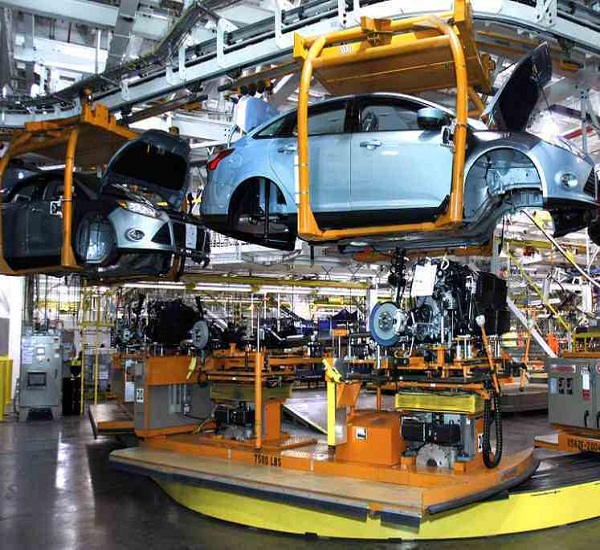
In a bid to make Africa a manufacturing powerhouse, the African Development Bank (AFDB) has proposed that the continental free trade agreement, CFTA, moves beyond trade to industrial manufacturing zones that create jobs for African citizens.

Speaking at the AFDB annual meetings held in Accra Ghana, the President of the Bank Mr. Akinwunmi Adesina suggested that the African region should not just be a trade region, but also a  region where more value-added manufacturing products are traded.

In his words, “I think African Continental free trade (AFCTA) should not just be a trade region, but an industrial manufacturing zone where we trade value-added manufacturing products from national and regional value chains that are competitive globally”.

He stated that the AFCTA should drive the creation of zones that will offer infrastructures, facilities, and incentives that drive manufacturing in the continent as it is done in Asia and South America to create jobs. He further disclosed that the AFDB is working to ensure that Africa transitions to sustainable energy that can drive factories to drive manufacturing. Mr. Akinwunmi revealed that 86 percent of AFDB investments in power generation will go into renewable energy.

This is indeed a highly commendable initiative from Mr. Akinwunmi to help countries on the African continent to tap into the $24billion liquified natural gas project, that will enable the countries in the region to power factories to drive manufacturing. Great to see that they are walking the talk in ensuring that Africa transitions into a manufacturing hub.

Using Nigeria as a case study, over the last years, there have been efforts to make the country the preferred manufacturing hub in West Africa, but such efforts have not produced any tangible results. The Nigerian economy has been badly affected due to the country’s import-dominated commodities.

Although in 2014, the Nigerian Industrial Revolution Plan (NIRP), was launched to make the country the preferred manufacturing hub in West Africa, meanwhile, the initiative was said to have struggled to meet its objectives, as the oil sector still accounted for 65% of the country’s revenue with almost half of the country’s population still living in poverty.

Nigeria for a long time has been ravaged by the high rate of unemployment which has affected the nation’s economy. According to the International Monetary Fund IMF, it suggests that Nigeria needs to create five million jobs per annum over the next 10 years in order to close its unemployment gap.

With the failure of the NIRP plan, it is ideal for the government to implement a new strategy to ensure that the nation becomes a preferred manufacturing hub in West Africa. A close look at developed or developing countries, one will observe that they are establishing industries which have been pivotal to the growth of their economy.

Lack of industrialization will no doubt leave a country underdeveloped. The creation of industries is not just beneficial to the company as it equally benefits the country as a whole. The gross domestic product of any country experiences a significant rise with the introduction of industries into the economy.

That is to say, the more goods that are produced in a country, the more the country’s economy blossoms. Nigeria has been faced with the habit of importation of goods and commodities which is not good for the economy, as it has also devalued the naira.

It’s high time the Nigerian government moves to create industries that will manufacture goods for export, to increase the country’s revenue, and also the high rate of unemployment will be drastically reduced because industrialization necessitates the need for human labor.

IMF Warns That Debt Servicing Might Gulp 100% Of Nigeria’s Revenue By 2026

3

The International Monetary Fund (IMF) has warned that debt servicing may gulp 100 percent of Nigeria’s revenue by 2026, if the government fails to implement adequate measures to improve revenue generation.

The IMF’s Resident Representative for Nigeria, Ari Aisen, disclosed this while presenting the Sub-Saharan Africa Regional Economic Outlook report on Monday, 30th May 2022 in Abuja.

According to him, based on a macro-fiscal stress test that was conducted on Nigeria, interest payments on debts may wipe up the country’s entire earnings in the next four years.

Early this year, it was disclosed that the Federal Government (FG) spent N4.2tn on debt servicing between January and November 2021, which represents 76.2 per cent of the N5.51tn revenue generated during the period in question.

The FG reportedly plans to spend N3.61tn on servicing Nigeria’s debt burden in the 2022 fiscal period, which represents about 34 per cent of the 2022 projected revenue of the country.

Nigeria’s debt stock, which is about N39.56tn as of December 2021, is likely to reach N45.95tn following plans by the Debt Management Office (DMO) to borrow an additional N6.39tn to finance the 2022 budget deficit.

Speaking in Abuja, Aisen expressed worry that many African countries, including Nigeria, risked sliding into a critical debt servicing problem unless urgent actions were explored to significantly raise revenue.

Aisen said, “The biggest critical aspect for Nigeria is that we have done a macro-fiscal stress test, and what you observe is the interest payments as a share of revenue and as you see us in terms of the baseline from the federal government of Nigeria, the revenue almost 100 per cent is projected by 2026 to be taken by debt service.

“So, the fiscal space or the amount of revenues that will be needed and this without considering any shock is that most of the revenues of the federal government are now, in fact, 89 per cent and it will continue if nothing is done, to be taken by debt service.

“It is a reflection of the low revenue of the country. The country needs to mobilize more revenue to be able to have macroeconomic stability. It has become an existential issue for Nigeria.”

He further lamented that being an oil exporter, Nigeria was unable to take advantage of the current global high oil prices to build reserves due to the subsidy on petroleum products.

According to him, Nigeria’s subsidy bill would likely hit N6tn by the end of this year at the current monthly subsidy bill of N500bn.

Aisen, however, expressed optimism that the Dangote Refinery would reduce fuel importation when completed, in order to reduce the subsidy burden.

He further warned that soaring food prices and next year’s general elections were threats to the country’s economy.

Aisen said “persisting insecurity, particularly banditry and kidnapping, and the forthcoming 2023 elections may affect the performance of the economy”.

The IMF Rep explained that Nigeria received $3.4bn in Special Drawing Rights and an equal amount in addition to a loan from the Fund, bringing the total loan since 2020 to $6.8bn.

In his remarks, the Director-General of the Budget Office, Ben Akabueze, disagreed with Aisen on his debt service-to-revenue figures, but agreed that Nigeria was spending a significantly high amount on debt servicing.

It’s only a-day old child that would be unaware that Nigeria’s debt profile is rising astronomically on a daily basis, yet no tangible revenue growth to cushion its excruciating effects. This portrays a serious danger to the country, even to a layman’s understanding.

It’s very worrisome that actualizing a surplus budget has become a far-fetched goal in Nigeria’s fiscal system. It suffices to assert that deficit budgets has abruptly and unwittingly emerged as tradition in the country.