
DD
MM
YYYY

PAGES

DD
MM
YYYY

spot_img

PAGES

Home Blog Page 5101

Australia’s Watchdog Sues Mastercard for Stifling Competition

0

Mastercard is facing an anti-competition probe in one of its biggest markets – Australia. The Australian Competition and Consumer Commission (ACCC) on Monday started legal proceedings in the Federal Court against the payment giant for allegedly stifling competition in the supply of debit card acceptance services.

Australia’s consumer watchdog is suing Mastercard over alleged anti-competitive conduct in deals with large retailers.

The ACCC said in a statement that it has instituted proceedings against Mastercard Asia/Pacific Pte Ltd and Mastercard Asia/Pacific (Australia) Pty Ltd, over alleged misconduct that started half a decade ago in the context of the Reserve Bank of Australia’s least cost routing initiative.

Mastercard’s alleged anti-competitive conduct commenced in late 2017 in the context of the Reserve Bank of Australia’s the ACCC said the “least cost routing” initiative was aimed to increase competition in the supply of debit card acceptance services and reduce payment costs for businesses by allowing them to choose the lowest cost network to process their transactions.

The aim is to increase competition in debit card acceptance services and reduce payment costs for businesses by allowing them to choose whether debit transactions were processed by Visa, Mastercard or eftpos, with eftpos often being the cheapest option.

“We allege that Mastercard had substantial power in the market for the supply of credit card acceptance services, and that a substantial purpose of Mastercard’s conduct was to hinder the competitive process by deterring businesses from using eftpos for processing debit transactions,” said ACCC Chair Gina Cass-Gottlieb.

In response to the “least cost routing” initiative, Mastercard allegedly entered into agreements with more than 20 major retail businesses, including supermarkets, fast food chains and clothing retailers.

The agreements gave these businesses discounted rates for Mastercard credit card transactions, provided they committed to processing all or most of their Mastercard-eftpos debit card transactions through Mastercard rather than the eftpos network, said the consumer watchdog.

This meant that these businesses would not process significant debit card volumes through the eftpos network even though eftpos was often the lowest cost provider.

“We are concerned that Mastercard’s alleged conduct meant that businesses did not receive the full benefit of the increased competition that was intended to flow from the least cost routing initiative,” said Cass-Gottlieb.

The ACCC investigated allegations that Mastercard engaged in anti-competitive conduct by offering certain large merchants cheaper interchange rates (known as ‘strategic merchant rates’), for processing credit card payments if they agreed to process Mastercard-eftpos debit card payments through the Mastercard network.

A Mastercard Australia spokesperson said it is disappointed that the ACCC has gone to litigation and is reviewing what it has filed.

“We have cooperated with the ACCC throughout its investigation and will continue to engage with the Commission, defending our actions to innovate and compete in Australia’s payments market,” the spokesperson said in a statement.

The ACCC is seeking declarations, penalties, costs and other orders.

“Reducing costs for businesses enables them to offer their customers better prices. Making sure the major card schemes, Mastercard, Visa and eftpos, compete vigorously is important for both those businesses and their customers,” Cass-Gottlieb said.
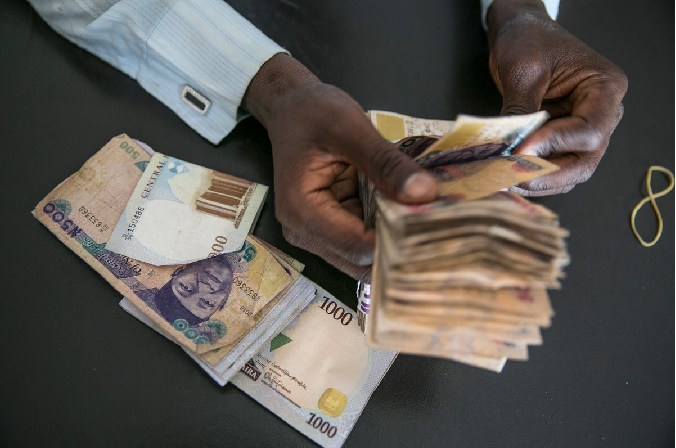

As Naira Falls, What Next for Nigeria?

0
Naira

Nigeria’s foreign reserves have dropped to $38.59 billion as the Central Bank of Nigeria (CBN) continued its currency float management that had seen the apex bank pumping $3.36 billion into the foreign exchange (forex) market over a two-month period.

The apex bank’s January monthly report on ‘Foreign Exchange Market Developments’ showed that $1.71 billion and $1.65 billion were injected in December 2021 and January 2022, respectively.

Latest figures from the mother bank indicated that the forex reserves depreciated $125.53 million to close, over the weekend, at $38.63 billion.

The latest decline in the foreign reserves could be attributed to the continuous intervention by the CBN in the forex market in order to ensure the stability of the local currency.

In spite of the interventions, the Naira has continued to depreciate closing, as at penultimate week, at N610 per Dollar at the parallel market, a decline of 0.7 per cent. At the official Investors and Exporters (I & E) Window, the naira fell by 0.1 per cent to N419.50 per dollar.

It’s noteworthy the naira had previously made marginal gains after the Monetary Policy Committee (MPC) raised interest rate by 150 basis points.

The local currency appreciated from N610/$ to N605/$, representing N5 gain after the MPC hiked Monetary Policy Rate (MPR) from 11.5 per cent to 13 per cent per annum.

The naira is, however, still trading weaker than pre MPC close of N600/$ at the parallel market but remains stable at N415.72/$ at the official market.

Forex Trader, AZA Finance, Ikenga Kalu said, “We expect the naira to appreciate further in the coming days back to N600/$. However, strains are likely to persist over the medium term given ongoing dollar supply constraints.”

The CBN said its policies – naira-for-dollar – incentives, stoppage of dollar sales to Bureaux De Change (BDC) and restriction of forex sales to 43 items that could be produced locally are meant to boost dollar liquidity and create currency convergence.

The CBN Governor, Godwin Emefiele explained that Nigeria, like other emerging market countries, reliant on oil exports, saying the retreat by foreign portfolio investors significantly affected the supply of foreign exchange.

“With the decline in our foreign exchange earnings and successive exchange rate adjustments, the CBN has continued to implement a demand management framework, which is designed to bolster the production of items that can be produced in Nigeria, and aid conservation of our external reserves.”

Emefiele further disclosed that the CBN had continued to favour a gradual liberalization of the foreign exchange market in order to smoothen exchange rate volatility and mitigate the impact which rapid changes in the exchange rate could have on key macroeconomic variables.

On his part, an economist and Managing Director of Financial Derivatives Company Limited, Bismarck Rewane, explained that CBN’s efforts at naira convergence would help reduce the official-parallel market spread which would in turn decrease the incidence of speculative trading at the parallel market.

“A reduced spread would decrease the incentive (arbitrage) for speculators to obtain forex at the official market and resell at the parallel market. This may result in panic dumping of dollars at the parallel market due to the concern of lower demand for forex and appreciation of the dollar at the parallel market.”

Rewane advised that closing the gap between the official and parallel market rates was likely to reduce the demand for forex at the parallel market, pushing investors and traders to the official market. This would lead to increased forex transactions at the official market.

He explained that the wide official-parallel market spread and the low forex supply at the official market had been the main factors driving investors and traders to source forex at an expensive rate from the parallel market.

For him, reducing this spread, coupled with an improved forex supply at the official market, would decrease uncertainty (volatility) at the forex market and bolster the ability of the official window to meet a higher demand for dollars.

The resulting impact of this is that a reduced exchange rate volatility and improved forex supply would make it easier for foreign investors to repatriate their funds.

It would equally ensure that traders and manufacturers access forex at a uniform rate from both the official and parallel markets.

“Reduced naira volatility and improved forex supply are positive for foreign direct investments and foreign portfolio investments as well as the country’s external trade. This is because of the increase in the volume of dollars available for foreign trade and investment.” he opined.

One might wonder why the BDC is still relevant, recognized and seemingly powerful in Nigeria’s money market, despite several calls for its eradication. The lingering occurrence of such uncalled and illicit practice has over the years made the country’s forex market look laughable and pitiable, at the expense of her economy.

Welcome 9Mobile to Tekedia Institute

0

Thank you 9mobile. Thank you amazing team; truly honoured to be co-learning with the team at Tekedia Institute. Good People, please visit your nearest 9Mobile office. You can also re-load via app, USSD, web, and other options. 9Mobile is my favourite network for data in Lagos whenever in the center of excellence.

9Mobile is enabler of life and of dreams! It is here for you, it is here for naija! Make it work for you. Make Nigeria a 9Mobile nation.

Meet everyone in class. Welcome 9Mobile.

Tekedia CollegeBoost Congratulates Fadipe Scholars On Their Graduations

0

Today is a graduation day in one of the batches in Tekedia CollegeBoost, a mini-MBA designed for university and polytechnic students. I want to specifically congratulate 100 scholars  funded by Prince Fadipe Foundation.  Tekedia Institute thanks the Trustees of this Foundation led by Oluwaseun Fadipe, Ph.D, PMP®,MBA for the generosity in funding the future.

We’re confident that you have been exposed to the elemental constructs of market systems, broadening your perspectives on the mechanics of business. The best faculty on educating scholars on African entrepreneurial capitalism have prepared you. Congratulations.

Sure, we remain hopeful that ASUU/government will call off the strike immediately. Nonetheless,  the experience with us will make your career ascension more amazing. From all of us at Tekedia Institute, gbozas and congrats. I will see you at the virtual graduation arena later today (details in the Board).

Ndubuisi Ekekwe, PhD

Professor and Lead Faculty, Tekedia Institute

The SORO SOKE BOOK and the Nigerian Act on Traditional Knowledge and Cultural Expressions

0

For the third day in a row, Nigerians are still not laughing at Trish Lorenz, the author of the Soro Soke book who claims to have created the phrase. The youths have been the key actors in calling out the European author and journalist as well as the publisher, the Cambridge University Press.  Our analyst noted in the prior analysis how the youths and other groups of Nigerians who voiced mixed sentiments about the book and claim echoed in emphasis on unjustly benefitting from Nigerian cultural expression, intellectual property theft, and neocolonialism through book publishing.

As the conversation continues, our analyst explores the need for a Traditional Knowledge and Cultural Expressions Protection Act in this piece. This is based on the insights gleaned from discussions on multiple platforms over the last three days, which are expected to continue in the coming days. Nigeria is undeniably a multicultural country, with over 250 ethnic groups and 500 languages. It is currently a country with thousands of traditional knowledge and cultural expressions or identities due to this single factor.

Nigerians are unique and diverse in every way, from material culture to human culture. The types of food available in the north differ significantly from those available in the south. Similarly, the ways in which people engage in social activities range significantly. Cultural expressions or identities are generated both deliberately and involuntarily as a result of these and other activities.

According to various estimates, Nigeria has tens of millions of people who speak languages other than Yoruba, Hausa, and Ibo, which are the three major ethnic groups. Various terms originated from the language they speak. Our analysis shows that these expressions fall under the classifications of the World Intellectual Property Organization and the United Nations, which are in charge of cultural heritage preservation and administration. Verbal is one of these classifications. Musical, action, and tangible expressions are all present.

Despite calls from international and regional organizations to preserve and safeguard these forms through intellectual property rights laws, Nigeria, like other developing countries, has done little to create an enabling legal framework.  According to the World Intellectual Property Organisation, “Many indigenous peoples, local communities and governments seek intellectual property (IP) protection for traditional knowledge (TK) and traditional cultural expressions (TCEs) as intangible assets.”

Though, at the time of writing, there is no indication that the Nigerian government is not one of the governments mentioned by the organization. However, a review of the existing laws reveals that Nigeria lacks legislation specifically dealing with the protection of traditional knowledge and cultural expressions.

This approach is killing innovation among ethnic groups, as our analyst pointed out in one of our previous pieces on intellectual property rights. If the federal and state governments revisit existing laws such as the National Archives Act N6 of 2004, the National Library of Nigeria Act N56 of 2004, the National Commission for Museums and Monuments Act Cap N19 of 2004 (hereafter Nigcom MM), and the National Council for Arts and Culture Act N25 of 2004, ethnic groups would greatly benefit from their traditional knowledge and expressions. These Acts have no particular provisions on the safeguarding of each ethnic group’s traditional knowledge and cultural expressions. In most cases, significant amendments to the laws are required to effectively protect traditional cultural expressions.

Our analyst finds it surprising that the contentious expression appears only 35 times out of 50,144 words in Trish Lorenz’s book (Soro Soke). Aside from the monetary reward the author has won, the book will also bring in a lot of money in the future. Enacting applicable regulations is one of the crucial right measures if concerned stakeholders in culture, tourism, and languages are truly serious about enlivening these areas.