DD
MM
YYYY

PAGES

DD
MM
YYYY

spot_img

PAGES

Home Blog Page 5108

GTCO’s HabariPay Gets Final Approval from CBN to Offer Financial Services

0

A few days after the launch of its fintech unit called SquadCo, Guaranty Trust Holding Company (GTCO), has got final approval from the Central Bank of Nigeria (CBN) for its payments unit HabariPay Limited.

The bank, which recently transited to a holding company, is focusing on fintech to tap from Nigeria’s underserved market. The CBN’s approval for HabariPay means one of the largest financial institutions in the country is joining forces with players in the fintech space to deepen financial inclusion in the country.

HabariPay offers a range of financial services augmented by other units of GTCO. This is seen as a major boost to the push to curtail the teeming number of about 40 million unbanked and underserved people in Nigeria, giving GTCO’s branches scattered across the country.

“Payments are central to the development of financial services globally and represent a key growth area for the group,” said CEO Segun Agbaje.

“With HabariPay, we have successfully created another pathway towards enhancing the service experience for our customers and creating more value for our stakeholders.”

Nigeria is experiencing a boom in the emerging fintech market that has been increasingly attracting billions of dollars in investment. As the boom results in threat to traditional financial institutions, banks are jumping the fintech train. Besides GTCO, Access Bank is another traditional institution in Nigeria that has gone holdco while Sterling Bank is towing the same path.

GTCO’s determination to diversify its financial operation is also seen in its recent purchase of Investment One Funds Management Limited and Investment One Pension Managers Limited made in February. However, the company’s focus remains on financial technology.

“Our vision is an Africa where every payment is digital, and we hope to achieve this by increasingly leveraging technology to improve access to financial services for individuals and empower businesses across Africa with the right digital tools to thrive,” Mr Agbaje said.

Is Nigeria’s digital payment space getting saturated?

Despite the financial inclusion gap, there is concern that there are becoming too many digital payment companies in Nigeria. Recently, major telecom companies in Nigeria, Airtel and MTN, were given licenses to operate payment service banks (PSB), a development believed to be the ultimate boost to the push for financial inclusion.

The telcos’ delve into financial services is in addition to hundreds of fintech startups in Nigeria, headed by Flutterwave, that are trying to solve the same problem.

However, compared to countries where there is financial inclusion, Nigeria’s digital payment market is still untapped given its population. For instance, in the United States, there are 8,775 fintech startups for its 334.6 million people while the United Kingdom has 1,600 fintech startups serving its 68.5 million population. India, a country with a financial inclusion gap similar to Nigeria, has 6,636 fintech startups for its 1.4 billion population. Likewise, Brazil has 1,446 fintech startups for its 215 million people.

Nigeria is said to have about 200 fintech startups, serving its more than 200 million population. This leaves about one million people to the service of one fintech, meaning that Nigeria needs more than a thousand fintech startups to bridge the gap.
Join Tekedia Capital Syndicate Today And Co-Own A Piece of Africa’s Great Startups

0

Tekedia Capital invests in technology-anchored early stage startups and companies. Our opportunity antenna and grassroot connections with innovators enable us to see patterns as they develop. We invite you to partner with us as we nurture and build category-king companies in Africa and beyond, and in the process advance citizens, communities and nations. At Tekedia Capital, we fund the foundations of the NEXT African economy.

Click, learn more and join our Syndicate here . With that, you will co-invest with us in the startups of the future. We work with citizens, companies, investment clubs, cooperatives, etc, from any location in the world where US companies are allowed to do business. Join Tekedia Capital and own a piece of Africa’s great startups.

$1,000 or N550k  membership (4 investing cycles) required.

Osun Voters Need Targeted Issue-Based Campaign as 2022 Election Draws Nearer

0
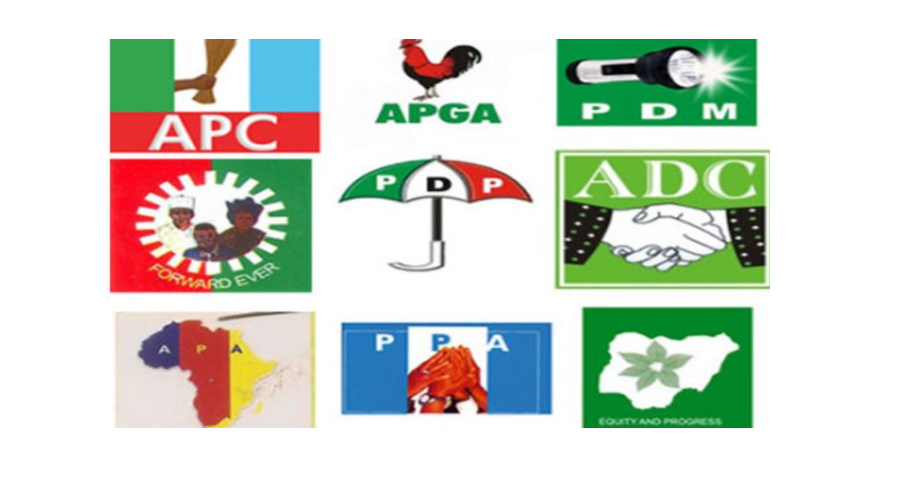
Sample of political parties in Nigeria (Source: Punch)

As political parties, media handlers, and supporters continue to promote more than ten candidates for the governorship election in Osun in 2022, the Positive Agenda Nigeria, a non-governmental organization, stated that voters in the state must be familiar with messages that focus on policy and program issues or needs. After four weeks of analyzing messages expressed by stakeholders on social media (Facebook and Twitter), in newspapers, in radio jingles, and during campaign events in some cities and towns across the state, the organization made this submission.

The organization, which is made up of academics and independent researchers, discovered that the ruling party, the All Progressives Congress, and the main opposition party, the People’s Democratic Party, engaged the public more during the four weeks of monitoring than other political parties who expressed interest in the election.

According to the policy brief released at the end of the first week and made available to our analyst, “media handlers and supporters of the ruling party informed potential electorate on programmes it would focus on if re-elected more than other political parties did. However, the leading opposition party (PDP) slightly engaged people on its planned programmes if elected.

Political parties (APC, PDP, LP, Accord) and their supporters slightly and highly engaged potential electorate while discussing infrastructure, economy, workers’ welfare, salary and employment and health. But the ruling party (APC) engaged the public more on health, workers’ welfare, salary and employment, social programmes, and infrastructure.

Personality issues of the candidates, competence or lack of it, assassination attempts or threats to life, violence and vote buying dominated the monitoring periods at the expense of informing potential voters the need to vote candidates based on their abilities and capabilities to address existing practical problems or needs in health, education, security, agriculture, economy, social programmes, infrastructure, workers’ salary, welfare and employment.”

Based on the emerged outcomes, the group notes that political parties need to train their social media handlers and media team on media literacy skills so that issue-based campaigns become their focus instead of attacking the personality of other parties and opponents.

Download the policy brief here

The Facts on Petroleum Technology Development Fund Nigeria with Southeast scholars

0

Good People, we must stop peddling fake news just to score cheap political points in Nigeria. I have received more than 20 messages and tweets indicating that students from Southeast were excluded from the Petroleum Technology Development Fund (PTDF) selection process due to the Fund’s decision not to travel to Enugu. Honestly, I was stunned to read those messages.

To check things, I called a director in the Fund to explain what was going on. According to him, they were unable to visit Enugu due to some security related issues (not a strong point I mentioned to him). Yet, the Fund did offer all Southeast candidates to interview virtually or to choose from one of Port-Harcourt, Abuja, Bauchi, Kaduna and Ibadan centers for the selection process.

And he sent me this link  which has many guys from Southeast – https://lnkd.in/ed-N2xX8 . I have people I call whenever I want things in Nigeria; this man cannot do fake news to me.

People, share this note with those peddling this fake news. Southeast scholars are still in the process. This is not to defend Nigeria. But rather, to defend facts and objectivity. To the national scholars, I wish all of you good luck.

GTBank’s Parent Company Launches HabariPay with SquadCo

1

GTBank’s parent company, GTCO, has unveiled a new product called SquadCo within its HabariPay subsidiary.  The Central Bank of Nigeria gave the approval according to Premium Times: “Payments are central to the development of financial services globally and represent a key growth area for the group. With HabariPay, we have successfully created another pathway towards enhancing the service experience for our customers and creating more value for our stakeholders,”” said CEO Segun Agbaje. 

As I noted in Feb 2022, GTBank is going through a 3rd metamorphosis, and unification of everything is going to be part of this future.  It needs to get it right because MTN Nigeria has disintermediated many domains of financial services and has positioned itself to capture significant value. That explains why the market cap of MTN Nigeria is larger than all banks, insurers and other financial institutions combined in Nigeria.

The banks of the future will be pure play technology companies which offer banking services. Telecom firms and fintechs have positioned themselves already for that future. GTBank and other banks are working hard to insert themselves at scale. Simply, they want to play at the edges of the smiling curve.

In November 2018 when I wrote ‘GTBank’s Everything “Habari” Banking – Raps, Sings, Styles, Shops, Pays and More’, I saw a grand unification but also cautioned that “It may make the local banking giant lose an identity”. GTBank was playing the duality element where products are also platforms; that plan did not work out well. But with HabariPay’s SquadCo injection, GTBank has a chance to capture value using the one oasis and double play strategies

The banking main subsidiary is the one oasis and HabariPay can be part of a play. Great strategy; it comes down to execution on the powers of (native) digital entrepreneurs. And call it an irony: when a bank goes fintech, it says bye bye to “nice” fees because fintech is nothing but disintermediation of banking services with optimized services.

This week, GTCO, Nigeria’s second biggest lender by market value, launched a fintech unit named SquadCo, which eases the path for it to offer services and products including, e-commerce, payment gateway and Soft POS. SquadCo is a product of HabariPay.

Rival Access Holdings completed its evolution to a holding company in April, a move that will enable it to branch out into payments and other financial services while Sterling Bank is on track to adopt a similar structure.

“Our vision is an Africa where every payment is digital, and we hope to achieve this by increasingly leveraging technology to improve access to financial services for individuals and empower businesses across Africa with the right digital tools to thrive,” Mr Agbaje said.

Early in February, GTCO announced purchase of Investment One Funds Management Limited and Investment One Pension Managers Limited as the group diversified into pension and asset management at a time earnings from its core banking business were becoming inadequate to sustain profit growth.