DD
MM
YYYY

PAGES

DD
MM
YYYY

spot_img

PAGES

Home Blog Page 5117

African Development Bank (AFDB) To Help Nigeria Return E-Wallet System In Agriculture

0

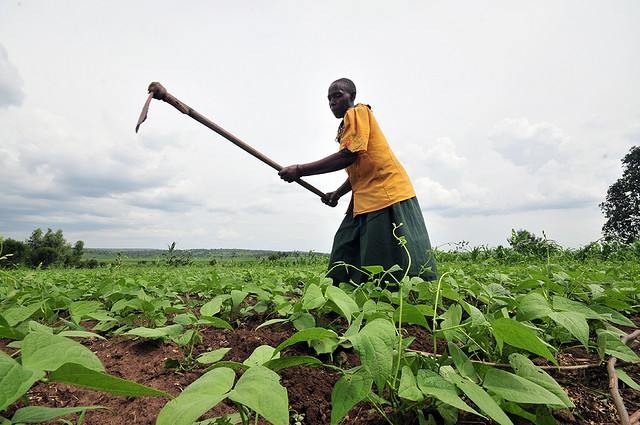
The African Development Bank (AFDB) has disclosed its plans to help Nigeria to return to the electronic wallet system of input distribution to farmers to boost agricultural production.

According to the President of AFDB, Dr. Akinwunmi Adesina, he disclosed that the system allowed the government to register about 14.5 million farmers and reached them directly with inputs, notably seeds and fertilizers, via electronic coupons on their mobile phones.

He further disclosed that the bank would support Nigeria with about 30 million dollars in reallocated funds to be used for an emergency food plan to produce in the dry season.

While speaking at a meeting, ahead of the Bank’s 2022 annual meetings in Accra Ghana, he had this to say; “Nigeria needs to go back and use the electronic wallet system that I developed when I was a minister to get fertilizers straight to farmers and cut out all the middlemen. We are going to help the government to do that because when farmers have quality seeds and fertilizers, they can rapidly triple food production,” he said.

“In Nigeria, we have provided 540 million dollars for special agro-industrial processing zones in seven states including the Federal Capital Territory. “That will allow Nigeria to have special zones where you can have agro-processing value addition and increased competitiveness of agriculture. “We are not alone, we put in 170 million dollars and others put in money such as the Islamic Development Bank and other partners”.

The use of a wallet system in the Agricultural sector is a very great initiative, and it is ideal for it to be re-introduced because the use of mobile technology in recent times has been very beneficial, especially in the delivery of government inputs and services.

One beautiful thing about the wallet system is that once farmers are registered on it, it enables the government and other institutions to reach them directly, cutting out all the middlemen.

Looking at the high rate of corruption in Nigeria, in the past years, the Nigerian government has on several occasions supported the agricultural sector with funds and through the procurement and distribution of seeds, fertilizers, and other agricultural inputs to farmers in the country. Unfortunately, the middlemen entrusted to distribute such resources to these farmers end up siphoning billions of dollars, as well as selling some of these inputs to farmers which affected farmers’ productivity.

These farmers on countless occasions are only given a small percentage of government support, which has little or no effect on their production output. But with the e-wallet system, through subsidized electronic vouchers, inputs and resources are delivered directly to them. It is interesting to note that the e-wallet system has gained widespread adoption, with over ten million Nigerian farmers having access to it.

The system has no doubt eradicated corruption from middlemen as well as subsidy schemes, which has prompted banks and other institutions to see the agricultural sector as an interesting one, which has made them willing to lend funds into the sector, knowing full well that such funds and resources will get directly to the farmers.

It might interest you to know that the success of the e-wallet system in Nigeria, has impressed Kenya and Uganda, and both countries have decided to collaborate with Nigeria to introduce the wallet system in their country. The African Union on the other hand has encouraged the use of the wallet system implemented throughout Africa.

Nigeria’s aggregate agricultural output remains extremely low relative to other purchase farm inputs and obtains the required quantity at the right time. This is because farmers have been finding it difficult to procure and distribute users and seeds and have been faced with fraudulent
practices.

The poor distribution, as well as procurement of fertilizer, grossly affected farmers’ productivity and income, but with the re-introduction of the wallet system, such fraudulent practices will be drastically reduced which will improve farmers’ output and generate more income for the country.
Lagos is #1 Investment Destination City in Africa

0

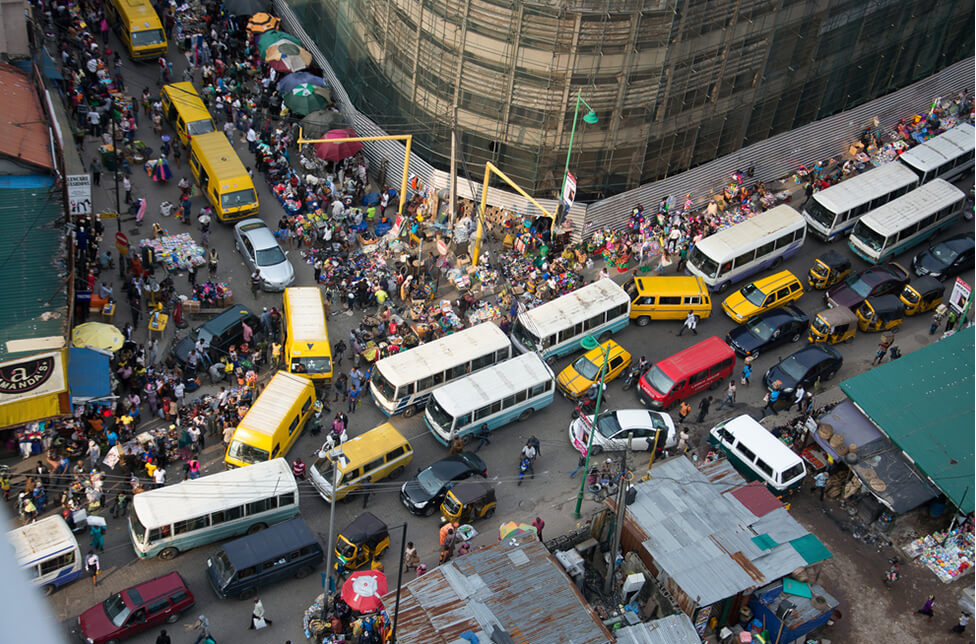
Lagos State recently emerged as the top destination in Africa for digital infrastructure investment, to the delight of its teeming fans.

It’s noteworthy Lagos has remained the most populous city in Nigeria and on the continent.

The above report was revealed in April 2022 during a panel hosted by Digital Infra Africa, where industry experts deliberated on the impacts of growing investments in data centres on the continent.

The session, which was moderated by Senior Vice President, Middle East, Africa and Greater India, Uptime Institute, Mustapha Louni, had MainOne CEO, Funke Opeke, joined by CEO of the Raxio Group, Robert Mullins; CEO, Teraco, Jan Hnizdo and Chief Marketing Officer and VP of the International Business Development, WIOCC, Mike Last.

These market leaders noted the spate of acquisitions and new entrants in the past six months including Equinix – MainOne’s new parent company, Digital Realty, Cassava Technologies and WIOCC.

They said growth in investments in the data centre infrastructure on the continent had grown exponentially, adding that such investments continued to be driven by the growth of broadband access and data consumption across the continent’s large economies, of which Nigeria was the largest.

Opeke stated, “When you look at the connected population and the growth potential of the numbers that remain unconnected, we see a large opportunity for growth in data consumption levels, and this is attracting global market players.

“MainOne is the market leader in Lagos already and we will continue to make investments with our new parent company Equinix to remain at the forefront of the increasing digitalization happening on the continent.”

“These views are in line with the recently published statistics on investments flowing into the tech sector on the continent. Lagos State government has actively championed these initiatives and investments in technology by creating an enabling environment for businesses to flourish, and also by providing active support to investors in the state through its numerous programs and initiatives.

“The effort is bearing fruit, as in the last one month, Lagos has attracted over $1 billion worth of committed investment from technology giants like Microsoft, which opened its new African Development Centre in the State; Google, which last week launched its state-of-the-art submarine Internet cable in Lagos and Equinix, which recently completed its acquisition of MainOne with a $320 million deal.

To put the level of investment that Lagos would attract in the next few years into context, at the recent launch of MainOne’s MDXi Lekki II Data Center, VP Growth and Emerging Markets at Equinix, Judith Gardiner, stated that, “Amsterdam as a key hub, with a population of one million people, has nine Equinix Data Centers with over 106MW capacity. Lagos, with a population of over 20 million, has the potential to far exceed this footprint.

“We are committed to bringing our capital, expertise, knowledge and customers to accelerate the digital age in Nigeria.” She hinted.

Indeed, Lagos has over the past and recent years taken the lead as regards investment destination owing to the seeming friendly and enabling environment. This prowess has made the state to relatively boast of the richest territory across the Nigeria’s shores.

The leadership of other states in Nigeria are required to step up their policies in a bid to ensure they key into the investment mantra towards boosting the Internally Generated Revenue (IGR) base of their respective jurisdictions. This would make them not to wholly depend on the central government for survival, as it’s currently witnessed in the country.

However, the Lagos government must strive to sustain the tempo, as well as revisit its various fiscal policies to ensure it becomes and remains friendlier than its present position, towards attracting more prospective investors to the state.

Governments at all levels must learn to acknowledge that the wholesomeness of every economic activity centres on policy-making and its onward implementation.

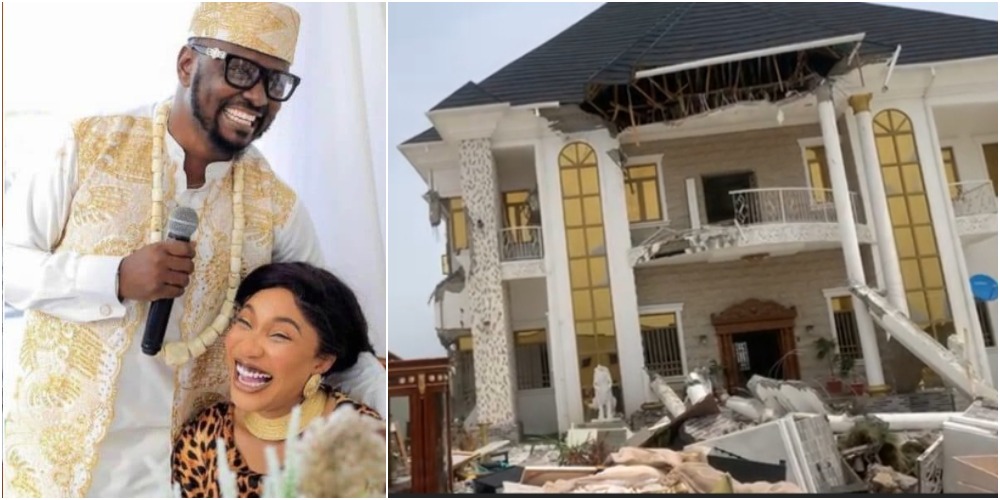
Learn from Prince Kpokpogir’ ‘s ordeal

0

You must have heard of Prince Kpokpogir’s ordeal in the hands of the Federal Capital Territory Authority (FCTA). Well for those that are out of the loop, let me bring you up to speed. His house which was just built a year ago in the Guzape area of Abuja was demolished by the FCTA. The house was said to have been worth over N700m.

According to the officials of the FCTA, the house was demolished because it was erected on government committed land. 

A Committed land is a land that has been set aside or reserved by the government for special or specific purposes or uses. It may be reserved by the government to be used to build something like parks, airports, roads, schools, markets, government offices, cemeteries, etc in the future or later days and therefore has no development or redevelopment potential at the time being. 

In Kpokpgiri’s case, according to the authorities of the FCTA, the place he erected his building has been marked out by the government to be used in building a highway, I.e the land he erected his house has been committed for road construction. 

An official of the FCTA was quoted to have said, “His (Kpokpogiri’s) house is on a superhighway known as M-16. He doesn’t even have a building plan approval. It’s like somebody who knows that the highway is coming sold the land to him and he just went to build. We have been asking him to stop but he refused.”

This incident should raise concern for everyone; both for those who own landed properties or wish to own landed property in the future, especially those who don’t engage the service of a lawyer while purchasing their properties. In transactions like this, you need the services of a lawyer to carry out the due diligence search to ensure you are not purchasing a committed property.

If you make the mistake of buying land that has been reserved by the government or in a committal area, the repercussion is that the government has the power and every legal right to repossess the land anytime and it does not matter whether you have erected a structure or built a world-class home there. 

The government can demolish whatever structure found there in their quest for repossessing what belongs to them and you have no case in court, especially the court of common law. 

Always engage the services of a lawyer. A lawyer who is an expert in this area will conduct a survey plan search at the appropriate land registry, this is where he will confirm if the land is free or committed and also uncover other encumbrances on the property if there are any. 

If you think you can do it yourself and do not require the services of a lawyer, you may regret it later. 

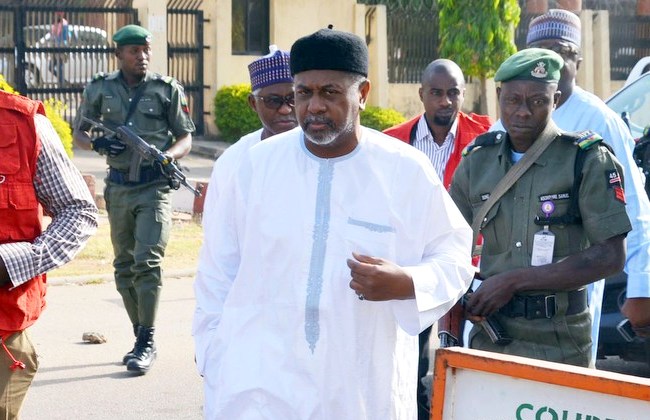
EFCC Re-Arraigns Sambo Dasuki, Others Over Alleged Money Laundering

0

The Federal Government (FG) of Nigeria, on Monday 23rd May 2022, re-arraigned former National Security Adviser (NSA), Col Sambo Dasuki (rtd), as well as a former Sokoto State Governor, Attahiru Bafarawa and former Minister of State for Finance, Bashir Yuguda, on corruption charges bordering on money laundering.

They were re-arraigned at the High Court of the Federal Capital Territory (FCT) on allegations of breach of trust and criminal misappropriation of public funds amounting to N388 billion.

In the 16-count criminal charges, Dasuki, Bafarawa and Yuguda were alleged to have diverted various sums in various currencies to different bank accounts under false pretenses of using the funds for the procurement of security equipment.

The charges, which were prepared by the Economic and Financial Crimes Commission (EFCC), claimed the funds were used to fund the Presidential campaign of the People’s Democratic Party (PDP) during the 2015 general elections.

However, when the charges were read to them, all the accused persons pleaded not guilty as requested by the Judge.

Following a passionate plea by a Senior Advocate of Nigeria (SAN), Lateef Olasunkanmi Fagbemi, Justice Halilu Yusuf adopted the earlier bail conditions granted them in 2018 when they were first arraigned. The Judge consequently fixed the trial for June 7, 2022.

It could be recalled that on December 1, 2015, Dasuki was arrested by the Nigeria’s State Security Service (SSS) for allegedly stealing $2.1 billion and accused of awarding phantom contracts to buy 12 helicopters, four fighter jets, and ammunition meant for Nigeria’s military campaign against the Boko Haram Islamist militants.

In November 2018, Dasuki was refused bail by the government despite being granted bail by four different high court judges in Nigeria.

On July 14, 2019, the Court of Appeal in Abuja declared the continued detention of the former NSA since December 29, 2015 by the SSS as illegal, unlawful, and unconstitutional.

The appellate court held that the DSS and its Director-General acted outside their constitutional powers on the long period of the detention of a Nigerian citizen and imposed a fine of N5 million on them to be paid to Dasuki as compensation for breach of his fundamental right.

However, the SSS eventually released Dasuki from detention on the 24th December 2019. A Senior Advocate of Nigeria (SAN) and lawyer to the former NSA, Ahmed Raji, confirmed the release of his client; he therefore thanked the Attorney General of the Federation (AGF) for ordering the SSS to comply with the various court orders granting bail to Dasuki.

The Minister of Justice and AGF, Abubakar Malami, had reportedly ordered the SSS to release the former NSA alongside the then convener of #RevolutionNow protests, Omoyele Sowore who was also detained.

In a statement personally signed by Malami, he explained that the decision to release the two men was in compliance with the bail granted to them by the court of law.

It’s noteworthy that, as a result of the Pandora Papers’ report, in 2013, Dasuki had set up a shell company with the help of a government contractor, Leno Adesanya. The report found that the sole shareholders were Dasuki’s sons with Adesanya not holding any shares and no other form of clear payment to him.

Adesanya’s representative claimed that no undisclosed favours were gained by the former and that he was simply helping Dasuki’s sons to set up an offshore company.

Now that the EFCC had re-arraigned Dasuki after four years of silence, what actually is the way forward? Is the agency now determined to follow the prosecution to a logical conclusion, or will it still be left haphazardly in the long run?

Besides, don’t Nigerians deserve to know what exactly prompted the long silence, after the erstwhile NSA was granted bail? Too many questions seeking apt answers.

On National Bureau of Statistics’ Report Over Rise Of Nigeria’s GDP

0

The National Bureau of Statistics (NBS), on 23rd May 2022, reported that Nigeria’s Gross Domestic Product (GDP) grew by 3.11 percent (year-on-year) in real terms in the first quarter (Q1) of 2022.

In the latest published report, the NBS revealed the figure showed sustained positive growth for the sixth consecutive quarter since the recession witnessed in 2020 when negative growth rates were recorded in quarters two and three of that year.

The report said, “The first quarter 2022 growth rate further represents an improvement in economic performance. The observed trend since Q4 2020 is an indication of gradual economic stability.

“The Q1 2022 growth rate was higher than the 0.51 per cent growth rate recorded in Q1 2021 by 2.60 per cent points and lower than 3.98 per cent recorded in Q4 2021 by 0.88 per cent points. Nevertheless, quarter-on-quarter, real GDP grew at -14.66 per cent in Q1 2022 compared to Q4 2021, reflecting a lower economic activity than the preceding quarter.”

In the quarter under review, according to the data agency, the aggregate GDP stood at N45,317,823.33 million in nominal terms – a performance that was higher when compared to the Q1 2021 which recorded an aggregate GDP of N40,014,482.74 million, indicating a year-on-year nominal growth rate of 13.25 per cent.

It added that the nominal GDP growth rate in Q1 2022 was higher relative to the 12.25 per cent growth recorded in Q1 2021, and higher compared to the 13.11 per cent growth recorded in the preceding quarter.

While broadly classifying the Nigerian economy into the oil and non-oil sectors, the NBS revealed that the nation recorded an average daily oil production of 1.49 million barrels per day (mbpd) in Q1 2022.

This value, it stated, was lower than the daily average production of 1.72mbpd recorded in the same quarter of 2021 by 0.23mbpd, and lower than the Q4 2021 production volume of 1.50mbpd by 0.01mbpd.

“Real growth of the oil sector was –26.04 per cent (year-on-year) in Q1 2022, indicating a decrease of 23.83 per cent points relative to the rate recorded in the corresponding quarter of 2021,” the report said. “Growth decreased by 17.99 per cent points when compared to Q4 2021 which was –8.06 per cent.

“Quarter-on-Quarter, the oil sector recorded a growth rate of 9.11% in Q1 2022. The oil sector contributed 6.63 per cent to the total real GDP in Q1 2022, down from the figures recorded in the corresponding period of 2021 and up compared to the preceding quarter, where it contributed 9.25 per cent and 5.19 per cent respectively.”

According to the data agency, the non-oil sector grew by 6.08 per cent in real terms during the reference quarter (Q1 2022).

It further explained that the rate was higher by 5.28 per cent points compared to the rate recorded in the same quarter of 2021 and 1.34 per cent points higher than the fourth quarter of 2021.

“This sector was driven in the first quarter of 2022 mainly by information and communication (telecommunication); trade; financial and insurance (financial institutions); agriculture (crop production); and manufacturing (food, beverage, and tobacco), accounting for positive GDP growth.

“In real terms, the non-oil sector contributed 93.37 per cent to the nation’s GDP in the first quarter of 2022, higher than the share recorded in the first quarter of 2021 which was 90.75 per cent, and lower than the fourth quarter of 2021 recorded as 94.81 per cent.”

From my view, the said report was about ‘year-on-year growth’. According to the publication, which seemed complicated and confusing, on quarter-on-quarter, real GDP grew at -14.66 per cent in Q1 2022 compared to Q4 2021, reflecting a lower economic activity than the preceding quarter.

So, if the last paragraph is anything to go by, or holds water, one might wonder the reason the NBS stated that Nigeria recorded a rise in her GDP. If the quarter in question (Q1, 2022) declined in growth compared to the preceding quarter (Q4, 2021), how could it be reported that the country recorded a significant improvement in her GDP?

In a nutshell, the NBS’s report, which was rather misleading, requires a holistic review towards making amends where need be.