DD
MM
YYYY

PAGES

DD
MM
YYYY

spot_img

PAGES

Home Blog Page 5130

On The Call For Digital Revolution Among Nigerians

0
A woman looks at a NFT by Mad Dog Jones titled "SHIFT//" during a media preview on June 4, 2021, at Sotheby's for the Natively Digital: A Curated NFT Sale Online Auction to take place June 10, 2021. - They are technology enthusiasts on the hunt for opportunities in the Wild West market surrounding NFTs: the popular certified digital objects that have spawned a new generation of collectors convinced of their huge potential. (Photo by TIMOTHY A. CLARY / AFP) / RESTRICTED TO EDITORIAL USE - MANDATORY MENTION OF THE ARTIST UPON PUBLICATION - TO ILLUSTRATE THE EVENT AS SPECIFIED IN THE CAPTION

It’s not anymore news that digitization has come to stay in the global community, and would likely dominate the entire workplace in no distant time.

Little wonder many concerned personnel have constantly and consistently harped on the inevitable role of the tool in mankind’s day-to-day activity, in every facet of human endeavour.

Penultimate month, a group of experts called on various workers and business owners to up-skill and enhance their relevance in the digital era.

They spoke at a three-day 2022 International Work Festival themed, ‘the future of work in a technology-driven world (Work-Humans)’, organized by Human Resources Expo Africa (HREA).

The Founder of HREA, Erefa Coker stated that it was important to solve digitization challenges to improve productivity in the workplace and allied places.

She said, “Instead of taking workers out of job, it is important that employers help their employees to up-skill. There are many courses online that the employee can explore. You cannot stop learning.

“Employers of labour must learn new ways and see what they can take back to their workplace to help them design solutions that will enable their workers to be happier.” she stressed.

She further noted that, because it was humans that drive technology, there was a compelling need for workers to empower themselves digitally to be able to use the technology.

“Nigeria is fast becoming a technology hub. We have Nigerians who work for different companies in America. We are going to become India at some point, once we get a lot of things right in the country.

“Once the government puts the infrastructure in place, we will have young population talent. The education system is fixed so that people get quality education and our education system reflects what is happening in the world so that it is not until I come out of a university that I know how to use a computer.”

On his part, the Chief Executive of Willway Paradime, Dolapo Agbede, opined that persons with disabilities (PWDs) also had talents and deserved an opportunity in the workplace.

Agbede, therefore, implored organizations to be disability-inclusive and to up-skill their employees living with disabilities to help them earn an income with dignity.

“In our organization, Willway Paradime, we can connect people who want to learn from people who are ready to teach. And then with the connection between those two, when they have now learnt, we can also connect them to where they can work.

“So we serve as a bridge; we say that we are NEXUS of social engineering because we are ensuring that we are changing the way people see persons with disabilities, technology because that is the way we are going to work in the future.

He stated that the firm ensures disability inclusion in all facets, because the disabled persons were part of the social cycle. Hence, they create the social part of interacting and being productive with persons with disabilities.

It’s only a dummy that’s yet to comprehend that virtually all mankind’s activities are currently being controlled by digitization. It suffices to assert that the digital age is fast taking over almost everything done by humans.

This is the reason every individual or entity, be it entrepreneur, student, political leader, public servant or what have you, needs to step up action in leveraging the numerous positive impacts of the digital age.

The various schools across Nigeria and beyond, from primary to tertiary level, must therefore ensure their wards or students key into the digital aspect of learning, so when they eventually graduate, they can compete favourably with their likes anywhere in the world.

The truth is that, digitization has obviously come to stay, hence must be embraced fully by everyone irrespective of their occupation or affiliation.
On Approval Of N1.4bn For Electricity Equipment In Nigeria

0

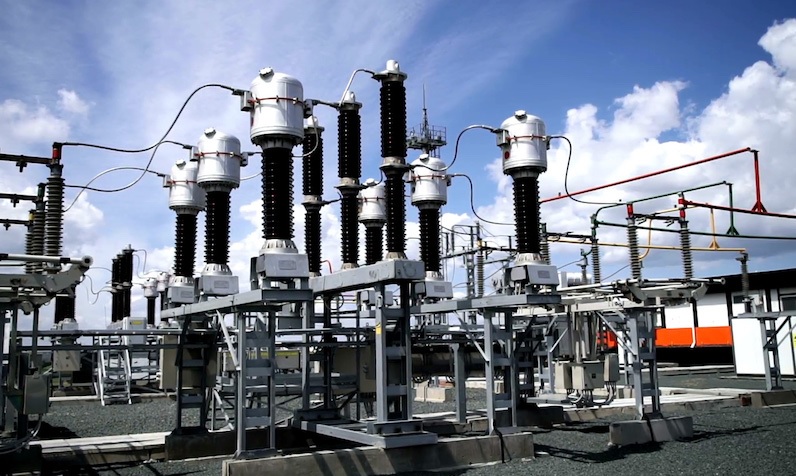
The Federal Executive Council (FEC) of Nigeria, on Wednesday 13th April 2022, graciously approved N1.4 billion for purchase of additional equipment by the Transmission Company of Nigeria (TCN).

The gesture by the government was reportedly part of efforts to improve power supply across the shores of the country.

The approval came less than one week after the country experienced the fifth grid collapse just within three months.

The Minister of Power, Abubakar Aliyu made the disclosure while addressing State House correspondents at the end of the meeting presided over by President Muhammadu Buhari.

He said, “I presented two memos from the Ministry of Power for the Transmission Company of Nigeria.”

According to him, the first one was a variation of the sum of a contract for 132/33 KV substation at Kafanchan, Kaduna State, with a KV line base extension at Jos substation, in Plateau State. This, based on the minister’s report, was in the sum of N132.7 million.

The second approval he got was for the supply of handling equipment and operational vehicles for the TCN at the cost of N1.3 billion.

“The second memo was for the supply of handling equipment, haulage and operational vehicles for the TCN at N1, 338, 159, 080. 88. They are heavy lifting equipment that the TCN requires for doing its work in the store and on the field, while changing equipment and moving transformers and the council graciously approved it.” he stated.

In a related development, the FEC equally ordered the Nigerian Bulk Electricity Trading (NBET) to begin negotiations with Nigerian Agip Oil Company (NAOC) to establish the new Okpai 11 power plant on the grid.

It’s noteworthy the government had entered an agreement with the Nigeria National Petroleum Corporation (NNPC) Gas and Power Investment Company Limited (NGPIC); a subsidiary of the NNPC on the Okoloma gas processing plant to restore the full capacity of the 650MW Alom VI combined cycle power plant.

The government said the recurring collapse happened as a result of vandalism, poor management system and gas supply issues.

Nigerian society is indeed really confusing. The government wouldn’t hesitate to approve any requested fund without taking the most paramount measure, needed by the affected system, seriously.

Overtime, countless funds had been reportedly approved and consequently released by the governments at all levels across the federation, yet in the long run, none was accounted for. This could be observed in all facets of the Nigeria’s economic state.

The power sector alone, has consumed trillions of naira, in a purported move of fixing the country’s lingered electricity quagmire. These released funds weren’t apparently expended on the projects they were meant for, or were rather siphoned into private purses.

As the above report read, Nigerians were informed that the equipment collapse was as a result of vandalism, gas supply issues and poor management. One might want to know the actual measure taken by the government to eradicate any form of vandalism witnessed in the power sector.

Talking about poor management, which has been a seemingly acceptable practice in Nigeria, what approach was deployed by the government to ensure it becomes a thing of the past? Lack of maintenance is one of the main reasons the public sector is not working in any part of Nigeria, hence should have been handled by the government seriously prior to approving the needed funds to purchase another  set of equipment.

Funnily enough, gas supply was mentioned as part of the power supply quagmire in a country that’s reckoned to be one of the greatest producers of natural gas across the globe. Doesn’t it sound ridiculous?

If the paramount barriers aren’t addressed headlong, the approved funds will still end up being misused or looted, as has been the case in the country. This signifies that the country’s problems are self-inflicted.

In a nutshell, what Nigeria’s power sector truly requires is total overhaul.

AfDB Approves €9.8m Investment Funds For Tech Start-Ups In Africa

0

The Board of Directors of the African Development Bank (AfDB) has reportedly approved an equity investment of €9.8 million to support venture capital investments in African start-ups, from seed to growth stages, particularly in the tech sector.

Of the equity investment, €7 million would be sourced from the African Development Bank’s resources while the additional €2.8 million would be provided by the European Union (EU) through a partnership with the Organisation of African Caribbean and Pacific States (OACPS).

The investment would help Cathay-AfricInvest Innovation Fund meet its target of securing €110m to invest in over 20 early-stage ventures across sub-Saharan Africa (SSA).

The Innovation Fund focuses on financial inclusion, financial tech and insurance tech, retail and logistics platforms targeting online/mobile consumers, healthcare technologies, pay-as-you-go ecosystem and off-grid energy technologies.

This was disclosed by the AfDB in a press statement issued to the public by its Management in April, 2022.

More recently, the Innovation Fund has expanded its focus to include start-ups that are harnessing new digital opportunities, created as a result of the Coronavirus disease (COVID-19) pandemic, or with high potential to help fight the scourge.

It’s noteworthy that the Mauritius-based Fund is jointly sponsored by AfricInvest Capital Partners and Cathay Innovation SAS.

The AfDB’s Director for Financial Sector Development, Stefan Nalletamby said, “The Bank’s approval is another milestone in the implementation of the Boost Africa Program and its partnership with the EU, OACPS and the European Investment Bank.

“It signals the importance given to tech-enabled high growth entrepreneurs on the continent and the key role of AfricInvest and Cathay Innovation in supporting this key business segment in Africa to achieve Africa’s growth, transformation and integration objectives.”

In its current pipeline, over 40 per cent of projects cover more than one African region. Roughly another third of the start-ups it invests in are in West Africa. A quarter of investee start-ups are in the health care sector.

Other investors include German KfW/Allianz GI’s AfricaGrow, public investment bank BPI and development finance institution Proparco, both of France, and Swiss impact investor Obviam.

The Bank’s investment is expected to accelerate the creation of a new class of successful African entrepreneurs that would serve as a model to younger innovators. It would also support youth and women-led start-ups and increase access and inclusion to financial and ‘real sector’ services and goods through appropriate technology and innovation.

Although venture capital firms invested $2 billion in African tech in 2019, a 73 per cent increase over the previous year, funding from this source for innovative start-ups remains very low in Africa. In addition very few venture capital funds focusing on early-stage tech start-ups have successfully closed rounds.

The AfDB investment aligns with the Boost Africa programme goals to enhance entrepreneurship and innovation across Africa, create new and quality jobs for young Africans, and contribute to developing an efficient entrepreneurial ecosystem in Africa.

Boost Africa, a collaboration between AfDB, EU, Organization of African Caribbean and Pacific States (OACPS) and the European Investment Bank (EIB), provides financial support to investment funds that target early-stage innovative enterprises across Sub-Saharan Africa.

The various start-ups on the African continent, are therefore, enjoined to leverage the overwhelming advantage of this lofty and laudable gesture, as presented by the AfDB. It’s no longer news that tech start-ups are found at every corner within the shores Africa, particularly Nigeria, hence they must ensure this rare opportunity doesn’t pass them by.

The concerned authorities involved in the process as regards accessing the funds are equally urged to ensure the initiative remains transparent and fair to all-concerned as long as the exercise lasts.

There should also be optimum information dissemination and orientation among the target beneficiaries, to enable each of them to acknowledge what is expected of their respective firms as prerequisite to accessing the said funds.

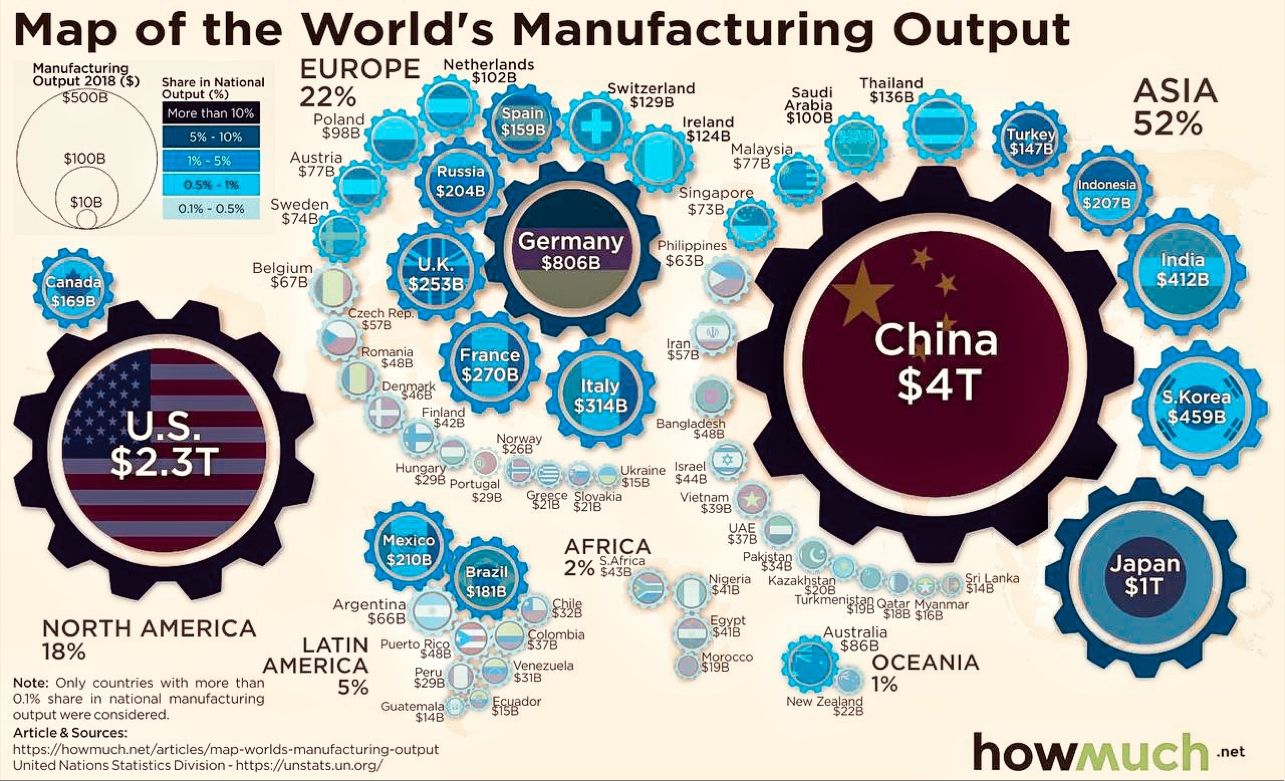
China leads the world’s manufacturing output

0

“Manufacturing refers to industries belonging to ISIC divisions 15-37. Value added is the net output of a sector after adding up all outputs and subtracting intermediate inputs. It is calculated without making deductions for depreciation of fabricated assets or depletion and degradation of natural resources. The origin of value added is determined by the International Standard Industrial Classification (ISIC), revision 3. Data are in current U.S. dollars”, explains Macrotrends. China runs this show.

Map of the world’s manufacturing output.
Asia 52%
Europe 22%
North America 18%
Latin America 5%
Africa 2%
Oceania 1%

The 2023 Lost Elections; How Conditional Cash Transfer (CCT) Rigs Elections in Nigeria

1

The rigging of the mind is back: TraderMoni, FarmerMoni, [you name it]moni. This was what APC used to rewire the last election. Yes, days to the election, the federal government was crediting market women, farmers, etc with money in a way that put opposition parties at a big disadvantage, in a nation where stomach infrastructure (food giveaway) wins elections.

As another election looms, the special rigging infrastructure is back: “The Federal Government says it has resumed payment of over N9.24 billion to 76,107 beneficiaries of Conditional Cash Transfer (CCT) programme across the six local government areas in Kebbi State. The National Coordinator of the programme, Halima Shehu, announced this during a courtesy visit to Gov. Atiku Bagudu in Birnin Kebbi.” They stopped the payment in 2019 and now they want to resume!

Watch as they scale this across the nation, accelerating it just days to elections. President Buhari has surprised me in many ways. Who would have believed this type of thing would happen under his watch? Yes, the timing of this cash transfer is shameful in a democracy

This is a pure institutionalized bribery for votes, distorting an organic equilibrium for free and fair election where candidates’ competence and capabilities are being evaluated by voters. But it is happening and they think it is fair in a democracy; very shameful for a nation.

#Unbelievable.