DD
MM
YYYY

PAGES

DD
MM
YYYY

spot_img

PAGES

Home Blog Page 5131

A person in possession of a stolen item is presumed to be the thief

2

A lady took to Twitter to narrate how she was arrested and detained by the police for purchasing airtime from a roadside vendor whom the police said to have stolen the airtime. She stated that she genuinely had no idea that the vendor stole the airtime since the vendor is a regular they always purchase airtime from.

She does not know what her fate could be the reason why she’s crying out on Twitter for help. 

The fact is according to Nigerian law if you buy or are found to be in possession of a stolen item you will be prosecuted for a felony or misdemeanor. This is the provision of S 427 of the criminal code act which was captioned “Receiving property stolen or fraudulently obtained and like offenses” and it provides thus: 

Any person who receives anything which has been obtained by means of any act constituting a felony or misdemeanor, or by means of any act done at a place, not in Nigeria, which if it had been done in Nigeria would have constituted a felony or misdemeanor, and which is an offense under the laws in force in the place where it was done, knowing the same to have been so obtained, is guilty of a felony.

If the offense by means of which the thing was obtained is a felony, the offender is liable to imprisonment for fourteen years, except in the case in which the thing so obtained was postal matter, or any chattel, money, or valuable security contained therein, in which case the offender is liable to imprisonment for life.

In any other case, the offender is liable to imprisonment for seven years.

For the purpose of proving the receiving of anything, it is sufficient to show that the accused person has, either alone or jointly with some other person, had the thing in his possession, or has aided in concealing it or disposing of it.

By this provision, by the reason of you being in possession of the stolen property, it is presumed that you are the thief or you have the knowledge that the item was stolen. For you not to be prosecuted, it must be ascertained after investigations that you do not know that the item you purchased or in your possession was stolen. 

The fate of the lady who purchased stolen airtime hereby, is after investigation and it is clear that he has no knowledge that the item was stolen then she will be off the hook and won’t be prosecuted. 

This is a modest call to all and sundry to take extra precaution and go the extra mile in verifying items purchased, especially when the item is unnecessarily cheap; cheaper than the market value, or an item sold in a place where it ought not to be sold because even if you have no idea that the item you purchased was stolen, the item will still be retrieved from you and given back to the original owner of the item. If you buy stolen goods, the general rule is that you are not the legal owner even if you paid a fair price and didn’t know that the goods were stolen. The person who originally owned them is still the legal owner.

Finally, as a general rule in law, a person is presumed to be the thief for being in possession of the stolen property. A person found to be in possession of the stolen property may also be charged with the offense of receiving stolen property unless it is ascertained that the person had no knowledge that the item was stolen but that does not mean that the item won’t be retrieved and given back to the original (legal) owner. 
Tech Firm Unveils Training For Young Nigerians

0

An Information and Communication Technology (ICT) company with competency in cutting-edge software solutions in the private and public sectors, Vatebra Limited, has graciously launched its inaugural internship cum mentorship programme for young Nigerians towards achieving efficiency.

The theme of the outing was ‘Vatebra Internship and Mentorship Programme #VIM202’ and unveiled at the Vatebra Tech Hub situated in Lagos State, Nigeria. The firm’s leadership disclosed that the initiative was to develop young and enthusiastic individuals within the shores of the Nigerian State into a unique learning and growth system consistent with its mission statement.

The programme, which began in April with its first set of interns and mentees, comes at a time when the technology ecosystem seeks urgent solutions, people and capabilities to make things better.

The tech firm noted that while useful and ingenious technology professionals “are increasingly becoming scarce as the industry generally witnesses brain drain, it becomes paramount that up-skilling and apprenticeship would go a long way to start building the technology professionals of the future” across the country.

The Programme Director of Vatebra Limited, in the person of Mosunmola Adewale-Akobada, stated “The VIM programme functions much like apprenticeship, providing hands-on technical training and capstone projects, as well as mentorship. As with the organization, the programme is both physical and virtual. It is scheduled to last for 10 months”.

On his part, the firm’s Head of African Markets, Matthew Omoaka informed, “This internship gives participants the rare opportunity to acquire skills and experience through short-term work, rather than a more traditional training approach. 

“It gives people a chance to develop some cool experience in a short amount of time and very specific and marketable information to put on a resume” as they strive towards excellence.

He added, “Conferring to the programme plan, the interns and mentees require up to 40 hours of work every week for a minimum of 10 months. Working hours are coordinated with the company supervisor. 

“The interns and mentees must demonstrate high-level performance and would be evaluated monthly. At the middle and end of the programme, the interns and mentees would make presentations and reports that would be used as a basis to judge their participation and achievements.”

Also speaking on the occasion, the Deputy Managing Director of the tech firm, Mike Aigbe, charged the interns that “the programme is an opportunity, which has been provided at no cost to them and for those who wouldn’t necessarily have had it.

“It will also help the beneficiaries in their career path, not only by getting the experience but as a concept of being able to balance that with the right exposure.”

In any field of human endeavour, the essence and inevitable role of mentorship and internship cannot be overemphasized. This is the reason anyone who lacks such a pattern of upbringing in their area of speciality must live to stagger as they proceed in the career.

Mentorship and internship have been proven beyond doubts to possess the required technicality towards boosting any career base. This is why it is needed right from home and preliminary schools, the moment it is being discovered the area the kid intends to channel his or her energy as they pursue their prospective career.

In view of this, the authorities of the various schools domiciled in Nigeria, starting from the primary to the tertiary, must endeavour to create a mechanism that would inculcate the required mentorship into their wards, in addition to the educational trainings given them on a daily basis. The parents and guardians must equally be of help to ensure this is actualized.

For those who have already graduated from tertiary institutions, they shouldn’t be in a hurry to make money as it’s found in our today’s society; rather, ought to focus on how best to develop their skills or what they had learnt in the school by ensuring they pass through holistic internship programmes, whereby they would trained by the experts in the fields.

This approach would make them become very marketable when they eventually entered the labour market.

Reviewing Nigerian Communications Commission’s Alert On Unlocking Of Vehicles By Hackers in Nigeria

0

The Nigerian Communications Commission (NCC) within the week warned car owners in Nigeria to beware of new hacking methods, which could remotely open car doors and start engines without keys.

The commission disclosed that owners of Honda and Acura car models were more prone to this attack.

The warning was part of the recent discoveries made by the Computer Security Incident Response Team (CSIRT), a cyber-security centre established for the telecom sector by the NCC.

Part of the centre’s report, released to the media by the commission’s Director of Public Affairs, Dr Ikechukwu Adinde, alerted telecom consumers and members of the public, particularly car owners, on an ongoing cyber-vulnerability that allows a nearby hacker to unlock vehicles, start their engines wirelessly and make away with the cars.

According to Adinde, “the CSIRT discovered that because car remotes are categorized as short-range devices that make use of Radio Frequency (RF) to lock and unlock cars, there are immediate dangers in a new hacking method which see hackers take advantage to unlock and start a compromised car”.

The CSIRT notified that the vulnerability is a Man-in-the-Middle attack or, more specifically, a replay attack in which an attacker intercepts the RF signals normally sent from a remote key to the car, manipulates these signals, and re-sends them later to unlock the car at will.

Dr Adinde quoted the CSIRT as saying, “Multiple researchers disclosed a vulnerability, which is said to be used by a nearby attacker to unlock some Honda and Acura car models and start their engines wirelessly.

“The attack consists of a threat actor capturing the radio frequency signals sent from your key fob to the car and resending these signals to take control of your car’s remote keyless entry system,”

“However, when affected, the only mitigation is to reset your key fob at the dealership. The affected car manufacturer may provide a security mechanism that generates fresh codes for each authentication request, this makes it difficult for an attacker to replay the codes thereafter”.

The NCC equally advised car users to store their key fobs in signal-blocking ’Faraday pouches’ when not in use.

It cautioned car owners, especially of Honda and Acura models to choose Passive Keyless Entry (PKE) as opposed to Remote Keyless Entry (RKE), to make it harder for an attacker to read the signal, because criminals would need to be at close proximity to carry out their nefarious acts.

The PKE is an automotive security system that operates automatically when the user is in proximity to the vehicle, unlocking the door on approach or when the door handle is pulled, and also locking it when the user walks away or touches the car on exit.

The RKE system, on the other hand, represents the standard solution for conveniently locking and unlocking a vehicle’s doors and luggage compartment by remote control.

The bone of contention is that, be it PKE or RKE, vehicle owners are enjoined to be wiser than serpent, to enable them to become a step ahead of hackers. Hence, they must seek advice from professionals whenever they acquire any vehicle prior to its use.

As tech or digitization obviously advances by the day, the members of the public are strongly urged to ensure they update their mindsets on a regular basis as regards any tech-driven gadget in their possession. They need to be well informed concerning any device being used by them or their loved ones, towards realizing the danger inherent that comes up as the days unfold.

As computer users are alerted to ensure strict passwords are being used, as well as regularly reviewed and changed, so it is applicable to vehicle owners or users of any tech appliance, to avert falling victim.

A $1.5 Billion Facility To Avert Food Crisis In Africa Approved

0

The African Development Bank Group’s Board Of Directors on Friday approved a $1.5 billion facility to help African countries avert a looming food crisis. Due to the Russian-Ukraine war that has led to the disruption of food supplies, Africa now faces a shortage of at least 30 million metric tons of food, especially wheat, maize, and soybeans imported from both countries.

Farmers in Africa are in more need of quality seeds and inputs which they need to plant to be able to boost food supplies. Therefore, the African Development bank board has approved $1.5 billion in facilities to avert the food crisis in Africa.

The African emergency food production facility will therefore provide 20 million African smallholder farmers with certified seeds. They will also enable them access to agricultural fertilizers, which will enhance them to rapidly produce 38 million tons of food.

The African Development Bank President Dr. Akinwunmi Adesina disclosed that food aid cannot feed Africa. He further stated that what Africa needs is not food bowls in their hands, but rather seeds in the ground, as well as mechanical harvests which will aid them to harvest bountiful food produced locally.

The African Development Bank will provide fertilizers to smallholder farmers across Africa over the next four farming seasons, using the convening influence with major fertilizer manufacturers, loan guarantees, and other financial instruments.

The Russian-Ukraine war negatively impacted a lot of countries most especially in Africa, because a large amount of them rely on Russia and Ukraine for a significant percentage of their food products, such as Wheat, Barley, Fertilizers, Vegetable oils, etc.

The war disrupted the global commodity markets and trade flows to Africa, which increased the prices of food in the region. Even before the war in Ukraine, a lot of countries in Africa were already faced with soaring food prices and scarcity, due to extreme climate change that disrupted planting and production efforts.

Many countries from East to Western Africa, have since been grappling with soaring food and fertilizer prices. The plan for the African Development Bank to provide 20 million farmers with seeds and fertilizers is highly commendable because Africans do not need to be spoon-fed, but rather given seeds to plant which will help them to also produce their food and stop being so dependent on other countries for food supplies.

Supplying them with foodstuffs will only do them more harm than good, as they will quickly exhaust it no matter how much, and always have them coming back for more which is not ideal. When these farmers in Africa put seeds in the ground, they will be able to feed themselves and also produce in large quantities, which will enable food security in the region. They will be able to feed themselves and preserve their dignity because there is no dignity in begging.

It has been estimated by the African Development bank that when these African farmers are given seeds and access to agricultural fertilizers, it will enable them to produce 38 million tons of food, which is a $12 billion increase in food production in just two years.

As Experts Advocate Gender Equality In Tech Industry

0

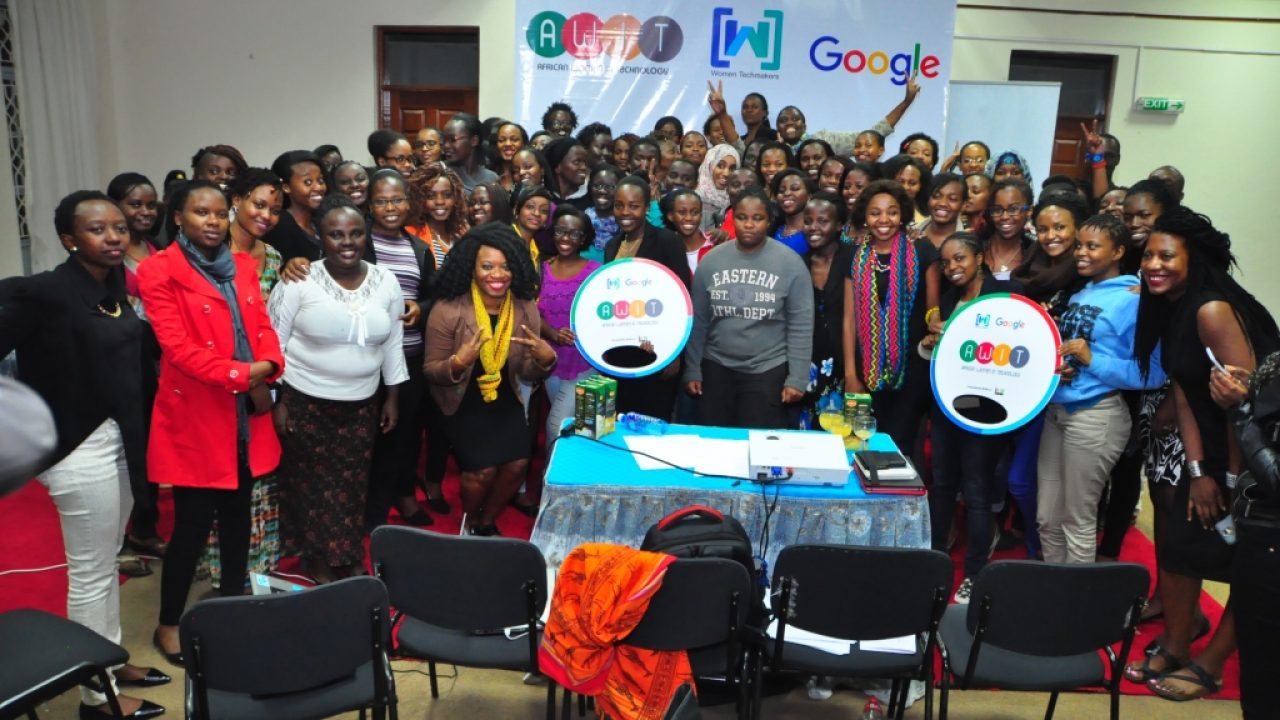
To commemorate the International Day of Girls in ICT, industry experts have called for gender equality in the sector.

According to the National Bureau of Statistics, on the average, in Nigeria, women make up merely about 22 percent of the total number of engineering and technology university graduates on a yearly basis.

While the Information Technology (IT) industry often talks about inclusion and diversity, much more work needs to be done.

There is undeniably a gender divide in all businesses, and one of these historically male-dominated industries is technology.

For Global Head of Zoho for Start-ups, Kuppulakshmi Krishnamoorthy, knowing the importance of equal gender representation in tech is one thing, and doing what it takes to support to become an ally, is an entirely different thing.

She said “To support gender equality in tech, the key players who have the power to propel this movement and those that can translate mere words into actions, need to have infinite compassion, and courage born out of empathy and kindness to constantly work on changing the stereotypes.”

While making recommendations to amplify support, Krishnamoorthy said there should be support for equality from early education on diversity and inclusion.

She stated, “Invest time and money on training to overcome conscious and unconscious bias; to create more resonant leaders; to create a community of mentors and givers who passionately volunteer and train young girls; to find and bring together more people who are truly intentional and are willing to pass the baton of knowledge on.

“Create and make available a marketplace of tech tools for learning and development like robotics kits, sandbox developer platforms, etc., that help in proving that technology can be a leveller. Empower young girls by helping them enhance their innate emotional quotient (EQ), keeping in mind inter-sectionalism.”

On her part, the Chief Executive Officer (CEO) of SweepSouth, a home services company, Aisha Pandor, said, “When it comes to getting more women into tech or other spaces where we are underrepresented language and representation matter, we often hear that when females are assertive, they are seen as aggressive, but when males are assertive, they are confident.

“That kind of language and those kinds of stereotypes start being entrenched when kids are young and impressionable. For example, as early as at primary school, when girls are studying maths and science, it’s well reported that many don’t feel confident enough in a class with other young boys, to put up their hands to answer questions.”

Pandor noted that as a society, “we need to be aware of any gender biases our children grow up with, and consciously untrain them, otherwise they occur at such a formative stage of development that they become entrenched and difficult to undo.

“This awareness work needs to be done with both girls and boys, without leaving either by the wayside. We also need to highlight more women in Science, Technology, Engineering, and Mathematics (STEM) in everyday life.

“If girls and women start seeing more women in spaces they wish to be part of, they will see their ambitions as relatable and achievable, and feel more encouraged to chase their dreams in this regard.”

While a strategist at Striata Africa, Dori-Jo Bonner opined that despite progress, there was still much more work to be done.

“As strange as it may sound, the gender divide in our technology business begins even before girls enter the workforce. As is the case with many other professions, ‘technology’ still carries many outdated stereotypes, and research indicates that girls are significantly less likely to study technology to consider a career in the sector.”

Bonner stressed this should not be the case, as the youth of today had emerged in tech much more than ever before, from entertainment to education, the next generation is introduced at a young age to technology and all it has to offer.

Based on her assertion, “What young girls do not learn about are the job prospects available in the technology industry and the important need for women to be acknowledged and make a difference in this space.

“It is crucial that we educate, mentor, and guide young girls about these options because only through this type of mentoring and guidance, can we begin to open doors to so many people whose abilities and talents are so sorely needed right now.”

From my view, to truly encourage young girls to key into the tech industry, we must begin from the homes and schools. The parents must desist from discouraging their girl child who possesses interest in taking a career in technologically-inclined disciplines. The schools ought to equally follow suit.

Above all, the concerned authorities need to deploy a mechanism that would ensure massive admission of female applicants in the various educational institutions across any country involved.