
DD
MM
YYYY

PAGES

DD
MM
YYYY

spot_img

PAGES

Home Blog Page 5132

When Speed Always Matters: Bank Transfers

0

Late transfers, slow deposits, and delays are real and expensive nightmares. Banks make errors; you take the hit. Trust us; we know the pain. Slow transactions affect income earners, family members, and friends. They also impact entrepreneurs, investors, and governmental organizations.

Many of us have experienced the frustration of waiting in line at a bank or supermarket only to find that the cashier is having trouble making a payment. We’ve all been there: you’ve been standing in line for 20 minutes, only to be told that your bill can’t be processed because of problems with your bank. It’s frustrating—not just for you but for everyone behind you who has waited just as long!

Most Nigerians Expect Slow Transactions

Recently, I heard a woman, a single mom, nagging about the stress of handling her small business while still having to keep up with uncleared bank transactions. It’s that bad. Most people expect their transactions to be delayed. This one affected a friend of mine. Some time ago, she felt unsafe walking through a dangerous environment. She knew how late it was, so she stopped at every available taxi. My friend had no physical cash and was completely relying on her Bank’s mobile transfer. Unfortunately, each driver refused to cooperate after considering their payment option. They were all sure about having slow transfer issues. The drivers even felt justified about avoiding the potential hassles they’ll go through if their payment delays.

For a long time, the Raven team considered the issue of slow bank transfers. It’s something that customers talk to us about all the time, and it’s something that many companies have tried to address in different ways. We considered this at length before launching our product last year and decided that what was needed was a solution that didn’t require any additional effort from our customers. First, let’s discuss the problems transactions face.

Why are bank transactions slow?

Suppose you complete a transfer checkout process instructing your bank to send money into another account. Your transfer begins as your bank notifies the recipient’s bank. The notification carries encrypted data with details about the executed transaction. The information is essentially permission for the recipient’s bank to make the payment on your behalf – using they are stored up money (assuming they have enough to go around).

Your bank knows that their message was successfully sent, and you receive a debit alert. (Regardless of your recipient’s account balance). In the end, both institutions take their time to balance their accounts and settle themselves.

This collection used to be a good enough method to maximize speed. Traditional Banks only had to trust that other institutions would follow the plan. The process, however, came with potential disadvantages for all parties. One challenge was that settlement depended on transferring large sums of physical cash constantly and needing to move them from bank to bank. But, payments between traditional institutions have the potential for many drawbacks. During unexpected events like the Pandemic, travel restrictions, curfews, etc., the process can take days. During that time, settlement funds can get delayed, lost, or stolen. Unfortunately, such events will lead to challenges that affect future transactions.

A temporal solution

The rise of digital banking made this process easier. Many banks reduced their reliance on human input when executing transactions (From interpreting bank tellers to forwarding transaction data to other banks), and most of the process became automated. The upgraded tech helped reduce the overall time per transaction; it also cut down certain errors that usually led to payment delays.

A digitized banking system was a significant step forward for the industry, but it still left room for improvement. While transactions were now faster, they still required human intervention. There were still points in which errors could be made – especially when dealing with non-standard transactions.

The growing population of banking services with the expansion of digital tech added gravity to the existing responsibility of traditional banks. The process needed for the management, interpretation, and settlement of multiple external bank accounts is already a tedious one, with mistakes ultimately resulting in delayed transaction processes for many banks.

In recent years, several technological innovations have changed this reality once again. To overcome slow transactions, innovative digital-only banks, including Raven, rely on transaction processes that improve speed.

Solution

Raven Bank uses a centralized system that specializes in clearing transfers. The system utilizes a centralized process focused on executing transactions well enough to deliver your money faster!

The process involves a secure receiving depository financial institution. They receive batches of transactions, sort them out, and make them available to the bank or financial institution of the intended recipient.

The receiving depository financial institution then checks for the authenticity and validity of the transaction before authorizing it for settlement recipients.

Because regulators have vetted these institutions, they provide security and convenience for banks and other financial service providers.

Conclusion

With our quick and seamless transfer system, you can send money to anyone. You don’t even need to worry about the recipient’s bank—it doesn’t matter which one they use! Because there is no need for the complex personal bank-to-bank settlement process, processing transactions reduces the cost of transfers.

If you’re one of the many people affected by a late transfer, slow deposit, or hold on your account, you need to act fast. Get started with Raven Bank, download our App on Google Play store and Apple Store; enjoy high-speed transfers.

Register for Tekedia Mini-MBA Which Begins June 6, 2022

0

Invent, innovate and drive organizational transformation, performance, and growth. Capture emerging opportunities in changing markets while optimizing innovation and profitability. Digitally evolve your business or functional area, turning digital disruption into a competitive capability and advantage. Master the concepts of building category-king companies, and thrive.

Registration for another edition of Tekedia Mini-MBA (June 6 – Sept 3, 2022) continues. Tekedia Mini-MBA, from Tekedia Institute is an innovation management 12-week program, optimized for business execution and growth, with digital operational overlay. It runs 100% online. The theme is Innovation, Growth & Digital Execution – Techniques for Building Category-King Companies.

All contents are self-paced, recorded and archived which means participants do not have to be at any scheduled time to consume contents. Our programs are designed for ALL sectors, from fintech to construction, healthcare to manufacturing, agriculture to real estate, etc.

More so, we have thrice weekly LIVE Zoom sessions, anchored by leaders in markets. REGISTER today (N90,000 or $170) for many early benefits and experience the best business school for African entrepreneurial capitalism. BEGIN here 

OSUN 2022: PAN Applauds Slight Improvement in Campaign Messages, Warns against Vote Buying, Verbal Attacks

0
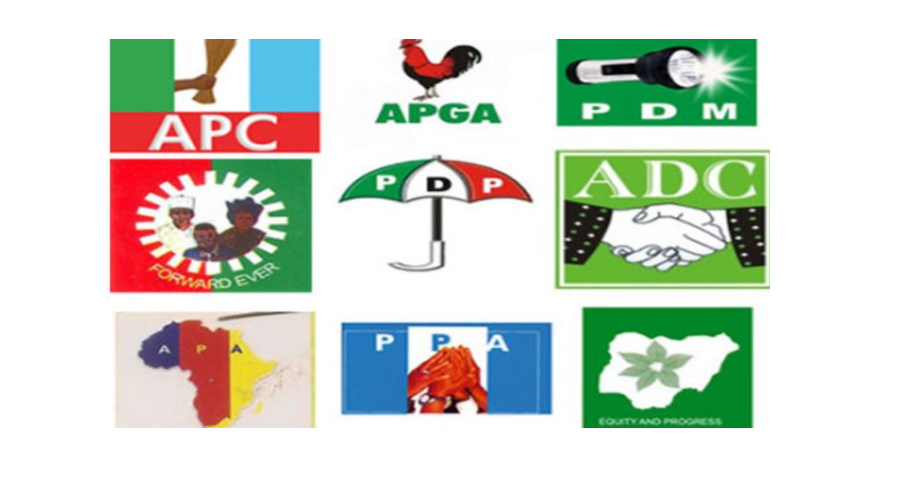
Sample of political parties in Nigeria (Source: Punch)

A non-governmental organisation with data-driven research interest, Positive Agenda Nigeria (PAN), has applauded some new approaches some political parties in Osun State recently deployed to promote their candidates ahead of the state’s governorship election come July 16, 2022. However, PAN warns political parties to refrain from statements that depict vote buying and showcase verbal attacks, as such practices are unhealthy for democratic principles.

The organisation dropped these hints in its second weekly report on election campaigns ahead of Osun 2022 Governorship Election.

Although the report had instances where candidates and their supporters attacked the personalities of their opponents, the level at which they keyed into campaign issues improved better than the first week’s campaign traces. Campaign issues such as agriculture, economy, social welfare, education, health, among others, reflected more in this week’s report. This means the rate of acclaims outweighed the level of attacks among political parties and their supporters.

The report reads, “We implore all the parties, especially the two major parties, to sustain the atmosphere of increased acclaims instead of being attack-inclined in their campaigns. In the same vein, we enjoin the political parties to as well keep on focusing on issues of the state.  The improved focus on programmes and policies of the candidates and their political parties should be continued. PAN commends the positive slight deviation observed in the parties and candidates’ engagement this week.

However, we condemn the introduction of insinuation of vote buying capacity by one of the candidates.  It is too early for such issues to rear its ugly head in the campaign atmosphere for the Osun 2022 election. For a state like Osun, bringing up policy issues and campaign programmes using radio as a means of communication is commendable. It allows the people at the grassroots level to have access to campaign issues.”

Animasahun Adekunle Mojeed, a Senior Research Analyst with the Group and Lecturer at Fountain University Osogbo’s Department of Political Science, notes that the electoral body and agencies in charge of regulating party finance should begin developing strategies to ensure that vote buying is effectively controlled during the election. This, he stresses, is critical because ‘vote buying intent’ appears earlier than expected, which has tendency of jeopardizing a credible poll on July 16th, 2022.

It would be recalled that PAN’s objective is to monitor pre-election campaigns in Osun for 69 days. This report marks the end of day 14 of the 69 days.

The full report is available here

Federal Government To Send 200 Youth To Israel and Morocco On Crop Production And Animal Husbandry

0

The National Agricultural lands development authority (NALDA) has disclosed its plans to send 200 young Nigerians for capacity building on crop production and animal husbandry in Israel and Morocco.

Such a motive is part of the continuation of the National young farmer’s scheme (NYFS), a program that President Muhammadu Buhari flagged off some months ago. The programs are said to have assisted Nigeria in terms of food availability during the emergence of the covid-19 pandemic, if not the country would have gone to other nations to beg for food.

The National agricultural lands Development Authority (NALDA) disclosed that the aim is to make agriculture more attractive to youths in the country, as the training will equip them on modern agriculture and agribusiness, which will lead to massive food production for Nigerians and more exportation of food.

They further disclosed that Israel and Morocco were chosen because they have expertise in greenhouse farming and animal husbandry. Youths will be drawn from the 36 States of the federation, and when they return to the country, they will begin to teach others what they have learned from the program

This is a very commendable initiative from the Buhari-led administration, as this will indeed help build a young generation of farmers that will use their expertise to drive Nigeria’s agricultural sector forward. Also, this initiative will change the ideology of a lot of youths, who have the belief that Agriculture is only done by peasants.

They will get to understand that agriculture is a very lucrative business which they will earn a lot of income from, as well as get adequate food supplies for not just personal consumption but also for the nation.

Such strategic training will also stir up interest among a lot of youths, and will also be a source of employment for those who are unemployed, which will automatically decrease the rate of unemployment in the country. It will also improve the food security in the country.

Currently, Nigeria is still characterized by high reliance on food imports. Due to food shortages in rural areas in the country, malnutrition is already widespread which has often increased the mortality rate in the country.

However, it is pertinent to note that food security is not simply having sufficient quantities of various staple foodstuffs, but it also entails access to the entire citizenry to these food items at very affordable prices.

Once this initiative is effectively carried out by the government to send 200 youths to Israel and Morocco for animal and agriculture, it will ensure food security in the country and attain self-sufficiency in food production.

Nonetheless, even if such an initiative is properly executed, yielding a lot of benefits, unless the government put strict strategic measures to guarantee the security of farmers on their farmlands and other security challenges, a food-secure nation will never emerge.

Once the issue of insecurity has been properly handled, with the expertise of the trained youths and many others, there would be sufficient food not just enough for the citizens of the country, but also the country will earn more revenue from the export of these agricultural commodities.

MTN Launches Payment Service Bank and Mobile Money Services in Nigeria

0

Following the evolution of Payment Service Banks, which has seen mobile telecom operators in Nigeria delve into financial services, MTN has kicked off its MTN MoMo.

The MTN MoMo, a commercial payment service bank that the telecom giant started a few years back, finally commenced operation on Thursday after series of trials and approvals from the central bank.

The Central Bank Nigeria (CBN) granted approval to MTN’s fintech in 2021. The company carried out a successful pilot service starting on the 16th of May, 2020, aligning it with the launch of MTN’s GSM operations on the 16th of May 2001 and the listing by introduction on the Nigerian Exchange Limited on the 16th of May 2019. The pilot phase took place across cities in Nigeria.

The PSB already boasts of an expansive agent network of over 166,000 active agents and a digitized partnership infrastructure, poised to provide a wide range of financial service products to millions of unbanked and underserved Nigerians.

MTN CEO, Karl Toriola, said the launch of MTN MoMo will boost financial inclusion in Nigeria.

“We are grateful to the Central Bank of Nigeria (CBN) for their support and guidance through the process.

“This is an important milestone for MTN Nigeria in our mission to support the government’s drive towards financial inclusion in Nigeria. Not just for those in urban centres and markets, but also people in the rural and remote areas of the country who remain excluded from the financial system,” he said.

MTN has entered into a partnership with Africa’s largest fintech company, Flutterwave, to broaden payment penetration in Africa. This means, MTN MoMo, having established operations in other African countries, stands a chance to compete in Africa’s burgeoning fintech ecosystem.

MoMo PSB CEO, Usoro Usoro said they will be working with other players in the payment industry to expand MoMo services nationwide.

“Providing easy to use, accessible and affordable financial services to all Nigerians is essential to executing the CBN’s financial inclusion strategy and the digital inclusion agenda of the Minister of Communications and Digital Economy. We look forward to playing our part and are excited about the opportunities to partner with relevant institutions across various sectors to co-create and expand access nationwide,” he said.

This has been a long time coming for the largest mobile telecoms company in Africa. Three banks – Hope PSB, Money Master PSB and 9PSB – got their final approvals in August 2020 and have since commenced operations

The PSB initiative was introduced by CBN in 2019 as a measure to increase financial inclusion in the country particularly in rural areas. According to the CBN, a major objective for the establishment of PSBs is to leverage mobile and digital platforms to enhance financial inclusion in rural areas, especially the underserved parts. This is expected to be achieved by increasing access to deposit products, payments and remittance services to small/micro businesses and low income households.