DD
MM
YYYY

PAGES

DD
MM
YYYY

spot_img

PAGES

Home Blog Page 5144

Fintech Startup, Last Mile Financial Services, Tackles Employee Fund Challenge With New App

0

Last Mile Financial Services Limited, a fintech start-up, has launched a payment app called “”PAY MASTA”. The app allows company employees to access funds for emergencies before salaries are paid.

During the launch of the start-up, Co-Founder of the company, Gerald Erih disclosed that the solution was borne out of genuine response to employees’ payment challenges.

In his words, “We observed that in Nigeria, about 80 percent of workers live paycheck to paycheck. So we developed this solution to enable them not just to have access to the money they have earned, anytime they need it, but also to help them plan their finances and track their expenses so that they can live debt-free”

The co-founder further disclosed that he noticed that so many loan apps are making things extremely difficult for people, instead of the other way round. He stressed that their high-interest rate is very awful, which makes it difficult for the borrower to pay back, which has seen so many of them default in payment.

With the launch of Last Mile Financial Services, the firm is on a mission to rescue working-class Nigerians and also extend to other Africans. Already, the Start-up has signed up about 20 Nigerian companies whose employees are currently enrolled on the Pay Masta app, to access interest-free payment of their salaries by their employers, while noting that 75 other Nigerian companies are being processed to be onboarded on the platform.

The company is already working on closing new funding, to enable it to expand its business across the shores of Africa to address payment challenges faced in the continent. With each passing day, more Fintech Start-up rises to fix financial challenges and problems people are often faced.  with

This is a commendable initiative from last-mile financial services for helping to solve a long problem that employees in the country are often faced with. Like they say, “Life is full of uncertainty”, which implies that most times before employees are paid salaries, they are sometimes faced with emergency issues that arise before payday, which often puts them in a tight corner.

A large percentage of workers in Nigeria live paycheck to paycheck. Loan apps on the other hand are not helping matters, as they charge outrageous interest for loans, which makes it difficult for the borrower to pay back. Most loan apps in Nigeria perpetuate the notion of loan sharking, which is fraudulent and violates the ethics of loan transactions.

Many employees who are in dire need of money and are not well-informed, borrow money from these apps which later affects them in paying back. Most of them agree to the terms and conditions of these loan sharks, not aware of the difficult financial situation they might find themselves in. Well, last-mile “Pay Masta” has come to put a stop to fraudulent interest rates of these loan sharks by offering no interest rates for money borrowed.

Experts Hold Conference On Fraud Eradication In Electronic Payment System

0

Experts and stakeholders in Nigeria’s electronic payment industry have called for formidable efforts to curtail the growing menace of digital frauds.

The experts, who gathered at the forum organized by the Businessday Media, tagged ‘Future of Payment and Fraud Conference 2022,’ in Lagos State, Nigeria spoke on the evolution of payment technology, existing payment trends, future of payments, and recurring fraud issues, among sundry issues.

They submitted that cyber fraud had been evolving, with attacks growing in sophistication and scope, thereby making payments’ security and prevention of electronic frauds top priority.

Speaking on the ‘Role of Law in Mitigating Fraud in the Digital Payments System’, Prof. Kareem Olatoye of the Faculty of Law, Lagos State University (LASU), Ojo, opined that the digital payment system was vulnerable to fraud and evidence of this abound everywhere, with cybercrimes such as cyberstalking, cybersquatting, and phishing, among others, leading the pack.

Olatoye said the report had it that identity fraud global losses totalled $52 billion in 2021, stressing there were, however, a plethora of existing Nigerian laws having provisions capable of helping to tackle electronic fraud.

According to him, these include Cybercrime Prohibition and Prevention Act 2015; Central Bank of Nigeria Act; Economic and Financial Crimes Commission Act 2004; Money Laundering (Prohibition) Act 2012; the Advanced Free Fraud and Other Fraud Related Offences Act 2006; the Communications Act 2003; Nigeria Deposit Insurance Corporation Act; Evidence Act 2011; Criminal Code Act 1990; the Penal Code 1990; Companies and Allied Matters Act 2020.

Others were the Constitution of the Federal Republic of Nigeria 1999; the Trademarks Act 2004; Anti-Corruption Act; Bank Employees, etc (Declaration of Asset) Act; National Drug Law Enforcement Agency Act and Special Tribunal (Miscellaneous Offences) Act.

The Law professor stated that law could be used to proffer solutions, stressing effective regulation was required. Having mentioned data protection must be robust, he stressed that S.6 NITDA Act enables regulating electronic data interchange.

According to him, under the NDPR, a data controller company must appoint a Data protection officer who must ensure the organization complies with data protection laws and regulations.

Olatoye informed the audience that regulation of crypto-currency was equally required, hinting that the SEC was currently working with CBN on crypto trading regulation.

Mitigating the impacts, the Law professor recommended there was need for law mandating payment software developers/owners to ensure security of the payment system against hacking and other abuses that could result in financial loss to the users.

He expressed there should be digital payment risk insurance in Nigeria as seen in the USA and other developed countries, adding online safety law was also required as seen in the United Kingdom online safety bill (s.36), which imposes duty of care to offer protection where criminals impersonate to steal people’s personal data or break into bank accounts.

He further opined there was need to place and enforce the legal burden on anyone carrying on business using Internet-enabled platforms to take responsibility for the safety of customers making digital payments.

“Adequate punishment for cybercrime and effective implementation. Digital Infrastructure needs to be robust. Online policing /monitoring of financial transactions, international cooperation are needed.” he stressed.

On his part, the Country Manager of Visa Nigeria, Andrew Uaboi, who spoke on the topic, ‘Contactless as the future of Payment in Africa,’ disclosed that contactless payment was the next frontier in the Nigerian Fintech and payment ecosystem.

It’s noteworthy that contactless payment is a means of payment that does not require cash or even swiping a card. It requires tapping or holding the contactless card or smartphone near a compatible card reader while checking out.

According to him, the innovation would enable the growth of small businesses and also assist individual businesses to thrive, revealing that Nigerians were expected to tap the full potential of the coming innovation, which would bring more merchants into the financial ecosystem.

He said, “There has been a significant increase in contactless payment since the COVID-19 era. In the U.S for example, one in six people testified that they carried out their first contactless payment during the COVID-19 last year. We have also seen a 40 per cent year on year growth of contactless payment, and all of this payment is also enabling small businesses. It enables the growth of individual businesses as well as economies.”

He therefore urged Nigerians to leverage the opportunity that is coming in changing their business and the economy at large.

Uaboi further explained that Visa was working with the Nigerian government, CBN and other partners to build a framework for which contactless would come in and thrive in Nigeria.

Speaking further, the Managing Director of Interswitch, Hakeem Lawal, disclosed that while support from overseas was important for payment penetration in Africa, the development of Africa’s payment system was largely in the hands of Africans via participation, policies and tailor-made solutions to address the needs. He said it was evident in the penetration of Mobile Money in Sub-Saharan Africa and the wide spread of online real-time funds transfer in Nigeria.

It’s indeed high time the relevant authorities in Nigeria stepped up mechanisms in ensuring electronic transactions become safer and reliable within the shores of the country.

This can only be achieved by tightening regulation that controls the overall activity regarding digital banking. The operators and entrepreneurs in the industry ought to also be regularly trained and retrained. Among all, prosecution must be taken seriously to serve as a deterrent to the upcoming fraudsters.

As Nigeria, Czech Republic Sign $16.2m Bilateral Agreement On Research Development

0

It’s clear and indisputable that any technological creation or innovation depends wholly on research works, which remain the bedrock of science and technology. Little wonder countries that believe in tech don’t hesitate to channel their efforts to activities pertaining to research development.

The Czech Republic has reportedly allocated $10.5 million in research funding to foster the growth and expansion of infrastructure, manufacturing and innovation in Nigeria.

The Executive Vice-Chairman of the National Agency for Science and Engineering Infrastructure (NASENI), Prof. Mohammed Haruna made the disclosure during the launch of the Call for Research and Development Proposals for the Delta-2 Programme, on Wednesday 18th May 2022, in Abuja, Nigeria’s capital territory.

The project is a brainchild of the Presidential Implementation Committee on Technology Transfer/Information (PICTT) exchange between Nigeria and the Czech Republic, inaugurated by President Muhammadu Buhari sometime in 2021.

According to Prof Haruna, besides the $10.5 million funding donated by the Technology Agency of the Czech Republic (TA CR), the Federal Government of Nigeria (FGN), through NASENI, would supplement the fund with $5.7 million, totalling $16.2 million.

He said, “Technology acquisition and domestication, through this collaboration, will help in bridging the technology gap between Nigeria and the West and facilitate the transition to a manufacturing economy. Indeed, the deployment of technology is crucial to mitigate our socio-economic and security challenges.

“The Delta-2 programme is uniquely designed to catalyse technology transfer and mobilize positive interactions and investments among private sectors and relevant stakeholders in Nigeria and the Czech Republic.”

The NASENI boss noted that the project proposal submissions would cover the period between May and July 2022, and that the output of the projects was expected to yield patents, pilot plants and the development of proven technologies, among others.

He added, “These project results will revolutionize our agricultural practices and mining methods. It is expected to create new micro, small and medium enterprises and promote existing ones.

“The resulting technologies from these collaborations will be transferred and domesticated in Nigeria through NASENI and other research institutions and private companies.”

The Chairman of the PICTT, Muhammadu Dahiru disclosed to the audience, who comprised mainly heads of universities and research-based institutes, that the Delta-2 programme would empower the nation’s entrepreneurs and research institutions with the technology needed in developing new products and enhancing old ones.

He said, “At the end of the day, we want to start manufacturing things in Nigeria, so that we can stop inflation and the naira’s free fall.”

On her part, the representative of the Czech Republic Ambassador to Nigeria, Beata Matusikova hinted that given the experience of her country and the potential Nigeria had in technology, both nations could develop a brighter future for the private sector.

This was indeed a very commendable move, to assert the least. It is only a nation yet to wake from sleep that’s still uninformed as regards the inevitable role of research activity in tech innovations.

However, this wasn’t the first bilateral agreement recently entered by Nigeria and other countries, yet the case remains the same in the country as regards commercialization of the nation’s countless patents.

Hence, the authorities involved in the aforementioned Memorandum of Understanding (MOU) graciously entered by the two countries, as witnessed by notable research-oriented individuals, must expedite actions to ensure it doesn’t stop at the Launch, but ought to transcend to the expected practical developments in the nearest future.

It’s imperative to take into cognizance that Nigeria would only get it right in the tech industry when her numerous technical potentials are given the needed due recognition without involving any form of pranks.

This can be actualized by putting the right people at the helm of affairs and ensuring that corruption is holistically tackled in the system not minding whose ox is gored.

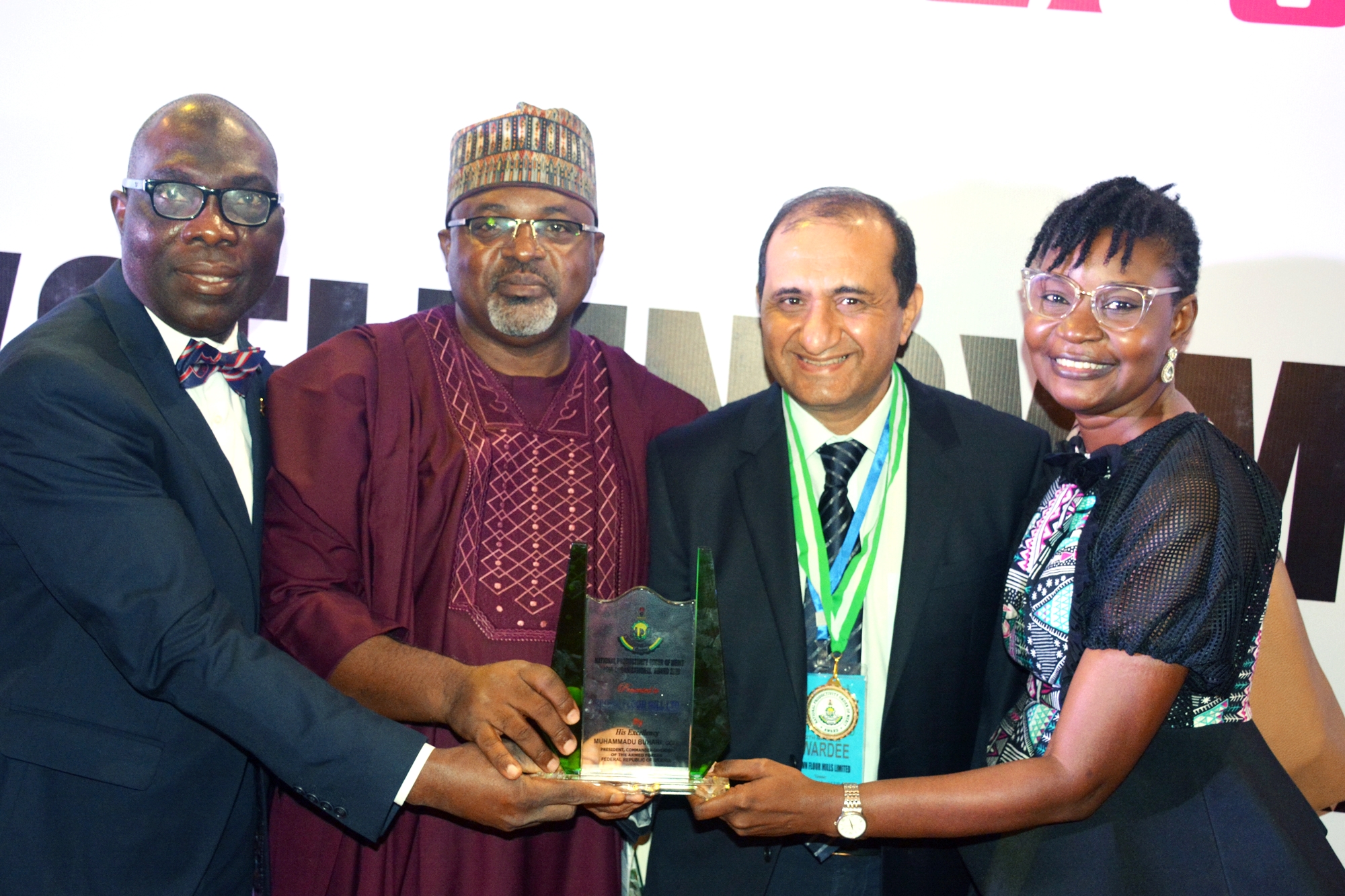
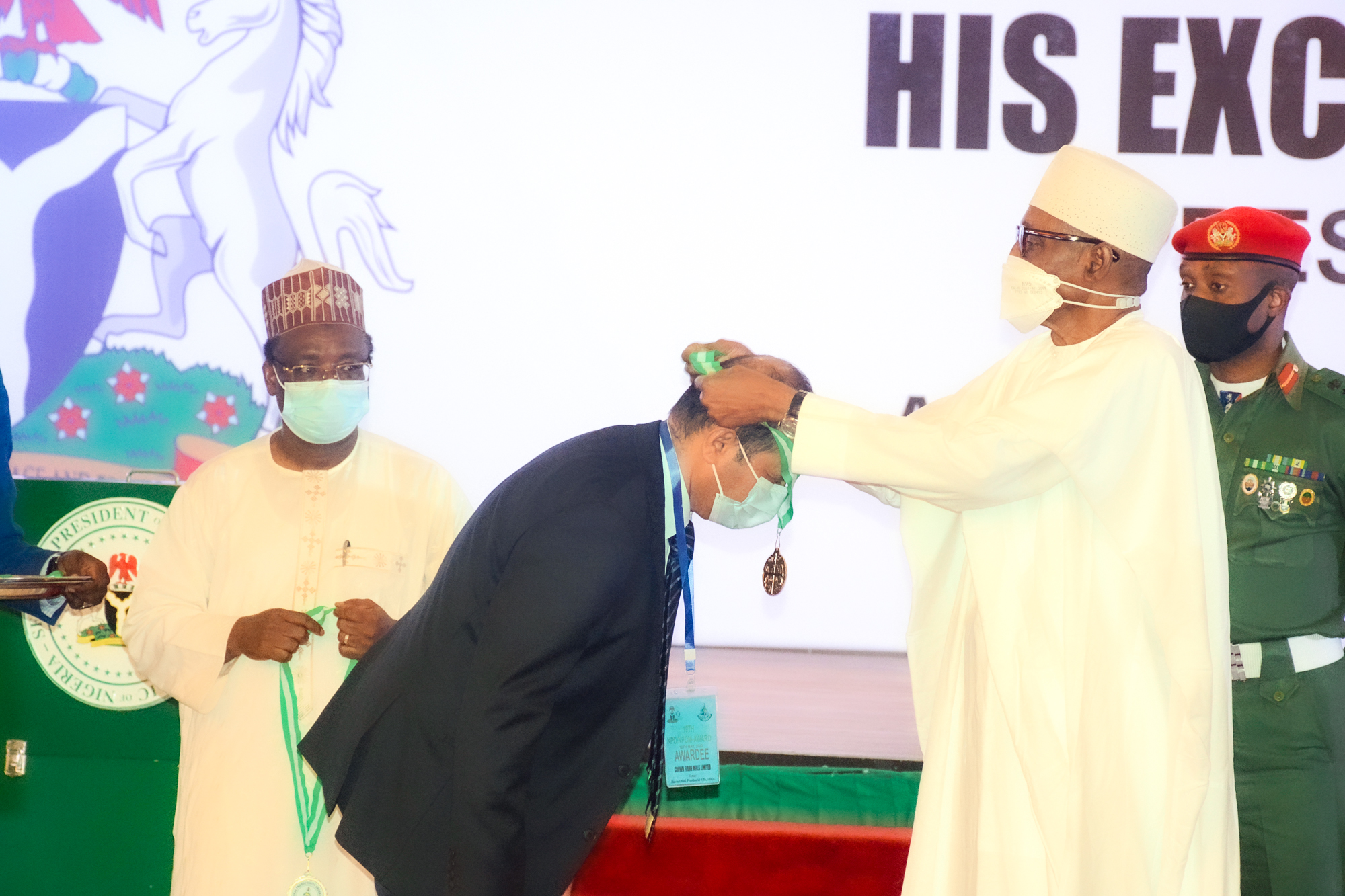
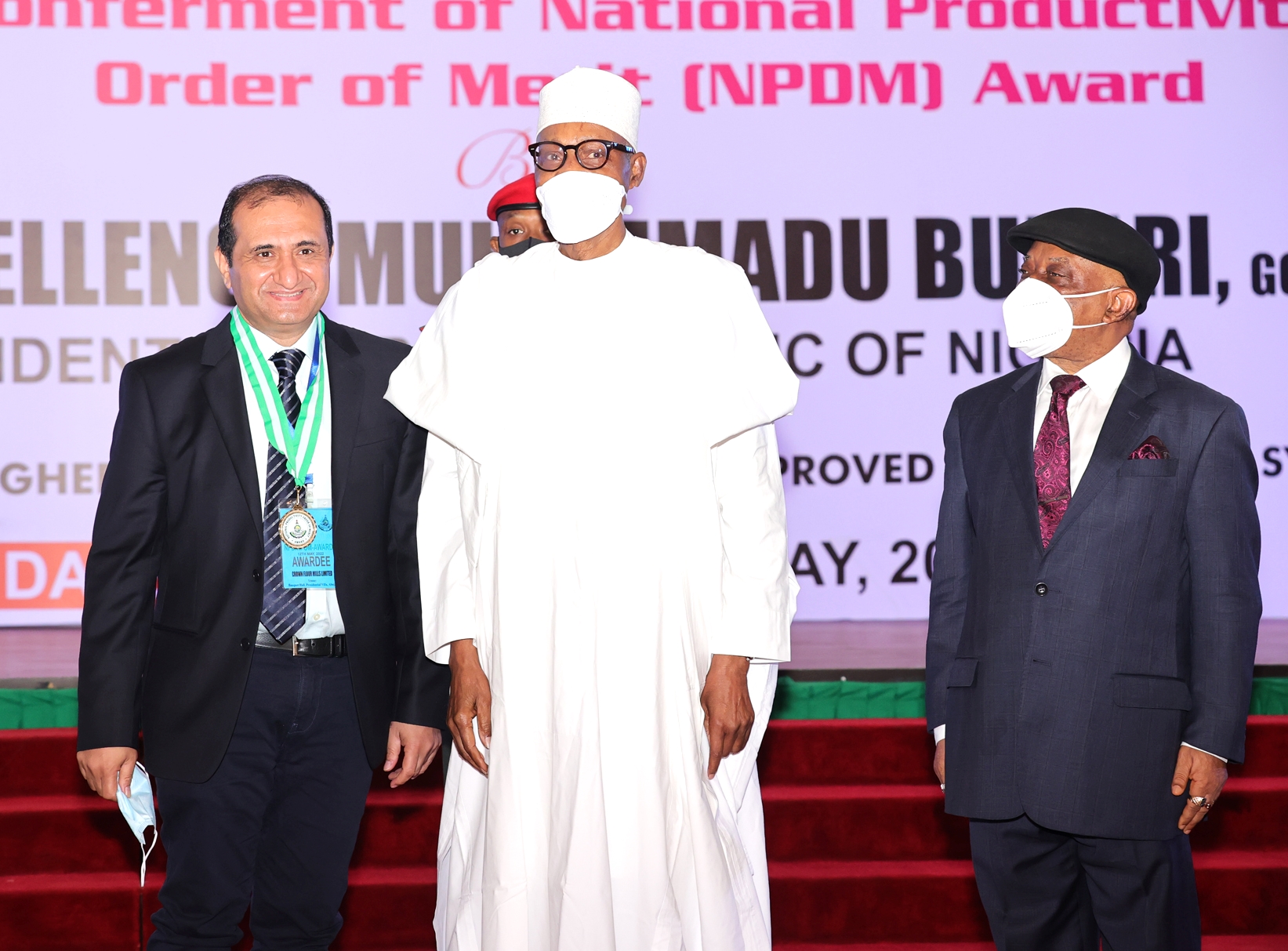
President Buhari Honours Agro-innovators, Crown Flour Mill, with National Productivity Order of Merit Award

0

They are innovators of distinction in the agricultural value chain. They have played major and catalytic roles in feeding Africa. Three years ago, they invited me to speak before their top management. I began by thanking Olam Agri and its subsidiaries for the work they have done in making sure that Africa will have a secured food future and an agric-based economy for the continent. That future requires innovation to boost productivity, optimize resources and farm in ways that are environmentally friendly and sustainable.  

That commitment is evident and I am happy to join the Nigerian people to congratulate Crown Flour Mill (CFM), the flour milling subsidiary of Olam Agri, a key investor in agro value chain, for receiving the prestigious National Productivity Order of Merit Award from President Muhammadu Buhari on May 12 in Abuja. Specifically, I congratulate Ashish Pande, the Managing Director of CFM and my good friend, Sid, who ran the R&D, for what this company has accomplished.

Improving market standards, delivering outcomes that benefit all stakeholders – business, communities, workers, etc – will remain the core of great companies. This award from the Nigerian people should motivate Olam to continue to do more. Yes, more investments on the Seeds for the Future Programme, driving the wheat self-sufficiency agenda in Nigeria, and other programs.

From all of us at Zenvus, congratulations CFM and Olam Agri for receiving this national award and your support to indigenous local innovators like my small company. Win more markets and feed ALL.
—Press release–

CFM’s Journey to a Well-Deserved National Award

When Ashish Pande, the Managing Director of Crown Flour Mill (CFM), the flour milling subsidiary of OlamAgri, a strong investor in the Nigerian agriculture value chain, rose to the podium to receive the National Productivity Order of Merit Award from President Muhammadu Buhari on May 12 in Abuja, the rapt applauses from the country’s finest business leaders present at the occasion confirmed the recognition was well-deserved.

The enthralling ovation was also proof that bold businesses can set themselves on the path to sustained national relevance through a commitment to raising market standards and delivering consistent impressive performances that impact the livelihood of the citizens.

In the wheat value chain, the efforts of CFM, in collaboration with vital local and global partners are remarkably galvanizing actions towards improved local wheat production. The business’ scaled investment in seed trial and research, distribution of farming inputs to local wheat farmers and the stimulation of wider adoption of mechanized farming techniques among smallholder farmers is spurring increased harvest yield. In 2021, an estimated 847 tonnes of wheat were collected for off-take by members of the flour milling association and to which CFM is a key member.

The business strategic approach to developing the wheat value chain recently triggered a pivot to deepening the stakeholder engagement in the value chain through a consultative forum – webinar series tagged the Olam Green Land Webinar Series.

Since the year 2021, the flour milling firm has channelled significant investments in bringing together top officials from the Federal Ministry of Agriculture and Rural Development (FMARD), the Central Bank of Nigeria (CBN), the Lake Chad Research Institute (LCRI), and global experts in plant breeding and genetics to discuss ways to improve local wheat production in Nigeria.

Under the auspices of its signature and flagship wheat value chain development vehicle christened “Seeds for the Future” Programme, the business undertakes interventions in research and development, innovation, education, and economic empowerment, on a sustainable basis. The programme kicked off with wheat seeds trial project in 2021. On the project, CFM is committing N300 million ($750,000), one of the largest private investments in the wheat value chain, to drive the country closer to its aspiration of attaining self-sufficiency in wheat production.

The programme involves a strategic partnership with the national agriculture research agency and renowned global experts in plant genetics to conduct a wider trial of heat-tolerant seeds as well as training local smallholder farmer women cooperative members across the wheat farming belts as seed-multipliers.

It is estimated that the programme will engage at least 10,000 farmers as seed multiplicators who will cultivate about 100,000 ha of land with high-yielding seed varieties by 2030. An estimated 200,000 tonnes of seeds are expected to be generated in the process for multiplication and commercialisation with a stronger impact on the income levels of smallholder farmers in Nigeria.

Also, recently, under the Seeds for the Future Programme, CFM embarked on the upgrade of a  school in indigent communities to provide sound academic foundations for future leaders of the country as part of an overall focus on the development of Nigeria through the Seeds for the Future initiative. Similarly, as part of concerted efforts to help improve wheat cultivation in the wheat farming belts, the business donated irrigation facilities including pumping machines to female wheat farmers in key locations also in the year 2021. 

CFM is at the fore of providing affordable and safe food brands for Nigeria’s teeming population. It was among the first food manufacturers in Africa to deploy a Vitamin Premix facility in its factories to ensure all its food brands contain essential minerals as stipulated in the global Micronutrient Fortification Index (MFI). For that valuable effort, the firm received the award of Industry Leader in Quality Systems and Fortification in the year 2021.

Meanwhile, it is in the areas of generating good jobs for the economy and providing top working conditions for its employees that perhaps CFM is having the greatest impact. Apart from being a formidable part of the Olam Agri Group that ensures over 5 million smallholder farmers across the globe continue to access a ready market for their outputs and earn stable incomes for their produce, the business employs local talents from various fields in Nigeria.

Most notably, between the years 2020 and 2021 CFM invested N120 million in training 1,500 local bakers in modern baking practices. It is setting up well-equipped baking schools in select states of the country to engage more bakers. The training received during the programmes is helping to improve productivity level as well as generate good incomes for more local households.

The business aslo demonstrated its support for environmental sustainability by engaging in a tree planting campaign in the year 2021, as part of concerted efforts aimed at reducing its carbon footprint.

Considering the over 10,000 smallholder farmers to be engaged in the Seeds for the Future programme, the  number of bakers trained annually in CFM baking schools, the supply chain players in the retail sectors stocking the firm’s popular food brands, the multiple scientists and researchers working for the firm at the production level of the value chain, and an impressive line of administrative officers sourced from all the geopolitical zones of the country running the business amongst others, CFM is a great enabler of a robust national economic performance.

Emphasizing the value of productive contribution to the economy, President Muhammadu Buhari explained at the awards ceremony:“Productivity is a vital determinant of economic growth, social progress and improved standards of living.”

The business has committed to ensuring  that its productivity rate will continue to reflect on the  national gross domestic production (GDP) rating.

S&P 500 Explains Why Tesla Was Kicked Out of ESG Index

0

Tesla CEO Elon Musk included FSG in his criticisms on Twitter that have lasted for weeks, touching many areas, from his Twitter acquisition bid to politics.

His attack on the FSG came after Tesla stock was kicked out of the S&P 500 ESG Index on Wednesday despite its focus on making electric vehicles, solar panels, and battery packs.

Insider reports that S&P Global executed its fourth annual rebalance of the sustainably focused, large-cap index this week, and the portfolio looks relatively similar to the plain-vanilla S&P 500 index. The S&P 500 ESG Index holds 308 stocks and counts Apple, Microsoft, Amazon, and Alphabet as its top four holdings.

The report added that Tesla, which is the fifth largest holding in the S&P 500, was ineligible to be included in the ESG index due to its low S&P DJI ESG score, according to S&P Global. That score fell in the bottom 25% of its industry group peers. Tesla joins Berkshire Hathaway, Johnson & Johnson, and Meta Platforms as the top mega-cap companies that have been excluded from the index.

“ESG is an outrageous scam! Shame on S&P Global,” Tesla CEO Elon Musk tweeted in response to the development. “Exxon is rated top ten best in world for environment, social & governance (ESG) by S&P 500, while Tesla didn’t make the list. ESG is a scam. It has been weaponised by phony social justice warriors,” Musk added.

Following Musk’s criticism, S&P Global explained why Tesla was removed from the index, citing many reasons. These reasons were said to have outweighed Tesla’s commitment to transitioning the world to cleaner energy, according to S&P Global.

“First and foremost, the GICS industry group in which Tesla is assessed experienced an overall increase in its average S&P DJI ESG score. So, while Tesla’s ESG score has remained fairly stable year-over-year, it was pushed further down the ranks relative to its global industry group peers,” S&P Global explained in a blog post.

As noted by Insider, the reason makes sense given that legacy automakers have turbocharged their efforts to jump into the electric vehicle space over the past year.

Other reasons for Tesla’s fallout from the index is its lack of a low-carbon strategy and codes of business conduct, and the company’s exposure to risks stemming from its involvement in controversial incidents.

“A media and stakeholder analysis identified two separate events centered around claims of racial discrimination and poor working conditions at Tesla’s Fremont factory, as well as its handling of the NHTSA investigation after multiple deaths and injuries were linked to its autopilot vehicles,” S&P Global said.

Those events led to a lower ESG score for Tesla, leading to its elimination from the index.

“While Tesla may be playing its part in taking fuel-powered cars off the road, it has fallen behind its peers when examined through a wider ESG lens,” S&P Global concluded.

Tesla stock fell about 5% in Wednesday trades amid a broader market sell-off. The world-leading EV manufacturer is facing an uptick in competition as more auto companies, particularly in Europe, make a shift to environment-friendly vehicles.

Musk’s continuous controversial tweets have also continued to affect Tesla’s stock and his personal fortune. Tesla’s stock has sunk by 29% since Musk announced his Twitter acquisition bid.  This has forced his net worth, which is largely tied to Tesla’s stock, to drop from $251 billion to $210 billion, or 16.3%.

But he appears not ready to stop. On Wednesday, Musk tweeted, following previous bashings of Democrats, that he will hence be switching his votes to the Republicans.

“In the past I voted Democrat, because they were (mostly) the kindness party. But they have become the party of division & hate, so I can no longer support them and will vote Republican. Now, watch their dirty tricks campaign against me unfold,” he wrote.

Musk’s unrelenting controversial tweets means that Tesla is likely going to take further hits.