DD
MM
YYYY

PAGES

DD
MM
YYYY

spot_img

PAGES

Home Blog Page 5146

S&P 500 Explains Why Tesla Was Kicked Out of ESG Index

0

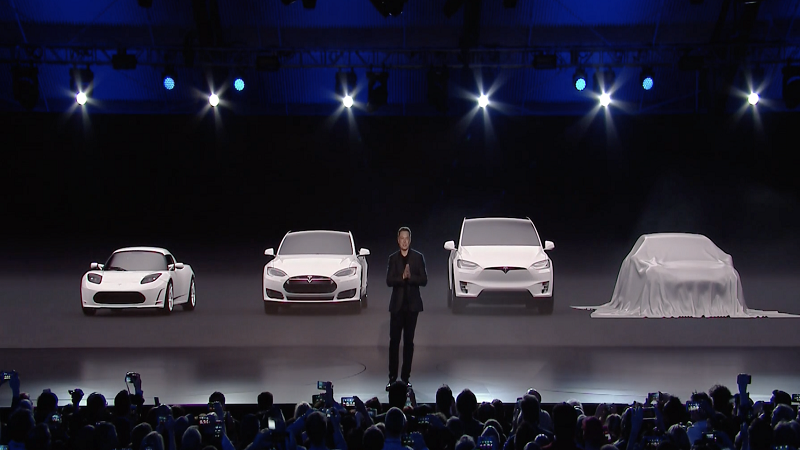
Tesla CEO Elon Musk included FSG in his criticisms on Twitter that have lasted for weeks, touching many areas, from his Twitter acquisition bid to politics.

His attack on the FSG came after Tesla stock was kicked out of the S&P 500 ESG Index on Wednesday despite its focus on making electric vehicles, solar panels, and battery packs.

Insider reports that S&P Global executed its fourth annual rebalance of the sustainably focused, large-cap index this week, and the portfolio looks relatively similar to the plain-vanilla S&P 500 index. The S&P 500 ESG Index holds 308 stocks and counts Apple, Microsoft, Amazon, and Alphabet as its top four holdings.

The report added that Tesla, which is the fifth largest holding in the S&P 500, was ineligible to be included in the ESG index due to its low S&P DJI ESG score, according to S&P Global. That score fell in the bottom 25% of its industry group peers. Tesla joins Berkshire Hathaway, Johnson & Johnson, and Meta Platforms as the top mega-cap companies that have been excluded from the index.

“ESG is an outrageous scam! Shame on S&P Global,” Tesla CEO Elon Musk tweeted in response to the development. “Exxon is rated top ten best in world for environment, social & governance (ESG) by S&P 500, while Tesla didn’t make the list. ESG is a scam. It has been weaponised by phony social justice warriors,” Musk added.

Following Musk’s criticism, S&P Global explained why Tesla was removed from the index, citing many reasons. These reasons were said to have outweighed Tesla’s commitment to transitioning the world to cleaner energy, according to S&P Global.

“First and foremost, the GICS industry group in which Tesla is assessed experienced an overall increase in its average S&P DJI ESG score. So, while Tesla’s ESG score has remained fairly stable year-over-year, it was pushed further down the ranks relative to its global industry group peers,” S&P Global explained in a blog post.

As noted by Insider, the reason makes sense given that legacy automakers have turbocharged their efforts to jump into the electric vehicle space over the past year.

Other reasons for Tesla’s fallout from the index is its lack of a low-carbon strategy and codes of business conduct, and the company’s exposure to risks stemming from its involvement in controversial incidents.

“A media and stakeholder analysis identified two separate events centered around claims of racial discrimination and poor working conditions at Tesla’s Fremont factory, as well as its handling of the NHTSA investigation after multiple deaths and injuries were linked to its autopilot vehicles,” S&P Global said.

Those events led to a lower ESG score for Tesla, leading to its elimination from the index.

“While Tesla may be playing its part in taking fuel-powered cars off the road, it has fallen behind its peers when examined through a wider ESG lens,” S&P Global concluded.

Tesla stock fell about 5% in Wednesday trades amid a broader market sell-off. The world-leading EV manufacturer is facing an uptick in competition as more auto companies, particularly in Europe, make a shift to environment-friendly vehicles.

Musk’s continuous controversial tweets have also continued to affect Tesla’s stock and his personal fortune. Tesla’s stock has sunk by 29% since Musk announced his Twitter acquisition bid.  This has forced his net worth, which is largely tied to Tesla’s stock, to drop from $251 billion to $210 billion, or 16.3%.

But he appears not ready to stop. On Wednesday, Musk tweeted, following previous bashings of Democrats, that he will hence be switching his votes to the Republicans.

“In the past I voted Democrat, because they were (mostly) the kindness party. But they have become the party of division & hate, so I can no longer support them and will vote Republican. Now, watch their dirty tricks campaign against me unfold,” he wrote.

Musk’s unrelenting controversial tweets means that Tesla is likely going to take further hits.
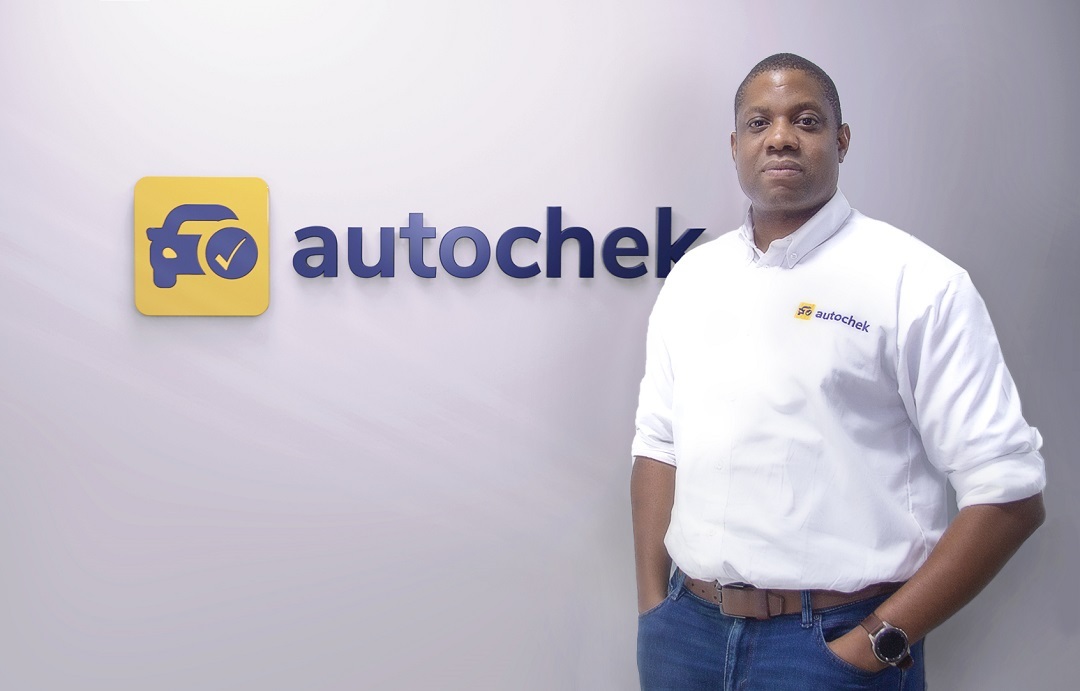
Autocheck Acquires Moroccan KIFAL Auto to Expand into North Africa

0

Autochek has entered into the North African auto market with the acquisition of Morocco’s KIFAL Auto for an undisclosed fee. This comes seven months after it entered the East African market with the acquisition of Cheki Kenya and Cheki Uganda from Ringier One Africa Media, and 20 months after it acquired Cheki Nigeria.

Launched in 2020, Autochek combines technology, underpinned by data analytics to deepen auto finance penetration across the continent.

With this acquisition, Autochek wants to tap into the budding automotive industry in Morocco which was valued at $4 billion in 2021 and is expected to reach $5.5 billion by 2027. In 2021, car sales in Morocco exceeded 160,000 units, creating more than 220,000 direct jobs. The industry is also expected to contribute as much as 24% to the Moroccan GDP by 2022.

This acquisition now makes Autochek present in six African countries, including Ghana, Côte d’Ivoire, and Uganda.

Autochek co-founder and CEO, Etop Ikpe, said in a statement that the acquisition will help the auto company to tap into huge opportunities that abound in the Moroccan auto market.

“From my first interaction with Nizar and his team at KIFAL Auto, I was so impressed by their passion for delivering effective solutions and their commitment to innovation. They have built an excellent platform and we are thrilled to have them onboard at Autochek to support the work we are doing to improve the automotive finance value proposition in Africa. There are so many parallels in our individual stories and I look forward to a long and mutually-beneficial relationship for years to come.

“I have long been an admirer of the work Autochek has done to enable improved experiences across Africa’s automotive value chain. There is so much we can learn from each other, and I am looking forward to bringing my experience and expertise to deliver more game changing innovation in Morocco and beyond,” he said.

KIFAL Auto was founded in 2019 by Nizar Abdalaoui Maane, and it has grown since then to become one of the biggest players in the Moroccan auto market. Maane said the acquisition will boost KIFAL’s growth potential.

“In our Industry and especially in an African context, it makes a lot of sense to continue growing with a large player. Morocco is a gateway into North Africa and I am confident that we can unlock new value and drive further transformation across the board,” he said.

Nigerian Airlines Again Raise Fare As Fuel Crisis Persists

0

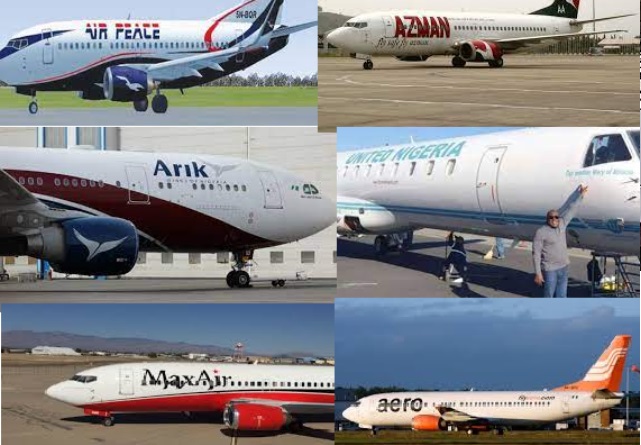
A week after the Nigerian National Petroleum Company (NNPC) intervened to resolve the aviation fuel crisis in the country, investigations revealed that supply from the NNPC has been used up as airlines grappled with price hikes amid scarcity.

The fuel scarcity forced most airlines to increase their fare to N55,000 as the base fare benchmark. Just recently, with the fuel scarcity still ravaging the aviation sector, domestic airlines in Nigeria have further raised their fare above the N50,000 base fare, with some airline tickets sold up to N60,000, as the fuel crisis in the industry continues to linger.

The scarcity has greatly affected the aviation sector on seamless conduct of air transport operations, which has led to a lot of flight cancellations and rescheduling. These airlines are also faced with the issue of low patronage, as not everyone can afford the base fare, and things have gone worse as most airlines have raised their fare to even N80,000.

There have been complaints from a lot of Nigerians as their plans and schedules have been altered due to the outrageous amount of airline fare prices. Recall that two weeks ago, airlines in the country threatened to shut down operations due to an increase in aviation fuel prices, but after swift intervention from the Nigerian National Petroleum Corporation (NNPC), the house of representatives, and the aviation ministry, the airlines had to desist from shutting down to continue operating.

The fuel crisis disrupting airline operations in the country is simply a result of the failure of the leadership. I am always perplexed as to why a country so rich in crude oil will be faced with shortage of fuel. What an irony! The government has to be blamed for not building a functioning refinery that would have helped to mitigate the fuel crisis.

Despite the huge billions of naira being invested in building a refinery over the years, there has been a lot of sabotage which has made things not work. There is an urgent need for Nigeria’s local refineries to be fixed as a matter of national emergency, to put an end to this reoccurring fuel crisis.

This aviation fuel crisis negatively impacts the nation’s economy as air transportation, with its associated complex networks, is a major source of transportation for people, goods, and services. The air transport sector contributes about N59 billion to the national GDP of Nigeria, which supports about 159,000 jobs and pays about N8.5 billion in tax annually.

Jet fuel scarcity leads to consequential flight disruptions and cancellations which have mostly become a yearly occurrence in the country. The government must understand that adequate fuel supply and availability of fuel for airlines in the country is very vital for economic sustainability.

It might interest you to know that all jet fuel consumption in Nigeria is imported, which creates pressure on the jet fuel supply chain. Hence, importation may not always be sufficient to meet the needs of the airlines in the country. The government must be hell-bent on building refineries, not just to refine fuel, but also to produce jet fuel locally, to mitigate the issue of the jet fuel crisis, as sometimes the process of obtaining jet fuel takes a lot of time which is not ideal for a nation’s airline sector.

Air transportation is critical to businesses and other economic activities in Nigeria, as it is one of the major sources of revenue for the country which generates earnings from both passengers and cargo movements.

Tekedia Capital Makes Investment in a Biomed and Clinical Service Startup

0

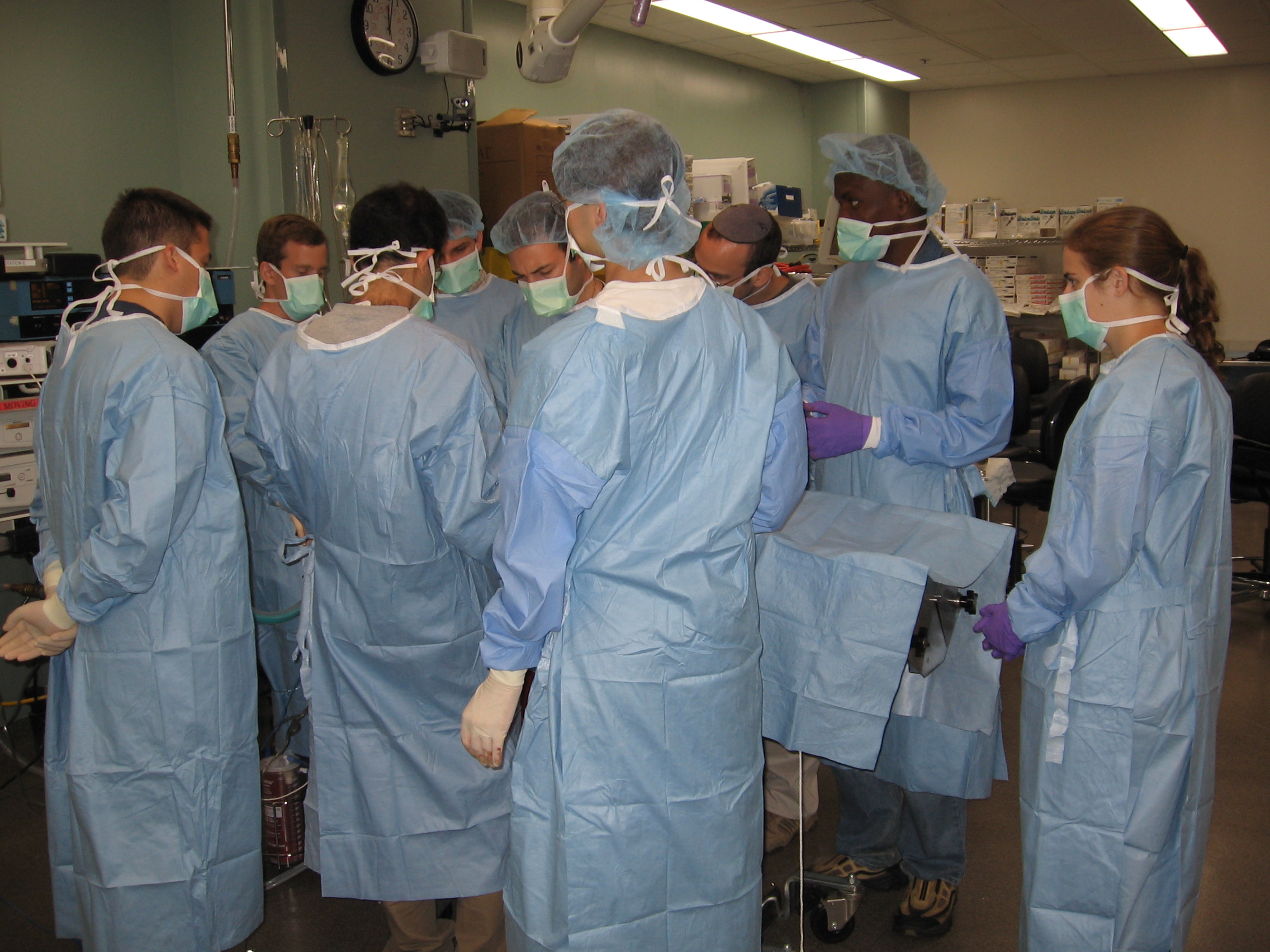
Evidence-based precision medicine with doctors performing scientific miracles in operating rooms. As an engineering student who was creating technologies for operating rooms, I was involved in some of those experiments, to engineer tools of the future, to make doctors stars before patients. Through abdominal, thoracic, etc  surgeries on pigs, I have tested tools, in operating rooms, which end up being used by the experts on humans.

But doing them in America does not remove the fact that Africa needs modern healthcare. Next quarter, we will unveil an amazing healthcare company. It is a biomedical research and clinical services startup that  integrates biomedical research insights with clinical service to advance precision medicine for improved patient outcomes.

It will save lives at scale in Africa. Stay tuned as we continue to build a new Africa through entrepreneurial capitalism. Tekedia Capital >> building the NEXT Africa.

Photo: testing a medical tool in operating room on a pig

Eintracht Frankfurt claim highly deserved Europa League title

0


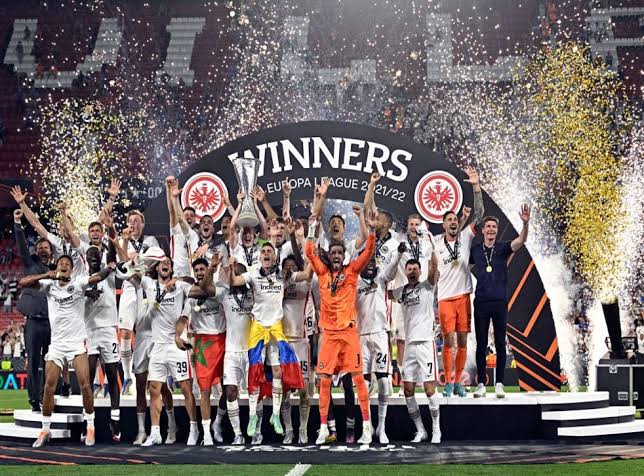
Frankfurt were triumphant in the UEL final last night as they successfully vanquished Scottish side, Rangers F.C to claim their second UEL title.

Oliver Glasner and his men had their dreams come true as they were able to go all the way, clinching the second tier European trophy. The German side who were unbeaten throughout the entirety of the competition stunned Rangers, coming from behind to level at 1-1, and eventually seeing their opponents out of the room with a 5-4 spot-kick win

For the second time in a row, the Europa winner was decided on penalties as Villareal also needed an 11-10 nail-biting shoot out to beat Manchester United to the gold last year. But this time around, the winner didn’t start the shoot-out.

Rangers had gone ahead with forward, Joe Aribo capitalizing on a mishap at Eintracht’s defence but the latter fought back thanks to an acute Rafael Borre equalizer that caught Calvin Bassey and his partner sleeping.

Both teams fought to the end, nailing, clawing and in the ensuing penalty shoot-out, Kevin Trapp denied Rangers’ Aaron Ramsey while Frankfurt converted all five kicks to win the competition

Speaking of Trapp, the German shot stopper, who was named the man of the match, was highly instrumental in his side’s ambitions saving a potential extra time winner from Ryan Kent before ultimately foiling Ramsey’s penalty.

The hero of the moment had his words to pour out post match, saying: It feels incredible. I’m still trying to catch my breath. For us, for Frankfurt, for the region – for the whole of Germany, I think it’s a wonderful thing. To be able to give back to our fans this way is so special. We believed that we could do it, but you saw we had to dig deep for this win. We never gave up on ourselves, we always believed. It was the most intense experience of our lives for many of us and we’ll need time to recover. This is not my night. It’s everyone’s night. It doesn’t come down to one player, it comes down to a whole team. The league season was a disappointment because we didn’t qualify for Europe, now the euphoria is huge as we look forward to the UEFA Champions League. It’s hard to find the words.”

Oliver Glasner also commented on their prestiged victory saying: “It was our 13th game in Europe and we didn’t lose any of them. We came from behind today, so I can’t find the words to describe what the boys did today and this season, and they don’t often fail me. I’m proud for my players and my work. It was exactly the game we expected. They are very physical, they play long balls. We had to dictate the pace. Our penalties were very good. We have been practising in the last month. Did I think about the UEFA Champions League next season? No. I never talk about the future because we don’t know what happens in the next months. I told the players we had a fantastic journey and that journey should not end in Seville, but tomorrow when we come home with the trophy.”

As earlier mentioned, it is quite interesting to note that Frankfurt didn’t lose a single match en route to the trophy and were sensational in their campaign. They were the true meaning of undefeated. Conquering Betis in the last 16, upsetting Catalan Titans, Barcelona, knocking out English sensation, Westham, Glasner and co did a near perfect, near 100% job and were rewarded with the gold for their efforts with. The win also meant Frankfurt automatically qualified for the UCL next season having failed to do so via the canonical pathway.

Frankfurt first won the UEL in 1980, defeating German counterparts, Monchengladbach 3-3 on aggregate in a two legged final.

No doubt, players like Kamada, Borre, Filip Kostic were of great essence in helping their club achieve this feat. 5 of Frankfurt’s goals came from Kamada, who tied with Patson for fourth highest goalscorer of the competition and was the highest for his team

Rafael Borre had 4 goals to his name, including the all-important final goal while Kostic had the highest number of assists in the competition at 6. The Serbian was also the mastermind behind the elimination of their greatest threat and cup favorite, Barcelona as he bagged a brace to capitulate the Spanish giants 4-3 on aggregate.

Frankfurt have done it, they have achieved what they’ve been dreaming about all season long. This fall, the German side would have the chance to feature in the classic UCL and they will look to build on their growing reputation. If not win, at least make a name and advance as far as ability and fate can drive them.