DD
MM
YYYY

PAGES

DD
MM
YYYY

spot_img

PAGES

Home Blog Page 5172

Tekedia Capital Special Demo Day – May 7 at 4pm WAT

0

Dear Sir/Madam,

Greetings. Our apologies for writing to mention any investing opportunity. We understand that members just concluded  a cycle a few days ago and will need time to refuel, financially.

  1. A Lagos-based startup which processes excess of N4 billion per month and which was in our Syndicate in November is back. The Y Combinator company was flipping to Delaware and we decided not to sign the term sheet then. They have concluded and are now available. We have provided its  pitch deck with an overview video in the Board.
  2.  One of our startups provided an update to members last week. Since the startup was launched in Sept 2021, it has processed $11 million. The startup also signed a major deal with a leading global fintech that will bring 900,000 merchants into its network.  Many members said they would like to invest. We are reaching out in case there are others who may be interested also. This startup has been here twice. We have provided its  pitch deck with an overview video in the Board.
  3. For both companies, a demo day is scheduled on May 7, 2022 at 4pm WAT. Zoom link in the Board when you login.

To learn more about Tekedia Capital Syndicate and the opportunity to co-own some of the most amazing startups in Africa and beyond, click here.

Regards,

Tekedia Team

Want to Set up an LLC? Here’s a List of 6 Tasks to Get You Started

0

If you’re thinking about setting up an LLC, there are a few key tasks you’ll need to take care of first. In this blog post, we’ll outline six of the most important things to do when setting up your LLC.

1. Choose a name for your LLC 

One of the first things you’ll need to do is choose a name for your LLC. This is one of the basic steps in starting an LLC in Florida or any other state in the United States. The name of your LLC is important for branding and marketing purposes. It can’t be too similar to another business name in your state, which is why it’s important to do a little research before you settle on one. Your business name should also be distinctive and easy to remember. Before you decide on a name for your LLC, it’s important to check that the name is available. You can do this by searching the business registry in your state or province. If the name is already taken, you’ll need to choose another one. You’ll also need to check with your state’s secretary of state office to make sure that the name you’ve chosen isn’t already in use.

2. Choose a registered agent 

One of the fundamental steps in setting up your LLC is to choose a registered agent. A registered agent is an individual or entity who agrees to receive legal documents on behalf of your LLC. This person must have a physical address in the state where you are forming your LLC and be available during business hours to accept the service of the process. 

You may choose to be your own registered agent, but we recommend hiring a professional service. Professional registered agents can provide many benefits, including peace of mind that your important documents will always be received and handled properly. 

3. File Articles of Organization 

One of the foremost steps to setting up your LLC is filing what are called Articles of Organization with your state government. Articles of Organization are filed with the state and serve as a public record of your business. This document officially creates your LLC and starts the process of legally protecting your business. These articles will include basic information about your LLC, such as its purpose, names of its members, and registered agent information. You can usually find the form you need on your state’s website, or you can hire a professional to help you file. 

4. Obtain an Employer Identification Number

After your Articles of Organization have been filed, you’ll need to obtain an Employer Identification Number (EIN) from the IRS. This nine-digit number is used to identify your business for tax purposes, and you’ll need it in order to open a business bank account and file your LLC’s annual taxes.

You can apply for an EIN online, by fax, or by mail. The process is relatively simple and shouldn’t take more than a few minutes to complete. Once you have your EIN, be sure to keep it in a safe place – you’ll need it any time you file taxes or make any other changes to your LLC. 

5. Create an Operating Agreement for your LLC

If you’re planning on setting up an LLC, it’s important to create an Operating Agreement. This document will outline the ownership and management structure of your LLC, as well as the rules and regulations that will govern its operation. Creating an Operating Agreement is a critical first step in setting up your LLC, so be sure to put some thought into it before getting started.

There are a few different ways to go about creating an Operating Agreement. You can hire an attorney to draft one for you, use a template or service like LegalZoom, or even do it yourself if you’re feeling up to the task. Whichever route you choose, just make sure that your final document is thorough and covers all of the bases. Once you have your Operating Agreement in place, you’ll be well on your way to setting up a successful LLC.

6. Obtain any necessary licenses or permits for your LLC

Finally, you’ll need to obtain any necessary licenses or permits required to operate your business. This will vary depending on the type of business you’re operating and where your business is located. For example, if you’re selling food products, you’ll need to obtain a license from your local health department. If you’re running a daycare center, you’ll need to be licensed by the state in which you operate. The best way to find out what licenses or permits you’ll need for your LLC is to contact your local Small Business Administration (SBA) office or Chamber of Commerce.


By taking care of these six tasks, you’ll be well on your way to setting up a successful LLC. For more information on each of these tasks, be sure to check out the resources below.


Despite Sanctions, Russian Economy Booms

1

The Russian economy has largely defied Western sanctions, thanks to its oil that many countries cannot do without. Russia’s decision to invade Ukraine early this year attracted an avalanche of sanctions from the US and its allies, painting a tumultuous future for the Slavic country’s economy.

But in a surprising turn of events, Russia’s ruble and stock market have remained relatively stable despite the sanctions. Below, Insider reported on the findings of an independent research group, Centre for Research on Energy and Clean Air (CREA), which shows how oil patronage from the European Union and others keep the embattled economy afloat.

Russia earned $66 billion from fossil fuel imports in the two months since its invasion of Ukraine as it profited from surging commodity prices despite facing tough sanctions.

Of that, the European Union imported 71% of Russian fossil fuels worth $46 billion through shipments and gas supply, a report by CREA showed.

This compares with imports worth roughly $147 billion for the whole of 2021, or about $12.3 billion a month, the Guardian reported.

Germany was the largest importer — receiving orders worth $9.6 billion. Italy, China, Netherlands, Turkey, and France were the next biggest buyers, the study found.

The research highlights how Russia has continued to benefit from energy exports, a key source of revenue for the economy, despite Western nations moving to sanction the country over its aggression in Ukraine.

While the US and UK have imposed bans on Russian energy imports, the EU has so far agreed to only ban Russian coal. Because these moves have a direct effect on the global energy market, prices of oil and gas have soared due to the twin threats of lower supply and fading import volumes.

Some countries have tried to “self-sanction” by avoiding Russian fossil fuel imports. Foreign oil deliveries from Russia dropped 20% in the first three weeks of April compared to the period before the invasion, the CREA data showed. But the economy has been able to offset lower volumes with higher prices, which means its revenue nearly doubled compared to the previous year despite curbs on exports.

Shipping data also showed that Russia is struggling to divert cargoes originally meant for European buyers. The Wall Street Journal recently reported more than 11.1 million barrels leaving Russia have been loaded onto cargoes with unknown destinations.

Meanwhile, the EU has struggled to shake off its dependence on Russian imports — especially gas — despite wanting to reduce its reliance. Figures indicate the bloc has attempted to cut Russian supplies, as data compiled by think tank Breugel shows the bloc’s imports of Russian gas were 26% lower in the first week of April than in the same period in 2021.

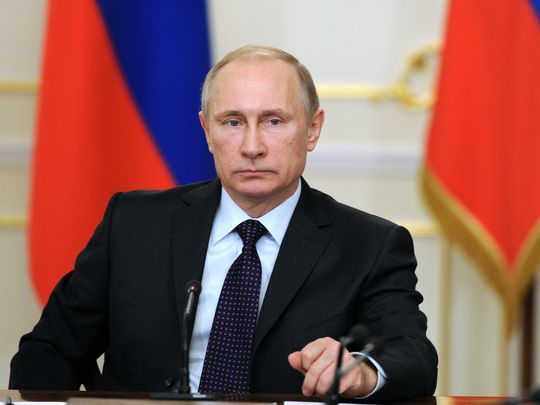
But Russian President Vladimir Putin doesn’t seem to be as threatened by a European ban on energy as EU leaders perhaps might expect him to.

“The so-called partners from unfriendly countries concede themselves that they won’t be able to make do without Russian energy resources, including without natural gas, for example,” he told a televised government meeting on April 14, Reuters reported.

The CREA said fossil fuel exports have helped fund Putin’s war against Ukraine, and recommended replacing Russian fossil fuel imports with clean energy.

“Fossil fuel exports are a key enabler of Russia’s military buildup and brutal aggression against Ukraine,” it said in the report.

“The EU and many European countries have already announced ambitious new clean energy and energy efficiency targets, policies and measures — these will provide a replacement for imports from Russia over the next few years. But imports need to stop now,” it added in a tweet.

Although Russia has found two major export destinations – China and India for its oil export, Europe is still its largest market. A unanimous decision by European leaders to sanction Russian oil will deal a huge blow to its economy. But without an alternative to Russia’s oil, the EU’s hands are tied, even though many of its leaders see the situation as an opportunity to transit to cleaner energy.

The major challenge lies on the timeframe – how long it will take before Europe finds alternative to the much needed gas that the bloc solely depends on. The REPowerEU, a plan developed by the EU to end reliance on Russian gas is expected to be actualized by 2030, which is far too long.

With the rocketing cost of gas in Europe poised to cause unbearable hardship and no alternative to Russian energy yet, Russia has found a solid edge to mitigate the impacts of sanctions. Forcing European countries to pay for gas with ruble is also another strategy Russia has deployed to keep the ruble stable.

The Russian ruble has risen to pre-conflict levels against the US dollar, hitting a two-month high. Its current account has also surged to $58.2 billion in the first quarter – its highest level since 1994.

Examining National Orientation Agency’s Call On Locally-Made Goods In Nigeria

0
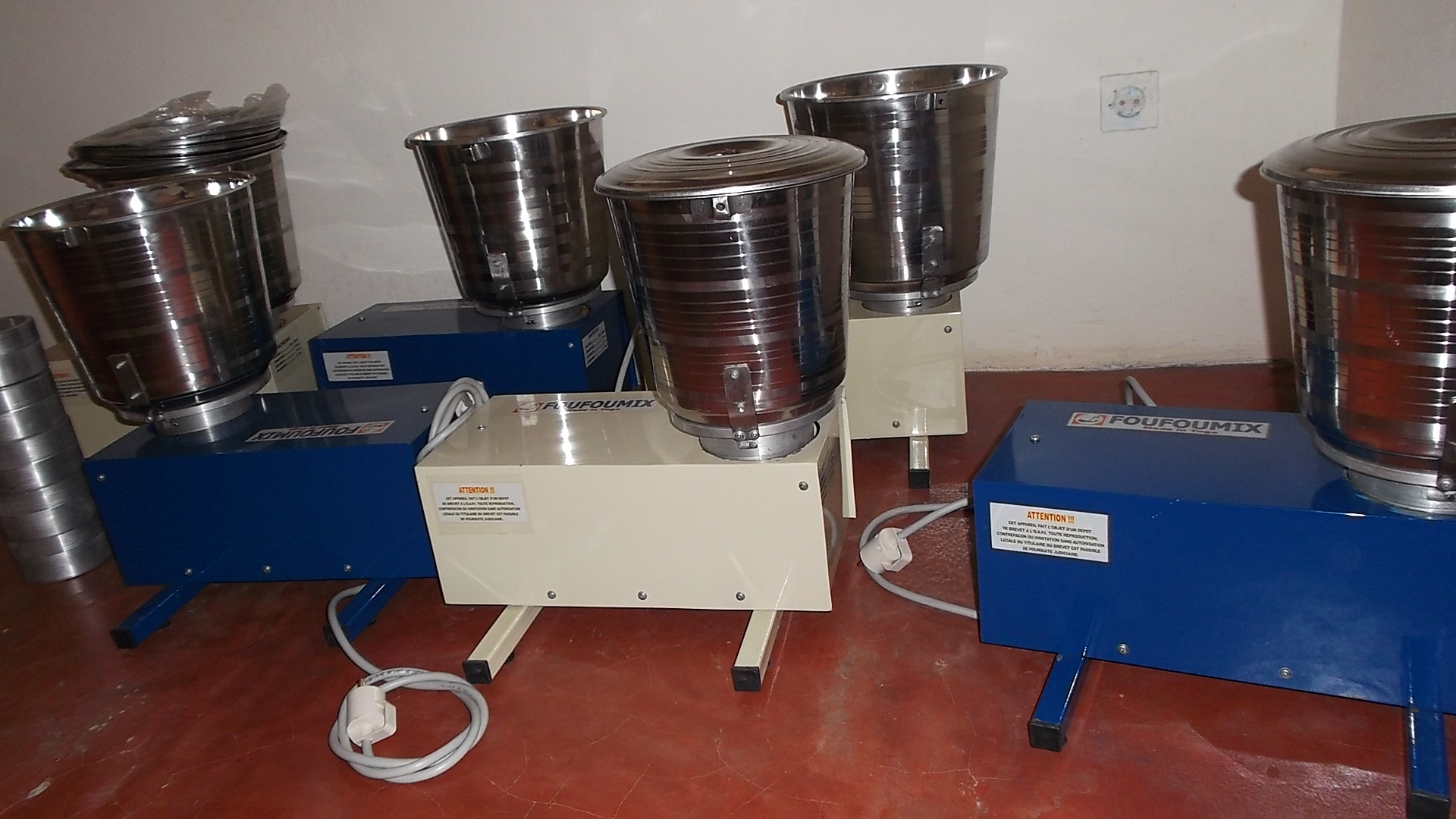
Foufoumix, invention of Togolese electronics engineer Logou Minsob helps obtaining foufou (African dish made from tubers) in 8 minutes. (Source: Africa Top Success)

The Anambra State Director of the National Orientation Agency (NOA), Mr. Charles Nwoji has called on Nigerians to drop their preference for foreign goods and patronize made-in-Nigeria products.

Mr Nwoji, who made this call on 27th April 2022 at a news conference in Awka, described the patronage of locally-made products against their foreign substitutes as a strategic means to encourage local industries and also grow the nation’s economy.

According to him, the economy of any nation grows rapidly when locally-made products and services are promoted and patronized by the citizens.

He said, “A nation needs to first patronize its own products to grow its economy if the people are sure and proud of their products and services. NOA has been carrying out sensitization programmes to promote the patronage of local goods.”

Mr. Nwoji opined that there was a need for a sustained national campaign, continuous sensitization and reorientation of Nigerians, especially Anambra people, to change their attitude towards locally made products.

He hinted that Nigeria needed strong advocacy to revive the moribund industries in the country in order to create job opportunities and restore her pride, saying in the long run, the advocacy would help to boost the nation’s foreign reserves and promote the Nigerian spirit.

“Charity, they say, begins at home, and truly no nation will develop when its economy is at the mercy of foreign products and services,” he said.

While describing developed nations of the world as those whose economies were largely based on production, Mr. Nwoji frowned that most Nigerians suffer the desire-for-foreign goods syndrome because of social symbols and the claim that foreign products are superior to their locally-made substitutes.

The State’s NOA boss further stated that though the claim might not be totally wrong, it is worrisome and economically dangerous to abandon locally-made products in preference for foreign goods.

“The worst is that manufacturers in reaction to the development have resorted to deceptive branding of their products with foreign labels and tags. This translates to giving credit for quality products that were produced in Nigeria to other countries.”

He therefore warned that the consequence of identity product theft was capable of leading to capital flight and a decline in the nation’s Gross Domestic Product (GDP).

Mr. Nwoji went ahead to disclose that NOA was ready to continue to encourage Nigerian manufacturers to take pride in their own products.

“Our local manufacturers need to appropriately and beneficially showcase Nigerian products and services to the world.” he landed.

It’s really baffling that Nigeria’s citizenry depends heavily on foreign-made goods and services, to the detriment of the locally-made ones. This pattern of practice, that has lingered unabated, has obviously posed a great danger to the country’s economic status.

It’s even more saddening when realized that the families of those who carry out such a campaign, like the NOA boss, patronize the imported products on a daily basis. This is an indication that Nigeria’s problem is indeed endemic.

It’s therefore high time these agencies started walking the talk. This can only be achieved by being true and unbiased patriotic citizens of the country.

Nigerian Government-German Siemens AG Electricity Deal Resumes, Targets 2000MW in 18 Months

0

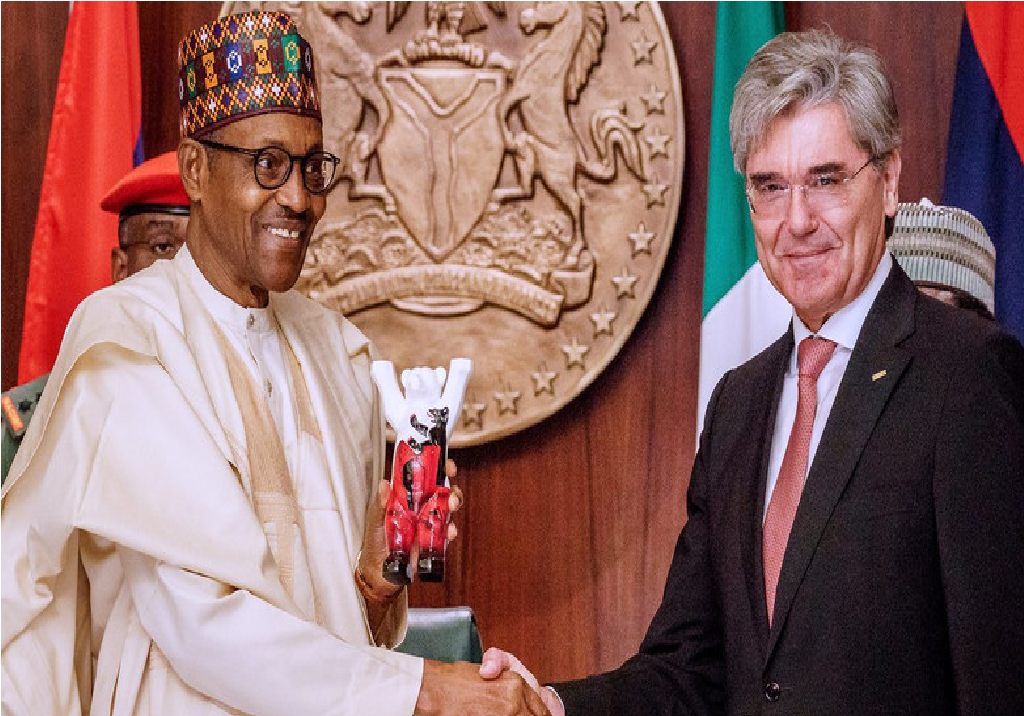
Since 2019 when the Nigerian government struck a power-generation deal with German company, Siemens, Nigerians were eagerly expecting the deal to disrupt the current epileptic electricity status quo and usher in a new order of constant electricity supply.

Three years later, the federal government appears to be giving their expectation hope of actualization. On Tuesday, FGN Power Company, a Special Purpose Vehicle (SPV) set up for the Nigerian-Siemens power deal said electricity equipment like transformers and mobile power substations are expected to arrive in Nigeria in September.

The delay in executing the partnership, which was attributed to Covid-19, has contributed to the deterioration of Nigeria’s poor electricity supply.

But the Managing Director, FGN Power, Kenny Anuwe, said on Tuesday in Abuja, while speaking on the project, that by the time the power equipment are installed, there would be major improvement in the supply of electricity in the country.

Per ThisDay, Anuwe explained among other things that the Presidential Power Initiative (PPI) in Phase 1 seeks to modernize, rehabilitate and expand the national grid by investing in the electricity value chain, including generation, transmission, and distribution systems of the power sector.

“We will start to see the implementation of the transformers and substations which have been purchased across the country starting from September, right through to December. We have some significant amount of equipment which will start to come in.

“Part of the minister’s objective in visiting Germany only a month ago, if you recall, was to engage the principals at Siemens on the president’s agenda for the PPI to ensure that we were able to deliver on the objectives

“I am happy to report that this has borne some fruits and we will start to see the delivery of equipment starting off in September this year,” he stated.

He also explained that yesterday’s programme was meant to provide the “codes”, the standards and the essential technological aspects of the project that the Distribution Companies (Discos) as well as other partners will abide by in the process.

“Essentially, this provides the minimum standards and requirements that they must utilize in implementing the project.

“Siemens equipment must comply with the local laws and regulations. And these are the things that we have put together to ensure that the Discos are all aligned with the FGN company power company and Siemens to implement the presidential initiative,” he said.

The Minister of Power, Aliyu, who was represented by the Permanent Secretary in the ministry, Mr. Nebolisa Anako, stated that the close-out event signified a milestone for the stakeholders in the sector.

“The objective of the PPI is to improve the end-to-end operational grid of the power supply in Nigeria to 25,000 MW, but the purpose in the next 18 months is to deliver additional 2,000 mw,” he said.

The Chief Technical Officer, FGN Power, Mr. Idowu Oyebanjo, in his intervention, said there are two parts of the project, including the onshore aspects that will take place in Nigeria as well as the offshore aspect that will take place overseas.

While Siemens would remain in charge of design and manufacturing of equipment, including control panels, mobile substations, he stated that the contractors will be in charge of logistics, transportation, storage as well as procurement and dismantling of substations for upgrades.

He added that while transformers in Nigeria are bought with the capacity to withstand about five Degrees Celsius, the new transformers could stay for 30-40 years because the transformers are now attuned to the Nigerian weather.

While attributing the delay in the project to the Covid-19 pandemic, he assured that with the expected supply of the mobile substations, as early as September, the work that has been done will begin to reflect nationwide.

“In six months’ time from now, we will be having the first tranche of supplies of mobile substations and transformers delivered on the shores of this country and that will be very, very helpful to the power grid,” he stated.

He denied the insinuation that there was any disagreement between the federal government and the German company as to the local content part of the project, insisting that the information was not correct.

“By means of mere coordination of what is going on in the power sector right now, we can even achieve the 2,000MW without a drop of power sector investment, but by September when all these equipment start to arrive, and we start to put them in the right places on the network, Nigeria’s will start to feel the impact in terms of power supply delivery,” he explained.

Epileptic electricity supply is one the bedrocks of Nigeria’s economic underdevelopment, resulting in poor business performance that has largely plunged Africa’s largest economy into abject penury. Last year, the World Bank said that unreliable power supply costs Nigeria about $29 billion annually, a situation that has exacerbated since then, forcing some companies to move their businesses to nearby country Ghana.

Nigeria has 8,000 MW installed electricity capacity but only about 4,000 MW is operable. Infrastructural development plans by successive governments since 2005, have failed to address the problem.

The partnership between the Nigerian government, German government and Siemens AG,  had a target of 7, 000 megawatts of power generation by 2021, (the 1st phase) and subsequently, 11, 000 megawatts by 2023, (the 2nd phase). It’s April 2022, which means that the first target has failed. It is only hoped that the new target of ‘2000MW in 18 months’ will not falter also as the partnership is resuscitated.