DD
MM
YYYY

PAGES

DD
MM
YYYY

spot_img

PAGES

Home Blog Page 5184

Yakubu Dogara’s Defection And The Court’s Verdict

0

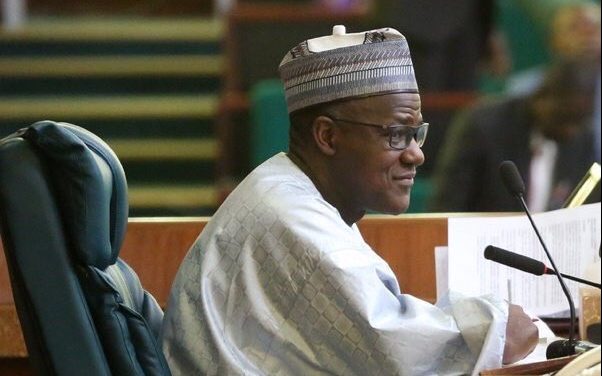
A Federal High Court in Abuja, Nigeria, on 22nd April 2022, sacked the immediate past Speaker of the country’s Federal House of Representatives, Mr. Yakubu Dogara from the National Assembly (NASS) and consequently declared his seat vacant.

It’s noteworthy that Mr. Dogara, who currently represents Bogoro/Dass Federal Constituency of Bauchi State, was the Speaker of the House of Reps between 2015 and 2019.

In his verdict, the Judge, D.U. Okorowo ruled that Mr. Dogara’s defection from the People’s Democratic Party (PDP) to the All Progressives Congress (APC) was wrong and meant he should vacate the legislative seat.

It could be recalled that Mr. Dogara defected to the APC after winning his re-election under the PDP in 2019.

His frosty relationship with his State Governor, Mr. Bala Mohammed, was one of the main reasons he abandoned the PDP, which he joined just recently. He dumped the PDP and returned to his former party, the APC on 24th July 2020.

The erstwhile speaker had earlier in 2018 dumped the ruling party for the main opposition platform due to the political confrontation that ensued for about two years between him and the then governor of Bauchi State, Mr. Mohammed Abubakar.

In a letter of resignation addressed to the Bogoro ‘C’ Ward Chairman of the PDP dated July 24, 2020, Mr, Dogara cited a breakdown of governance in his native State of Bauchi under the administration of of the present Governor, Bala Mohammed whom he said he helped installed as the State’s governor in 2019.

Mr. Dogara disclosed that he could not successfully ask questions about those issues regarding governance without being accused of disloyalty, if he were to remain in the PDP.

He argued that if he abdicated this responsibility of telling the truth to power in Bauchi State, having done the same under the administrations of former Governors Isa Yuguda and Mohammed Abubakar, respectively, he would be the most irresponsible and unprincipled politician in Bauchi State.

Mr. Dogara was elected speaker on the APC platform in 2015. He subsequently decamped, alongside dozens of other federal lawmakers, to the PDP in the build-up to the 2019 general election.

He won his re-election as a lawmaker on the PDP platform but did not contest the speaker’s position, because the APC won the majority seats in the parliament.

After his meeting with President Muhammadu Buhari on July 27, 2020, the then Head of the APC’s interim management committee, Mr. Mala Buni, who also attended the meeting, disclosed that the president was pleased with Mr. Dogara’s defection.

The ruling of the Federal High Court sitting in Abuja wasn’t the first of its kind; it has joined recent verdicts served on similar grounds, such as the one pertaining to the incumbent governor of Ebonyi State, among others.

This pertaining to judgement is indeed a win, win for Nigeria’s democracy, to assert the least. Hence, the apex court in Nigeria – otherwise known as the Supreme Court – is expected to uphold the rulings as regards defections when eventually brought to its jurisdiction.

Wave Secures BCEAO License to Offer Digital Financial Services

0

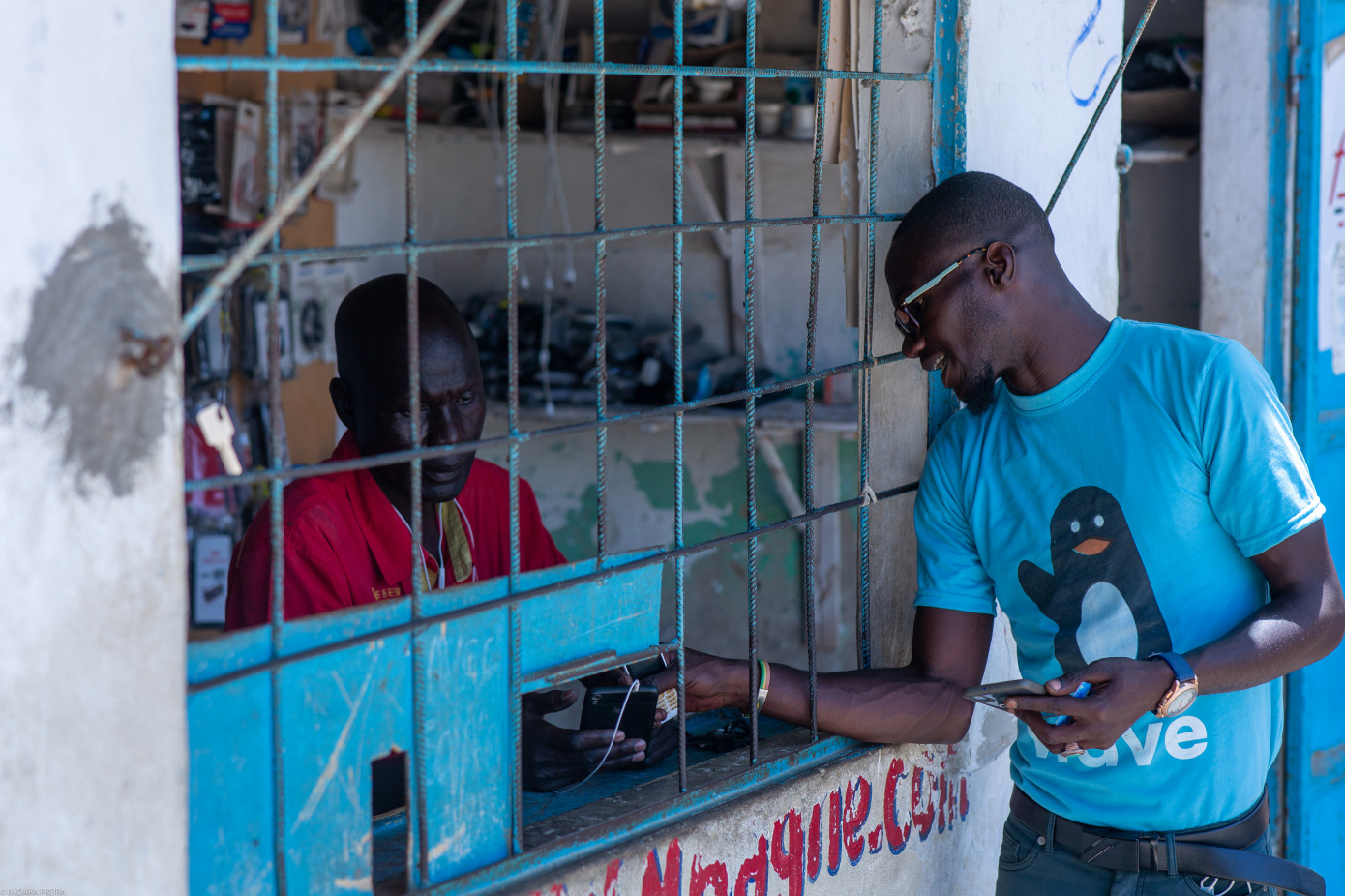
The push for financial inclusion in Francophone West Africa has got a major boost. Wave Digital Finance, a subsidiary of Wave Mobile Money Group (Wave), has been licensed by the Central Bank of West African States (BCEAO) to carry out digital financial services.

Wave’s services are available in eight West African Francophone countries – Benin, Guinea Bissau, Burkina Faso, Côte d’Ivoire, Mali, Niger, Senegal and Togo—that form the West African Economic and Monetary Union (WAEMU).

The company, which offers free bill payments, free cash-in and cash-out and charges only 1% transfer fee, has relied on third-party financial institutions like the United Bank for Africa (UBA) and Ecobank, to render services to its customers that have ballooned in four years because of the company’s service fees, which is roughly 70% cheaper than its competitors’.

“We are excited to receive our E-money issuer license. We are grateful to the BCEAO who has been supportive of our vision to offer radically inclusive and affordable financial services. They have witnessed us grow into the largest mobile money provider in Senegal with over 6 million active users in just 4 years, and that’s only the beginning of customer-first mobile money in WAEMU,” the CEO of Wave Drew Durbin said.

Wave has been a popular choice in WAEMU, and has disrupted the mobile money market in the bloc, forcing mobile-based financial services like Orange to slash its service charges by 50%.

The E-money license by the Central Bank signals a growing recognition of a new age of financial inclusion models led by Fintechs such as Wave.

In addition, it will allow Wave to diversify and offer more financial services like merchant payments, savings, credit, and remittances in collaboration with other partners in the WAEMU financial ecosystem.

Ms. Coura Carine Sene, General Manager for Wave in WAEMU, said, in addition to other benefits, the license will help the startup to compete with other mobile money providers.

“This is a momentous occasion for us. Despite being one of the largest mobile money providers in Senegal and other WAEMU countries, we were limited in what we could offer our customers. We will now be able to compete with other mobile money providers on an equal footing. The shift in the licensing structure will benefit both our customers and agent network in the long run. We expect new products to drive customer growth. Thus, benefiting our customers, while increasing the take-home income of our agents.

“In partnership with the national directions of BCEAO, we hope to extend this license very quickly to the other WAEMU countries so that our entire customer base in the region can benefit equally,” she said.

Securing license in the seven remaining countries of the bloc may be the magic wand that Wave needs to stay ahead of its competitors.

Rise In The Demand Of “Akwete” Fabric – The Governor Soludo Effect

0

Recall that the governor of Anambra state, Governor Charles Soludo during his election campaigns, disclosed his intention to promote locally-made products in Nigeria. One of which is the Akwete fabric which he promised to always wear. The Akwete fabric is a unique handwoven textile produced in Akwete town in Abia State, which is usually done by the Akwete women.

The Akwete cloth is made of cotton thread, while the decorative patterns and effects are added with a thread of heavier texture or contrasting colors. Indeed Governor Soludo did not mince words with regards the Akwete fabric. Asides from his swearing-in ceremony where he wore the beautifully made fabric, he has also been seen on countless occasions wearing the fabric.

This act by him has shot up the demand for the locally made fabric. According to reports, it was disclosed that the governor sent one of his reporters to Akwete in Abia state where the fabric was being produced, and it was discovered that the demand for the material is now in high demand, courtesy of Governor Soludo’s decision.

The governor has done something remarkable for the made-in Nigerian product as he has revived the already dying Akwete textile industry. He has also increased the source of livelihood for the women of Akwete, as the majority of them are now smiling to the bank because of the high demand for their fabric.

It might interest you to know that not only is Governor Soludo rocking the Akwete cloth, but his first daughter Adaora Soludo has also followed suit. While scrolling on the Twitter app, I came across her Twitter handle @adaorasoludo where she wore a beautiful cloth made of Akwete fabric. Right under her post, a lot of people made inquiries about how to get the material. I felt ecstatic that a made in Nigeria product is now in high demand, which I tagged as “the Soludo effect”.

By Soludo’s decision to wear the famous Akwete cloth, he is already standing shoulder taller than his peers and contemporaries in the promotion of locally made-in Nigerian products. There is no better way he could have done it, than rocking the material himself which has seen him lead the push to appreciate and patronize the work of Nigerian citizens.

Soludo has already changed the narrative of people who saw those wearing the Akwete dress as low-class people. It will be ideal if other Eastern governors can take a cue from Governor Soludo to put heads together and support the local economy to reduce the over-dependence on foreign-made goods. The need to patronize locally made-in-Nigeria goods cannot be overemphasized, as it is one major way to boost economic growth and development.

The economy of a nation grows when locally made goods are promoted through patronage first by its people than through export. According to statistics, Nigeria spends $4 billion to import textile materials yearly. Such an outrageous amount should rather be used to develop our textile industry. It is appalling to see that the country has been growing other countries’ economies due to our over-dependence on imported goods, especially those that have a local substitute.

With proper funding for the Akwete textile industry, it will in no distant time see the fabric compete with foreign textile materials, which will also see it being exported to foreign countries. It is indeed a new dawn for the women of Akwete as they are about to witness a drastic financial turnaround from the era of lack and penury to an era of plenty.

Petrol Tanker Explodes In Lagos

0

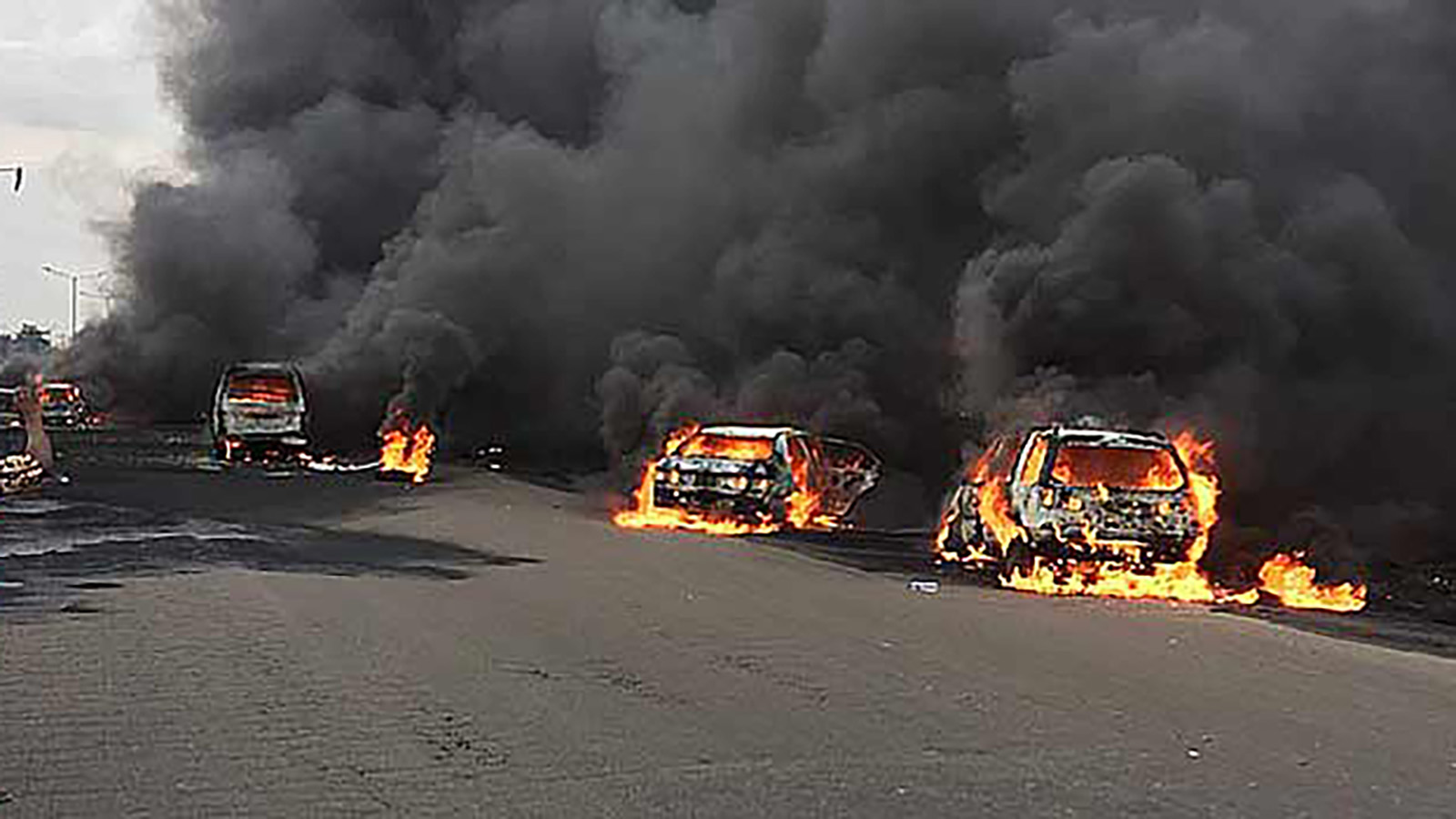
On Friday, 22nd April, 2022, a petrol-laden tanker exploded in the city of Lagos, Nigeria, destroying many lives and property.

The explosion, which took place at Ajegunle Bus Stop along the popular Lagos-Abeokuta Expressway, claimed one life and destroyed at least three vehicles, as was reported by the Lagos Fire and Rescue Service.

The tanker, which was loaded with Premium Motor Spirit (PMS) otherwise known as petrol, reportedly overturned while attempting to enter a filling station by the expressway, hence spilled its entire content.

The South-West Zonal Coordinator of the National Emergency Management Agency (NEMA), Ibrahim Farinloye disclosed to newsmen that the sole fatality of the incident was a 15-year-old Oluwatobi Lawal, who was preparing for his WAEC and JAMB examinations.

On her part, the Director of the Lagos Fire and Rescue Service, Margeret Adeseye said in a statement that they received a distress call regarding the fire outbreak at about 2:16am (WAT), from a tanker meant to service one Ayinde Oil filling station at Ajegunle.

“Unfortunately, a male adult was recovered and suspected dead, likewise three various brands of vehicles involved in the Fire, aside the tanker and shops,’’ the statement read in parts.

The tanker “accidentally spilled its 45,000 liters PMS content while negotiating a bend to the station before resulting in fire from the nefarious activities of scoopers at the Toll Gate end, causing it to spread through some roadside makeshift shops to its source at Ajegunle Bus Stop.

She said the situation was, however, brought under control by fire-fighters from Agege, Ikeja, and Alausa.

In a related report, Joseph Akinsanya, the Federal Road Safety Corps (FRSC) Agbado Unit Commander, Joseph Akinsanya stated that the fire destroyed ten shops.

He explained that the tanker, with no registration number, coming from Lagos, was trying to enter a filling station when it suddenly overturned and caught fire, while attributing the cause of the incident to leakage that spilled the content on the road.

“Unfortunately, one person was burnt beyond recognition; many people, the number, which is yet to be ascertained, were injured, while ten shops were also burnt.

“However, some of the injured victims were taken to a nearby hospital, and Ota General Hospital, while the corpse had been deposited at Ifo General Hospital, Ogun,” he said.

Mr. Akinsanya advised motorists to drive cautiously and obey traffic rules and regulations as they have diverted away traffic from the scene of the incident.

He also implored them to cooperate with traffic managers that were on the ground to manage the situation in order to reduce the time spent in the gridlocks.

The Unit Commander said the FRSC personnel and other sister agencies carried out the rescue operation and could extinguish the fire with the help of the Lagos State Fire Service.

Explosion of tankers, carrying petroleum products, on Nigerian roads, has indeed become a recurring decimal, hence seems not unlike a norm in the country’s everyday life.

This is quite appalling, to assert the least. It suffices to say that the concerned authorities and stakeholders as well as well-meaning individuals really need to look inwards with a view to ensuring that this uncalled and cruel incident becomes a thing of the past within the shores of Nigeria’s polity.

On most occasions, you would discover that this unfortunate occurrence is usually attributable to a high level of unguided touting practice on the country’s various roads. Hence, this must be looked into in earnest by the relevant law enforcement agencies.

Above all, it’s not anymore news that virtually all the roads across the country, especially the highways, are currently in a very bad state. This ought to equally be addressed by the governments at all levels.

Poor Electricity Supply In Nigeria – Impact On Businesses

0
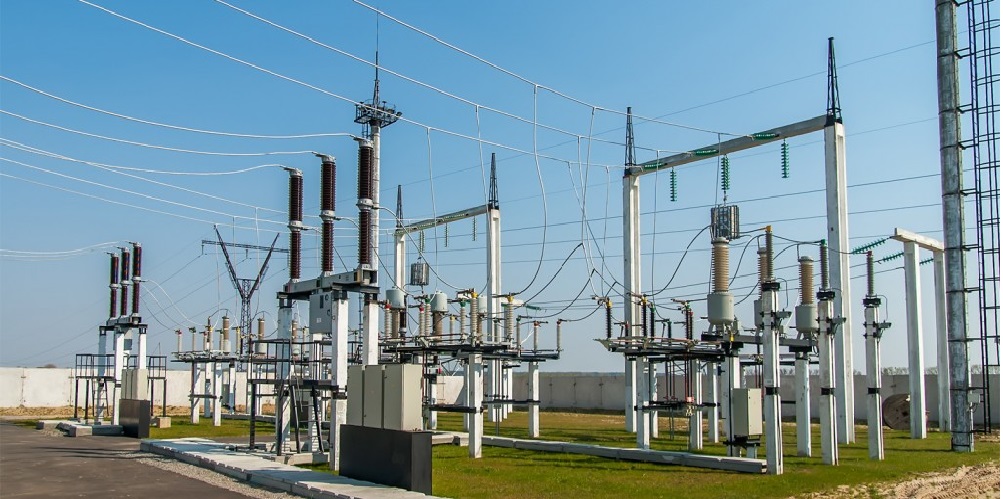
Power station (credit: Sparkonline)

As someone who resides in Nigeria, I can categorically state that the electricity supply in the country is abysmally poor. Unlike our neighbor, Ghana that has celebrated years of uninterrupted power supply, never has such happened in the history of Nigeria. Regardless of whether you pay your electricity bill, it has already become a norm for the power holding company of Nigeria, PHCN to disconnect the electric supply at different points in time.

This poor supply of electricity has made it extremely difficult to run a business in Nigeria, which mostly affects small businesses. According to the world bank, it disclosed that businesses in Nigeria suffer an annual loss of $29 billion as a result of an “unreliable” power supply, which they stated that it has resulted in the refusal of consumers to pay bills.

Some Nigerians are reluctant to pay electricity bills because of how poor the supply of electricity has been. It’s appalling that a country that calls itself the “giant of Africa” is still ravaged with the widespread power blackout. The electricity supply has never been reliable, which is why companies, businesses, and industries have become heavily reliant on self-generated power.

A large number of them have opted for the use of solar energy while some use petrol and diesel-powered generators. This has seen them spend heavily on petroleum products which have affected their revenue. Small businesses are the ones most affected, as a large percentage of them depend heavily on power to run their business. Constant use of generators to run their business has seen them accrue losses with little or no profit.

Owners of these businesses are left with no option but to adapt to the epileptic power supply in the country, which has seen a lot of them struggle to reach lofty heights for their businesses. Imagine a small business owner that spends heavily on petroleum products on a daily basis to run his or her business, such a person is bound to either lose out entirely or manage the crumbs that the business produces courtesy of the poor power supply.

Asides from the adverse effect poor electricity has on businesses, it has also hampered the creation of new markets, as new markets are created when the energy supply is stable. With a stable power supply, individuals will be able to set up businesses where they can earn an income as well as cater for their families. It’s quite unfortunate that the power sector in the country is handled with levity, and one thing the government must understand is that the poor supply of electricity has crippling ripple effects in the country with so many negative impacts on almost every sector. Health, Agriculture, Education, Business, Production, etc.

Not only does poor power supply cripple businesses, it also comes with environmental costs. The constant use of generators that emits fumes into the atmosphere, increases air pollution which affects climate change and human health. In turn, environmental damage can result in agricultural job losses, the ripple effects are countless.

According to economists and researchers, they disclosed that energy is the engine that drives the economy of a nation forward, therefore poor energy supply greatly affects a country’s economic growth. It is therefore paramount for any nation that wants to see the country’s economic boom, to invest heavily in ensuring that there is a constant power supply.

It is a known fact that when small businesses thrive in a country, it acts as a catalyst for economic growth. Therefore when small and medium scale businesses are affected because of poor power supply, it stifles the growth of the economy. Nigeria’s major shortage of reliable power supply is a major constraint to the country’s economic growth.

It is disheartening that the epileptic power supply in Nigeria has made it one of the harshest environments to do business, which has rendered the country less competitive and has also caused some businesses to move out of the country. It might interest you to know that the major reason why Michelin, Dunlop tyres had to leave Nigeria, was because of its epileptic power supply. The lack of reliable power supply has stifled economic activity, private investment, and job creation which is ultimately what is needed to lift millions of Nigerians out of poverty.

If the government of Nigeria is hell-bent on eradicating poverty in the country, as well as boosting the economy, they must take into cognizance that the power sector must be greatly improved. Power is the engine of any thriving economy. By doing so, businesses can operate with ease and accrue more profit than loss, more employment opportunities for individuals, and most importantly, it will make the country a suitable environment for business.