DD
MM
YYYY

PAGES

DD
MM
YYYY

spot_img

PAGES

Home Blog Page 5187

Musk Breaks Through on Twitter

0

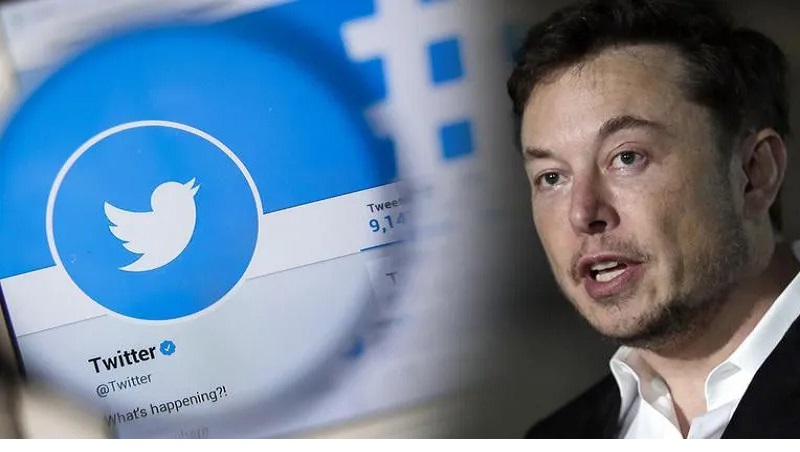
Elon Musk’s push to purchase Twitter appears to have seen a green light following mounting pressure on the company’s board by shareholders to consider his bid, Reuters reported on Sunday citing people with knowledge of the matter.

Musk made a $43 billion takeover bid for Twitter earlier this month after taking 9.2 percent stake in the company. But his bid has faced a hurdle as Twitter board adopted the ‘poison pill’ in an attempt to stop the acquisition.

Twitter co-founder and former CEO Jack Dorsey had joined Musk in criticizing the board for moving to stop the bid.

Musk had asked that Twitter shareholders be involved in the decision of whether to accept his bid or not. Now many shareholders are asking the company to consider the bid, even though they have varying views regarding what a “fair price” for a “deal would be.”

Musk had promised in a letter to Twitter’s board to turn the microblogging app’s fortune around, a message that apparently seems good to shareholders. Reuters reports that many reached out to the company after Musk outlined his acquisition financing plan on Thursday and urged it not to let the opportunity for a deal slip away.

According to the sources, Twitter’s board is expected to find that Musk’s all-cash $54.20 per share offer for the company is too low by the time it reports quarterly earnings on Thursday. Nonetheless, some shareholders who agree with that stance still want Twitter to seek a better offer from Musk.

But that would be challenging because Musk’s $43 billion bid outweighs Twitter’s current $37 billion market capitalization by $6 billion, and he made it clear that it’s his “best and final offer.” However, there is hope that he could be cajoled to add more to the figures, particularly to appease shareholders who had complained that his bid is not enough.

One option available to Twitter’s board is to open its books to Musk to try to coax him to sweeten his bid. Another would be to solicit offers from other potential bidders. While it is not yet clear which path Twitter will take, it is increasingly likely that its board will attempt to solicit a better offer from Musk even as it rebuffs the current one, the sources said.

“I wouldn’t be surprised to wake up next week and see Musk raise what he called his best and final offer to possibly $64.20 per share,” one of the fund managers who is invested in Twitter said on condition of anonymity to discuss private conversations with the company.

The possibility that Musk could win over shareholders with a tender offer had threatened whatever confidence the ‘poison pill’ had brought to the board. The sources cited by Reuters said that the board is concerned many shareholders could back Musk in a tender offer if it doesn’t negotiate with him. While the poison pill would prevent Twitter shareholders from tendering their shares, the company is worried that its negotiating hand would weaken considerably if it was shown to be going against the will of many of its investors, the sources said.

But there is another challenge. Shareholders are divided on what will be the ideal price per share. Earlier this month, Saudi Arabia’s Prince Alwaleed bin Talal, a Twitter shareholder, had tweeted: “I don’t believe that the proposed offer by Elon Musk ($54.20 per share) comes close to the intrinsic value of Twitter given its growth prospects,” in response to Musk tweets on his Twitter bid.

The sources who spoke to Reuters said the price expectations among Twitter shareholders for the deal diverge largely based on their investment strategy. Active long-term shareholders, who together with index funds hold the biggest chunk of Twitter shares, have higher price expectations, some in the $60s-per-share, the sources said. They are also more inclined to give Parag Agrawal, who became Twitter’s chief executive in November, more time to boost the value of the company’s stock, the sources added.

The disparity would be one of the most challenging issues of the deal, if the shareholders don’t quickly reach a consensus on what would be the right price.

Reuters’ sources said ‘short term-minded investors such as hedge funds want Twitter to accept Musk’s offer or ask for only a small increase’. Some of these are fretting that a recent plunge in the value of technology stocks amid concerns over inflation and an economic slowdown makes it unlikely Twitter will be able to deliver more value for itself anytime soon, the sources added.

“I would say, take the $54.20 a share and be done with it,” said Sahm Adrangi, portfolio manager at Kerrisdale Capital Management, a hedge fund that owns 1.13 million shares in Twitter, or 0.15% of the company, and has been an investor since early 2020.

But most of the issues appear to have been sorted out as new information emerges from the negotiation table.

Bloomberg reports Monday morning, citing sources, that Musk is close to sealing a deal. and if talks continue smoothly, a deal could be announced today. It is not clear yet if Musk elevated his price. Musk was reportedly ready to finance his Twitter bid with as much $15 billion of his personal fortune, and has managed to rally the support of some investors who are willing to finance the deal.

Twitter shares moved up 3.5 percent Monday, following the news that a deal could be reached soon.
The Liberation of the little blue bird by Elon Musk

1

Twitter is the most difficult social media platform in the main league. I am on the 3rd trial before I gave up on it. Yes, for two good times, I have deleted my accounts because I struggled with it. On the 3rd voyage, it has been weeks since I logged in.

First, this product does not allow you to build your points, in the academic way. And when you try to break them, you create a mini thesis for the readers. Then, the worst part: inability to edit posts.

But Twitter has been getting away with those issues because it is the best ecosystem to break news. Unfortunately, many of us are not in the business of breaking news; we prefer to analyze broken ones!

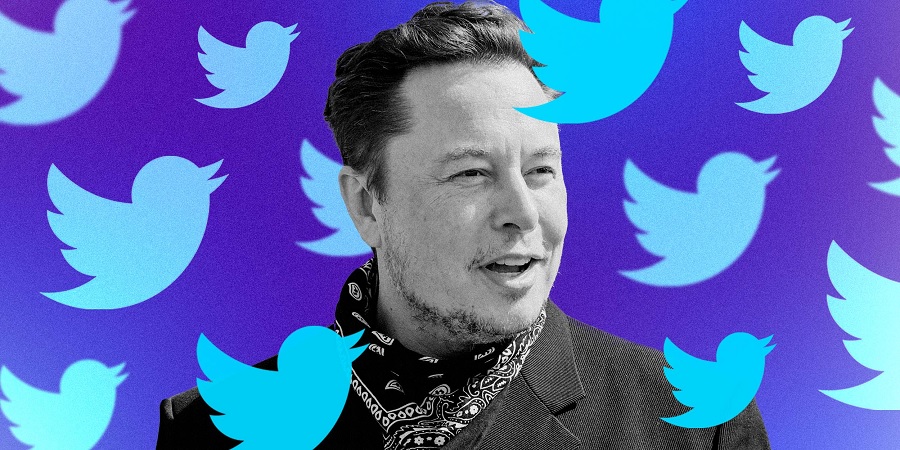
But help seems to be on the horizon. The little blue bird is flying to the generation’s finest innovator. People, this is the age of Mustter, a great fusion of Musk and Twitter. It promises to be amazing for the bird because Elon Musk wants to bring a liberation of “free speech”.

Twitter’s board has accepted Elon Musk’s offer to buy the social media platform for $44 billion and take it private, in what could be one of the biggest-ever leveraged buyouts of a publicly-listed company. It’s a dramatic turn of events: When the Tesla CEO unveiled his unsolicited bid 11 days ago, the social media platform appeared certain to reject it, even adopting a “poison pill” defense to ward off a hostile takeover. But Twitter started to warm up to the offer after the billionaire disclosed that he’d secured $46.5 billion in financing. About half of that financing is bank debt, the rest is cash pledged by Musk himself. Musk says he wants to “transform” Twitter into a “platform for free speech around the globe.” (LinkedIn News)

People, Musk is peerless but any promise of a censor-less digital ecosystem will not work. I have made my point before: “Elon Musk is brilliant but there is one thing he cannot achieve: a zero-censorship social media platform”.

It is a big irony: without moderation and censorship, many will lose their “freedom” to tweet. Why? On LinkedIn, if they do not have a blocking feature, I would have left. But with that blocking feature, I have put many people where they belong. They come to cause confusions and bully; we block them to have the “freedom” to discuss. I am not sure how Musk will solve that by taking Twitter private.

Of course, it does not matter when you have $250 billion in the personal balance sheet. At that level, even $44 billion could seem like a good video game.

Twitter is not making money. Unless Musk brings subscription plans, not sure how the outcome will change. It is very hard to make money on text-based products in this age of mobile. Check WhatsApp, check Twitter; their core products are text-based. In those products, you are engaged to use them unlike photo- or video-based products where you relax to consume them, making it possible for you to make time for adverts. Twitter’s challenge is native. But hey, Elon Musk builds rockets; Twitter problem is an earthly one.

Comment on LinkedIn Feed

Comment 1: Elon went on to once again test his grit and weigh his balls by going after a public company, which has served as a major communication channel for individuals, businesses and politicians and he succeeds as usual, growing even bigger balls while doing it.

However, I am not personally confident He will achieve all he is set out to achieve with free speech, Twitter still has to operate within a sovereign just like Ndubuisi Ekekwe alluded to, and free speech many times comes with its own baggage of “bad business”. I am also not confident it is one of the wise business decisions Elon will make in his lifetime.

But then again, who am I to question the decision of a Man of many landmarks, a Man who revolutionized and commercialised space travel, and a Man who has $250Bn to his Name.

Congrat to Elon and his team of advisors.

Comment 2: In my opinion, free speech is an illusion. What we have around the world are different levels of permission of speech. Some countries have higher levels of permission than others.

Apart from that, an open system where anyone can say anything is not possible. People will get hurt and lives will be destroyed. The so-called freedom of speech will suppress the freedom of others.

Eventually, the government will regulate social media and everyone will blame the government for denial of “freedom of speech”

My Response: We will be waiting to see how he will manage the ecosystem when one terrorist group posts that it is looking for fighters. As you said “free speech is an illusion” at all levels.

Another comment on 2: Ndubuisi Ekekwe If a ‘terrorist’ group can recruit fighters, the ‘terrorist’ group is just preaching to their choir. The question becomes why does the audience exist? Banning them increases the barrier to recruit, but doesnt solve the problem, it just delays it.

My Response to that: Good point. But there are many stacks in everything – the generation, distribution, etc. You may not like to be sued for making your platform a den for bad people to play games. Imagine if you allow your house as a place for drug peddlers to share their goods. Society will not excuse you if you do not make efforts to stop that by locking your doors and making sure they do not have access.

Comment 3: I’ve been reviewing this whole Twitter acquisition by Elon. Trying to make Twitter 100% uncensored could be disastrous. Extremists will always abuse such privileges. Free speech for all, trouble for some. And also, Musk is beginning to gain so much influence as an individual, he’s leading the game here on earth and over in space. Tesla and SpaceX, not to talk of Neuralink, Dogecoin and The Boring Company. Now he has added Twitter to the list. I feel there should be regulations to privatization. Musk will become a demigod. Someday we’d wake up and realized we living in Elon’s world not ours. Watch the titans play.

Elon Musk Is Considering Starting His Own Social Media Platform


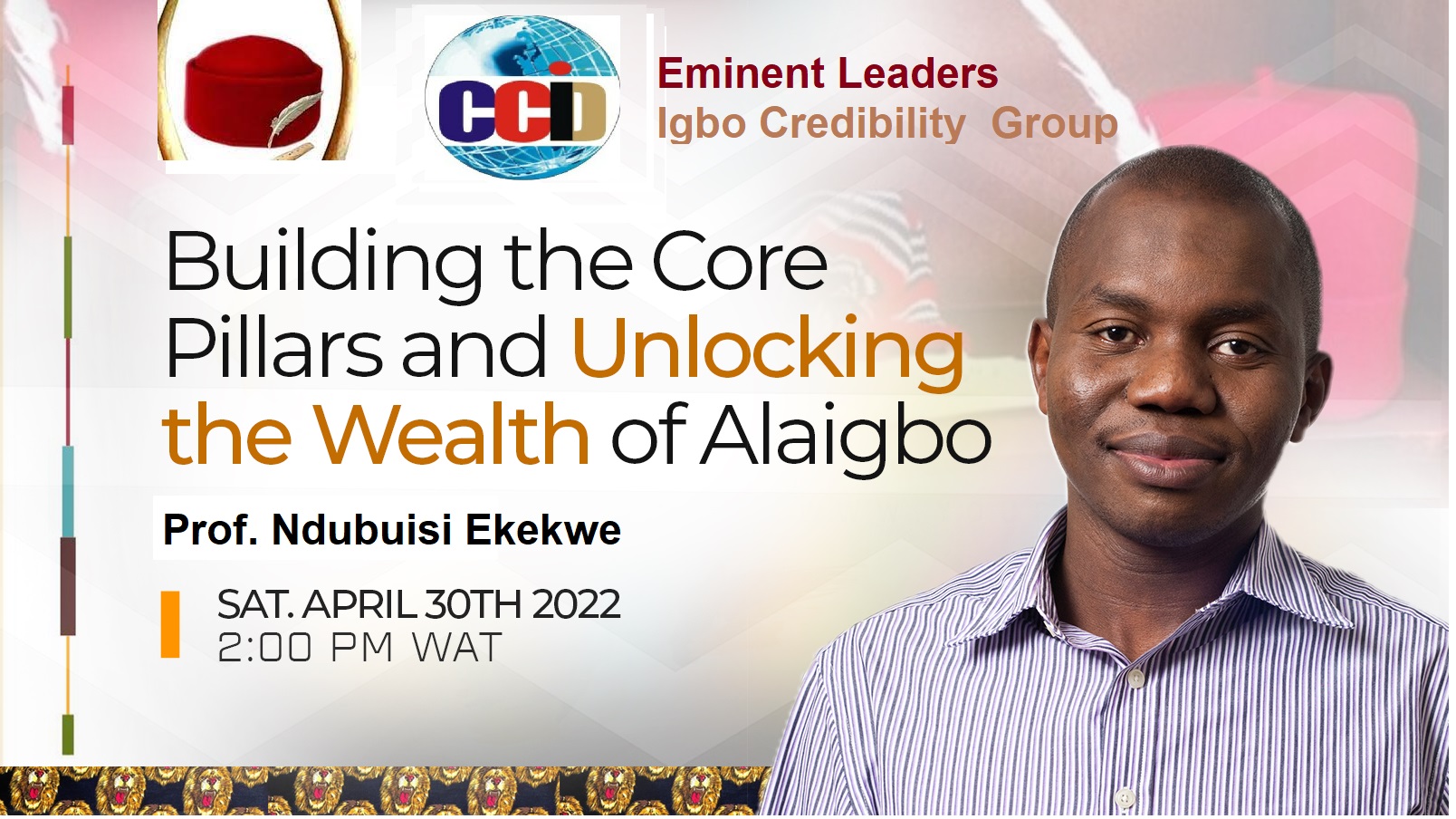
Building the Core Pillars and Unlocking the Wealth of Alaigbo – Ndubuisi Ekekwe Speech at CC

0

The recorded video is below.

The Economic Committee of the Igbo Credibility Group, a group of eminent Igbo leaders and scholars, is hosting this webinar. They have approved making the presentation public. You’re highly invited; Zoom below.

Introduction: Looking at 2,000 years of gross world product, and individual GDPs of nations, we can see two distinct economic developmental phases. Nations begin at the “invention” phase where there are many ideas, but few products and services. Successful nations transmute into the “innovation” phase where they do not just have ideas, they actually have the capacities to create products and services. Products and services are what solve frictions (i.e. problems) that societies have. Unless nations can translate those ideas into products and services, they stall economically. That translation is what GDPs capture through economic activities and productions.

Alaigbo today is an invention society – so many ideas postulated in beer parlors, taxis, offices, etc, but limited products and services to serve communities. In this presentation, Prof Ndubuisi Ekekwe will explain how the Igbo Nation can build the core pillars which all innovation societies have built, from Europe to North America to Asia. No nation in human history has developed without those pillars. Like the Europeans who created chemical compounds but were unable to make vaccines, and died of epidemics centuries ago, until Alaigbo can translate its knowledge base into market solutions, and fix frictions in our communities, the economic stasis will remain.

Europeans later turned those compounds into vaccines, after they enabled the pillars; the Igbo Nation can build out its own, and accelerate prosperity. Nigeria’s national budget of $42 billion for 210 million citizens when South Africa with 60 million people is spending $152 billion, explains the urgency for our moment.

Topic: Building the Core Pillars and Unlocking the Wealth of Alaigbo
Presenter: Prof Ndubuisi Ekekwe, Lead Faculty of Tekedia Institute and Harvard Business Review writer since 2009
Date: April 30 2022
Time: 2pm WAT
Zoom: click here


The Rise of NFTs and the Nigerian Tax Regime

2

Just as the world gets crescively disrupted through the redefinition and driving of an increasing domain of human transactions by blockchain technology and the frenzy of a decentralized financial market gains increased traction across the globe, governments, as a crop of societal institutions that across ages have been at the centre of societal evolution, are increasingly growing nervous and recurrently frustrated in their bid to maintain the status quo in the financial sector.

When viewed from another angle other than the interest of protecting citizens from fraudulent activities, governments may not ordinarily be frustrated if their main concern, which is ostensibly taxes, were turned in unthreatened. When Benjamin Franklin sarcastically stated in 1789 that only death and taxes were certain,[1] he could never have imagined a time when humanity would be so inventive as to independently go beyond a centralised banking system, evolve blockchain technology, build decentralized currencies and trading platforms, create the concept of Non-Fungible Tokens (NFTs), and eventually use it as it is today, amongst a slew of other blockchain-based technologies in the financial sector.

So far, however, the concept of NFTs has proven to be more of a speculative industry than an art collection enterprise, thereby creating more regulatory troubles for governments who are yet to grapple with the regulation of fungible tokens built on the blockchain network and technology, which in due time should enable the evolution of an effective taxation regime. For countries like Nigeria, the nightmare is made worse by its financial sector regulatory agencies, which have sought to avoid the subject of fungible tokens’ legal status and content over the years, directing financial institutions to discontinue interaction with these technologies and frustrating any attempt by private individuals to use their services for the purposes.[2]

Hence, when the domain and content of cryptocurrencies are yet to be determined under Nigerian law to effectively rest its legal status, the questions of compliance abuse and general illegality do not only become mere concerns but a reality. For NFTs and their taxation, the troubles of investors and creators seem to be more complicated, primarily because Nigerian tax laws, just as universally obtained, have evolved in such a manner as to constructively cover all manner of human transactions having economic value. Thus, argumentatively, personal income tax, capital gains tax, and company income tax, as the case may be, amongst others, do apply to the transactions of purchase and sale of NFTs under Nigerian laws. However, the problem that arises rests with the trite principle of taxation law that a statute which seeks to impose a tax must do so in clear and precise terms so that the taxpayers and stakeholders will know who and what is being taxed.[3] By implication, therefore, such wordings as “property” used in the Capital Gains Tax Act[4] to denote assets chargeable, “income” used in the Personal Income Tax Act[5] and “profit” as used in the Companies Income Tax Act[6] for the purposes of defining accruable taxes on persons and companies, respectively, create real legal questions as to the situation of NFTs and cryptocurrencies by the means of which their transactions are generally effected under any of these constructions.

In light of the foregoing, it is important to note that taxes are deductible only on the basis of a recognized currency, whether Nigerian or that of another sovereign country.[7] Consequently, given that NFTs and cryptocurrencies are yet to be recognized as currencies under Nigerian laws, does it allow the argument that any transaction of sale or purchase of NFTs by barter with another NFT or through a cryptocurrency is not taxable under Nigerian law? Theoretically, such arguments may avail the contender to the extent that the courts are willing to accept such  as tax avoidance as against tax evasion and will therefore serve to preclude the investor or artist from any tax liability.[8]

However, it must be noted that even if such arguments are upheld by the courts, it will be extremely difficult, at the expense of saying impossible, for any person to satisfy the primary condition of not embroiling the Naira or any other recognized currency in their transactions, whether before the transaction or after its conclusion. The reasoning is simply based on the fact that cryptocurrency has not yet permeated every aspect of life in Nigeria in such a way that the investor or artist can solely use it as a means of daily transaction.

Expositorily, it is to be noted that personal income tax as within Nigeria in this circumstance will be applicable to the artist whose NFT is sold via another NFT or a token sum of cryptocurrency, either of which he eventually converts into a recognized currency, say the Naira. This is because the law will operate to input on the NFT sold or the cryptocurrency exchanged into fiat the status of a property that was created by the artist whose proceeds must be taxed. Ordinarily, this will be the same position as affecting company income tax mutatis mutandis. However, for capital gains tax, the events will be a little bit compounded as it involves the appreciation in value of a previously held economic position. Therefore, it will be necessary to determine the previous taxable economic position for the appreciated value to be thereafter taxed. Hence, when a collector or investor purchases an NFT, the instrument of purchase being traceable to a legal tender, and thereafter sells the same through an instrument of sale also traceable to a legal tender at a value in excess of that at which they purchased the NFT originally, such excess of value shall be subject to the tax regime affecting capital gains in Nigeria by imputation of the status of capital on such NFT by the law.

Conclusively and consequent of the foregoing analyses, all persons engaged in the sale and purchase of NFTs within the jurisdiction of Nigerian tax law must make every effort to keep their books up to date, as trading in a decentralized financial market may not be sufficient to exempt them from incurring tax liabilities.


[1] NCC Staff. (2021, November 13). Benjamin Franklin’s last great quote and the Constitution. National Constitution Center – Constitutioncenter.Org. Retrieved April 21, 2022, from https://constitutioncenter.org/blog/benjamin-franklins-last-great-quote-and-the-constitution

[2] Moses-Ashike, H. (2022, April 4). CBN warns Nigerians of illegal financial operators. Businessday NG. Retrieved April 21, 2022, from https://businessday.ng/banking/article/cbn-warns-nigerians-of-illegal-financial-operators/

[3] Cape Brandy Syndicate vIRC (1921) 1 KB 64

[4] Section 3, Capital Gains Tax Act, CAP C1 LFN 2004

[5] Section 3, Personal Income Tax Act, CAP. P8 LFN 2004

[6] Section 9, Companies’ Income Tax Act, CAP. C21 LFN 2004

[7] Section 54, Companies’ Income Tax Act, CAP. C21 LFN 2004

[8] 7UP Bottling Company PLC VS Lagos State Internal Revenue Board (2000) 3 NWLR (Pt 650) 565

Examining TETFUND’s Message To Nigeria’s Tertiary Institutions

0

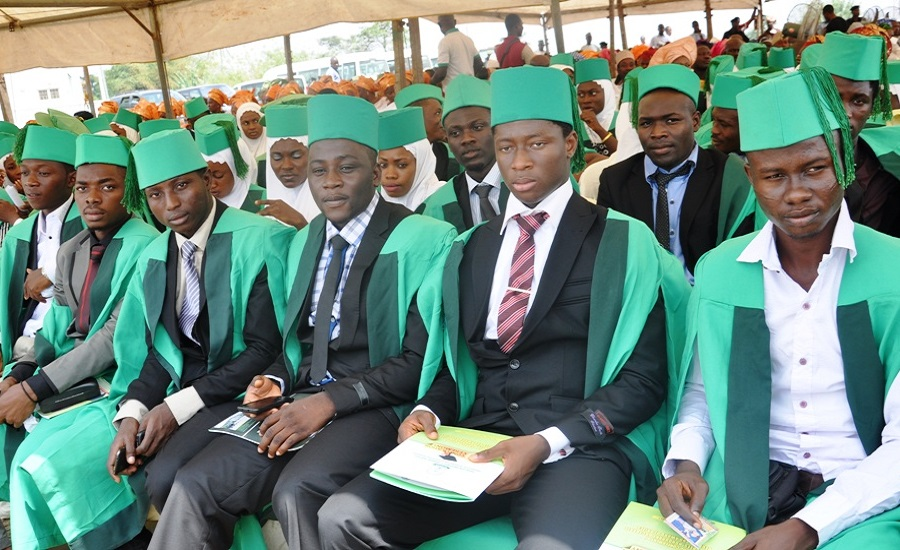
The Executive Secretary of the Tertiary Education Trust Fund (TETFUND), Mr. Sonny Echono has called on tertiary institutions domiciled in Nigeria to produce entrepreneurs and not just graduates.

Mr. Echono, who was newly appointed by President Muhammadu Buhari, made the call in Abuja, the country’s capital territory, when the Governor of Plateau State, Mr. Simon Lalong paid him a courtesy visit at the Fund’s Headquarters.

The TETFund boss opined that the investments in creating entrepreneurs would go a long way to curbing the menace of unemployment and consequently tackle the socio-economic problems prevalent in the country.

He said one of his fundamental goals was to make tertiary institutions a place to produce entrepreneurs, noting with the support of the Federal Government (FG), TETFUND plans to reinforce the huge investments in the 13 new universities to fast track their rate of progress with a view to achieving the purpose of establishing them.

He stated that the present administration of President Buhari had greatly given his full support to education, adding this was evident in the recent Presidential approval of upward review of Education Tax from 2% to 2.5%, which would enable TETFUND to cope with the increasing demands.

Mr. Echono expressed optimism that the education tax would likely increase to 3% as the government increases education investment, saying such a step would go into expanding the frontiers of education.

“The increased tax would facilitate the implementation of more developmental projects in the education sector” , he said.

The Executive Secretary showed appreciation at the show of support from Gov. Lalong, while pledging continued commitment to the development of tertiary education in his home State.

In his remark, Gov. Lalong lauded the fund for the numerous iconic projects dotting the tertiary institutions in Plateau State, saying TETFUND had now become a lifeline for the schools.

He therefore sought the continuity of the good work by the Fund, expressing his appreciation for its contribution to the development of education in his State and the Northern region at large.

He further expressed optimism that the newly appointed Executive Secretary of the Fund would keep up the good work of his predecessor, Prof. Elias Bogoro.

He assured Mr. Echono of his support in discharging his duties as the Chairman of the Northern Governors Forum, to make sure the Executive Secretary gets the needed support of other Northern governors.

The Director of the Office of the Executive Secretary, Mr. Uchendu Wogu noted that all the good works by TETFund as identified by Gov. Lalong, were the mandate of the agency, which remained obligatory to fulfill.

He thus expressed gratitude to the institutions in the State for their transparency in utilizing their allocated funds while making it possible to attract more funds for the development of the institutions.

Aside from the call by the TETFund Executive Secretary, it was already obvious that it’s high time the chief executives of these institutions started making moves to ensure their respective wards emerge entrepreneurs after graduation.

The contemporary global society is conducive for only job creators, not seekers. This is an indication that time has come for our various tertiary institutions to change the existing pattern of impacting knowledge on their numerous students.

This is one of the reasons I had called the concerned authorities, for the umpteenth time, to revisit the ongoing Students Industrial Work Experience Scheme (SIWES) towards ensuring that it becomes more result-oriented technically.

The bone of contention remains that we need to overhaul the system to create an environment that would boast of producing entrepreneurs or job creators as graduates.