DD
MM
YYYY

PAGES

DD
MM
YYYY

spot_img

PAGES

Home Blog Page 5189

Tesla Posts $3.3 Billion Profit in First Quarter 2022

0

Supply chain constraints and global chip shortage which has scuttled production around the world did not stop Tesla from turning up big in the first quarter of 2022. The electric vehicle manufacturer reported that it earned a whopping $3.3 billion profit in the first quarter.

Tesla recorded an 81 percent increase year over year compared to the same quarter last year, when it made $10.4 billion in revenue. The company announced over $18.7 billion profit to beat its record in the same quarter last year.

The Verge’s report (below) on Tesla’s first quarter earning delves into how the automaker maneuvered its way out of the hurdles that incapacitated other manufacturers and greatly undermined their profits.

Tesla logged $679 million in emission credit sales to other automakers, compared to $314 million in credit sales in Q4 2021. The company generates this revenue by selling these credits to automakers that make fewer “clean” vehicles than are required by the US government and the European Union.

The credit sales have come in handy in past years, helping Tesla eke out a profit while its car-making business struggled. Last summer, the company reported that its manufacturing and energy sales business was profitable for the first time without counting emission credit sales.

It was undoubtedly a noteworthy quarter for Tesla. The company opened two new factories — one in Berlin on March 22nd and the second in Austin, Texas, on April 8th — while also being forced to shutter its Shanghai factory for several weeks amid rising COVID numbers. The costs of opening those two factories, while also struggling to keep its Chinese factory in operation, were expected to weigh down Tesla’s numbers this quarter.

The company says it started production in Berlin last month, and that it started Model Y deliveries from Texas in April. The company also mentioned it’ll produce its structural battery packs with 4680 cells in Texas later this year, alongside the standard packs with 2170 cells.

The earnings report also follows a robust quarter for delivery and production for Tesla. The company said it sent 310,048 vehicles to its customers in Q1 2022. Tesla CEO Elon Musk described that feat as “exceptionally difficult,” citing global supply chain issues and the closure of the company’s factory in Shanghai amid rising COVID case numbers. Despite that, Musk also predicted on the earnings call that the company would be able to ramp up production and make 1.5 million cars this year.

Tesla said it delivered 295,324 Model 3 and Model Y vehicles, while 14,724 were for the Model S and X. Deliveries increased slightly from the previous quarter’s 308,600 deliveries and outpaced the 184,800 shipments Tesla made in the first quarter of 2021, representing a 68 percent year-over-year increase. On the production side of things, Tesla said it built a total of 305,407 vehicles during the past three months.

The company has also continued its trend of making more per car — its gross automotive margin was 32.9 percent in Q1 2022, compared to 26.5 percent in Q1 2021. In its notes to investors, the company says it increased the average selling price of its cars and grew the number of cars it was delivering.

Tesla navigated the global supply chain crisis better than its rivals, posting record deliveries and profits for several quarters. The company was able to avoid the same kinds of headaches as other global automakers by sourcing different chips and rewriting software on the fly.

Tesla posted a record profit of US$3.32 billion for the first quarter, even as a pandemic-induced shutdown of its Shanghai factory crimped output. The results blew past analysts’ expectations and compare with earnings of US$438 million a year earlier. Sales jumped 80% after the world’s most valuable carmaker delivered 310,000 electric vehicles. Chief executive Elon Musk also said Tesla would likely produce more than 1.5 million vehicles this year despite supply chain challenges, reflecting a 60% increase. (LinkedIn)

Funding Small Businesses In Nigeria – A Catalyst For Nation Building

0

The role of small businesses in countries is very important because these businesses contribute to local economies by bringing growth and innovation to the community where the business is based. Small businesses also stimulate economic growth, by providing employment opportunities to individuals who may have difficulty securing a job in big corporations or companies.

It is imperative to say that when small businesses are properly funded, it is a strong catalyst for the growth of the economy of a nation. Although in Nigeria, small businesses are not properly funded as they suffer a 48 trillion naira funding gap. Some small and medium scale enterprises (SMEs) in Nigeria don’t operate at their full capacity because of the challenges that have hampered their growth. Some of these challenges are lack of modern technology, unfair market price, lack of access to finance, etc.

The secret of developed and developing countries is the fact that small and medium-scale enterprises are properly funded. One common major challenge these businesses often faced with is the lack of access to loans. These businesses have difficulty in obtaining loans from banks and other financial institutions, sometimes they are often faced with high-interest rates which often crumbles the business in the long run.

Although the Central Bank Of Nigeria (CBN) has a criteria that small and medium scale businesses must meet before they can be granted loans. Which is an asset base between 4 million and 500 million naira, and a staff strength between 10 and 100 employees.

In Nigeria, there is a very high rate of unemployment, which has seen it rise in the country to 35% in 2021, according to a report by a credit rating agency, Agusto & Co. Once small businesses are properly funded, there will be a drastic decrease in the unemployment rate, because SMEs are important contributors to job creation.

The SME sector in Nigeria accounts for most Nigerian jobs and contributes nearly half of the country’s GDP in nominal terms. With over 37 million SMEs in Nigeria, they contribute to almost 50 percent of GDP in nominal terms and account for 84 percent of all Nigerian jobs. Thus, these businesses contribute to the country’s national income, productivity, and employment.

According to sources, few Nigerian banks have stood out in supporting small businesses to reach their full potential. Some of these banks include; First Bank, Fidelity Bank, UBA, Fidelity Bank, and Wema Bank. This is commendable and also would be great if other banks can also join to support small and medium scale businesses in the country so that they can attain their lofty dreams.

Most of these banks in Nigeria, unlike the ones above-mentioned, have high-interest rates, which is usually a burden to these businesses and eventually leads to the mortality of the business. It is quite unfortunate that despite the importance of SMEs to a nation’s gross domestic products and GDP, they are given less attention in Nigeria.

Although another way that would be ideal in funding small businesses in Nigeria is through crowdfunding, where a group of SMEs can come together and put resources to start a business. Unfortunately, it is a very big challenge in Nigeria, because a typical Nigerian will rather compete than collaborate. Some Nigerians believe in a one-man squad.

However, there is a great need for the government of Nigeria to create schemes that will make it easy for small and medium scale businesses to access loans with fair interest rates to boost their business. They must understand that SMEs are the future of the already dwindling Nigerian economy, if they are properly funded, it will boost the country’s economy.

A substantial portion of Nigeria’s economy is produced by small businesses. According to the report, an estimate of 600 million jobs will be needed by 2030 to absorb the growing global workforce, which makes SME development a high priority for many governments around the world.

As APC Announces Cost Of Nomination, Interest Expression Forms

0

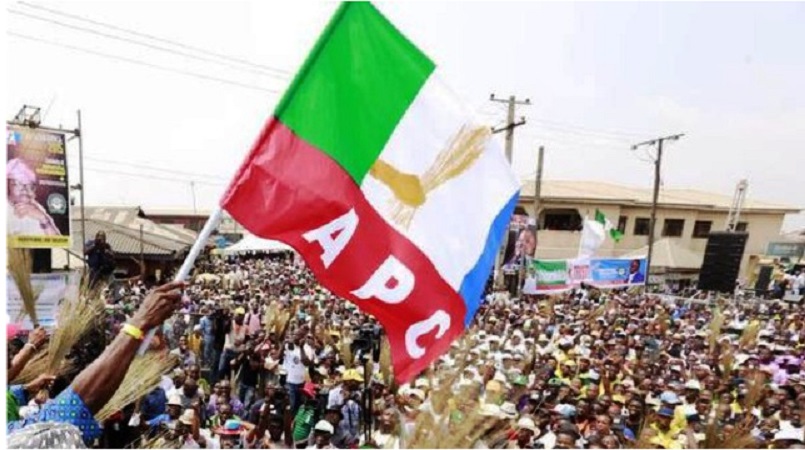
The ruling All Progressives Congress (APC) has announced the cost of the party’s various forms ahead of its primary elections.

The presidential nomination and expression of interest forms were pegged at N100 million. The forms for governorship aspirants cost N50 million; Senate, N20 million; House of Representatives, N10 million and State Houses of Assembly, N2 million.

The National Executive Committee (NEC) of the party disclosed this on Wednesday, 20th April 2022, via the party’s National Publicity Secretary, Mr. Felix Morka. This was released shortly after the 11th NEC Meeting held in Abuja.

The statement read that the Nomination Form for the Presidential position would go for N70 million while the Expression of Interest Form would go for N30 million.

Opposing an earlier announcement by the party’s National Women Leader, Betta Edu that the women will get free forms, Mr. Morka said women are entitled to free nomination forms but will pay for their expression of interest forms.

Similarly, the party leadership also approved a 50% reduction in nomination fees for youths less than 40 years for various elective positions.

He further disclosed that the APC had approved the Schedule of Activities and Timetable for the 2023 general elections.

According to the Spokesman, the NEC has approved the commencement of sale of Expression of Interest and Nomination Forms from Saturday, April 23 to May 6, 2022. Consequently, May 30/31 2022 were approved for the Presidential primaries.

It’s noteworthy that the incumbent Vice-President, Prof. Yemi Osinbajo; the former governor of Lagos State, Sen Bola Tinubu; the Minister of Transportation, Mr. Rotimi Amaechi; the Ebonyi State Governor, Mr. David Umahi, are among the leading presidential aspirants of the ruling party.

Having gone through the APC’s approval as regards its forms for the various elective positions, particularly that of the presidency, as a concerned Nigerian, I’m bedeviled by the fact that the aforementioned costs are so exorbitant.

This simply means that a ‘common or average’ Nigerian who is interested in becoming the President of the country cannot come anywhere near the position, let alone embracing it. Hence, such a person would remain a mere dreamer till further notice.

This unabated placing of outrageous price for these forms is the sole reason cruel godfatherism, which has crippled the Nigeria’s political space, will never depart from the country. This implies that the country will continue to wallow in a confused state.

Taking into cognizance the damaging effects of this unending scenario to Nigeria’s polity, there’s a compelling need to review the country’s electoral laws to ensure the electoral umpire is given the power to regulate the cost of the nomination and expression of interest forms of the various political parties.

It is better late than never. Hence, the time to do this is now.

Form Investing Club and Meet Tekedia Capital Investing Requirements

0

Tekedia Capital deploys $$millions into startups yearly, made possible by our Syndicate members. We have received comments from many people who want to join our Syndicate but are unable.

Sure, we understand that the $1,000 or N550,000 membership for four cycles. Nonetheless, we will not change the requirements; we do not want people to use money for diapers and Indomie noodles to invest in startups. 

Nonetheless, we have noticed one way people are overcoming that barrier. We have many people who come together and they invest as one entity. But for that to happen, the friends will have to establish a company or just a legal business name so that Tekedia Capital deals with them through that business name. 

So, if you are interested, look for friends, partners, etc and band together; think of an investment club. With that, 20 people can meet the above requirements as a group (they share the membership fee and co-invest together for the min requirement).

Learn more about Tekedia Capital here

Netflix Ventures into Advertisement Following Revenue Headwinds

0

Netflix is planning to introduce ads for the first time in its 25 years history due to revenue growth headwinds emanating from loss of subscribers. The film streaming company said Tuesday it will offer ad-supported tiers to consumers over the next two years.

Competition in the streaming industry has gone intense recently with more players like the DStv joining the on-demand video streaming services. With subscription-based streaming as only its source of revenue, Netflix has been hardly hit by global economic headwinds buoyed by Russian-Ukraine conflict.

Netflix recorded a loss of 200,000 subscribers in the first quarter, its first in a decade. The company’s co-chief executive Reed Hastings said on the earnings call that it will introduce the ad-supported plans to give customers more choice.

Per TechCrunch, the company blamed a number of factors for the decline in its subscriber base. It said the slowdown is a sign of saturation in its major markets. It also acknowledged the growing competition from rivals such as Disney, Paramount and Warner Bros. The company also noted that more than 100 million users watch Netflix by borrowing credentials from others.

Password sharing has since last year been a big concern to Netflix, who once threatened to halt the practice. But now it is exploring other options to address the concern as it faces one of the most challenging times in its history. The company, while acknowledging that its revenue growth had “slowed considerably,” said it needs to convert subscribers who don’t pay.

“Our relatively high household penetration — when including the large number of households sharing accounts — combined with competition, is creating revenue growth headwinds,” it said in a statement earlier Tuesday. On its earnings call, the company said this large base of users who don’t pay for the service currently is an attractive audience to convince into converting into subscribers or having their friends and family pay more.

However, the plan to venture into ads marks a significant shift in Netflix’s business model, given the company’s earlier stance on advertisement. The company has over the years frowned at the idea of selling ads to its roughly 222 million subscribers. TechCrunch quoted Hastings from a 2017conference saying that Netflix was not well suited to compete with the likes of Facebook and Google on ads.

A shift to the ad playbook has become a viable option owing to the changes in market activities since the past five years. Netflix has tried to woo subscribers across its markets including India, Indonesia and Kenya and boost revenue by lowering subscription fees.

Per TechCrunch, Netflix introduced its most affordable monthly pricing tier to date in India in December, where individuals can subscribe to Netflix for as low as 199 rupees ($2.6). The company last year offered a free mobile plan in Kenya. Though the company said it is “seeing nice growth” in a variety of markets including India, and has recorded 10% to $7.8 billion revenue growth, which falls short of Wall Street expectations of $7.9 billion, its recent loss paints a gloomy future if it maintains its belief on ads.

Netflix said it expects to lose 2 million more global subscribers in the current quarter. The company’s shares fell as much as 27% to $256 in extended trading.

Analysts have long argued that Netflix should explore and adopt advertisements besides its aggressive marketing. Hastings said, citing the success of rivals Hulu and Disney, that the ad model has matured enough and proven successful. “We don’t have any doubt that it works,” he said.

The plan will mean creating an ad-free streaming for consumers who don’t want ads, and offering incentivized subscription bouquets for subscribers who accept ads.

Per TechCrunch, Disney has long offered an ad-supported tier on several of its services, including its Asia-focused streamer Hotstar. The company said last month that it plans to launch an ad-supported Disney+ plan in the U.S. later this year.

“Those who have followed Netflix know that I’ve been against the complexity of advertising and a big fan of the simplicity of subscription,” Hastings said. “But as much as I’m a fan of that, I’m a bigger fan of consumer choice,” he said.

“Allowing consumers who would like to have lower price and are advertising tolerant get what they want makes a lot of sense,” he said, adding that the company is not viewing the ad-supported model as a “short-term fix.”

Customers who don’t wish to see ads will continue to be offered ads-free plans, he said.

“In terms of the profit potential, definitely, the online ad market has advanced and now you don’t have to incorporate all the information about people that you used to. So we can be a great publisher and have other people do all the fancy ad-matching and integrate all the data about people … so we can stay out of that,” he said.