DD
MM
YYYY

PAGES

DD
MM
YYYY

spot_img

PAGES

Home Blog Page 5189

Requirements for Setting-Up A Licensed Real Estate Investment Company in Nigeria

0

In this article, we will be looking at Real Estate Investment Schemes or Trusts (REIS/REITs) which are Collective Investment/ fund management schemes engaged mainly in investing in income-generating real estate assets or real estate-related assets.

Understanding this topic better will be attempted by the use of a question and answer format. Happy reading!

Question:- Like typical Unit Trust schemes, can Real Estate Investment Trusts be Open-ended or Close-ended?

Answer :- Yes, they can. REITs are simply Unit trust schemes that focus on Real Estate Investments.

Q:- What time range Investment objective is best suited for Real estate Investment Schemes?

A :- Real Estate Investment Schemes are best suited for Intermediate and long-term investment interests in Real Estate.

Q:- Do Real Estate Investment Schemes also come with Unit-based participatory interests as with Unit Trust Schemes?

A :- Yes, they do.

Q :- Under what legal structures can one engage in or issue a Real Estate Investment Unit Scheme?

A :- This can be done either by setting up a company registered by the Corporate Affairs Commission (CAC) and then getting licensed by the SEC as a Real Estate Investment Company (REICO) or as a licensed Fund Manager under the SEC rules you can launch a registered Real Estate Investment Unit Trust (REIT).

Q :- What the minimum required value of an issued Real Estate Investment Trust Fund?

A:- The minimum value of an Initial Public Offering (IPO) Real Estate Investment Trust is 1 Billion Naira. Subsequent offerings come with a minimum value requirement of 500 Million Naira.

Q :- Who actually owns property acquired via a licensed Real Estate Investment Trust?

A :- The SEC rules ( as amended) in Rule 509(1) states that a REIT can wholly acquire and hold legal title to a property or chose to hold equitable title through a Trust deed or other structure acceptable to the Securities and Exchange Commission (SEC) which governs the licensing of Collective Investment Schemes in Nigeria.

What this means is that a Real Estate Company can hold legal title to a property on behalf of the Investor beneficiaries of a Real Estate Investment Trust who hold an equitable title through a Trust deed or the Fund itself can acquire and hold Legal title to property.

Q :- What are the safety measures to be put in place where a Real Estate property is held by a Trust deed or alternate structure acceptable to the SEC?

A :- The following safety measures are required to be put in place in such a situation by Rule 509(2) of the SEC rules –

  • The registration of a caution indicating the interest of the Investment Scheme in the relevant land registry where the property is located;

  • The fixture of plaques or other notices on the relevant property indicating the interest of the Investment scheme;

  • Depositing the original title documents and other relevant pre-signed documents with the scheme’s Custodian;

  • The provision of such indemnity to the scheme as may be necessary.

Q:- Can a REIT qualify as a security?

A :- Yes it can. A REIT can qualify as asset- backed security or mortgage-backed security.

Q :- Do real life examples of Real Estate Investment Trusts exist in Nigeria?

A :- Yes they do. Notable examples include UPDC Real Estate Investment Trust and Sky Shelter Fund.

Q :- What’s the difference between a REIT and Land Banking?

A :- A Real Estate Investment Trust ( or REIT) involves offering the public participatory interests in a pool of funds geared strictly towards investing in Real Estate Asset Securities for Intermediate or Long term interests.

Land Banking on the other hand is the practice of buying small or large quantities of undeveloped land with the intention of profiting from their resale based on anticipated substantial infrastructural development or population growth in the area which generally leads to Real Estate value appreciation.

Q :- What are the requirements for the registration of a Real Estate Investment Scheme as required under the SEC rules?

A :- The following requirements are :

  • A filled application form SEC 6A;
  • 2 copies of the scheme’s draft prospectus;
  • 2 copies of the scheme’s Trust deed;
  • letters of consent from the prospective parties to the trust;
  • 2 copies each of the Certificate of Incorporation and Memorandum and Articles of Association of the Fund Manager/Investment Company duly certified by the Corporate Affairs Commission;
  • 2 copies of the Certificate of Incorporation and Memorandum/Articles of the scheme’s Trustee duly certified by the Corporate Affairs Commission;
    -2 copies each of the particulars of the particulars of the directors of the scheme’s Fund Manager and Trustee certified by the Corporate Affairs Commission;
  • a sworn undertaking to file evidence of the maintenance of separate trust accounts in a reputable bank;
  • evidence that the minimum paid-up capital of the Fund Manager & Trustee complied with SEC rules and regulations.

Q:- What are the requirements for the registration of units of a Real Estate Investment Trust?

A :- The requirements are as follows :

  1. The name under which the issuer of the units is doing business & the address of its principal office;

  2. the name of the proposed scheme;

  3. commencement date of the scheme;

  4. the Investment objective of the scheme;

  5. investment outlets of the scheme;

  6. the number of units proposed for issue;

7 the nominal value per unit;

  1. the names & addresses of the directors or persons performing similar functions, the Chief Executive Officer and the Chief Accountant;

  2. the names and addresses of brokers to the scheme;

  3. the names and addresses of all persons owning 5% and above of any class of shares of the issuer both on record & beneficially as at the date of filing the application for registration of the trust scheme;

  4. the amount of the proposed units of the issue to which any person specified in 8,9 and 10 has indicated an intention to buy or subscribe;

  5. the general nature of the business transacted or to be transacted by the manager;

  6. a sworn undertaking to file quarterly reports with the commission;

  7. any other information required by the SEC from time to time.

Q :- When is a REIT a better funding option than a mortgage?

A:- A REIT is a better option for co-owning comparatively heavy Real Estate assets like apartment complexes, warehouses , commercial buildings, massive residential schemes,shopping malls, hotels , office complexes or Real Estate-related assets like Mortgage-backed securities sold by Mortgage banks and for ensuring constant profits over a longer period of time.

Mortgages, Venture Capitalist financing, or Real Estate Joint ventures are a better option for developing relatively smaller land developments for the purpose of excision applications and relatively quick development and sales/rental objectives.

It is hoped that a better understanding of how REITs work and when they should be accessed has been gained by the article which can be used to make better-informed investment and finance-sourcing decisions.


Join our academic excursion which begins June 6, 2022

0

The next academic excursion begins next month. The courses are set, from strategy to innovation, from marketing to technology, from design thinking to accounting, and MORE. More than 200 business leaders from companies you admire, locally and internationally, will lead it.

Good People, you are invited to register for the next edition of Tekedia Mini-MBA today – and beat the early bird deadline and save.

Come, let’s go to this academic excursion together here https://school.tekedia.com/course/mmba8/

Nigeria 2023: Presidential Aspirant Secretly Buys Bauchi State Governorship Forms?

0

While he is publicly seeking the presidential ticket of the Peoples’ Democratic Party (PDP), the governor of Bauchi State, Mr. Bala Mohammed has reportedly secretly obtained the Nomination and Expression of Interest forms and been cleared to contest in his State’s governorship primary.

It’s noteworthy that Mr. Mohammed will serve out his first term as governor of the State in 2023, hence eligible for re-election.

There have been speculations over who will emerge as his successor in 2023 after he declared his intention to run for Nigeria’s presidency.

One of such speculations suggested that the Secretary to the Government of the State, Mr. Ibrahim Kashim entered a pact to act as placeholder for the governor.

According to the claim, Mr. Kashim secretly resigned and obtained the governorship nomination and expression of interest forms of the party and would proceed to compete in the primary.

The peddlers of the speculations are of the view that if Mr. Kashim wins, and Mr. Mohammed is not successful in his bid to be the party’s presidential candidate, the former would step down and be replaced by the latter who has been his boss.

But party insiders with knowledge of what is being played out in the State’s PDP secretariat have dismissed this speculation as untrue, informing that Mr. Mohammed has not only secretly purchased the form for the State’s gubernatorial primary but has been screened and cleared to compete during the primary.

This revelation gives credence to the allegation by another contestant for the party’s presidential ticket, Nyesom Wike, the governor of Rivers State, that some of his rivals in the contest are not as committed as he is because they have secretly obtained nomination and expression of interest forms for other positions they hoped to fall back on.

Last month, Mr. Mohammed and a former senate president, Bukola Saraki, were controversially selected as consensus candidates of the northern region during the party’s primary. But other contestants from the region rejected that decision.

When reached for response, the Spokesperson for Mr. Mohammed’s presidential campaign, Udenta Udenta, described his boss’ clearance to run for the Bauchi PDP’s gubernatorial primary, as being speculated, as a rumour and declined to tender further comments.

“I don’t comment on mere rumours. What I know is that he had been screened to contest for the presidency and he has joined a long list of other candidates.” he said.

But some sources have refuted the spokesperson’s claim, saying the purchase of the gubernatorial forms by Mr. Mohammed is beyond mere rumours and that he would most likely withdraw from the presidential race before long.

This manner of behaviour has become a norm among the teeming Nigeria’s politicians, who I often referred to as politicos. They keep on deceiving their gullible followers, who apparently have no say of their own.

A similar act was displayed by Sen. Rochas Okorocha, the erstwhile governor of Imo State, in 2014 prior to the 2015 general elections when he was aspiring to clinch the presidential ticket of the All Progressives Congress (APC). He wasn’t successful in his presidential bid, hence later fall back to emerge as the party’s governorship flag-bearer in Imo, after which he eventually became the State’s governor for his second term.

Time has obviously come for the Nigeria’s electorate to wake up from slumber, else they stand to regret it once again come 2023. 

Find your path

0
Fasmicro Consulting

Begin the new month with the unbounded possibilities of the future. Be like the dragonfly which even though enjoying the mild water current defines its path. Do not allow the chatter of the paralysis of the Nigerian state to define your state of mind.

Find confidence in the resilience of the Nigerian people. Yes, “surviving” with $42 billion for 210 million citizens when South Africa uses $152 billion for 60 million people. Indeed, the nation would be unstoppable if more resources (and accountability) are possible.

Yes, never be fooled: the national budget of South Africa is controlled by the government, but in Nigeria, the citizens hold the ace. That is why your local government area headquarters may not afford a stamp pad, or the police station cannot afford an electric bulb, even in a place where men and women have all types of mansions.

So, no matter what they have there as the national budget, understand one thing: Nigerians have multiples they control by themselves. Our yearly flows from consumers to businesses in Nigeria is close to $350 billion; that is a lot!

Nigeria runs the largest “national budget” in Africa even though the official numbers may not show so. Sure, South Africa has $152 billion while Nigeria has $42 billion. But do not be  fooled: the national budget of South Africa is controlled by the government, but in Nigeria, the citizens hold the ace. That is why your local government area headquarters may not afford a stamp pad in a place where men and women have all types of mansions, untaxed. In South Africa, they would have brought some of those private wealth into the public coffers.

Fixing Nigeria’s Lackluster Venture Capital Funding

Online Sports Betting – Requirements for Securing A Digital Sports Betting License in Nigeria

0

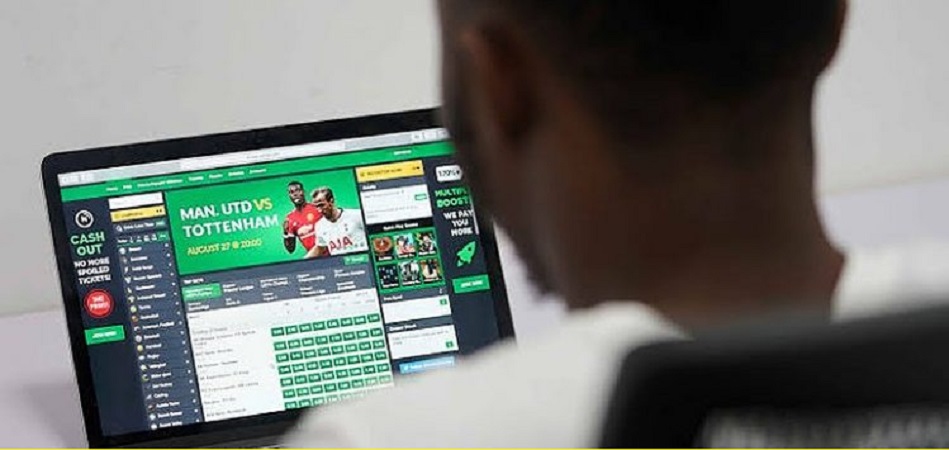
Online betting is currently witnessing a huge boom as a major Fintech opportunity in Nigeria, partly motivated by the current economic situation leading to increased efforts on the art of many Nigerians to seek passive income, and the attractive idea of making money from truly legitimate passion for sports like Football shared by an overwhelming majority of people in the country.

Sport betting itself is the activity of predicting sports results and placing a wager on the outcome. In Nigeria, sports betting has been described alongside betting businesses like Land-based Casinos as legal under Nigerian Law which on the other hand describes as illegal betting games of chance which usually by deliberate design are not favorable to the player, which can be described as plain racketeering.

Digital Sports betting which is the core focus of this article is regulated at the Federal level by the National Lottery Regulatory Commission (NLRC) established through the National Lottery Act and is charged with administering the provisions of the National Lottery Regulations 2007 while at the state level in places like Lagos state Online Sports betting is governed by the Lagos State Lotteries and Gaming Authority (LSLGA) established by the Lagos State Lottery Law (as amended).

This article aims to shed more light in a most summarized and basic manner on what you really need to know about getting a Digital Sports Betting license.

Due to disputes between the Federal and State governments over whether the Federal government has jurisdiction over betting licenses, it is very advisable to seek Digital Betting licenses from the NLRC as well as the LSLGA. 

The NLRC usually issues 3 classes of licenses which are Lottery licenses, Sports Betting licenses, and Promotional licenses.

To secure a Federal Digital Sports Betting license from the NLRC, you need to have the following:-

– Preferably, an Online Betting company registered with the Corporate Affairs Commission. The minimum share capital requirement for Sports Betting companies is 30 Million Naira while the minimum share capital requirement for a lottery betting company is 5million Naira (you cannot engage in Online Sports Betting as a lottery company);

– While at the point of applying for a Federal/National Sports Betting license grants from the NLRC, you must not have a registered company, you must attach to your application a copy of your Company name reservation approval by the Corporate Affairs Commission and evidence of the payment of a sum of 10,000.00 Naira to the NLRC;

– Applying for a National license is broken down into an Application stage, a Provisional Approval (Approval-in-Principle ) stage, and a Post-licensing stage;

– An NLRC  non-refundable application fee of 2million Naira payable to the NLRC;

– A one-time license fee of 100 million Naira(a 50% concession on this fee is possible where the company is a member of the Association of Nigerian Bookmakers);

–  A completed NLRC application form;

– Evidence of Domain name registration with a country code top level Domain label for Nigeria;

– Evidence of Trademark Registration ( Trademarks are the company’s brand symbols that include logos, slogans, catchphrases etc.);

– Evidence of SCUML registration as well as a set-up AML/CFT compliance framework. SCUML stands for the Special Control Unit on Money-laundering and is the government agency tasked with receiving compliance returns from Financial Institutions (FIs) and Designated Non-Financial Institutions (DNFIs) which includes Fintech players like Online Sports Betting companies;

– Particulars of directors and key personnel of the betting company (please note that people under the age of 18 are not allowed to be directors in Betting companies);

– A 5 year financial projection and Organization progression/growth plan for the Betting company;

– Details of the company’s planned Sports Betting games along details of the company’s participation terms and conditions for bettors, its marketing and distribution plans and a demonstration of Sports Betting Industry analysis capabilities;

– A detailed profile of the company’s Technical Service Providers/Partners and Telecommunications partners as well as copies of all JV agreements and/or SLAs signed with Technical partners and proof of software certification from recognized Tech testing labs;

– Where the company has foreign participation/ownership, there must be presented relevant immigration documents and a Certificate of Capital Importation from the Nigerian Investment Promotion Council;

– A Bank guarantee of 25 Million Naira valid for 1 year(at the temporary licensing stage);

– Connection of the Betting platform to the NLRC monitoring and reporting framework.

Temporary license grants last 90 days and at the Post-licensing stage or in the course of business operations, Betting companies are required to remit along with monthly update returns before the 10th of the next month a 3% tax on monthly sales turnover to the NLRC, 2% of this going to the National Lottery Trust fund .

NLRC licenses are valid for 10 years and do not have renewal fees, but renewal is at the discretion of the presidency subject to the recommendation of the NLRC.

Also, National Sports Betting companies are expected to establish a Prize Fund Account which will hold at least 50% of the proceeds from any lottery strictly for the payment of prizes.

STATE SPORT BETTING LICENSES :- For the purpose of this article we’ll be dealing with the procedure and requirements involved in getting an Online Sports Betting (OSB) license from the state agency regulating the business of Sports Betting, in this case the Lagos State Lotteries and Gaming Authority(LSLGA) which is a creation of the Lagos State Lottery Law (as amended). LSLGA licenses do not come with Bank guarantee requirements unlike NLRC license applications.

The requirements for an OSB license from the LSLGA are :-

– Application letters with attached Letters of Intent sent to the LSLGA which are usually reviewed in 10-15 working days;

– A minimum share capital of 20 million Naira;

– Incorporation documents of the applicant company;

– A non-refundable application fee of 500,000.00 Naira payable to the LSLGA;

– A license fee of 50 million Naira, with a renewal fee (renewal itself bring at the discretion of the LSLGA) of 10 million Naira payable annually along with a 2.5% monthly tax on sales revenue;

– Details of its proposed platform (if it is self-hosted or cloud-based and details of its hosting company of its the latter);

– A detailed proposal on the Online Betting scheme revealing vital particulars of the company’s key personnel(with 3-year Tax receipts where applicable) and its Business plan along with its financial projections;

– Detailed information about the company’s Technical operation flow and Technical partners.

Please note that Sports Betting companies in Nigeria CANNOT be 100% Foreign-owned, as a result at least 15% of the company’s controlling participation must be owned by Nigerians. Also, another way of going round the rather heavy capital requirements of getting a Digital Betting license is to simply set up an Online Betting Shop or a chain of Online Betting Agency shops by virtue of a franchise agreement.

SPORTS BETTING COMPLIANCE REQUIREMENTS :- Online Sports Betting companies have an extended Regulatory Compliance framework covering them that includes :-

  1. The NLRC/LSLGA;
  1. AML/CFT/KYC compliance filings to The Special Control Unit on Money-laundering as well as the Nigerian Financial Intelligence Unit (NFIU) among others;
  1. The National Office for Technology Acquisition and Promotion (NOTAP);
  1. The Nigerian Investment Promotion Commission (NIPC);
  1. Betting advertisement compliance with the Advertising Practitioners Council of Nigeria (APCON);
  1. The National Information Technology Development Agency (NITDA);
  1. The Federal and State Inland Revenue Services.

Consequently, it’s very advisable when setting up a licensed Digital Betting platform to have efficient Legal services by your side at every step of Licensing and post-licensing.

It is hoped that a basic understanding of how to participate in the Nigerian Online Betting Industry will be acquired from a proper processing of this article.