DD
MM
YYYY

PAGES

DD
MM
YYYY

spot_img

PAGES

Home Blog Page 5209

Join Tekedia Capital Investment Cycle Which Ends Next Week

0

Amazing great startups, and one out of Lagos filed a major patent in the United States. Explore the great startups, out of Africa, in the Q1 2022 Tekedia Capital investment cycle. The cycle ends next week.

Begin here and own a piece of the empires of the future

Join them as they are taking off with the rocketship.


Nigeria’s Democratic Terrain And Its Intriguing Features

0

It’s widely and popularly noted that the worst democracy can never be compared to the best autocracy anywhere in the world, meaning literally that the former remains far better than the latter.

In view of the above, several persons all over the global community have invariably and rigorously been canvassing for apt sustenance of democratic systems and processes in their respective societies. According to them, the said system has convincingly proven to run an all-inclusive pattern of government compared to others.

It’s noteworthy that democracy is conspicuously characterized by two prime recipes namely: elections and freedom of speech. These key factors spice up the regular functionality of any democratic terrain wherever it is found.

An electoral process invariably heralds any democratic government or leadership, whereby a set of leaders is constitutionally empowered to be at the helm of affairs of the given nation or province, as might be the case.

The above clause implies that it is through elections the leadership class of any democracy emerges. It suffices to say that it’s only by the conduct of an election the people would meet their leaders. When the leaders are eventually produced via the polls, the people or the electorate can then be classified as followers.

The bone of contention is that an election is not unlike a pivot on which a democratic state firmly stands. It is, therefore, the progenitor of the system of leadership in question. It’s the foundation or basis of this lovable platform currently enjoyed by the majority of countries across the globe.

Election is simply the rudiment of democratic values. It’s apparently one of the paramount reasons discerning individuals all over the world clamour for democracies. It’s the origin of good governance, which equally is one of the main features of any existing democracy. An election is summarily the engine room of all democratic processes and values.

It’s on this premise people are urged to safeguard elections with all their might. The obvious beauty of an electoral process is why rational mindsets in every nook and cranny have at all times preached the reason it must be treated with all manners of seriousness.

It’s of note that the peaceful and credible conduct of any election, either national, state or association, does not depend on the electoral umpire alone. That is to say, for any election to be fair or for its outcome to be appreciated and acceptable by all and sundry, all hands such as the umpire, voters, candidates, security outfits, the media, and observers are required to meaningfully contribute their quota.

Each of the stakeholders mentioned above has a very vital and inevitable role to play towards guaranteeing a well transparent and commendable election, particularly a societal electoral process. Their respective roles are well defined in the Electoral Act guiding the election in question in such a way that they aren’t meant to derail in the long run till the exercise is holistically concluded.

The most basic attitude that’s expected of all participants in any election is to see the overall interest of the benefiting entity as more crucial than the various interests of the individuals that make up the union or group.

Considering the interest of the province, nation or association, or collective interest of the members, as sacrosanct would enable all participating parties to render contributions that are devoid of pranks or what have you. Placing the people’s general interest ahead of their personal gains remains the best way indisputable credible polls could be witnessed in any clime that upholds or understands the language of democracy.

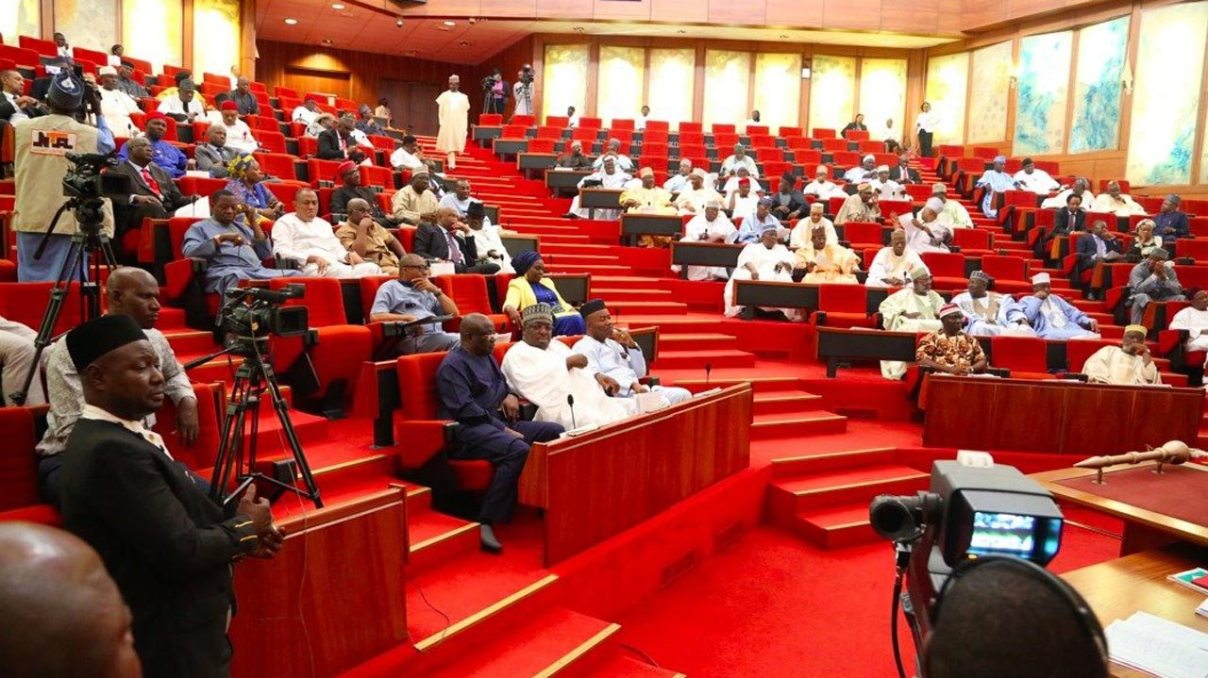
Taking Nigeria as a case study, it’s needless to assert that the acclaimed giant of Africa is presently undergoing a serious trial period as regards elections and their possible outcomes. As well-meaning and patriotic Nigerians are at the moment apparently perturbed, there are key facts they are required to embrace with a view to ensuring the country isn’t in any way marred by any form of crisis, irregularity, or mayhem during elections.

If any right thinking Nigerian truly looks forward to seeing a more peaceful and greater country called Nigeria, then he/she shouldn’t be told or reminded that the citizenry are expected to be and remain rational and law abiding throughout the conduct of any scheduled poll.

The candidates or political parties involved need to bear the national interest in mind as they variously receive the results of the elections. Thus, if the results aren’t in their favour, they must be willing and ready to accept them in good faith.

They shouldn’t see victory after the elections as a “do or die affair” or an anticipated outcome that must come to past. It’s imperative to comprehend that, among the numerous contenders, only one of them is meant to emerge victoriously at the polls for a particular position.

It’s pertinent to acknowledge that not being successful at a certain poll doesn’t signify you can’t succeed subsequently, or no more room for you to excel. We must always take into cognizance that election is a continuum, hence remains endless. In other others, if the outcome of today’s election isn’t in your favour, tomorrow’s might make you grin again.

It’s undoubtedly the collective civic responsibility of the citizens to at all cost defend the sanctity of their country and the human life at large. To adhere to this mandate, they must at all times be fully prepared to accept their individual fates in good faith.

If it’s ideal that a certain electoral outcome ought to be disputed, let the aggrieved party endeavour to head to the election tribunal rather than resorting to violence or related acts.

Register for Tekedia Mini-MBA Today

0

At Tekedia Mini-MBA, we use case studies to explain how companies and innovators are changing the ordinance of market systems through innovation. These cases are drawn from many sectors and regions.

Register today and beat the early registration deadline for the next edition of Tekedia Mini-MBA (Jun 6 – Sep 3 2022), and get many extra benefits like my books, etc.

We’re the largest business school in the continent and I invite you to co-learn with me and other 200 amazing faculty members. Register here.

Godfatherism In The Contemporary Nigerian Politics

0

It’s no longer news that every electioneering era across the world, particularly on the African continent, invariably begets a set of peculiar stories.

In regard to financing, Nigeria’s political system is presently characterized by nauseous happenings, thereby causing the innocent polity and its teeming watchers ceaseless nightmares.

This unabated and seemingly acceptable activity is cut across all elective posts, hence isn’t peculiar to when one is vying for a particular position. For example, someone who’s aspiring for the post of the executive chairman of a certain local government council may end up spending millions of naira in the process and might not even secure the anticipated position afterwards.

One may ask, what exactly are these aspirants really financing? Officially, they are expected to finance the purchase of their nomination and expression of interest forms. The forms as being sold by various political parties to their respective members are reportedly exorbitant that the prospective office holders or aspirants, in most cases, have to borrow to foot the bills.

Aside purchase of forms and other allied matters, the campaign process that usually succeeds the primary elections – thus preceding the main elections – is another avenue where the aspirants resort to indulging in money politics.

If you are well informed, then you wouldn’t hesitate to concur with the survey that indicates that in contemporary Nigerian society, for instance, the citizenry have been compelled to boldly and proudly sell their birthright for a mere pot of porridge yam. This show of shame cannot be unconnected with ignorance and/or poverty.

It’s noteworthy that whatever uncalled practice being showcased by the electorate is arguably attributable to the liberty granted to the teeming politicians to ‘mess around’ while canvassing for a given political office. It can’t be argued that every practicing politician in Nigeria that’s seeking for any position of authority has the ‘right’ to spend any sum of money in the process.

It’s worth noting that, in this case, not just the electorate are at the receiving side. The so-called political gladiators are equally lavished with bags of money by the aspirants in order to buy their consent. This very act often precedes the primary election of a given party.

These are the cogent reasons an aspirant who’s not financially buoyant would be left with no choice than to accept the lending hand of a godfather, a step that in the long run might bastardize his/her political career. Sometimes, it’s even the aspirants that go about seeking for who would sponsor their ambitions.

Since politics has regrettably been considered as an investment or business venture, rather than an avenue to render selfless service, what else would you expect from an average politician who eventually clinched victory at the polls? Such a person, if assumed duty, wouldn’t fail to please the desires of the political mafia.

In view of the above, most of the funds budgeted for various infrastructural/development projects in the concerned locality might be siphoned into the private purse of a godfather, thereby relegating governance to the background. This singular act has overtime crippled our god-sent nascent democracy. In a situation where the demands of the bigwig aren’t met, the society may be plunged into shambles.

Apart from the financial implications of godfatherism, a certain godfather might at any time decide to unseat his beneficiary. This kind of case was recently sighted in Lagos State.

What’s the way out of this quagmire? First, we must completely silence the ongoing high rate of nomination form introduced by the various parties. This can be made possible by specifying in the Electoral Act the maximum price any party should charge for each of the forms to be purchased by their members aspiring for different offices.

More so, any aspirant ought to be mandated by law to declare his/her assets. Hence, after the elections, the electoral umpire would be required to crosscheck the affected assets towards ascertaining how much the aspirant actually ‘invested’ in the campaign activity. The aspirants must be mandated not to exceed a certain threshold in regard to expenditure in accordance with the position he’s bidding for.

If he’s found culpable after the thorough investigations, he ought to be charged to court for onward prosecution. If found guilty, such a politician should not just pay a fine but be jailed. This would strongly help to eradicate godfatherism from the system.

The electorate must, on their part, be reasonable. It’s unequivocally the only insane person that could freely mortgage his or her future merely for peanut’s sake.

They must comprehend fully that their respective futures lie in their palms, hence are imbued with the power to decide how it would appear. 

Lawmaking is a serious business

0

Laws are made for man and not the other way round. So as society develops and societal goals and values develop too, laws are amended, repealed and even new laws made to accommodate those changes in societal values and that is why for a law to be properly so called it should never be static, rather it should be organic and flexible so to be able to adjust to the societal changes and to accommodate new societal values.

The cross-dressing bill which the house of representatives is considering passing into law intends to criminalize cross-dressing and bring about a dress code for the general public with the punishment of 6 months imprisonment for those that fail to comply with this public dress code is quite absurd. 

How will such law be enforced considering the ambiguity of the interpretation of what cross-dressing and dress code could be deemed to be? 

At a time when other countries are amending their laws and making new laws to accommodate citizens who want to change their sexual identity and wanting to identify with another sex that is not their biological sex and also explore their sexual fantasies, Nigeria lawmakers are seriously considering making laws for public dress code,  it shows how retrogressive the thinking faculties of the Nigerian lawmakers are. 

Will this law apply to ladies/girls too who put on clothes that are known or regarded to belong to the male gender or is this law only limited to males who have chosen to dress like ladies? 

What is good for the goose is good for the gander. So if this legislation pulls through while the law is prosecuting males dressing like women then women who put on trousers, shorts, polo, etc should be prosecuted too. 

Don’t you see how silly the whole thing will turn out to be? 

Legislation is a serious business and the legislative arm of government plays a very vital role in the development of any society.  it is saddening that the legislature can’t think of proper laws to make or amend for the betterment of society but rather consider criminalizing cross-dressing in 2022 of the 21st century. 

This is obviously just an afterthought of joblessness and boredom on the part of the house of representatives. 

It should never be heard of that a country like Nigeria which prides itself as a liberal and secular society should ever consider restricting and limiting the way an individual dresses or adorns himself or herself. 

Making recourse to the grundnorm, the Constitution, which other laws derive their validities from, let’s ask ourselves the pertinent question; “if this bill is passed into law can it stand the Constitutional test of validity? 

Section 39 of the Constitution of the Federal Republic of Nigeria, 1999 (as amended) provides the citizens with the fundamental right to freedom of expression. Freedom to express oneself is not limited to expressing your thoughts through spoken or written words. 

The way an individual can express himself through words, another individual can as well express himself or herself through dressing and painting, especially those in the creative and entertainment industry. 

Placing a ban on cross-dressing is tantamount to placing a ban on s.39 of the Constitution. Therefore, the lawmakers have no such power to make, repeal or amend any law which purports to limit or deny citizens’ fundamental rights as provided in the Constitution. 

Therefore, constitutionally speaking, this proposed law if passed into law will offend the provisions of the Constitution, particularly section 39 and according to S1(3) of the Constitution, any law which does not align with the constitution can not stand.