DD
MM
YYYY

PAGES

DD
MM
YYYY

spot_img

PAGES

Home Blog Page 5219

MTN Nigeria Responsible for 13.5% of Total Tax Collected by Nigeria’s Tax Agency in 2021

2

MTN Nigeria was the first company to break the N1 trillion annual revenue in Nigeria. It is also one of the publicly traded companies in Nigeria with a market cap of N1 trillion and above. Magically, it is also one of the companies that is sustaining the Nigerian economy through taxes:

“In 2021, MTN Nigeria’s total tax contribution to all government agencies including the FIRS amounted to N757.6bn while FIRS collected a total of N6.4trn tax revenue in the year. Specifically, MTN Nigeria paid a total of N618.7bn in direct and indirect taxes to the FIRS in the 2021 tax year, representing approximately 13.5 percent of the total FIRS collection for the year.” Yes, one company is contributing 13.5% of the total tax revenue within FIRS purse.

For all the emergent celebrations of small companies, it is only when nations can nurture and inhabit big firms will they transition to the next level. Why? Big companies have the resources to fund the next layers of massive capital-intensive opportunities and feed the purses of governments. We admire those small firms, but they have to grow – and that is the major call for the nation.

My postulation remains that every opportunity has a factor of 6 multiple for Nigeria to attend its near-term stable equilibrium state because the GDP should be $3 trillion, not the paltry $500 billion we have now. If that happens, it means we will have in various forms six “MTNs”, six “Dangote Groups”, six “everything”, etc. Imagine the implications for Nigeria!

MTN Nigeria Communications paid a total of N757bn direct and indirect tax to government agencies in 2021, it has been revealed. This was disclosed during the National Tax Dialogue Event organised by the Federal Inland Revenue Service. 

A statement titled, ‘MTN Named Best Tax Compliant Organisation in Nigeria: … recognised as one of the top 20 taxpayers by FIRS,’ signed by the company’s secretary, Uto Ukpanah, revealed that the company’s total tax contribution to all government agencies reached N757.6bn in 2021.

It said, “In 2021, MTN Nigeria’s total tax contribution to all government agencies including the FIRS amounted to N757.6bn while FIRS collected a total of N6.4trn tax revenue in the year.

“Specifically, MTN Nigeria paid a total of N618.7bn in direct and indirect taxes to the FIRS in the 2021 tax year, representing approximately 13.5 per cent of the total FIRS collection for the year.”

“While the past 24 months have been challenging for our country and nations worldwide, we are committed to supporting the Federal Government’s ongoing Economic Growth Recovery Plan.

“We will continue to invest heavily in network expansion with a focus on expanding access to under-served communities. We also plan to connect an additional 2,000 rural communities in 2022.”

Nigeria’s consumer protection agency must go beyond SLAs to tech stacks on bank payment failures

1

The Federal Competition and Consumer Protection Commission (FCCPC) has urged deposit money banks to establish a service level agreement with other service providers to reduce financial technology-related challenges faced by customers.

How your bank configures its ATM systems can help you model the trust factor in the land. In Nigeria, the bank debits you before the ATM dispenses money. If the seconds between debiting you and dispensing money, a technical glitch happens, you will go home with no cash even though you have been “paid” according to the bank’s general ledger.  So, you need to return to the bank hall to clear it up. That happens in POS terminals: the payment fails with the merchant only to notice later that you were actually debited. In Nigeria, it is Debit and then Pay.

In the US, they actually “lock” your money, then pay before they debit you, making sure under no circumstances would you be debited with no dispensing of cash. But they have something working for them: they have access to your credit file, and that means even if they have paid and you do not have cash, you cannot run away; they will mess up your credit. 

Yet, technically, there is no way they can pay you when you have no cash because the systems that check balances and release cash are entwined. And 99.99% of the time, the tech does not fail due to many layers of warehousing and redundancies built in. Everyone is happy and technical glitches do not cause bad customer experiences.

So as Nigeria’s consumer protection agency pushes for service level agreements between banks and solution providers, the redesign must  go beyond signing papers. They have to move higher to technology stacks if they want to prevent that nightmare experience where after customers have eaten in a restaurant, and try to pay via POS, and are informed that the payments have failed, only later to receive successful debit alerts after they have left the restaurant (after substituting with cash payment), on the same failed POS payments.

In the US, they lock the value, and give credit to the restaurant (the merchant), and then debit the bank customer. In other words, there is no way you can have a failed payment for a transaction that was successfully debited. Once they have paid the merchant, they will debit the locked value later. What this means is that a technology glitch will not affect the sequence of events and at the end of the whole process, superior service is delivered.

He said, ”I personally have a problem with banks literally leaving everything to customers to establish when something goes wrong. We are working and it is part of the guidance documents that we will work on.

”Somebody wants to pay for something maybe an air ticket and the ticket is not issued because they say you didn’t make the payment, you have lost the ticket and the fare. In reality, the person did everything to pay and it showed that the fellow paid but the money was not remitted.

”Another instance is where DStv says that you didn’t pay but your account is showing that you paid. Consumers don’t choose the payment system that they desire. They go to their bank and the service provider chooses where they want their payment.

”In that ecosystem, they must have their service level agreement on how they do their reconciliations. That is the service level agreement that we are insisting must exist within the ecosystem.’’

Comments on Social Media Feeds

Comment 1: This is a serious problem here. It has happened to me more than 5 times. The last one, I’ve not seen my money till today.

My Response: I stopped using debit cards when in Nigeria to pay in restaurants since it never works, but later in the evening, I get debit alerts. Because I have no time to visit any bank for N2K or N3k refund, I switched to paying with cash. Simply, go to the bank’s ATM, get cash and pay. But it has to be fixed and they have to reconfigure the sequence, not signing papers. In Diamond Bank those days, I worked in the System Automation Unit and it was our job to design such.

Comment 2: Why do I see this as a startup idea?

My Response: Unless you can serve as a bridge but it is not really a startup idea unless you will build a neobank that uses that protocol for better customer experience. The flow chart can indeed deliver a new basis in the market. Good luck. If you build one, I will adopt your debit card as I will be confident, it will never debit without dispensing value.

Comment 3: Ndubuisi Ekekwe, From my little experience as a software engineer, this will not change anything because of the following reasons:

1 : The number of seconds it take to lock your account before dispensing your cash, is almost thesame with the one it will take to debit your account before paying you.

2: A technical clitch can also happen after the money has been locked(hidden debit) in your account and the atm machine will not pay you. In such a situation, you will also go home without money and you will not be able to access the locked amount until a hidden reversal has been done by the bank.

Summary, the only difference between the two scenarios you explained is that you will not get the debit sms alert but all other things like not having access to the money and going home without cash are thesame.

Other software engineers in the building can throw more light on this or correct me if I am wrong.

Thanks for reading.

My Response: I worked in a bank’s Software Automation Unit as a young graduate. What you have written is theory. If you live in US and have a bank or credit card, when you initiate transaction, they quickly “lock” value and in your dashboard online you will see “pending”. That pending can take up to 3 days to clear.

Provided they can lock that value, they will release the funds. They know that they have 3 days to take that money. Nigeria does not have that “pending” state in your online dashboard.

Note that in a rare state where they noticed that money was not paid, after the pending lock, it takes less than 10 minutes to delete that entry, releasing the funds back to the account. In other words, a glitch existed between the lock and pay phase, once that is resolved in seconds, they delete that entry if there was no payment.

Of course, a US bank has to do that as if it does not do that, class action will hit it.

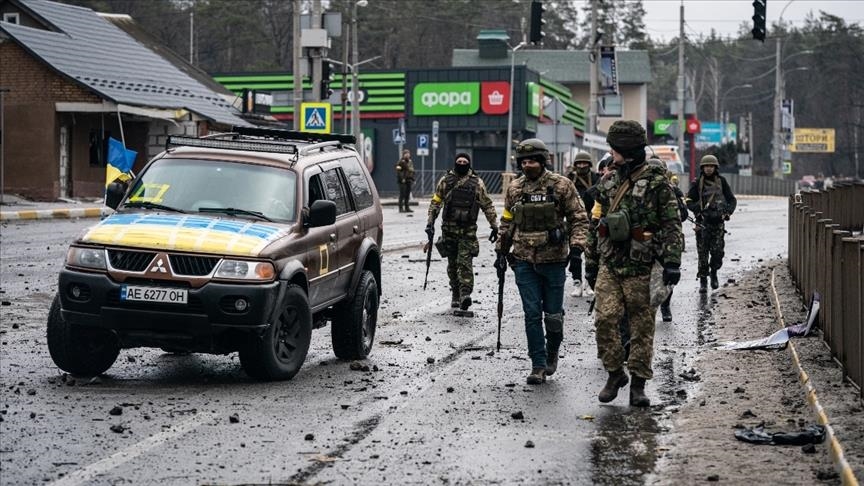
Russia-Ukraine War: Google To Invest $10 Million To Fight Against Misinformation

0

Following the Russia-Ukraine war that saw the forceful invasion of Ukraine by Russia, the social media feeds have been filled with different posts concerning the war. While some of the posts are real from credible sources, many more are considered to be fake news. Following the rise of fake news being peddled on the media as regards the war, American multinational technology company Google, recently disclosed their plan to roll out new features that enhance access to trusted information, as well as rolling out $10 million to address fake news that is being spread about the realities and facts of the Russia-Ukraine war.

Google via its blog post disclosed that it will partner with think tanks and civil society organizations to conduct region-specific research into misinformation and disinformation, as well as giving out cash grants to support fact-checking networks and non-profits. Through Jigsaw, a unit within Google that builds technology to counter threats to open societies, the tech disclosed that it will partner with local experts and academics to develop approaches to both directly counter-information and help people more easily identify disinformation.

According to Google, in its words, “As an information company, we take our responsibility seriously to provide reliable, trustworthy information to people when they need it. We saw how many Ukrainians turned to search to find up-to-date information, including where to find shelter or humanitarian aid, and relied on air raid alerts on their phones. To help, we are also rolling out new features that enhance access to trusted information, including info panels in local languages and transparency labels for publisher content on Youtube”. 

This is a laudable step taken by Google to help combat the spread of fake news on the Russia-Ukraine War. It is interesting to note that Google is not the only tech company that has taken this step, as other tech companies like Facebook, Twitter, and Google-owned- Youtube have also taken steps to stop the spread of fake news concerning the Russia-Ukraine war. Since the inception of the war, a lot of internet users have been exposed to so much information (fake and real) about the war, and one must understand that such information plays a significant role in the war. Misinformation and the spread of fake news are not alien to warfare, as it is impossible not to have fake news peddled during war.

Misinformation is also a commonly used tactic by warring nations as part of propaganda campaigns, which are often used to deceive their opposition into making wrong decisions. According to sources, in the early period of the Russia-Ukraine war, the Kremlin media made false claims about the Ukrainian military fleeing from the battlefield, which was untrue. It was later revealed that such false claims were aimed at crushing the Ukrainian resolve in a bid to spark patriotism on the Russian home front.

As someone who has been keeping tabs on the war since it began, I have often come across posts in the media where it was revealed that the Ukrainian military killed the Russian military in mass. I found such posts hard to believe because it is a known fact, how formidable the Russian military is in times of war, and how Ukraine was considered to be the underdog. I also came across a post about how the Ukrainian military men were ruthlessly killed by the Russian armies. Such contradicting posts made me understand that supporters of both warring sides were posting false pictures and videos to suit their claims.

What people must understand is that the spread of fake news about a war creates a large amount of uncertainty about the real situation on ground. People in these war-torn areas are often misled by what they read in the media, which often affects their decision-making process. According to information obtained, it was revealed that military men from both countries did not go to the war with their cellphones to avoid their location from being tracked. What this implies is that there will be little information coming from the war front, which also means that there will be less circulation of images and videos from the war front, except for the few ones shared by journalists.

Some people, out of their mischievous desire, go ahead to dig up old pictures and videos that are in no way related to the war, attributing it to the Russia-Ukraine war. For example, there was a video that trended online where a Ukrainian girl was seen confronting a Russian soldier. After much investigation, it was discovered that the video was not related to the Russian-Ukraine war, rather it was a video of a Palestinian girl confronting an Israeli soldier.

In warfare, misinformation and the spread of fake news are always evident, whether intentional or not, and the main and widely used channel for spreading such news is social media. It is indeed a commendable approach for the tech giants that have swung into action in ensuring that they eradicate fake news on their platforms concerning the war, as such news can incite negative actions, and also create a biased view of the war contrary to the actual issue.

The United States Kicks Off Its Global Largest Consular Office Project in Lagos Nigeria

2

The news that the United States Government has commenced the construction of a new Consulate office in Lagos, which would be the largest globally, has come to Nigerians as surprising as it is ground-breaking.

The project, which is sited at the iconic Eko Atlantic City, was kicked off on Thursday in a huge ceremony that was graced by Lagos State governor Babajide Sanwo-Olu, US Ambassador, Mary Beth Leonard and US Consul General, Claire Pierangelo.

Estimated at $537 million, the new consular office will occupy a 12.2-acre space in the rapidly developing Eko Atlantic City. It would provide a modern space for the largest consular operation in Africa, including improved public-facing interview and waiting areas.

Further details reveal that the construction project targets Leadership in Energy and Environmental Design (LEED) Silver Certification ––a globally recognized designation for achievement in high performance, best-in-class, green buildings –– and incorporates many features designed to make the building more sustainable.

Ennead Architects LLP of New York is the design architect, Pernix Federal, LLC of Lombard, Illinois, is the design/build contractor, and EYP, Inc. of Albany, New York, is the architect of record.  The construction project is expected to be completed in 2027.

Given the size and weight of the project, Nigerians are curious as to why the US government would want its biggest consular office in Nigeria.

Statement issued after the ceremony by the Public Affairs Section of the U.S. Consulate General, Victoria Island, Lagos, said the size of the project demonstrates “the importance of the relationship between the United States and Nigeria,” as it would support diplomatic and commercial relations between the United States and Nigeria and provide American and Nigerian Consulate employees with a safe, secure, sustainable, and modern workplace.

In addition, it would directly benefit the Nigerian people, and throughout the project, an estimated $95 million would be invested in the local economy, with the project employing approximately 2,500 Nigerian citizens, including engineers, architects, artisans, construction workers, and administrative staff.

“These workers will have the opportunity to learn new technical skills and safety awareness that will help distinguish them in the local market,” the statement said.

According to the US government, besides fostering the relationship between Nigeria and the US, the camp was conceived to help strengthen democracy in the West African country.

“Our vision for this remarkable Consulate campus is to create a facility that both honours the vibrant relationship between the United States and Nigeria and communicates the spirit of American democracy, transparency and openness,” Leonard said.

However, a large section of Nigerians hold the belief that beyond all these is a push for higher revenue generation. Nigeria appears to be the United States’ largest visa market. A report noted that the US Embassy Nigeria made a whopping N19 billion in 2018, from visa fees. Out of the sum, only 143,783 non-immigrant visas were issued to Nigerian applicants, according to data released by the US Department of State.

Therefore, at the exchange rate of N400 to a dollar, the consulate made nearly N19 billion in 11 months instead of N14.5 billion it would have made at N305.25 to a dollar. The difference of N4.5 billion represents 23 per cent excess gain.

Considering that other visa types such as H, L, O, P, Q, R, K and E attract higher fees, ranging between $190 and $265, the embassy’s gross earnings increased by a significant amount.

For instance, a religious worker travelling to the U.S. had paid N76, 000 for P-type visa instead of N58, 000; the same for athletes, artists and entertainers

Daily, hundreds of Nigerians troop to US embassies in Abuja and Lagos looking for visas, most get denied. The data indicated a 57.47% adjusted refusal rate for the 2018 fiscal year, which was subsequently amplified by former President Donald Trump’s anti-immigration moves which targeted developing countries and had Nigeria banned from US visas in 2020.

The US embassies in Nigeria have also been accused of using parallel market FX rates instead of official rates. Some Nigerians who see the current US visa charges as extortion have opined that the US should imitate Japan, who only charges fees on a visa application only when the visa is approved.

The Essence Of Time Management In Our Everyday Life

0
Collection of vintage clock hanging on an old brick wall; Shutterstock ID 561021889; Purchase Order: ccg

Many people in the entire world have at various occasions misinterpreted the real essence of time Management mankind’s daily activity.

Several questions had been raised in respect of time by different individuals and entities. Most times, people failed to tender the apt answer to the enquiries. That’s the prime reason for this very topic.

The fact is that we cannot possibly shy away from discussions pertaining to time management if we are really determined to excel, or distinguish ourselves, in our various field of endeavour. It would shock, or perhaps surprise, you to note that adequate time management is arguably the secret behind most successes recorded by mankind.

In his words, Baltasar Gracian said “All that really belongs to us is time; even he who has nothing else has that.” This intends to inform us that with time, one can attain to any height in accordance with his or her aspiration. And, the time itself ‘belongs to us’, meaning literally we can make use of it the way and manner we desire.

Frankly, our inability to utilize our time properly has been the prime reason we have failed on various occasions. It’s noteworthy that most of us are still lagging behind when it comes to utilization of time. Those who fall in this bracket can never move ahead, even a bit, until they fully comprehend how best to manage their time.

An associate of mine, years ago, missed a contract worth millions of naira owing to his inability to abide by the time stipulated in the invitation. He was asked via a text message to report to the firm by exactly nine O’clock in the morning. But as a result of the ‘African time’ mentality, he didn’t take the time seriously, thus arriving at some minutes past ten.

He was, however, granted the interview as planned. He reportedly performed very well after all said and done. But surprisingly, the Human Resources Manager (HRM) said to his face “Mister Ken, you are truly qualified for this job but I am afraid of one thing.”

When he tried to ascertain what informed the HRM’s fear, he was rightly told that the company was not ready to engage or contract anyone that believes in African time. That was how they deprived him of the golden opportunity.

William Penn opined “Time is what we want most, but what we use worst.” Most people spend most of, or virtually all, their time catching fun or engaging in frivolities. They do so, forgetting time to wait for no one. Jef  Mallett wisely asserted “If time flies when you are having fun, it hits the afterburners when you don’t think you are having enough.”

It was the famous Nigerian musician, Mike Okiri that sang in vernacular “Time na money.” In the song, he implored people to use their time judiciously, stressing that good things do not fall from heaven but are acquired by hard work.

Little wonder John Kennedy counseled “We must use time as a tool, not as a crutch”. Among all, it is pertinent to acknowledge that “Lost time is never found again” as opined by Benjamin Franklin.

Hence, we are charged to always take into cognizance that time is invariably of the essence when carrying out any task. This signifies that it is an inevitable tool designed for mankind to be managed and used towards actualizing a conceived goal.

So, no matter how much we make an effort to steer clear of time, we can never succeed. Rather, we will only end up hurting ourselves. It suffices to assert that one who plays with his/her time has played with the future.

“If we take care of the moments, the years will take care of themselves.” This was tendered by Maria Edgeworth, and I concur. She was trying to argue that if we properly handle our present situation, the future will certainly have nothing to fear for. It’s crucial to understand it is only adequate management of time that can enable us to conquer the challenges of today, thereby paving the way for a better tomorrow.

On a daily basis, we are expected to schedule our respective useful activities or consignments, and never play with any of the items in the timetable. Each of the items therein must be given a certain time frame, and you must consciously work not to abuse the schedule. Similarly, if you are working on any project, endeavor to prepare a Gantt chart for it, to guide you as long as the journey lasts. This is a keyword to success for those who truly intend to succeed.

It would interest us to acknowledge that, even those we look up to still don’t joke with their time in spite of the level or height they have already attained. Survey shows that successful individuals are more conscious of their time than the incoming ones. This is because, out of experience, they have realized how powerful the said tool is. This is why each time you see them, their eyes are on their wrist watch.

It’s, therefore, on this note I urge us to invariably bear in mind that time is the conqueror of everything under the Sun, hence the need to adore it. Yes, we must adore and cherish it candidly and strongly, if there’s really a goal to achieve.

At this point, I leave you with the words of Philip Stanhope that says “Know the true value of time; snatch, seize, and enjoy every moment of it… Never put off till tomorrow what you can do today.”

You have all it takes to be in control of your precious time. So, you shouldn’t allow the reverse to be the case. Do not let your time control you, else you will live your entire life to regret your steps. It only takes proper planning to adequately handle or manage the situation. This implies we must always be mindful of how we plan our schedules.

The time has surely and obviously come for us to treat our time with absolute seriousness, if truly we are determined to arrive at the desired destination as it’s being scheduled.

Hence, irrespective of one’s occupation or profession, they must endeavor to take their time very seriously towards arriving at the apt point, to avert ‘had I known’.