DD
MM
YYYY

PAGES

DD
MM
YYYY

spot_img

PAGES

Home Blog Page 5261

An honest and (un)professional advice on divorce from your lawyer friend

0

Being a lawyer has really messed up my mindset about marriages and relationships lately. You need to see the tons of emails and calls I get daily from folks seeking my legal services to institute a proceeding for divorce for them (both men and ladies); I got two emails to that effect just today. The professional ethics of lawyer-client confidentiality binds me if not I should have shared some receipts of them here.

Due to the fact that I constantly write articles on law-related topics (including divorce), people get my email address from news blogs and messages from those seeking divorce keep trooping in on daily bases, this has forced me to raise this unprofessional but friendly alarm.

“It seems everyone wants a divorce. There’s no other better explanation for it”.

Sometimes when I ask about the duration of the marriages, some of these marriages are even barely up to a year. It seems everyone wants to be out of the marriage institution and you will be forced to ask yourself, does it mean that these days marriages are no longer working or what is really going on.

I know as a lawyer I should be eager to jump on those divorces briefs and go ahead to file the processes as much as the client is ready to pay me my professional fee (some of the clients don’t even care about how much the fee cost, they just want to be out of the marriage no matter what it takes) but as a human who has empathy before anything else, I am sometimes reluctant to take up some of those briefs, especially after carrying out due diligence inquiry and meeting with the client and I found out that the reason(s) he/she wants the divorce is too trivial that the court will not grant us audience.

Be it as it may, as a lawyer and as a human, I do not advocate that anybody remain in an abusive relationship; God forbid that I do that or ask a person to remain in a marriage that has failed completely but some of the issues or reasons why some of these clients want a divorce when you hear of it are just too trivial; just mere misunderstandings in most cases that the partners can talk through and settle it with makeup sex; unless they are not telling the lawyer everything or the real reason why they really want the divorce.

How can you ask a lawyer to institute a divorce because your husband does not answer your phone calls immediately or because your spouse snores or your spouse refuses to cook or wash for you? These are some of the reasons I hear from some clients and they will end it with “it’s a long story or lawyer you won’t understand, just go ahead with the divorce process, I’m tired of the marriage”.

I am honestly not an insensitive person; I am not insensitive to the fact that some of these issues are deeper than what they may seem on the face of it but sometimes it circles back to ego. A partner does want to let go of ego.

As a lawyer who is also a certified mediator and counselor, sometimes I can decipher that the relationship has not broken down irredeemably, the partners just need to talk things through, or that a partner just needs to let go of ego and apologize and they will live happily ever after.

In as much as the spouse is not abusive and you are not physically abused or mentally abused, whatever other reasons that do not fall into that category are always considered trivial by the court and the court will be reluctant to listen to the divorce proceedings because the marriage has not broken down irredeemably.

Some of you all need to understand that divorce is not as simple as you think. I have never seen a person that went through a divorce and remain the same, it also does have a huge negative effect on the children. Divorce is also very expensive. It is never cheap.

The litmus test before a court will grant a divorce is “has the marriage broken down irredeemably? have the partners tried all they could to make the marriage work and it is not working?; has a mediator or the lawyers to the spouses tried to mediate and seek amicable settlement of the partners and it failed?

If all the answers to these questions are in affirmative then the court will proceed and grant the divorce but if any answer to the above questions is in the negative then the court will be hesitant in hearing the divorce proceeding.

Most importantly, the court considers the duration of the marriage. The court will definitely be reluctant to grant a divorce for a marriage that is barely a year.

Nigeria Is Not Fair On Blocking Multichoice (DStv, GOtv) Rate Hike

1

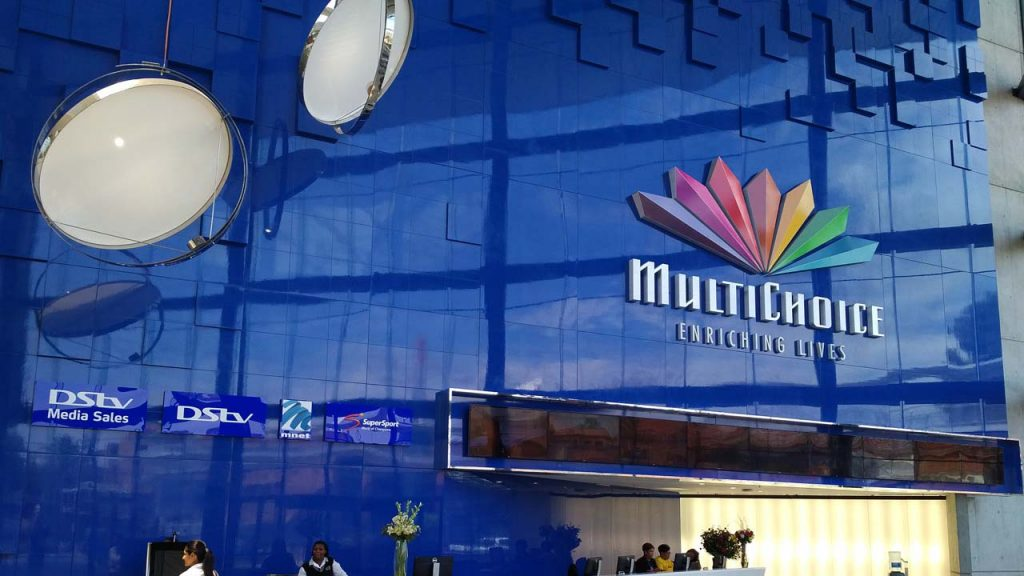
Poor Multichoice -you are going to pay in Euro and still collect the same rate in Naira despite the deteriorating Nigerian currency: “The Competition and Consumer Protection (CCP) Tribunal sitting in Abuja, ruling in the favor of the plaintiffs, restrained Multichoice Nigeria Limited from increasing its tariffs and cost of products and services scheduled to begin on April 1.”

I wish Nigeria would fight these pricing battles with a smarter option, and that means increasing supply. Controlling prices from the Court, while popular, will never improve markets. We have enough evidence that  the rascality of the court has cooled investments in the electricity sector. Check potable water also; some rates have not changed for years, making investors run away from the opportunities.

Bringing that mindset to TV and shows may not be helpful unless everyone is ready to watch the Ajonkwu festival of Ovim. That may not be bad except that the show is free!

Here is one thing to consider: “The cost of English Premier League broadcast rights has risen almost 8% to 9.2 billion pounds ($12 billion) for the next three seasons.” This means that the costs of these products are rising 8% (keeping forex constant) and by the time you add the currency impact, there is no way MultiChoice can stay in business without increasing rates, for an imported product in Nigeria.

Of course, this is not to support MultiChoice. But I find it offensive when the Court and government punish companies despite clear evidence that adjustment on prices is necessary. Who has not increased prices in Nigeria on imported products?

Court Stops Multichoice (DStv, GOtv) from Implementing Tariff Hike

Comment on LinkedIn Feed

Comment 1: Yes it’s a luxury but now laced as “essential” need of most homes. You haven’t mentioned(based your argument) that this increment would lead to pay rise for her employees or other stakeholders(commission for sales agents -offline and API) in this new increment stopped by the court; multichoice would be the only one smiling if the increment is successfully implemented – even the past increment hasn’t trickled down to these partners (I would like to know if I am in the dark here). Taxes are still same for them for now, only cost of production is the issue here which many firms (always) count raising pay for employees and commission as secondary in their books. Or these stakeholders don’t feel the bite of the evonimical crunch?

My Response: I am not sure you are responding to this post. I am not discussing employee wages. I am discussing cost of an imported product. More so, I am yet to read where Multichoice workers are demonstrating on low wages. Multichoice has the largest agency network in Nigeria. It is possible because it has the best compensation model. I am an academic and I do not have those sentiments: every imported product in Nigeria has increased price, it is unfair to expect Multichoice NOT to adjust prices. I understand that my position will not be popular but I will make the same case if it is Ovia, Dangote, Ayo or Ekekwe.

Another person on Comment 1: luxury is rarely essential. I’m not aware of a situation where luxury is classified as essential, without the loss of the premium that luxury attracts.

Court Stops Multichoice (DStv, GOtv) from Implementing Tariff Hike

0

The faceoff between the Nigerian government, consumers and Multichoice Nigeria over hike in subscription tariffs, has continued to deepen. Nigerian consumers, backed by lawmakers, have been asking for a stable subscription price or pay-per-view billing.

Against this backdrop, the South African satellite TV provider, who is parent to DStv and Gotv, popular cable TV service providers in Nigeria, has been on and off the court and the chambers of Nigeria’s National Assembly.

The situation took a new turn after some Nigerians filed a fresh complaint following Multichoice’s recent move to once again increase tariff.

The Competition and Consumer Protection (CCP) Tribunal sitting in Abuja, ruling in the favor of the plaintiffs, restrained Multichoice Nigeria Limited from increasing its tariffs and cost of products and services scheduled to begin on April 1.

The three-member tribunal, presided over by Thomas Okosun, gave the order following an ex-parte motion moved by Festus Onifade, a legal practitioner, on behalf of himself and the Coalition of Nigeria Consumers.

Other members of the tribunal include Sola Salako Ajulo and Ibrahim EL-Yakubu.

The News Agency of Nigeria (NAN) reports that in the suit marked: CCPT/OP/1/2022, Multi-Choice Nigeria Limited and Federal Competition and Consumer Protection Commission (FCCPC) are 1st and 2nd respondents respectively.

The motion ex-parte filed by the applicants on March 29 was brought pursuant to Section 39 (1) & (2) of FCCPC Act 2018; Order 26, Rule 5 (2), (3) & 26 Rule 6 (1) & (2) Federal High Court (Civil Procedure) Rules 2019 and Section 47(a), (b), (c),(d), of Federal Competition and Consumer Protection Act 2018.

The applicants had prayed for “an order of interim injunction restraining the 1st defendants/respondents, either by itself, agents, representatives, officers or privies, howsoever described, from carrying out the impending increase in tariffs and cost of its products and services intended to take effect from 1st April, 2022, until the hearing and determination of the motion on notice already filed before this tribunal.

“An order of the Honourable Tribunal mandating the 1st defendant/respondents to maintain status quo pending the hearing and determination of the motion on notice.

“And for such further order or other orders as this Honourable Tribunal may deem fit to make in the circumstance.”

In the ruling, the tribunal ordered Multichoice Nigeria Limited to stop the planned hike in tariffs and cost of its products and services pending the hearing and determination of the motion.

“The 1st defendant/respondent is hereby restrained, either by itself, agents, representatives, officers or privies, howsoever described, from carrying out the impending increase in tariffs and cost of its products and services intended to take effect from 1st April, 2022 until the hearing and determination of the motion on notice already filed before this Honourable Tribunal.

“The 1st defendant/respondent is hereby mandated to maintain status quo pending the hearing and determination of the motion on notice,” the tribunal ruled.

The matter was adjourned until April 11 for the hearing and determination of the motion on notice.

“All parties in this suit are to appear before this Honourable Tribunal on the 11th day of April, 2022,” it ruled.

How long would this continue?

Multichoice services have been the most opposed in Nigeria when it comes to tariff increase, apart from petroleum products. While other companies have without confrontation, been increasing the cost of their products and services.

In 2020 when Multichoice attempted to increase tariff, it drew a national uproar that forced the Nigerian National Assembly to intervene, asking the South African company to suspend its plan or otherwise, provide pay-per-view billing for Nigerian consumers. Since then, every other company operating in Nigeria has nearly doubled the price of their products and services without opposition, even Nigerian-based companies.

Earlier this month, the Nigerian government quietly removed electricity tariff, and petroleum pump price has repeatedly been increased in recent times. The price of Dangote Cement is said to be higher in Nigeria than other countries across Africa where the product is available.

Inflation is at 16.87% as of January 2022, according to the Nigeria Bureau of Statistics (NBS), pumping the cost of everything in Nigeria. Experts are baffled that despite this reality, Nigerian consumers still want Multichoice’s bouquets tariffs stagnant, even though compared to other African countries where the cable network is operational, Nigeria still has the cheapest rates.

Experts said that the Nigerian government’s actions amount to forcing price control on a foreign company and it would likely spook investors – and for a country looking for foreign direct investments, it’s an own goal.

Nigerian Politicians And Their Blame Game Culture

0

One trait that is synonymous with Nigerian politicians, is their ability to shift the blame on persons, happenings, events, etc, instead of taking full responsibility for their failures. The blame game tactic is a strategy often used by them to perpetuate their intention in order to veil their political excuses. One thing they fail to note is that it Is the responsibility of anyone who calls his or herself a leader to accept full responsibilities as well as build preventive measures against a catastrophic event.

Politics in Nigeria is embellished in blame-game culture, where an incumbent government or party still blames the previous government for its failure. These shenanigans deployed by them are premised on excuses where they get to shift responsibilities away from themselves to save their head. A case study of President Muhammadu Buhari who got elected in 2015, despite his woeful performance, has continued to heap blame on the past government for his administration failure.

The country is experiencing economic problems because the previous administration failed to plan for the future. The exchange rate of the naira has been wobbling because of the poor financial policies of the previous government. Infrastructure is dilapidated because the previous government did not provide sufficient funds in the budget to take care of roads, water, and health care. Unemployment has worsened because the previous government did not care about the welfare of youths. Agriculture, the manufacturing sector, small-scale businesses, are in shambles because of negligence by the previous government. All these blames, are just to excuse their incompetence.

One of the qualities of a competent and proactive leader is the ability to accept mistakes and strategize in new ways that can improve the condition of the Present, better than the former. It is only incompetence that will make a leader blame the past leadership for his abysmal performance. Concerning the recent attack on the Abuja-Kaduna train, which saw 8 lives lost with several others injured and many more still held hostage, the governor of Kaduna State El-Rufai has come under heavy criticism as terrorists continue to attack residents of Kaduna state.

He has been accused of playing with the lives of the citizens in his state. Nigerians have for a long time demanded accountability and a solution to insecurity in Kaduna state, as armed bandits have been terrorizing them as well as killing innocent lives. It might interest you to know that Gov. El Rufai heavily criticized the previous government for the high rate of insecurity in the country and their failure to curb the insecurity menace. Meanwhile, when the recent Abuja-Kaduna train attack happened, Governor El Rufai disclosed that he told the minister of transportation Hon. Rotimi Amaechi, that they should stop operating at 5 pm.

He revealed that he pleaded with them to discontinue the evening train because he knew that armed bandits might likely attack at night. Meanwhile, the minister of transportation, Hon. Rotimi Amaechi after the attack with their usual blame-game culture, rather than accept full responsibility for the attack, shifted blame to the federal government. According to him, he disclosed that he had earlier warned his colleagues at the federal executive council about possible attacks on the Abuja-Kaduna rail line.

He further stated that nobody listened to him when he requested for necessary digital security and crime prevention equipment that could forestall such a disaster. In his words “we have lost tracks we have lost human beings and the equipment is just N3 Billion to fix all the things on that track now, will cost us more than N3 Billion. And now even the things we said give us the approval to buy at the time we asked for it, the dollar was N400 now it is N500. When you come with sincerity to the government and your colleagues and people are stopping you, it’s annoying”.

Indeed this blame game culture is synonymous with almost every politician in the country. They seem to have ready-made answers for every action in regards to their inability to achieve positive results. It’s high time they begin to accept responsibility for actions and happenings in the country because constantly shifting blame reeks of incompetence.

Impact of Constructive Criticism On Societal Growth

0

Criticism is the expression of disapproval of someone or something. In the same vein, a critic of a person, policy or system disapproves of them and expresses such a view publicly.

One who writes reviews and expresses opinions about books, films, music or any art work having considered it carefully can equally be referred to as a critic. Hence, it’s all about expressing a contrary view about something or someone in strong terms.

Criticism remains a matter of flushing out certain thoughts, policies and/or attitudes, or trying to change them. It is to show that things are not as self-evident as one believes.

Thus, criticism ensures that what is accepted as self-evident will no longer be accepted as such. It suffices to say that observance criticism in any society is a matter of making facile gestures or remarks difficult.

Criticisms are essential recipes in any area of human endeavour. For instance, in steward-client relationship, if the latter has a criticism to tender, it means he or she wants to give feedback on the services being rendered to him/her, thereby creating an opportunity for the former to learn more about the person he is working for and how to convert them into a satisfied client member. Same measure is applicable in a trader-customer relationship.

Similarly, in a business venture, working or partnering with someone who is patient and able to receive as well as act on criticism signifies that both parties involved can work towards a better or greater outcome. Furthermore, in movie production, criticism enables the producer to know what his audience actually wants.

If one always thinks he is right but doesn’t get feedback from anyone else, he wouldn’t know if he is really doing well. Whether you are selling, servicing, performing, or leading, listening and acting on those honest views or reactions will tell you precisely what is good and what could be done better. Perhaps, you can use the information to change your performance, exhibition or product, as the case may be.

In public service, criticism has the tendency of guiding the public servants away from bad practices, and towards good and acceptable ones. It would enable the said workers to take a step back or have a rethink with a view to making amends or adjustment where need be.

The socio-political arena is not left out while discussing the inevitable role of criticism in nation-building. Undoubtedly, a little constructive criticism from the members of the public such as the civil society groups, the electorate, the religious organizations, or what have you, channeled towards the political office holders can yield the anticipated change in the country or society in question.

Considering the positive impact of constructive criticism, there is no gain reiterating the fact that it is indeed a welcome gesture or required factor toward the socio-economic development of any nation, hence ought to be sustained. To this end, there is a need for us to acknowledge that the language we use in response to criticism is vitally important.

Whenever criticism is tendered by any concerned individual or group, the recipient is expected to try at all costs to avoid getting into an argument. Instead, they should turn the exchange into a discussion on how to resolve the predicament. Such an approach would keep the door open for the required change or correction.

Also, criticisms are not meant to be taken personally. Even if one feels he or she is being criticized unfairly, he shouldn’t retaliate with an extreme knee-jerk reaction. Such a response will worsen the situation and can even harm the person’s reputation as well. Therefore, it is important to always remember to not be offended by someone’s remarks even if you think it is a personal attack.

On the other hand, having noted the enormous significance of constructive criticism in nation-building, there is also a compelling need for the critics to be mindful at all times when tendering their criticisms. They ought to know when to tender the criticism and how it ought to be presented.

It’s worthy of note that some critics lack the orientation on when and how to present their criticism. This set of persons invariably tender their contrary opinions as a form of antagonism, thereby making the supposed/target recipient misunderstand the gesture.

More so, critics are meant to comprehend that criticism is expected to be accompanied by the presumed remedy to the anomaly that is being criticized. Most so-called critics usually end up raising a cloud of dust in the name of criticism.

Unequivocally, a criticism that is not tendered with a presumed solution to the problem being criticized is simply a mere noise that is intended to cause a pandemonium or controversy rather than addressing the situation at hand.

In view of these assertions, everyone at all levels including political leaders, followers, craftsmen, traders, businessmen, teachers and public servants, as might be the case, is expected to take criticism seriously regardless of the circumstance in order not to abuse the remarkable tool.

Criticism is arguably a veritable device, but it’s however required to be deployed reasonably and selflessly towards the needed societal growth.