DD
MM
YYYY

PAGES

DD
MM
YYYY

spot_img

PAGES

Home Blog Page 5271

Nigeria’s Volunteer Fighters to Ukraine, and Republican Senators’ Letter

3

First, Nigeria must address the case of many Nigerians who want to volunteer to fight in Ukraine. It is a great irony that a nation which has many “wars”, and is looking for fighters, magically has citizens who are available to go and fight in another country! Yet, I doubt if they are truly going to fight.

 Possibly, they will look for an escape out of Nigeria. My major issue is making sure we do not feed a future radicalization system where these “volunteers” return, post Ukraine war,  and cause problems in the nation.

Secondly, a new chapter is opening. More than 40 Republican senators have written an open letter, asking Biden to immediately facilitate the transfer of aircraft and air defence systems to Ukraine: “We implore you to direct your Department of Defense to facilitate the transfer of aircraft, air defence systems, and other capabilities by and through our Nato partners immediately.”

Republican U.S. senators are imploring the Biden administration to reverse course and allow the transfer of Poland’s MiG fighter jets to the Ukrainians to fight the Russian invasion, a sign the Defense Department’s rejection of the offer may be running into steep resistance on Capitol Hill.

Forty GOP senators signed onto a letter from Sens. Joni Ernst of Iowa and Mitt Romney of Utah urging President Joe Biden to answer the plea from Ukrainian President Volodymyr Zelenskyy, who told lawmakers over the weekend that if the U.S. could not help with a no-fly zone over his skies, it could at least send more planes for his people to defend against the attack from Russia.

“Enough talk. People are dying,” Romney said at a press conference on Capitol Hill. “Send them the planes they need.”

If Biden agrees, everything becomes unpredictable. And I will expect the use of chemical weapons by next month once NATO delivers these aircrafts. Russia knows it has limited options since NATO can supply as much weapons to Ukraine as possible, and the only exit will be to bring a new basis in this war.

People, this is getting out of control. If this madness does not end by March, a really bad thing can happen.

So far, Biden continues to maintain that he has no interest to follow the suggestions of Republicans.

“I want to be clear: We will defend every inch of Nato territory with the full might of a united and galvanized Nato,” the president wrote on Twitter. “But we will not fight a war against Russia in Ukraine. A direct confrontation between Nato and Russia is World War III.”

Biden has repeatedly said that sending US troops for direct engagement with Russia was off the table.

In recent days, his administration has pursued an increasingly aggressive sanctions campaign against Vladimir Putin and his country.

On Friday, Biden announced a ban on imports of Russian alcohol, seafood and diamonds and widened the list of oligarchs facing sanctions.

How Far With The Construction Of Nigeria’s AKK Gas Pipeline?

0

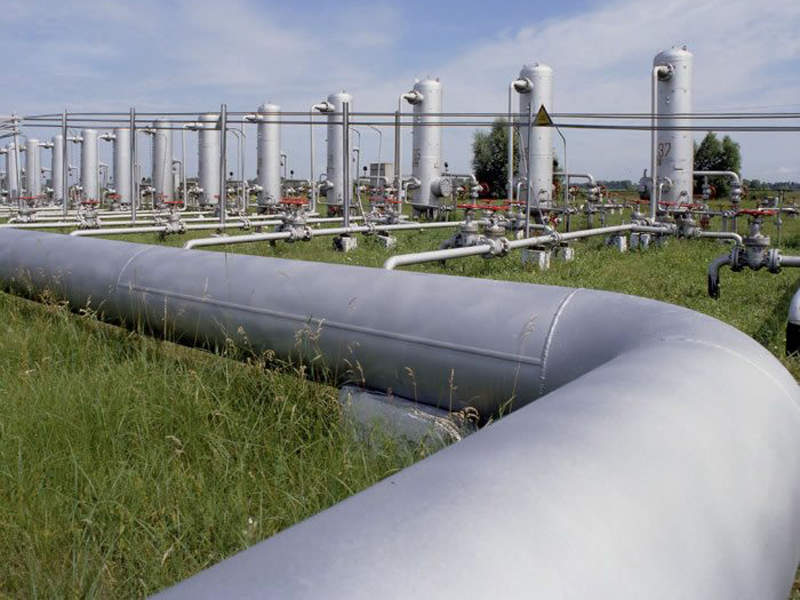
Two years back, Nigerians were graciously informed by Nigeria’s Federal Government (FG) that the construction of Ajaokuta-Kaduna-Kano (AKK) Gas Pipeline would commence as soon as possible, reportedly in line with the developmental stride of the FG.

Consequently, precisely on 30th June 2020, President Muhammadu Buhari virtually conducted the flag-off ceremony of the proposed AKK Gas Pipeline project, which apparently raised the expectations of the citizenry.

It’s worth noting that the overall cost of the historic landmark project was estimated at 2.6 billion dollars. It would equally interest us to take into cognizance that the gesture came at the time the country, among many others across the globe, was battling with the Coronavirus disease (COVID-19) pandemic.

While speaking at the occasion, President Buhari disclosed that the project, whose impending construction was based on budgetary allocation and specifications, was very dear to the people of Nigeria, hence must succeed.

He, therefore, mandated the Nigerian National Petroleum Corporation (NNPC) and its partners to remain resolute, noting the AKK project was part of the delivery of the current administration’s Next Level Agenda for sustainable development, enhancement of economic prosperity and increase of the country’s infrastructure assets.

The president stated thus “We promised the nation that we will expand the critical gas infrastructure in the country to promote the use of gas in the domestic market. These include the Escravos to Lagos Pipeline System, Obiafu to Obrikor Pipeline and the AKK.”

Nigeria’s number one citizen equally informed that the project, which was scheduled to be completed in two years’ time, was fundamental to the government’s desire to industrialize the country and energize the entrepreneurial spirit that remained present among our teeming population.

He further highlighted that the project, when duly completed, would provide gas for generation of power and for gas-based industries, which would facilitate the emergence and development of new industries.

Aside its significant job creation potential – both direct and indirect – as well as fostering the development and utilization of local skills, manpower, technology transfer cum promotion of domestic manufacturing, Mr. President opined that it would ensure the revival of moribund industries along transit towns in Kogi, Niger, Kaduna, and Kano States coupled with Abuja, the precise areas where the pipeline will cut across.

Still at the virtual ceremony, the president acknowledged that the COVID-19 pandemic had further underscored his administration’s drive for export substitution initiatives and projects that promote local manufacturing, hence the emergence of the 614km AKK gas pipeline.

It’s noteworthy that the key financiers of the epoch-making project were reportedly the Bank of China and SINOSURE, China’s Export and Credit Insurance Corporation. Similarly, the contractors were Brentex Plc., China’s Petroleum Pipeline Bureau and Oilserve Plc., China’s First Highway Engineering Company.

In his speech, the Group Managing Director (GMD) of the NNPC, Mr. Mele Kyari explained that the project involved the establishment of a connecting gas pipeline network that would link the Northern region to the Niger Delta, Eastern and Western regions of the country.

The project, which had been awarded at a total contract sum of US$2.592bn, was awarded to Oilserv Plc for the first segment covering 303km whilst the second segment covering 311km was awarded to Brentex Petroleum Services.

The second segment, according to a reliable report, indicated that it would be financed under a debt-equity financing model with loan from the Bank of China and SINOSURE meant to be repaid via the pipeline transmission tariff and supported by a sovereign guarantee.

As at then, I made it very clear that it was undoubtedly a capital-intensive project to assert the least. Hence, must not be handled with a kid glove towards ensuring its timely and apt construction cum completion.

This is one of the prime reasons borrowing is necessary, like I earlier stated when the contract was awarded. Every individual, entity or corporate body is only required to borrow when capital projects are involved.

It suffices to assert that it’s highly inconsequential and preposterous to seek for loan to service recurrent expenditure or what have you. However, it’s injurious if the project being borrowed for isn’t realized in the long run.

It’s appalling that two years down the line, no positive development has thus far been heard about the AKK gas pipeline, which was billed to come into completion by the second quarter of this year.

For such a remarkable project to yield the expected fruit, various parameters needed to be considered by the relevant authorities. The implementation of the proposed AKK project, which was meant to be directly under the watch of the NNPC Management, deserves nothing but the very best if it’s really targeted to positively turnaround Nigeria’s economy – particularly in the oil and gas sector. This is the reason some factors mustn’t be overlooked as it progresses. I unequivocally disclose this in the period under review.

The direct beneficiaries of the project – including Niger, Kaduna, Kano and Kogi States as well as the Federal Capital Territory (FCT) – are therefore expected to be on the lookout with a view to ensure that the needful is deployed as long as the construction works last.

In view of the above, the governments of the aforementioned states and the authority in charge of the FCT were also required to guarantee adequate monitoring of the project by invariably bringing themselves closer to the construction sites.

Hence, the concerned governors and the FCT Minister shouldn’t be reminded of their respective Corporate Social Responsibilities (CSR) as regards the progress of the impending project, especially in the area of security and allied matters.

In the same vein, the National Assembly (NASS) – in their oversight function as enshrined in the Nigerian Constitution – needs to equally extend their tentacles toward the overall activities arising thereof. In this regard, an ad-hoc monitoring committee ought to be set up by the lawmakers.

On the other hand, it’s imperative to remind the Buhari-led government the compelling need to revisit the Ajaokuta Steel project. It could be recalled that the bill for the onward completion of the abandoned capital-intensive project was graciously passed by the eight assembly but was unfortunately declined assent by the Presidency, reason best known to it.

So, as we ostensibly undergo the post COVID-19 era, it’s pertinent for the President to make a u-turn in a bid to reexamine the said bill to make amends where need be and resubmit the same to the ninth assembly. This time, it can be tendered as an Executive Bill. This mustn’t be jettisoned if we are truly sincere about touch-lighting the country’s epileptic economy.

I cannot possibly conclude this analysis without mentioning the country’s downstream sector in the petroleum industry. It’s also high time the Federal Government (FG) became strongly determined to revamp our moribund refineries.

It’s disheartening that after years of promising to fix the said anomaly, Nigerians are yet to embrace a new era in that regard. Similarly, we need to step up actions to ensure that the country could boast of various modular refineries as earlier announced. We can’t continue to dwell in the past at such a time like this.

All in all, as we are obviously prepared to squarely face the challenges  being occasioned by the emergence of the dreaded COVID-19 pandemic, governments at all levels must take into cognizance that tech-driven measures and policies are the only way out.

Dangote’s Big Warning: “There will be a shortage of wheat, maize…in the world”, impending food crisis in weeks

3

Aliko Dangote has dropped a clear message to Nigerians and Africans, reminding them of an impending food crisis within the next two to three months as a result of the Russia-Ukraine war: “There will be a shortage of wheat, maize and a lot of products because as we speak, Russia and Ukraine do almost 30 percent of the world’s urea and 26 per cent of the world’s potash; and even phosphate also, they are one of the largest (producers) in the world.

“There would be a scarcity of food generally, we would not be able to access fertilizers going forward, we would not see the effects now, but in the next two, three months. Even the US will not be able to do the same number of tonnage they did last year because of this.

“Right now, you start seeing people exporting maize to earn foreign exchange, which I think we need to stop, so that we don’t create shortage; and we need to make sure we grow more so we don’t have a shortage. It is about food security, and it is very, very serious.”

And CEO of Flour Mills of Nigeria, Boye Olusanya, corroborated: “Today, the prices of wheat have gone up. There is a lag that comes because of inventory control, but it is something that we need to sit down with the government to say – what measures can we put in place to alleviate what is coming.

“The impact is not just on wheat alone; Ukraine is one of the largest producers of maize, which will also have a significant impact on maize because it is an alternative to wheat.”

He also spoke about what he described as “cross-border trafficking of maize”, saying more farmers will like to take advantage of the crisis.

“The last impact is on fertilisers, and the impact is not just short term, because we’re not looking at a one-off thing. You’re looking at an impact on the production of over a year to 18 months.

“When you look at all that and what then happens in pricing, obviously, if we don’t manage this well, there will be significant volume compression, in terms of material that comes in and therefore the volume of food that is sold,” Mr Olusanya added.

Meanwhile, no African country was included in Russia’s export ban list: Of course, even if you want to buy from Russia, avoiding US sanctions will be wise.

“The government has approved a list of imported goods and equipment that are temporarily prohibited from being exported from Russia. The decision will be effective until the end of 2022. It has been adopted as a follow-up to the presidential executive order on the application of special economic measures in foreign economic activity to ensure the security of the Russian Federation. 

“The list includes over 200 products, such as technological, telecommunication and medical equipment, vehicles, agricultural machinery, electric equipment, as well as railway cars and locomotives, containers, turbines, metal and stone cutting machines, video displays, projectors, consoles, and switchboards. This measure is necessary to maintain stability on the Russian Market”. 

No African Nation Included In Russia’s Export Ban List

0

As part of Russia’s response to sanctions imposed on them over their invasion of Ukraine, the country on Thursday announced an export ban on more than 200 types of foreign-made products and equipment, until the end of the year. Contained in the export ban list includes technological communication, medical equipment, vehicles, agricultural and electrical equipment of more than 200 types of goods in total. According to Russia, they had to take this necessary measure to ensure stability in the Russian market.

The announcement reads, “The government has approved a list of imported goods and equipment that are temporarily prohibited from being exported from Russia. The decision will be effective until the end of 2022. It has been adopted as a follow-up to the presidential executive order on the application of special economic measures in foreign economic activity to ensure the security of the Russian Federation. 

“The list includes over 200 products, such as technological, telecommunication and medical equipment, vehicles, agricultural machinery, electric equipment, as well as railway cars and locomotives, containers, turbines, metal and stone cutting machines, video displays, projectors, consoles, and switchboards. This measure is necessary to maintain stability on the Russian Market”. 

The list also contained names of countries on its export ban which includes; Albania, Andorra, Australia, Canada, Members of the EU, Iceland, Japan, Liechtenstein, Micronesia, Monaco, Montenegro, New Zealand, North Macedonia, Norway, Singapore, San Marino, South Korea, Switzerland, Taiwan, China, Ukraine, Uk, Jersey, Anguilla, British Virgin Islands, Gibraltar, and United States of America.

A close examination of the names of countries included in the list, one would notice the absence of African countries. It’s surprising to me that no African nation was included, considering the fact that some of them at the UN General Assembly, had to vote against Russia’s invasion of Ukraine with Nigeria inclusive. Their exclusion on the list should indeed be a breath of fresh air for some of them. One can only imagine Russia’s reason for not including any African nation on its export ban list.

I can only imagine the implications the ban would have had if Nigeria was included knowing full well that they voted against Russia’s action on Ukraine at the UN assembly. It is a known fact that Russia is one of Nigeria’s biggest trade partners as trade between Nigeria and Russia is currently valued at over $2billion. Russia plays a vital role in Nigeria’s International trade as the Nation is one of Nigeria’s top sources for its imported items, especially food items. According to the National Bureau of Statistics, Nigeria imported goods from Russia are currently valued at N813.19 billion (over $2billion annualized).

Seeing all these benefits Nigeria enjoys from being in a close relationship with Russia, I am surprised at why they still went ahead to vote against Russia at the UN. Also imagine if Russia decides to include all African nations that voted against them at the UN on its export ban list, this would have spelled doom for most of them as they are more of consumers than manufacturers. This is why Professor Ndubuisi Ekekwe in one of his articles stated that African leaders need to have a nuanced approach as regards the Russian-Ukraine war, to avoid making rash judgments and decisions that will affect their country.

After releasing its export ban list, Russia also warned that assets owned by Western companies that have pulled out of their country will be nationalized. Russia’s President Vladimir Putin has come out to say that sanctions pelted out at Russia will bring about ” negative consequences” for the world’s markets because Russia is a major producer of agricultural fertilizers. In his words, “it is clear that at such moments, people’s demand for a certain group of goods always increases, but we have no doubt that we will solve all these problems while working calmly”.

Let’s co-learn on how to drive productivity in workplaces

0

One of my best sessions in Tekedia Mini-MBA is coming tomorrow. Let’s co-learn on how to drive productivity in workplaces. Zoom link in the Board. To register for the next edition of Tekedia Mini-MBA, go here

Welcome. We run an amazing business school which has attracted professionals and students from 41 countries. Our Faculty members come from Microsoft, Shell, Flutterwave, Nigerian Breweries, Jobberman, Coca Cola, and other great organizations. Thrice weekly, I personally coordinate live Zoom sessions (Tue, Thur and Sat at 7pm WAT) on the mechanics of business systems. We bring our Faculty and Guests on those sessions, covering many industries and business domains.

REGISTER today and join us! – Prof Ndubuisi Ekekwe, Lead Faculty.