DD
MM
YYYY

PAGES

DD
MM
YYYY

spot_img

PAGES

Home Blog Page 5279

Mercury Bank Places Restrictions On Accounts Linked To African Tech Start-Ups

0

Mercury bank, an online bank located in San Francisco, California designed to help small companies (start-ups) manage their cash flow better, just recently restricted several accounts linked to African tech start-ups. The number of companies affected by the restriction remains unknown. Information gotten from a few sources disclosed that companies affected, range from 12 to 30. According to those affected, Mercury bank did not give any prior notice as to why they carried out this action, nor did they give an explanation why the action was taken on the affected start-ups.

Upon persistent questioning, Mercury Bank which holds over $4 billion in customer deposits for its 40,000+ businesses in over 200 countries, later disclosed that some of the affected start-ups got their account was flagged and placed under review by its compliance team after it noticed some “unusual activity” and couldn’t provide further details until it’s review are complete. Displeased with these restrictions, a couple of tech founders and stakeholders had to directly send a mail to Mercury CEO Immad Akhund, asking him what the issue was and also stating that they need the issue resolved immediately.

The CEO however responded, stating that their partner bank noticed an unusual activity, and instructed Mercury Bank to lock and investigate a large set of accounts linked with such activity. He however assured them that they are currently working on the issue and hopefully all restrictions will be removed.

These restrictions sparked mixed reactions from Twitter, where a couple of Tech founders insinuated that the restrictions might be linked to the ongoing conflict between Russia and Ukraine, which has seen the company’s partner bank review its exposure to “high risk” regions such as Africa.

Although Mercury has reached out to affected start-ups, stating that its intention wasn’t to single out the founder or start-up. But considering how most of the complaints seem to be coming from the African region as compared to other regions, it is hard to think that these start-ups in Africa are not prime targets. This is not a good look for start-ups affected, as nearly $3k estimated in return check fees for checks were already sent out before the restrictions. Will these companies be compensated for these losses accrued? One can only imagine.

This act indeed should be a wake-up call to African startups. It is high time they build their finance system and regulate their global fintechs. They need to get to the point where they don’t have to raise capital overseas. Self-reliance looks like the ideal solution. The restrictions should be a reminder to Nigerian Tech CEOs and stakeholders that there is no other perfect alternative than to build their own International Finance center and buy offshore bank licenses so start-ups can bank their money.

Truth be told, Africa especially Nigeria is more of a consumer, than building their infrastructures. There is an urgent need to double down in building our structures, as over-reliance on foreign infrastructure can spell doom someday.

In November 2021, the central bank governor, Godwin Emefiele disclosed that the Apex bank would establish an international financial center at the Eko Atlantic city, for investors to invest in critical sectors of the economy, and this will help to position Nigeria as a key destination for investment in Africa. But then, building at home can be filled with uncertainty too as anything in allegiance with the federal government is often faced with misfortune that can hit any time soon. The Apex bank of Nigeria is known for abnormally freezing accounts.

When Two Elephants Fight: ASUU strikes from time immemorial

0

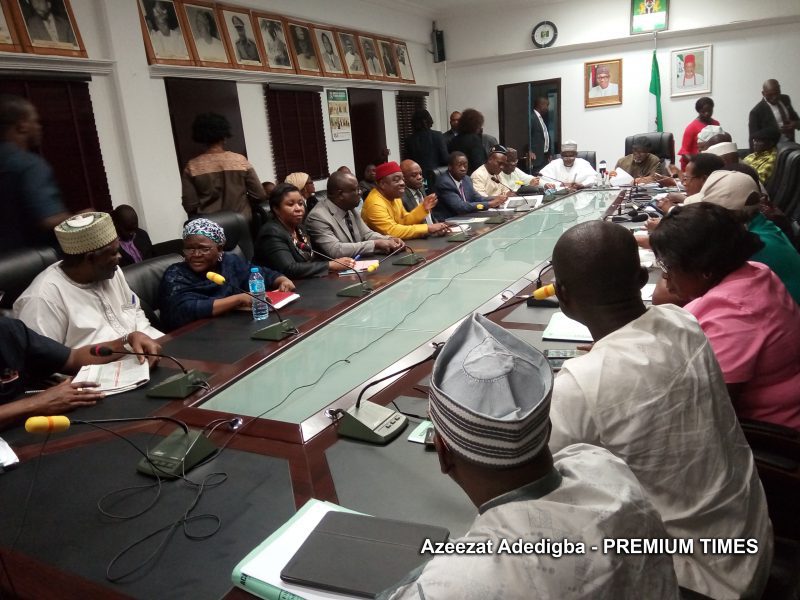
The Academic Staff Union of Universities (ASUU)  is (controversially) a voluntary labour Union formed in 1978 as a successor to the Nigerian Association of University Teachers (NAUT) which was formed in 1965 as a labour Union that covers academic staff in all of the Federal and State Universities in Nigeria.

It is a body that university academic staff and lecturers fall under and under which they organize themselves against the government, make their demands known and register their displeasures.

When people hear of ASUU, the first thing that comes to an average Nigerian’s  mind is strike or industrial action; the name ASUU can be said to be synonymous with strike as any time the name asuu is trending then it is obvious that they are in loggerhead again with the federal government and about to declare an industrial action which according to them is the only known way they get the government to listen to them and attend to their demands.

The very first recorded ASUU strike took place in 1988 and the reason for the industrial action is the academic staff of universities protesting for equitable salary and the autonomy of the Nigerian universities. This first ASUU’s industrial action led to its first ban by the government in 1988 which is not good for the labour Union body that is just 10 years of inception.

That strike was called off in 1990 and the universities  kicked off their usual academic activities in full scale and students were allowed to return to campus.

The second ASUU strike took place in August 1992 and lasted for a month as it was called off in September of that same year. The reason for the second strike was related to the first reason for the previous industrial action which was for an equitable salary scale and increase in salary and wages of university teachers. This second industrial action of ASUU led to its ban again by the government and prohibition of ASUU related activities.

As Nigeria returned to a democratic government in 1999 and trying to recover from the mayhem of the autocratic military government, ASUU deemed it fit to again bring up their demand to the new democratic government of Nigeria, hoping that the government will be more eager to listen to them. This did not go as planned as the government of Nigeria and ASUU entered into a full blown Cold War and this led to the ASUU strike of 1999 lasting for a whole five months. Five months of schools closed down and academic activities on hold in Nigeria’s public universities.

After the 1999 industrial action, ASUU went on another strike in the year 2001 and the strike lasted for three solid  months.

Furthermore, in December 2002,  ASUU went on a two weeks strike. The reason for this two weeks’ strike was that the Obasanjo-led budding democratic federal government of Nigeria did not implement the agreement they entered with the union earlier in the previous years.

ASUU decided they were done with the federal government tricks and games in 2003 and they declared a strike in that year. The strike was as if it was never going to end as it lasted for a whole six months. This ASUU 6 months strike of 2003 was also because the government couldn’t implement some of the agreements it entered with them and their primary demands have always been: adequate funding of the universities, increase in salaries and wages of public university teachers, pension fund for university lecturers.

ASUU took a break in 2004 but resumed their labour struggle in 2005 and they embarked on another strike in the year 2005 and the strike lasted for about two weeks. Also in the year 2006 ASUU took one week off for strike, the seven days strike of 2006 came after the three days warning strike, making it a total of 10 days of strike in the year 2006.

Also, in 2007, also went on another three 3 months forced vacation due to their industrial action; reason? Government’s  constant  failure to implement the prior agreements they had with the labour Union body.

 In 2008, the labour Union went on a one week  strike. The reason for this strike is primarily for the reinstatement of their fellow comrades that the government took away their jobs due to the trade Union struggle.

In June 2009, ASUU declared another strike which is now looking like an annual ritual. The strike was called off in October that same year having lasted for four months. This 2009 industrial action birthed another (new) agreement between the federal government and the labour Union and this new agreement was tagged “The ASUU/FG agreement of 2009”.

In July 2010, ASUU declared another strike over the government failure to implement the ASUU/FG agreement of 2009 made the previous year. This strike of 2010 spilled off to the following year as it was called off in January, 2011 having lasted for five solid months.

Eleven months later after the 2010 strike was called off in January  2011, ASUU embarked on another strike in December that same year and called it off in February of the next year of 2012. The strike lasted for two months.

In July 2013, ASUU embarked on the most talked about and most notorious industrial action of the recent years. The strike lasted for five  solid months as it was called off in December of that same year.

The labour Union decided to shield their (industrial action) sword for about four years as it begin to appear to them that the federal government is beginning to listen to them and taking active steps in the implementations of their agreements but the two cat and rat fell off again and they embarked on another strike in August 2017 and the strike ended in September that same year after one month.

In November 2018 the labour Union declared an indefinite strike. The strike lasted for three months and was called off in February of 2019.

In March 2020 while the whole world was on lockdown due to the Covid 19 killer virus,  ASUU also decided to lockdown and embarked on another indefinite strike. The strike lasted for nine months before they called it off.  The impact of the nine months strike of the 2020 was nevertheless not much felt because parents were even reluctant to release their children to go back to school and students were not ready to go to school campuses and start mingling with crowds at the risk of contracting the Corona virus.

ASUU took another break from strikes in 2021 as no strike was recorded in that year  but they embarked on (their annual) strike in February of this year (2022), the strike have lasted for more than two weeks and it still counting as it appears that the labour Union have had enough of the government and are not ready to call this off until they have their way.

In all the strikes that Asuu have embarked on, both the ones that lasted for days and some that extended for months, what is  common is the government’s failure to implement the agreement they  have previously entered with the labour union and before those agreement was entered with the government, the reasons for previous strikes is the university teachers demanding for a better working condition from government.

Some of the primary demands of ASUU are: increase in salary and wages of the University teachers, proper funding of the universities, funded research and funded continuous education for the university lecturers, the issue of pension and gratuity for retiring lecturers, good working environment etc.

While we all can agree that ASUU to some reasonable extent deserve what they are demanding and even more from the federal government, we have no choice than to plead with body to maybe reduce their expectations and demand from the government because it seems what they have been demanding for over two decades, the government cannot or May meet up with them.

We also call on the government to be the bigger person and honor the agreements she have entered with the labour Union and meet the demands of this union at least to some reasonable extent because when two elephants fight, the grasses suffer; the grasses here are the students and scholars who are forced to spend extra years in school and stay at home doing nothing due to the incessant strikes of the ASUU.


Ndubuisi Ekekwe Statement on Restricting Accounts of African Startups by US-Based Mercury Bank

1

I received the news that San Francisco-based Mercury Bank, a bank for startups, has restricted the accounts of many Africa-focused startups. The neobank has claimed that the restriction was due to “unusual activity” and possibly emanated from its supervisory bank partner, Evolve Bank & Trust. Accordingly, many startups woke up to receive this:  “Hi, your access to the Mercury account for XX  has been temporarily restricted. Let us know if you have any question or concerns.”

Statement from Immad Akhund, the neobank’s CEO:

  • “I am the CEO of Mercury. Since many of you have emailed/messaged me directly I thought it would be best if I just reached out directly.
  • “We found out yesterday that our partner bank noticed unusual activity and asked us to lock and investigate a large set of accounts with linked activity. We are working through our due diligence on all those accounts and will be in touch with you individually with questions if we have any on your account or activity.”
  • “Since it’s a reasonably large set of accounts it’s taking us some time to work through all of them but it’s the highest priority for us internally and we have more than 10 people working on this. We apologize for this sudden inconvenience and hope to put better practices in place to avoid this in the future.”

It feels very disappointing that Mercury Bank could act in this way. But of course, it is also important to understand that it has to comply with regulatory ordinances in the United States. But typically, you give notices and provide the startups the opportunities to clear the air before you pause or restrict the accounts.

Later this month or early next month, our neobank which is a full-fledged bank will launch in the United States. We have developed a novel playbook to support immigrants and foreign companies which majorly operate outside the United States. The US regulators like the protocols we have built.

I want to assure everyone that your bank is coming. We’re confident that as you grow, people will not see it as unusual activities. Do not lose confidence, the American market remains open despite the setback from Mercury. 

We have a better KYC/AML protocol to ensure that everyone plays by the rule and that we support your growth at scale. I hope to share the first day of our operations here once the regulators finish the regulated-mandated cybersecurity checks of our technologies. 

We expect the experts to finish at any moment and we will be on the path to be included in the US banking production server. Something amazing is on the way to support African and global startups in the US banking system.

We’re Tekedia Capital, we’re funding innovators of the future including a Texas-based Digital Bank

The Ascension of Zenith Bank Plc – PAT of N245 billion in 2021

1

There is no argument – Zenith Bank Plc is at the zenith of Nigerian banking: “Zenith Bank Plc has released its 2021 full-year audited financial statement reporting a profit after tax of N244.5 billion the highest on record. This reflects a 6.07% increase year on year.” I expect Zenith Bank’s number to top GTBank’s GTCO by at least N40 billion.

This company is separating itself from other players and the gap is widening quarterly. We used to be this bullish with GTBank, but it seems very soon any comparison may be academic. Left and right, Zenith Bank is the category-king on making money in the banking sector of Nigeria!

Anything it is doing is working, and other banks should learn from its playbook. From Nairametrics, here are the key metrics.

  • Net Interest income which it earns from its lending business rose 7% to N320.8 billion.
  • However, a 51.6% spike in loan losses meant net interest after impairments was flat at just N260.8 billion.
  • Zenith Bank, however, made up for it with income from commission and fees rising 31% to N103.9 billion year on year. It also raked in N167.4 billion in net trading income representing a 37.6% increase year on year.
  • Zenith Bank also grew its deposits by a whopping 21.2% to N6.4 trillion while its total assets is now N9.4 trillion. Net assets rose 14.4% to N1.27 trillion.
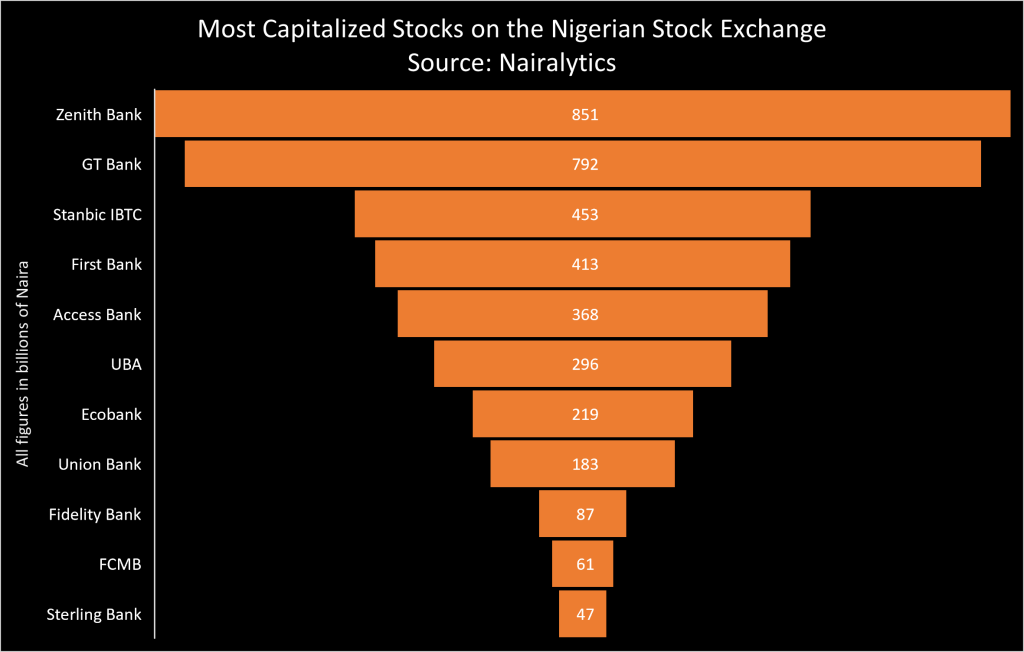
  • Zenith Bank Plc last traded at N27.10 per share and its market capitalization stands at N850.84 billion as at Monday, February 28, 2021. Year-to-date performance shows that the share price of the company has gained 7.75%.
  • The bank has proposed a dividend per share of N2.8 per share up from N2.7 per share a year ago. Based on its current share price, Zenith Bank’s dividend yield is about 10%.

As Zenith Bank dances atilogwu, owambe, etc for this result, Dangote Cement is sharing an amount that is more than some states’ budgets as dividend. When you can distribute N341 billion as dividend in a year, the overriding trajectory is that everything has converged: the customers are buying and the company is executing at a high level. 

The Nigerian people are truly resilient to be powering these results for these companies despite the paralysis in the land. As they say in our churches, my turn MUST come. Say Amen somebody! But you have to invest and take risks first!

The hotels are also doing fine: “Transcorp Hotels Plc has announced its Audited Financial Statements for the full year ended December 31, 2021.?The?results published on the Nigerian Group Exchange showed?a 114% growth in Revenue to N21.74bn from N10.16bn as of December 2020,?while Gross Profit rose by 143 %?to N16.23bn from N6.67bn.

The Company’s results show an impressive growth in its performance signalling its strong recovery from the impact of the COVID- 19 pandemic in 2020. The performance also reflects the Company’s resilience and nimbleness, as it consistently leverages innovation to achieve an outstanding performance, breaking occupancy, and revenue records in 2021.”

GTCO of GTBank

Guaranty Trust Holding Co (GTCO) Plc has released its first Full-year financial result as a group which revealed a profit of N175 billion in 2021. This reflects a 13.21% decrease year on year….The statement revealed that in FY 2021, interest income fell by 12.77% from N288.28 billion to N251.47 billion in the current period. GTCO’s profit performance is on the back of all margin decline as income from interest and trading income all depreciated year on year.

UBA

United Bank for Africa (UBA) Plc has announced its audited results for the full year ended December 31, 2021.. gross earnings rose significantly to N660.2 billion representing an increase of 7 percent compared to N616.8 billion recorded at the end of the 2020 financial year. UBA’s Profit Before Tax was impressive with a 20.3 percent growth to N153.1 billion, compared to N127.3 billion at the end of the 2020 financial year; while Profit After Tax rose grew by 8.7 percent to N118.7 billion in 2021, compared to N109.2 billion recorded the previous year.

Note: This post was updated with more results, from Nairametrics reports

Tekedia Live – Information Security & Digital Forensics

0

One of the sector’s best who until recently was helping to build technologies to secure BMW of the future, from cybersecurity attacks, via its subsidiary, will be at Tekedia Live on Thursday to take us into an excursion to Information Security & Digital Forensics. Dr. Francis Nwebonyi of University College Dublin is super-amazing.

He earned PhD in Computer Science with focus on Network and Information Security from Universidade do Porto. His MSc in Computer Security and Forensics was from the University of Bedfordshire and he is a member of Tekedia Institute Cybersecurity and Digital Forensics Faculty. He continues to help us to update our curriculum in this age where most industries are going digital. We thank Dr. for this leadership.

It’s time for digital security; Zoom link in the Board. Tekedia Mini-MBA >> your better school.