DD
MM
YYYY

PAGES

DD
MM
YYYY

spot_img

PAGES

Home Blog Page 5282

Tackling National Economy Via Technological Strategy

0

At the moment, Nigeria doesn’t need a soothsayer to tender that she’s seriously in need of a rethink towards revamping the current pathetic physiognomy of her economy.

The present Nigeria’s economic value is arguably dwindling, thus requires a serious and candid strategy if the concerned authorities are genuinely prepared to deploy the needed political will towards salvaging it.

However, it’s pertinent to acknowledge that the recommended measure cannot be successfully applied if we fail to employ a tech-driven approach. This implies that technology remains inevitable towards salvaging the country’s economic posture that currently bears a pathetic look.

Development at any phase is always linked to technology and the latter takes place when there’s advancement in science. In other words, science, technology and development are all proportional to each other.

It’s imperative to acknowledge that development is required in every individual as well as nation, in all aspects. And for such effect to occur, science and technology must go hand-in-hand. Science is known as the study of knowledge, which is made into a system, and depends on analyzing and comprehending facts. Technology is the application of this scientific knowledge.

For any successful economy, particularly in present times, science and technology are the rudimentary requisites. If any nation fails to utilize these, then the chances of getting itself developed becomes minimal.

Technology is associated in all means with modernity, and it’s an essential tool for rapid development. Hence, any country that’s not able to prosper in this regard would never be able to sustain the lives within its jurisdiction and may have to solely depend on other countries for survival.

It was estimated by the World Bank that seven of the ten largest economies of the world by 2020 would be in Asia, including Japan, China, India, Indonesia, South-Korea, Thailand, and Taiwan. The economic prophecy eventually came to pass. This is because the countries in question were able to leverage the impact of technology on societal growth.

Just a few decades ago, most of these countries were known to have poor policies, low discipline and no advancement. But with an effective introduction of technology, they have succeeded in making waves all over the world.

Nigeria obviously needs to emulate them. Rather than begging them to come over and help us develop the country, let’s ascertain how they made it to the top, so we can apply the same techniques without seeking their assistance since we have all it takes to perform independently.

The truth is that the required manpower and resources abound in Nigeria. What the government needs to do is to recognize the needed labour-force and the available endowments, then consequently endeavour to do the needful.

They must be prepared to devote reasonable commitment, which is a product of time. This is where political will comes in. You must be willing to sacrifice your time and energy to a cause you believe in, if you really want it to become an absolute success.

Nigeria is ostensibly being taken aback by her leaders. If not, this country would have gone several steps ahead of where it is today. If the government must do the right thing as expected, it has to revive all moribund technical colleges across the country, resuscitate the ongoing Students Industrial Work Experience Scheme (SIWES), and adequately equip all the science-oriented departments in institutions of higher learning.

Furthermore, teachers’ wages must invariably be taken very seriously. These are the fundamental ways the country’s education sector can be strengthened. Similarly, the health sector, which is awash with outdated facilities, must equally be liberated by providing befitting structures and equipment that can stand the test of time. The country is already blessed with countless health experts, but they lack the needed environment to showcase their expertise.

Moreover, Nigeria lacks an industry where science and technology can thrive, thus she needs to create one by setting up an enabling environment that can accommodate every professional irrespective of their field or area of specialization.

Owing to the lack of such an anticipated environment, the country loses hundreds of talents and patents on a daily basis via brain drain. The government must be willing to assist anyone who has an idea, and not to abandon him or her to rot. A reliable agency that can listen to people’s ideas and channel them to apt quarters ought to be set up by the governments at all levels.

For urgency’s sake, we must embrace the agric sector through implementation of mechanized farming instead of the ongoing crude pattern. As regards the mining sector, the concerned authority must extend the hand of fellowship to the cognoscenti whom must be indigenous, towards acquiring efficient output.

The power sector cannot be addressed if we fail to supplement the existing hydro pattern with other such available generation sources as solar, wind, biomass, and coal. The Tourism industry can equally be made more viable by inculcating tech measures in the system.

Security, on its part, cannot be left out while discussing technology. If the needed resources – both human and material – are eventually made available but aren’t well safeguarded, it would be an effort in futility in the long run.

Among all, tax evasion can only be properly tackled if we employ adequate forensic techniques. It’s not anymore news that countless establishments domiciled within the shores of the country have unabated dodged payment of taxes, yet nothing is being done about it, perhaps because the required mechanism to tackle the menace isn’t made available.

Even corruption, which remains the bane of the country’s democratic system, can’t be duly fought if tech strategic approach is jettisoned or relegated to the background.

There’s absolutely no way Nigeria’s various economic diseases can be aptly treated without engaging tech strategy.
Tekedia Institute Launches Tekedia Industries – Digital Tech, Agriculture, New Energy, etc

0

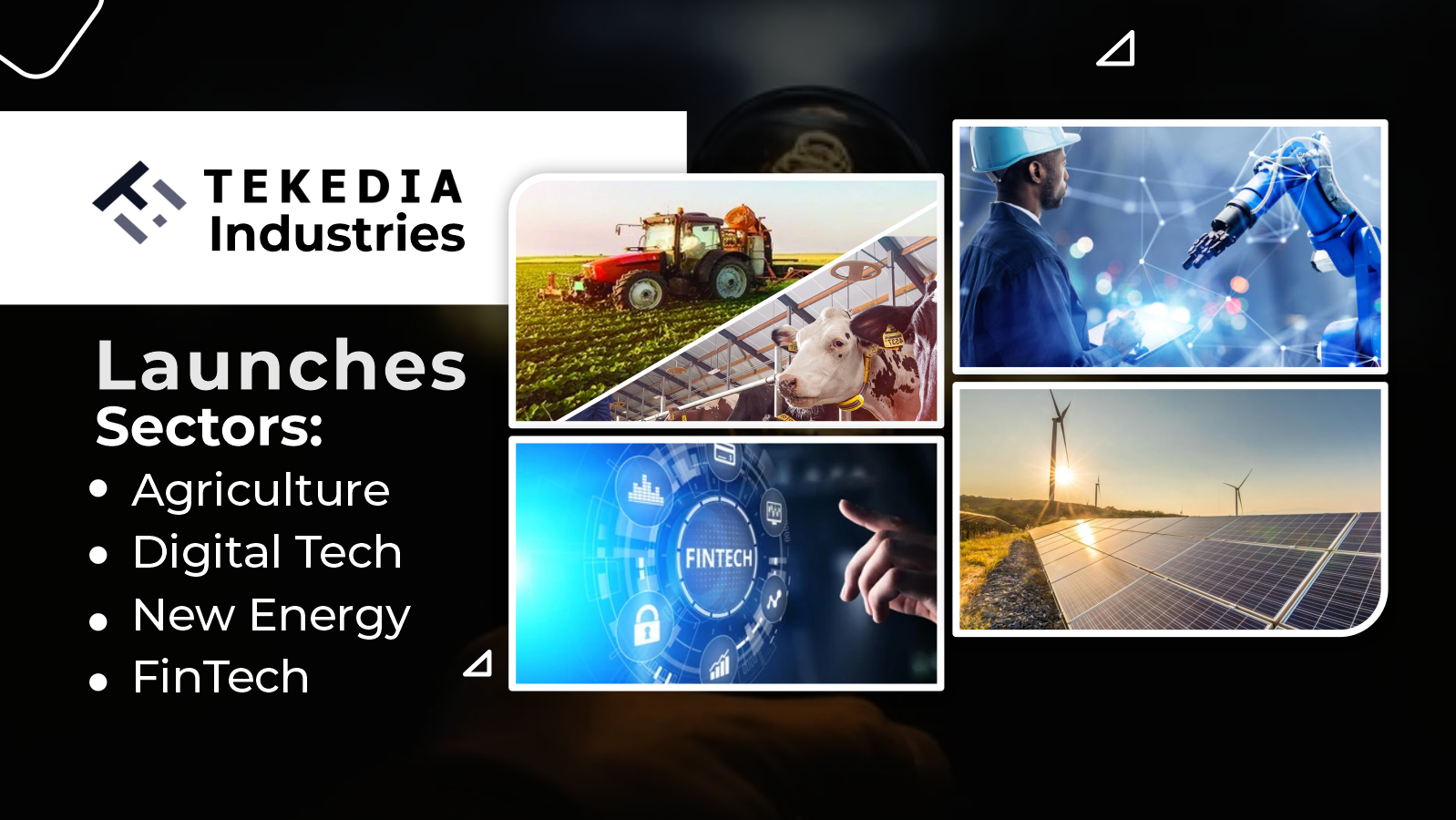
Tekedia Institute is proud to share that we have launched Tekedia Industries where we teach sector-domain elements in the mechanics of market systems.  It is part of our mission to make innovators and scholars practically ready to fix market frictions.

Tekedia Industries provides practical world-class playbooks on how entrepreneurs, builders, makers, project champions, workers, etc in a specific industry will understand it, and find value therein. It comprises courseware and private one-on-one private Zoom sessions. The following underlisted industries are covered:

  • -Agriculture Business
  • -Renewable and New Energy Business
  • -Digital Technology Business which includes fintech, logistics tech, etc

It is on-demand which means you can register anytime and begin. Check the curriculum and register here.


Registration is ongoing; you begin immediately after payment as this is an on-demand program, not batched with any start date. REGISTER Today.

  • Pricing: N180,000 naira (or US$400) per person.

As Russia Invades Ukraine, Who Will Evacuate Nigerians?

1

As Russia bares its power loose on Ukraine through land, air and sea – an unprecedented full military operation that has riled the whole world up, ripping through covid economic recovery and shooting oil prices up, every country has inadvertently got into a race to evacuate its citizens.

Many countries began issuing the ‘leave Ukraine immediately’ warning to their citizens at the early sign that war is inevitable. However, as warning statements from foreign affairs departments form a flurry of worry, the Nigerian Ministry of Foreign Affairs issued a statement, urging Nigerians in Ukraine to relax.

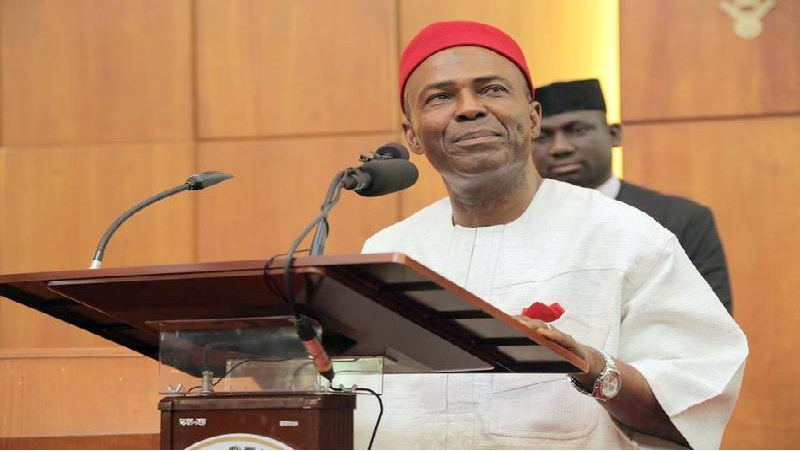
Foreign Affairs minister Geoffrey Onyeama said on NTA Thursday afternoon: “The advice we were getting was that Nigerians in Ukraine should not panic. The embassy was in touch with them, telling them to take reasonable precautions, which has been ongoing for a while.” The Russian government itself was saying they will not invade, he added.

Ukraine is both a business and education hub, having thousands of international students, including Nigerians. Morocco, Nigeria, and Egypt make up the list of top 10 countries for international students in Ukraine, accounting for 8,000, 4,000 and 3,500 students respectively. The three African countries made up nearly 20% of all foreign students in Ukraine as of 2020, according to Ukraine’s ministry of education and science.

Besides this number of Nigerian students in Ukraine, there are thousands of others who have different business in the Eastern European country – all needed to be evacuated while there is still a chance.

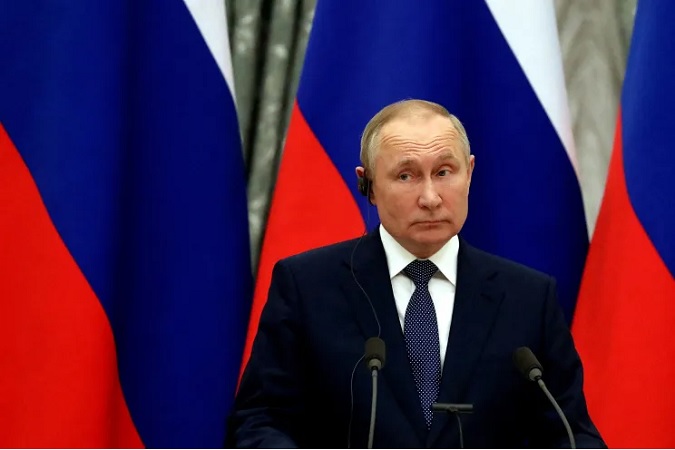
A dramatic turn of events came with Russian president Vladimir Putin recognizing the independence of Ukraine’s separatist regions, Donetsk and Luhansk. As the war escalates, the chance of evacuation gets slimmer. Ukraine has shut its airspace to commercial airlines and the government has ordered all men from 18 to years not to leave the country.

In a change of tone, the Ministry of Foreign Affairs on Thursday assured Nigerians in Ukraine and their loved ones that as soon as the airports in the country are opened, the federal government would assist in facilitating the evacuation of Nigerians who are willing to leave. It added that the “Nigerian Mission has confirmed that military action by the Russians has been confined to military installations.”

However, the increasing reports of civilian casualties in Ukraine has not only debunked the statement of the Ministry, it has also fueled concern for the safety of everyone in the country.

Nigerians in Ukraine, who have been following the instruction from the Mission, said they’re all packed and waiting for the next instruction.

“Internet has gone down. Some services are not working. Refugees camp hasn’t been set up yet, but we’re waiting for a signal to move,” a Nigerian wrote on Twitter.

https://twitter.com/eldrenna/status/1496708929254010884?t=e-oiXyUvNsiuqmgvi14UEQ&s=19

The latest advisory from the Nigerian Embassy in Ukraine urges “Nigerian nationals resident in Ukraine to remain calm, but be very vigilant and be responsible for their personal security and safety.”

“The embassy wishes to add that should any Nigerian nationals consider the situation as emotionally disturbing, such nationals may wish to temporarily relocate to anywhere considered safe by private arrangements. They should, however, ensure that they do all the needful to validate all their resident documents for ease of return to the country when desired,” it said.

Nearly 200,000 Russian troops have been let loose into Ukraine, eliminating the hope that Putin will withdraw them any time soon, and narrowing the window of evacuation as Ukrainians fight back.

On Thursday, Nigerian House of Representatives offered to evacuate Nigerians, according to a post made on its Twitter account. The House said it is counting on Allen Onyema, CEO of Air Peace airline, who evacuated Nigerians in South Africa during the xenophobic attacks, to volunteer some planes for Nigerians in Ukraine.

The House said its Committee Chairman on Foreign Affairs will jet out to Ukraine, Friday. It is hoped that the trip will open a way out for Nigerians.

As Russia invades Ukraine – Major impacts for Web hosting, DeFi, and all aspects of Tera and Metaverse global economies

0

Thirty-six hours ago, I made a post focusing on the speech of  Kenya’s Ambassador to UN Martin Kimani. In it I made a somewhat delicate plea to Vladamir Putin. Just a small voice along with a lot of louder and stronger voices that were out there. None have been heeded. My thoughts are with the Ukrainian people, and even too, many of the Russian youngsters who are forced to shoulder a war they don’t want.

This post is now about business impacts, some of which are for Nigeria.

In statement by European Commission President Ursula von der Leyen:

‘we will target strategic sectors of the Russian economy by blocking their access to technologies and markets … weaken Russia’s economic base … freeze Russian assets … aligned with … the United States, the United Kingdom, Canada,…Japan and Australia.’

Von der Leyen also announced readiness to create reverse flow of gas from EU into Ukraine to cushion the effects of its uncoupling of energy links with Russia.

This is what precipitated the price of Brent Crude jumping overnight to its highest point since 2014.

While this seems good news for Nigeria and other oil producing African countries, it is important to understand that this is a ‘sentiment’ reaction from the market.

‘Sentiment’ reactions anticipate something that seems likely, but has not yet happened. There are simply two types of sentiment – a perception of future supply, or a perception of future demand. If the sentiment is proven accurate then the price should stay stable (the sentiment has already priced in the rise).

On the other hand if the sentiment fails to translate, or some other actors bring something to the table (such as ME countries dumping a load of product into the market to cool it), then the price will recede again.

High oil prices are also not universally good news for Nigeria. As per the famous discussion with Bill Gates and Mo Ibrahim, Aliko Dangote pointed out that while O&G sector is Nigeria’s main source of foreign currency, and where FGN makes majority of its income from, it is only 8.8% of the Nigerian Economy.

Since the sectors the masses are ‘feeding’ from comprise 91.2% not O&G, then should oil prices go up, but FGN remove the subsidy on the downstream products, while the Federal system enjoys bigger budgets, further hyper-inflation would ensue plunging the masses further into poverty.

Then again, the issue in Europe relates to natural gas. Crude oil is not the same thing. Though there is also such an issue as ‘sentiment transference’ When this happens, it is the products/services that most resemble the primary target of the sentiment get impacted first.

Bitcoin fell 8% to a one-month low and other cryptocurrencies crash, wiping $150B in the crypto market in the last 24 hours (Arjun Kharpal/CNBC)

Cryptocurrencies are already banned in 10 Countries… Algeria, Bangladesh, Egypt, Iraq, Morocco, Nepal, Nigeria, Qatar, Tunisia and China

Prior to this conflict Russia seemed leaning towards outrightly banning crypto (source Jeff Benson Jan 20, 2022 for decrypt.co), on LinkedIn, Philip Weights reports Vladamir Putin doing a ‘U turn’ on this in a matter of weeks.

The market ‘sentiment’ here would be since the main global centres of the world are going to shut down ‘traditional’ liquid asset movement vehicles for Russia, Russia will resort to using crypto to transact. But the same actors shutting down Russia will be prepared for that also, and so a large global consensus of multiple sovereign states will shut down crypto, not because of any dislike for crypto specifically, but simply because it is a transaction medium vulnerable to being used by Russia to circumvent the other restrictions imposed.

There are many raw materials and agricultural products in which Ukraine is in the top three suppliers in the world.

On the equity front, a week ago, Kiera Rawlings (Reuters) said: ‘Worries over a potential Russian invasion into Ukraine could fuel stock weakness over the short-term, but most U.S. market fallout related to geopolitics is likely to be short-lived, if history is any guide.’

One of my support services this morning timed out . I know for certain the support team are based in Ukraine.

The medium term factor that might most affect Nigeria may be access to various customer and technical remote services.

There are a few countries in the world that have a strong foothold in remote telephone, online and OTT support services. They offer round-the-clock support that range from customer services to billing enquiries, basic sales enquiries, and technical support. The clients they represent range across conventional banking, telecoms, electricity and utility providers, crypto exchanges, web hosting companies, DeFi providers, and a wide range of other services.

The strongest geos for these services are India, The Philippines, and…

UKRAINE

Another support service provided from Ukraine is down. This one usually answers live queries within 1 minute.

The Ukrainian operators are especially competent at technical proficiency.

Ukraine citizens have centuries of technological development excellence and their engineers and scientists have been pivotal to the former Soviet Union in the space and nuclear races with the US of bygone times.

There was an old saying: ‘If you want technological intelligence from the Soviet Union, you go to Kiev, because that is where Moscow keeps its brain!’

As cyber-attacks from Russia intensify, then any global actors that have Ukrainian nodes on their global datacentre networks and cloud solutions are especially open to breach.

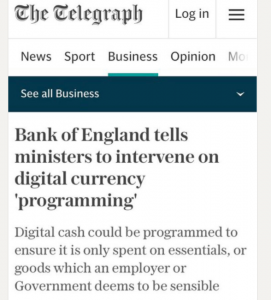
BANK OF ENGLAND seems to think Digital Currency can have its use restricted through ‘programming’, but do they mean all Digital Currency or just CBDC?

But as conscription begins, and support officers swap their headsets for guns in the field, the true impact on service dependency will be unknown.

Again, my thoughts are with Ukraine.

Please visit www.johnmckeown.eu

All URLs accessed 24/02/2022

www.linkedin.com/posts/sarang-pokhare-iim-calcutta-digital-marketing-expert_ukraine-cyberattacks-all-you-need-to-know-activity-6902557395789205504-WBiT

www.linkedin.com/posts/european-commission_russias-aggression-against-ukraine-press-activity-6902542894180507648-NLtZ

ec.europa.eu/commission/presscorner/detail/en/statement_22_1322

decrypt.co/90886/bank-russia-wants-bitcoin-ban-how-other-countries

www.linkedin.com/posts/philipweights_vladimir-putin-rejects-ban-on-crypto-mining-activity-6894177763025125376-FW6z

www.reuters.com/markets/europe/markets-churn-over-russia-ukraine-conflict-history-shows-fleeting-impact-2022-02-14/

johnmckeown.tiny.us/ukraineafrica-mypush

johnmckeown.tiny.us/decadepredictions-mypush

X-raying Financial Institutions And e-Frauds In Nigeria

0
SEC Nigeria

While tech experts are discussing the financial institutions, they would be more concerned about how much and far the key players in the sector have fared in respect of tech-driven measures.

As some stakeholders would dispute the ‘goodness’ and remarkable activity of the financial institutions, others would ceaselessly defend the ‘unavoidable impact’ of the sector even with last drop of their blood.

Financial institutions, the bank particularly, have greatly enabled mankind to jettison the archaic pattern of saving money and other valuables, thereby averting a whole lot of troubles usually characterized by the said method.

The bank as a sector has in recent times obviously contributed to countless economic growth recorded by both individuals and entities, particularly a given country or bloc as might be the case.

Regarding savings, the bank creates an unquantifiable opportunity for the human race, businessmen and traders in particular, to on a daily basis safe-keep their monies and assets towards experiencing a better ease of doing business or trading.

The bank has thus far arguably saved people from a lot of tensions, because it has created and maintained an avenue where anyone, regardless of status, can easily deposit his/her money without exercising any element of fear concerning safety.

With the introduction of the ongoing Consolidation Policy of the Central Bank of Nigeria (CBN) as ably initiated during the reign of Prof. Charles Soludo, it is now certain that any amount of money/asset kept, or deposit made, in any commercial bank domiciled within the country is certainly safe.

The reliability of commercial banks are presently well guaranteed, and such can at any time be proven by any financial or policy analyst. This is the sole reason people from all walks of life can be seen currently trooping into banks to make deposits of valuables.

And with the existence of the newly introduced Cashless Policy by the apex bank, people can now make transactions from the comfort of their respective bedrooms, with ease.

The cashless policy, with the aid of tech-driven measures, has really assisted the banking sector in curtailing several inconveniences and stresses faced by their personnel as well as the clients.

The aforementioned policy has equally hitherto helped the sector to alleviate all sorts of physical social ills usually experienced by the banking industry, such but not limited to as armed robbery, to a reasonable extent.

Before now, with much cash flow in circulation, armed robbers had greater opportunity to physically invade people’s privacies, be it offices, shops, residences, or on the roads, thereby forcefully making away with their hard-earned money.

On the other hand, the advent of the Information and Communications Technology (ICT) mechanism in the banking sector has constituted tremendous unbearable non-physical ills popularly known as electronic frauds (e-frauds). These crimes aren’t physically perpetrated like in the case of armed robbery.

The e-fraud, as the name implies, pertains to all kinds of ills emanating from the use of electronic gadgets or equipment to include computers and cell phones, among others.

ICT remains the major aid of the ongoing modern system of banking. It’s worthy of note that the said mode of technology cannot be possible without the use of electronic devices and mechanisms such as computers and the internet, as well as networking.

This electronic methodology, since inception in the banking sector, has profusely been characterized by countless frauds. It’s worth noting that the electronic ills can only be possible via a manipulation called hacking.

It’s only when one’s electronic belonging – including personal and bank accounts – is hacked, that the criminal would have the opportunity to perpetrate any type of intended crime that could cost the unsuspecting person a fortune. We must come into terms that anybody can fall victim of this dastardly act.

So, we can at this point wholly comprehend that though the advent and sustenance of the ICT in the banking sector has majorly assisted in solving a whole lot of plights and crises, it has made millions of people victims.

In various fora and platforms, I’ve extensively analyzed several issues and ills pertaining to electronic (internet) hacking. In my candid words (analyses), I’ve taken time to advise that, for us to enjoy or appreciate the use of electronics, we must be well and aptly prepared to make, introduce and maintain sound policies, either as separate individuals or entities.

As a group of people called Nigeria, the corporate body that’s in charge of the country’s banking system in its entirety must at this digital age be more concerned on how to strategize with a view to ensuring that the existence of tech-driven measures doesn’t end up causing more harm than good to the entire system.

The above can only be duly achieved by introducing and maintaining a wholesome and reliable policy-making unit in the institution. Hence, the CBN mustn’t relent in making this happen within its jurisdiction.

As these merchants try to make profit in the lucrative banking business while helping the public safeguard their fortunes or treasures, they as an institution must equally create corporate guidelines that would help their clients avert various troubles liable to befall them.

On corporate policy, banks must be well tutored on the compelling need to create more secured online Apps or softwares by engaging reputable IT experts. Similarly, a standard ICT unit ought to be maintained in their respective branches.

On individual policy, the users of the computer Apps must on the other hand be thoroughly sensitized on how best to protect their online transaction identities and details at all times. This measure must equally involve respected and reliable professionals.

The bitter fact remains that, as sophisticated technologies evolve, the criminally-minded persons or entities in the system would strive to take advantage of the development at the expense of the unsuspecting users.

This is the reason corporate bodies and individuals are regularly advised to endeavour to be wiser than the criminals just as mankind is being advised by the Holy writ to be smarter than the devil.

Hence, the educational institutions, on their part, must invariably be ready to inculcate the required expertise into the ICT learners or trainees undergoing various trainings within their jurisdictions.

Though Nigerians have left where they used to be, there’s still an enormous distance to cover in a bid to arrive at the needed point.