DD
MM
YYYY

PAGES

DD
MM
YYYY

spot_img

PAGES

Home Blog Page 5284

Tekedia Live – Business Strategy & Execution, Thur 7pm WAT

0

Tomorrow (Thur), Eromosele Omomhenle F.IMS , a Senior Manager, Global ISV Alliances and Partner Development at Microsoft global headquarters in Redmond, USA, will anchor a session on Business Strategy & Execution.

He is always amazing and will take us into an excursion on how to craft strategy, execute business playbook and outperform the market. Zoom link in the board.

Tekedia Mini-MBA >> learn from the best

Tekedia Institute offers Tekedia Mini-MBA, an innovation management 12-week program, optimized for business execution and growth, with digital operational overlay. It runs 100% online. The theme is Innovation, Growth & Digital Execution – Techniques for Building Category-King Companies. All contents are self-paced, recorded and archived which means participants do not have to be at any scheduled time to consume contents. Besides, programs are designed for ALL sectors, from fintech to construction, healthcare to manufacturing, agriculture to real estate, etc.

After funding, what next?

0

To refer back to some data I quoted in a previous post, 21.5 percent of startups fail in the first year, 30 percent in the second year, 50 percent in the fifth year, and 70 percent in their 10th year. You may find it interesting to know that quite a lot of startups that have raised some sort of funding fall among the numbers. This means that securing funding does not necessarily mean that your business has become what it should be.

So really, the big question to answer is that after fundraising, what next? Do you just take an executive seat, sip some champagne while admiring your newly purchased suit? Does successful fundraising mean that it is now time to “chill with the big boys”?

The answer is no! You will find out that if the work done before fundraising drained you 30%, you can realistically expect to be drained 60% after the funding round especially if it is your first time raising funds.

Unofficially, I have sampled the thoughts of some successful entrepreneurs, from personal chats, reading and watching their interviews, and also following their stories. Here is what I discovered. More than half of entrepreneurs lose every single dime raised in their first fund rounds. It could be borrowed from friends or institutions, it could be the proceeds of a mortgaged property, it could even be money belonging to angel investors or partners who decided to back the ‘big idea’.

Whatever the source of the funds, many founders will exhaust the first funds they raise without having much to show it. I think even investors are aware of this, and it is the reason they would often want you to start the business on your funds until you prove the concept. They want to be sure that you have eliminated some likelihood that the business would fail.

When you have successfully raised some funds to inject into your startup, activate all you need to drive towards the next phase of business growth. If there is are experts you need to get on your team, recruit them as soon as you can. Activate the strategy roadmap that you pitched to your investors and get running.

As an entrepreneur or founder who has just raised funds, you cannot go back to sleep. You should not even be going to the drawing board. Keep in mind that the funds you have raised are supposed to carry the business from one phase of growth to another, so there is a lot of work to do after fundraising. What you should be doing at that stage is going out to the market. Don’t wait for the customers to come to your product. Take the product out to the market and seek out the customers. Get the feedback you need and make the necessary fixes. Go all out.

If you have been a part-time founder, probably running the business side by side a full-time job, after raising funds, you might consider going all in.

More Women Join The “Tech Bros” In Africa’s Fintech Boom

0

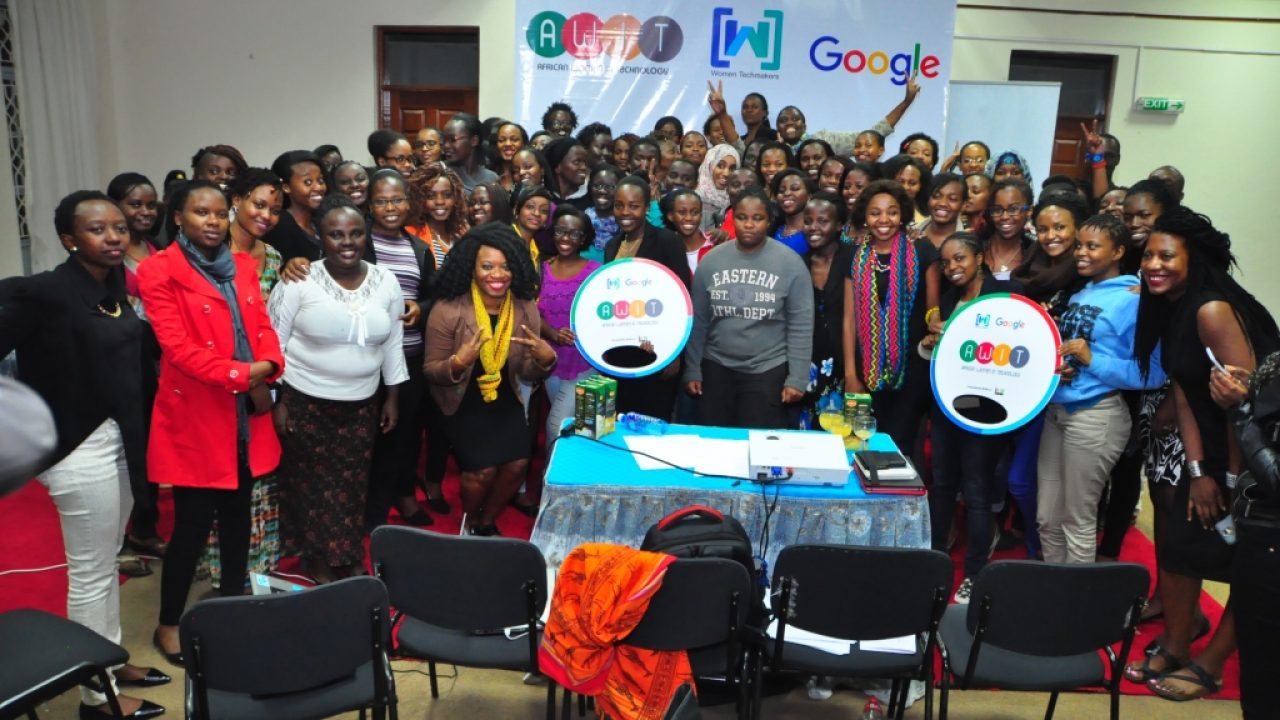
As the popular saying goes, “what a man can do, a woman can do better”. Indeed the women in Africa seem to be living up to that in the area of tech. Lately, there has been an increase of women in Fintech in Africa that was initially dominated by the men popularly known as the ” tech bros”. The industry has experienced a high influx of women breaking grounds and leveraging financial technology.

According to a market research company that tracks gender diversity, it stated that around 3.2% of fintech firms in Africa are founded solely by women, doubling the global average of 1.6%. Also according to indexable 2021 data, it stated that Africa’s Fintech has more female board members compared with other regions.

An increasing number of accelerators that provide early-stage companies with training, mentorship, financing, and venture capital firms are now shifting focus to women-led businesses. Despite the perceived gender bias in the tech industry, this has not in any way deterred women from venturing into the tech ecosystem. They strongly believe that they are not different from their male counterparts in making giant strides in tech. Indeed, the results have been doing the talking, obviously showing that women can also do exceptionally well in the tech field. While the sector is very much a “men’s club”, research shows that Africa’s fintech sector fares better than other regions when it comes to women at the top.

This article wouldn’t be complete without mentioning some female trailblazers doing exceptionally well in the tech industry;

Okra: This is a female-led API fintech company based in Lagos co-founded by Fara Ashiru Jituboh. Okra was launched in 2020 to digitize financial services for Africa. Okra has built an open finance platform that enables developers and businesses to build personalized digital services and fintech products for customers. Remarkably in less than two years, the start-up has drawn more than 400 clients, including more than 20 banks in Nigeria, Kenya, and South Africa, and has raised $4.5million in venture capital.

Lami Technologies: Founded in 2018 by Jihan Abass who is based in Nairobi, Kenya, with aims to boost almost non-existent insurance coverage among Africans. Lami’s application programming interface or API enables businesses to offer flexible digital insurance products such as vehicle and health insurance to customers. Through its API, users can get a quotation of motor, medical, or other insurance products in seconds, then customize the benefits and adjust the premium to suit their needs, and get their policy documents instantly. Since its inception, Lami has raised more than $1.8 million in seed funding and partnered with companies including Kenya commercial bank and e-commerce platform Jumia to sell more than 72,000 policies.

CrowdyVest : Tope Omotolani is the co-founder and CEO of Crowdyvest, an impact-driven community focused on creating interdependence between individuals and businesses. It provides an all-in-one financial solution geared towards achieving financial freedom while facilitating impactful growth in line with the United Nations Sustainable Development Goals. Under Tope’s leadership, Crowdyvest has raised over $35 million through savings and investment for multiple businesses from a community of over 100,000 members in over a year.

With so many groundbreaking achievements from African women in tech, one would think that seeing these remarkable results by these women will jettison the issue of gender bias. Unfortunately, I am perplexed that such crude behavior is still prevalent. Female fintech founders have often lamented that when they have the opportunity to pitch their ideas to venture capital firms, gender biases still play a role, meaning they often raise less and receive lower valuations.

Despite some of these shortcomings on the part of the African women in tech, I am very ecstatic at how dogged these women have chosen to look beygrounde of these issues and still went ahead to do exceptional things in the tech ecosystem. Seeing these results from women indeed has awakened their fellow women who want to venture into the industry to see the possibility of also dominating the presumed ” men’s world”. It is advisable that venture capital firms put away their biases against some of these women and offer them the same assistance the men also get. Women indeed have what it takes to do exceptionally well in the tech industry and are currently breaking new grounds.

The Meta’s Reels Playbook

0

“Reels is already our fastest growing content format by far, and today we’re making it available to everyone on Facebook globally. We want Reels to be the best place for creators to connect with their community and make a living, so we’re launching new monetization tools too. We’re adding creative tools to Facebook Reels like Remix, and the ability to create a Reel from an existing story. We’re also building video clipping tools so that creators who publish live or long-form, recorded videos can test,” said Mark Zuckerberg, CEO, Meta (yes, Facebook)

Meta has copied TikTok; it is part of the market system.  By having other things within the Meta universe, Reels does not need to be as great as TikTok to thrive. Yes, I have moved to Microsoft OneDrive, cutting off Dropbox, because I want a unified system instead of disparate systems in my laptop. Even if OneDrive is not as great as Dropbox, it is just good enough when combined with other Microsoft products within Microsoft 365. That bundling remains a super appeal in digital businesses.

That is the same playbook here: Reels will thrive because some people will adopt it, and make up with other features within the Meta world.

Meta has a great strategy of not going into the trap of hiring experts. It has a better statistical chance of thriving with the aggregation model it is deploying here. Quibi which has since folded used movie legends to create short videos without knowing that you have more odds of getting a viral video within millions of videos, than within tens of videos, created by experts. The business model of Quibi was poor, as I wrote, and no wonder the company collapsed despite having prominent business leaders in the game. 

Yes, with cloud computing and AI, the probability of getting a hit video compounds in mass-aggregation over a dataset made by few experts. All you need is to look at data and see which video is promising and once identified, soup it up so that everyone will see it. That is virality. Reels will grow even if it is not as great as TikTok.

It is about the power of the business model; Meta is deploying it here.

Meta Rolls Out “Reels” Globally

Meta Rolls Out “Reels” Globally

0

Meta’s push to pivot products across its social media companies amidst growing competition and regulatory policies threatening its business, is seeing a lift, according to CEO Mark Zuckerberg.

Early last month, Zuckerberg announced seven investment priorities for Meta, following a heavy drop in the company’s shares that saw Facebook lose more than $250 billion. The chief executive said that Meta will be focusing on Reels, community messaging, commerce, ads, privacy, AI, and of course the metaverse.

Giving an update on the progress the company has made so far, Zuckerberg wrote on Tuesday that Reels has been made available for creators globally.

“Reels is already our fastest growing content format by far, and today we’re making it available to everyone on Facebook globally. We want Reels to be the best place for creators to connect with their community and make a living, so we’re launching new monetization tools too.

“We’re adding creative tools to Facebook Reels like Remix, and the ability to create a Reel from an existing story. We’re also building video clipping tools so that creators who publish live or long-form, recorded videos can test,” he said.

Last year, Apple began the enforcement of its new privacy policy, the App Tracking Transparency (ATT), which gives iPhone users the choice to disable Facebook’s tracking system, curtailing its ability to curate data for targeted ads. Facebook usually harvest the needed data for its targeted ads by tracking users across the web. In addition, TikTok has seen unprecedented growth globally, especially among young people – which poses a further competitive threat to Meta’s growth. Since 2012, the number of young users on Facebook has been on decline and only users 25 and above have been increasing their use of Facebook, according to internal research from Meta leaked by whistleblower former head of products Frances Haugen.

Zuckerberg said Meta will focus on short videos to counter TikTok’s intimidating growth. TikTok is a short-form video platform that gives users the opportunity to create contents and earn from them, a method Facebook has adopted through Reels.

“To give creators more visibility and reach, they can share their Instagram Reels as recommended content on Facebook. We’re also rolling out Reels in Facebook Watch and letting people share public Reels to Stories,” Zuckerberg said.

In addition to the declining number of Facebook users, Meta is facing the challenge of tightening privacy laws in Europe. The European data privacy watchdog GDPR, has been reviewing its rules targeting big tech companies to tackle growing issues of misuse of private data.

Early February, Meta warned that it would pull out of Europe if a new privacy rule that aims to halt it from transferring consumer data from Europe to the US is approved.