DD
MM
YYYY

PAGES

DD
MM
YYYY

spot_img

PAGES

Home Blog Page 53

Amazon’s One Oasis Strategy with Cascading Double Play

0

Amazon is quietly writing one of the most important business playbooks of our time, a cascading virtuoso of what I have called the One Oasis Strategy and its extension, the Double Play (click here to read how I explained both in Harvard Business Review).

At the center of Amazon’s rise was a simple oasis: ecommerce. That marketplace of books first, then everything became the gravitational center of the company. But Amazon did not stop at selling products, it built systems to make that oasis work at scale. In doing so, it created internal capabilities of compute, storage, and logistics that were not originally designed as products, but as enablers.

Then came the first great leap: Amazon turned its internal infrastructure into Amazon Web Services (AWS). What began as a support system for ecommerce became a global cloud computing platform. That is the essence of the Double Play: build an internal capability to win your primary market, then externalize that capability as a standalone business. AWS did not just support ecommerce; it became Amazon’s profit engine.

Now, Amazon is executing a second-order Double Play; a Double Play on top of a Double Play. To optimize AWS, Amazon designed its own chips – custom silicon like Graviton and Trainium – to reduce dependency on third-party suppliers and improve performance-per-dollar. Again, the chips were not the business; they were tools to strengthen the oasis (now AWS, not ecommerce). But history is repeating itself.

As Amazon CEO Andy Jassy has noted, demand for these chips is so strong that Amazon is considering selling them externally. What started as an internal optimization layer for AWS could become a massive standalone semiconductor business, potentially a $50 billion enterprise if operated independently. This is where Amazon’s strategy becomes symphonic.

First layer: ecommerce as the oasis.
Second layer: AWS as the Double Play from ecommerce.
Third layer: custom chips as the Double Play from AWS.

Each layer is born to serve the previous one. Each layer, once mature, becomes a market-facing business. This is not diversification; it is cascading innovation, a stack of capabilities where every internal necessity becomes an external opportunity.

In physics terms, Amazon is conserving and compounding business momentum by continuously creating new growth vectors from internal systems, enabling multiplies in size and growth velocity.

Lesson: Do not chase many businesses. Build one powerful oasis. Then engineer capabilities to serve it. And when those capabilities mature, externalize them. That is how to engineer a new basis of competition and become a category-king company in your industry.

Comment: “Your “Double Play” framework (applied to Amazon) is elegant but somewhat revisionist, and appears to reverse-engineer intentionality from outcome. ”

My Response: Not revisionist you missed the core of my thesis, which is this: the Oasis is the best product or unit of a business. As long as you keep investing to make that oasis better, in a winner-takes-all world, you gain superior leverage to compound your positioning. That One Oasis becomes the anchor of dominance.

And as it strengthens, it creates the pathway for the Double Play, a concept I borrowed from baseball where you further monetize the capabilities built around that focused investment.

The products you referenced, like Fire, were not designed to enhance ecommerce. They were orthogonal bets; Amazon exploring its own mobile device strategy. They were not extensions of the Oasis.

But if you think about an oasis in a desert, the analogy becomes clearer. Communities thrive around a well-nurtured oasis because it sustains life. In the same way, when a company identifies and deepens its One Oasis, every surrounding capability begins to draw strength from it.

My use of the term One Oasis is deliberate. It is a call for discipline for companies to focus on building the best product, not just making scattered investments. Beyond the Harvard piece, I have expanded this framework extensively in the Tekedia Mini-MBA, where the full depth of the concept is explored. You can watch this video
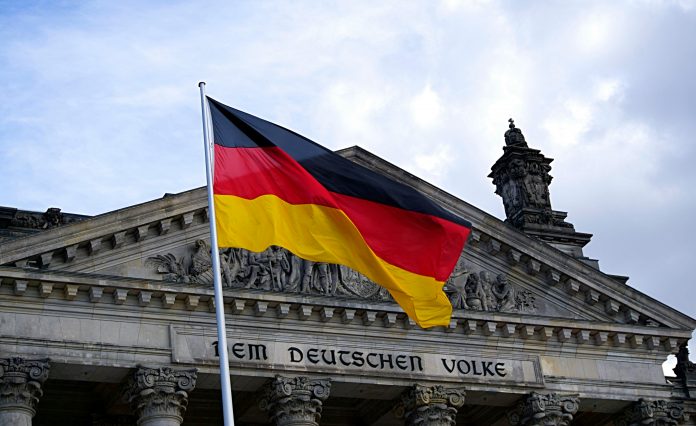

 

German Transport Associations Calling for Urgent Steps Against Sharply Rising Operational Costs 

0

German transport associations are calling on the government, particularly Friedrich Merz, to take urgent steps against sharply rising operational costs in the sector.

Major industry groups representing freight forwarders, logistics companies, road haulage, buses, taxis, and related services have highlighted a cost crisis driven mainly by surging diesel prices which recently hit record highs above €2.50 per liter, energy and electricity taxes, personnel expenses, and overlapping CO charges including a double burden in road haulage from national and EU mechanisms.

The associations are pushing for: Lower energy and electricity taxes. Abolition of the double CO pricing in road transport. Short-term relief measures to improve liquidity and prevent insolvencies. Faster, low-bureaucracy government support to protect supply chains. They warn that without quick action, many companies—especially in road freight—face severe strain, potential bankruptcies, and disruptions to Germany’s logistics network, which is critical for the broader economy.

This pressure comes amid wider economic challenges in Germany: Fuel costs have spiked due to global oil market tensions. Personnel costs in transport and logistics have risen noticeably around 4-5% year-on-year in recent periods. Public transport operators are also dealing with cost pressures, though those discussions often focus on funding for the Deutschlandticket and local ticket hikes rather than the freight-side crisis.

The timing aligns with political transitions, as the industry urges the new leadership to prioritize competitiveness and avoid passing higher costs onto consumers and businesses through price increases or reduced services.In short, the message from the sector is clear: rising input costs especially diesel and regulatory charges are becoming unsustainable, and they want targeted fiscal relief now to stabilize operations and safeguard jobs and supply chains.

This reflects ongoing tensions between climate policy goals and economic pressures on energy-intensive industries like transport. Many mid-sized freight forwarders, hauliers, and logistics firms are struggling with thin margins. Rising diesel prices, combined with CO? charges, energy taxes, personnel costs, and other burdens, have pushed some to the brink.

For a typical truck (10,000 km/month, 30 l/100 km), extra diesel costs alone can add ~€1,200 per month per vehicle. Fleets of 50 trucks face hundreds of thousands in annual hits. Fuel often represents 20–30%+ of total costs in road freight. Companies face pressure from European rivals with lower cost structures. This leads to route gaps, liquidity issues, and challenges in refinancing or investing in greener fleets.

Logistics costs are passed on, with warnings of up to 10% increases in haulage rates. Since trucks handle ~85% of goods transport in Germany, this contributes to higher consumer prices for everyday items (food, retail, manufacturing inputs). It has already fed into broader inflation spikes.

Potential delays, reduced services, and domino effects from insolvencies. Germany’s export-oriented economy and Mittelstand are particularly vulnerable, with knock-on effects on industry and just-in-time production. Logistics is projected to grow only ~0.5% in real terms in 2026 amid these pressures, weak industrial activity, and structural challenges like driver shortages.

The popular Deutschlandticket rose from €58 to €63 per month in January 2026 an ~8.6% hike, with some local and regional tickets also increasing. This affects commuters and occasional users, though the ticket remains subsidized and popular for reducing car use. Public operators face their own cost pressures, leading to debates over federal and state funding adequacy. Higher fares aim to offset revenue shortfalls but could dampen ridership gains from the ticket’s introduction.

Poor road and rail conditions compound issues, hindering efficiency and adding indirect costs for businesses. Without targeted relief, the sector warns of threats to jobs, supply security, and Germany’s competitiveness. Consumers ultimately feel it through higher prices and potential service reductions, while the push for green transition creates tension with immediate economic stability.

The incoming government under Friedrich Merz faces calls to balance these amid wider challenges like energy prices and weak growth. These impacts highlight a classic policy dilemma: climate goals versus protecting a critical, energy-intensive industry that underpins the economy. Short-term pain is evident in insolvencies and price pressures; longer-term effects depend on how quickly adaptation or policy relief occurs.

CoreWeave Shares Jump 13% After Landing Multi-Year Cloud Deal With Anthropic

0

Shares of CoreWeave rose more than 13%, extending an already strong run for the stock as investors welcomed another major customer win just a day after the company unveiled a $21 billion expansion of its cloud partnership with Meta Platforms.

The agreement with Anthropic, whose financial terms were not disclosed, will bring fresh compute capacity online later this year to support production-scale workloads for Claude, one of the fastest-growing frontier AI model families in the market. According to the companies, the partnership will begin with a phased infrastructure rollout, with scope for future expansion as demand accelerates.

The deal is believed to be more than another cloud-services contract. It is seen as a strategic supply agreement in an industry where access to compute has become as critical as access to capital.

The race among leading AI developers is no longer being fought solely at the model layer. Increasingly, it is a contest over who can secure sufficient GPU capacity, data-center power, and networking bandwidth to train and deploy increasingly larger systems.

That is precisely where CoreWeave has carved out its niche. The company, often described as a “neocloud”, specializes in renting out high-performance AI infrastructure built primarily around Nvidia’s advanced GPU architecture.

Unlike traditional hyperscalers such as Amazon Web Services, Microsoft Azure, and Google Cloud, CoreWeave’s business is singularly focused on GPU-intensive AI workloads.

With Anthropic joining its customer roster, CoreWeave said nine of the ten leading AI model providers now use its platform, a striking validation of its infrastructure strategy.

The agreement reflects Anthropic’s aggressive push to lock in long-term compute access amid intensifying competition with OpenAI, Google, and Meta. The startup has been moving quickly to diversify its sources of infrastructure.

Earlier this week, Anthropic signed a long-term capacity arrangement involving Broadcom and Google, securing access to roughly 3.5 gigawatts of AI compute capacity beginning in 2027. Reuters also reported that the company is exploring the possibility of designing its own chips, a move that would mirror the broader industry trend toward vertical integration in AI hardware.

Together, these developments underscore a key reality of the AI boom: compute scarcity remains one of the industry’s most consequential bottlenecks. Practically, frontier labs are beginning to treat compute contracts much like airlines hedge jet fuel or manufacturers secure long-term semiconductor supply.

Any disruption in access to GPUs can slow training cycles, delay product rollouts, and erode competitive advantage.

One of the market’s longstanding concerns has been customer concentration, making the Anthropic deal a major financial win for CoreWeave. Last year, Microsoft accounted for roughly 67% of the company’s revenue, leaving investors concerned about overdependence on a single client.

This new agreement materially improves that picture. CoreWeave now has a diversified roster of blue-chip AI clients, including Microsoft, OpenAI, Meta, and Anthropic, which reduces concentration risk and strengthens revenue visibility.

That diversification matters because CoreWeave’s business is extremely capital-intensive. The company is pouring billions into data-center buildouts, GPU procurement, cooling systems, and power infrastructure.

Recent disclosures show it has been aggressively raising capital to keep pace with demand, including debt offerings and a major $8.5 billion loan facility to fund expansion. This has led some investors to question whether growth is being bought at the expense of balance-sheet strength.

Friday’s rally suggests the market is increasingly willing to look past those concerns, provided the company continues to convert capacity investments into long-duration contracts.

In the space of months, CoreWeave has secured an $11.9 billion agreement with OpenAI, a $21 billion expansion with Meta, and now a multi-year arrangement with Anthropic. That sequence effectively positions CoreWeave as one of the principal infrastructure beneficiaries of the AI supercycle.

The deal also comes with a broader industry implication. The fact that model developers are increasingly outsourcing vast chunks of compute capacity to specialized providers suggests that the AI economy is evolving into a layered ecosystem.

At the top sit the model builders. Beneath them are the compute suppliers, chipmakers, and data-center operators. In this hierarchy, CoreWeave is emerging as one of the most important infrastructure intermediaries, effectively the backbone provider for the model wars.

That makes Friday’s move in the stock more than a reaction to a single contract. Analysts see it as a market verdict on CoreWeave’s emergence as a strategic utility for the AI age. If demand for Claude and other frontier models continues to accelerate, this deal may prove to be another major step in cementing CoreWeave’s role as one of the industry’s most indispensable suppliers.

Bitcoin Breaks Below $72,000 as US-Iran Deal Collapses

0

The price of Bitcoin slipped below the $72,000 mark as geopolitical tensions resurfaced following the collapse of high-stakes negotiations between the United States and Iran, wiping out optimism that had recently fueled a market rally

The crypto asset traded as low as $71,254  on Saturday after U.S. Vice President JD Vance confirmed that marathon negotiations with Iran in Pakistan had ended without a deal.

Vance reportedly held direct face-to-face talks with Iranian officials in Islamabad, the first high-level engagement of its kind since the 1979 Iranian Revolution. The negotiations, which lasted a grueling 21 hours and were hosted by Pakistan, ultimately collapsed.

In a brief press conference before departing Pakistan, Vance said,

“We’ve had a number of substantive discussions with the Iranians. That’s the good news. The bad news is that we have not reached an agreement, and I think that’s bad news for Iran much more than it’s bad news for the United States of America.”

He added that Iran had refused to accept key U.S. terms, particularly regarding nuclear weapons development. Vance described the outcome as disappointing but left the door slightly open for future talks, while emphasizing that the U.S. had presented its “final and best offer.”

The failure comes after a recent two-week ceasefire between the U.S. and Iran had briefly boosted risk assets, pushing Bitcoin above $72,000 earlier in the week. Markets had priced in optimism around diplomatic progress, but the latest stalemate reignited geopolitical concerns.

The announcement triggered immediate selling pressure across the cryptocurrency market. Bitcoin, which had surged above $73,000 earlier in the week on easing tensions, dropped as sentiment shifted from “risk-on” to caution, highlighting once again how sensitive the crypto market remains to geopolitical developments.

According to real-time data by Watcher Guru, over $115 million in cryptocurrency positions were liquidated across major exchanges in just the past 60 minutes.

Ethereum (ETH), Solana (SOL), and other major altcoins also posted losses of 1–3%. Traders cited renewed uncertainty over potential escalation in the Middle East, including risks involving the Strait of Hormuz and oil supply disruptions. At the time of this report , BTC was trading as low as $71,607.

Geopolitical Events on BTC Price Action And Outlook

Geopolitical events have increasingly influenced Bitcoin’s price action in recent weeks. While often called “digital gold” for its perceived safe-haven qualities, BTC has at times traded more like a risk asset, reacting strongly to headlines involving U.S. foreign policy and global tensions.

Crypto analysts noted that the drop appeared to be driven by short-term risk-off sentiment and possible liquidation cascades, rather than fundamental changes in Bitcoin’s long-term outlook.

The breakdown in talks raises questions about the future of the fragile ceasefire and the broader conflict involving Israel and the region. Analysts warn that prolonged uncertainty could keep oil prices elevated and weigh on global risk appetite.

For Bitcoin holders, the episode highlights the asset’s sensitivity to macro and geopolitical headlines in the current environment. Some traders view the dip as a buying opportunity, arguing that any eventual resolution could spark a strong rebound.

As of now, Bitcoin remains in a broad consolidation range between roughly $68,000 and $73,000, with eyes on upcoming U.S. economic data and any further updates from the White House on Iran.

Anthropic Takes Aim at Microsoft’s Core Franchise With Claude for Word, Betting Big on Legal and Enterprise Workflows

0

Anthropic’s beta launch of Claude for Word marks a fresh escalation in the enterprise AI battle, moving Claude deeper into the heart of daily office workflows and directly challenging Microsoft’s dominance in document software, legal tech, and knowledge work automation.

Anthropic has opened a new front in the enterprise AI war with the beta launch of Claude for Word, a move that goes far beyond another productivity add-in and signals a direct challenge to Microsoft’s hold over workplace software.

By embedding Claude natively into Microsoft Word, the AI startup is making an aggressive push into one of the most entrenched enterprise ecosystems in the world: document creation, contract review, memo drafting, and collaborative editing.

The immediate target appears to be high-value professional work, particularly legal services, finance, and enterprise advisory functions.

Anthropic said the new add-in is “designed for professionals who work extensively with documents, particularly in legal review, financial memo drafting, and iterative editing.”

The move is seen as not a mass-market writing assistant aimed at casual users but a deliberate attempt to move Claude into specialized, workflow-intensive environments where document precision, auditability, and revision control are essential.

For the legal profession in particular, the product has been built around real-world review processes rather than generic text generation. Users can ask the model to interrogate a contract and receive answers with clickable section citations, a feature that closely mirrors how lawyers and deal teams work through agreements.

Anthropic’s own example prompts underscore this focus. They include: “Summarize the key commercial terms: parties, term, governing law, and anything off-market.”

Other prompts include: “Flag provisions that deviate from standard market position, ranked by severity,” and “What did the counterparty change, and which revisions are dealbreakers?”

These are not generic prompts. They map directly onto core tasks in M&A, financing documentation, commercial contracts, and litigation review. That makes the product potentially significant for law firms, in-house counsel, private equity shops, and investment banks, where document turnaround time directly affects deal velocity.

The tracked changes integration may be the most strategically important feature. Rather than generating disconnected text in a separate chat window, Claude works inside the document layer itself.

Every edit can be accepted or rejected as a formal revision, preserving Word’s native redlining workflow. This is crucial for enterprise adoption because it keeps humans firmly in the review loop while making AI output operationally usable.

Anthropic says the tool can “edit selected text while preserving surrounding styles, numbering, and formatting,” and that a “tracked changes mode” lets users accept or reject every edit as a revision.

That solves one of the major friction points in enterprise AI deployment: workflow disruption. Instead of forcing professionals to leave Word, copy content into a chatbot, then manually paste it back, Claude is now positioned directly where the work happens.

Strategically, this is a far more consequential move than it may first appear for competitive reasons.  Microsoft has long treated Word, Excel, and PowerPoint as the cornerstone of its software empire, and its Copilot strategy is built on AI-enhanced productivity across that stack.

Anthropic is now effectively inserting its own intelligence layer into Microsoft’s moat. This is especially notable given that Claude had already been pushed into Excel and PowerPoint earlier this year, expanding its presence across the Office ecosystem.

The broader implication is that Anthropic no longer wants to be viewed primarily as a developer-first AI company. For much of its commercial rise, Claude has been strongly associated with coding, developer tooling, and enterprise APIs.

This latest rollout signals a much broader ambition. The company is now explicitly targeting knowledge workers across legal, finance, HR, strategy, and executive teams. In effect, Anthropic is positioning Claude not as a chatbot, but as an enterprise operating layer.

This is where the competitive pressure on Microsoft becomes more interesting. While Microsoft still controls the software environment, Anthropic is competing at the intelligence layer. That means the battle is shifting from who owns the application to who owns the decision-making and drafting workflow inside the application.

This raises a larger question about the future of productivity suites for investors and enterprise software watchers. The next moat may no longer be the document container itself. It may be the AI system that understands context, interprets legal nuance, tracks revisions, and accelerates professional decision-making.

If that thesis proves correct, Anthropic’s Word integration could be an early sign that AI companies are beginning to decouple value creation from the traditional software platforms they sit on top of.

For now, availability remains limited to Team and Enterprise plans, which reinforces the premium, business-first positioning of the launch.

The bottom line, however, is that Anthropic is moving aggressively beyond developers and into the core workflows of white-collar enterprise work, and in doing so, it is challenging one of the most durable franchises in corporate software.