DD
MM
YYYY

PAGES

DD
MM
YYYY

spot_img

PAGES

Home Blog Page 5307

Female Genital Mutilation In Nigeria On The Rise, Calls For An End

0

Currently, we live in the 21st century where the world has evolved and is still evolving. It is disheartening to know that an estimated 200 million women and girls around the world have undergone female genital mutilation, with 80% of the cases in Africa alone. These statistics shows that there are still primitive people living in the stone age especially in Africa, if not this practice would have long been jettisoned. The United Nations recently marked International day of zero tolerance for female genital mutilation on February 6.

Majority of the girls who have undergone this practice are below 15 years of age. The surprising thing about female genital mutilation is that it is more common among elites. Female genital mutilation has caused more harm than good to these ladies who have gone through it. The most painful thing about female genital mutilation is that it is irreversible which also causes health issues coupled with a series of complications. Girls who have gone through it often experience urinary retention, pelvic infection, pain during intercourse, epidermoid cysts, etc. It has zero health benefits.

The United Nations children’s fund, Unicef stated that Nigeria accounts for the third-highest number of women and girls who have undergone genital mutilation. The United Nations strive for its full eradication by 2030, with the backing of sustainable development goals. While in power, President Goodluck Jonathan signed a decree to illegalize female genital mutilation in 2015, but it was poorly enforced. It is believed that there will be a population explosion in 2030 in the number of those affected by FGM in Nigeria.

It’s obvious a lot of people, agencies and governmental bodies are treating the issue of female genital mutilation with levity, which is the reason for the rise In FGM cases. This indeed is a wake-up call for everyone in the country, from top government officials, schools, communities, NGOs to all join hands on deck, to ensure that this menace is eradicated. Although some NGOs have helped in sensitizing and creating awareness on the dangers involved in female genital mutilation.

The process of social change in the community with a collective coordinated agreement to abandon the practice of “community-led action” is therefore essential. With improvements in education, social status of women, and increased awareness of the dangers of female genital mutilation. There should also be constant use of mainstream media to create awareness of the dangers of Female Genital Mutilation. Billboards mounted on various strategic positions talking about the dangers of FGM would play a very important role in curbing it. The more educated, more informed, and more active a woman is, the more she can appreciate and understand this harmful practice of Female genital Mutilation.

One of the reasons why there is a rise in the cases of female genital mutilation is that there is no federal law prohibiting the practice in the country. This is one of the main reasons for the slow progress in declining the prevalence of female genital mutilation. I believe once laws are established by the government, stating that people who carry out such acts would be penalized, female genital mutilation will be reduced. At the grassroots, campaigns should be held regularly to enlighten the people on its dangers. There is a strong need to ensure that this practice is eliminated because it has exposed a lot of women and girls to so many health challenges. This can only be achieved with an approach where legislation, health care professional organizations, empowerments of women in the society, and education of the general public at all levels with an emphasis on the dangers of female genital mutilation are taken seriously.


Tekedia Mini-MBA (Feb 7 – May 7, 2022) Edition 7 has started; Registration continues …

0

The 7th edition of Tekedia Mini-MBA has started; registration continues for the self-paced program. It is an innovation management 12-week program, optimized for business execution and growth, with digital operational overlay. It runs 100% online. The theme is Innovation, Growth & Digital Execution – Techniques for Building Category-King Companies. Cost is N60k or $140; go here and register.

The sector- and firm-agnostic management program comprises videos, flash cases, challenge assignments, labs, written materials, webinars, etc by a global faculty coordinated by Prof Ndubuisi Ekekwe. It will run from Feb 7 – May 7, 2022.

If you have not joined, now is the time to register.


Tekedia Mini-MBA is an innovation management 12-week program, optimized for business execution and growth, with digital operational overlay. It runs 100% online. The theme is Innovation, Growth & Digital Execution – Techniques for Building Category-King Companies. All contents are self-paced and recorded which means participants do not have to be at any scheduled time to learn.

This sector-agnostic program has more than 200 faculty from leading companies like Flutterwave, Microsoft, MTN, Access Bank, Afreximbank, KPMG, Shell, Schlumberger, Nigerian Breweries, etc, handling courses in more than 32 domains of business and leadership. More students graduated from it in 2020 than any school in Africa. From executives in Singapore to Nigerian bank managers to startup leaders in India, the last edition attracted learners from 35 countries and their testimonials are positive.

The acquired capabilities have helped learners to get new jobs, get promotions, raised funding, and advanced their careers and the companies they work for. The Institute is currently working with dozens of companies, providing a mechanism to co-design growth strategies in companies. More than 30% of learners are sponsored by companies and those firms include Soulmate Industries, Lily Hospitals, Problem Space New York, to name just a few.

Prof Ndubuisi Ekekwe, a World Economic Forum YGL and a regular writer in the Harvard Business Review, and who holds two PhDs and four master’s degrees, including a PhD from Johns Hopkins University, coordinates the program. He recently licensed a robotics patent to the United States Government. The ace circuit designer co-designed the accelerometer used in Apple iPhone’s early generations.

Besides the program, participants get other benefits, including Prof Ekekwe’s books like “The Dangote System: Techniques for Building Conglomerates”, Career Week, Innovation Week, Special Labs on Remote Work Administration (Krozu, USA), Decentralization Finance (BoundlessPay), Digital Security (Infoprive), among others, as coordinated by the Institute.

Some solid ways to legally protect your business

0

Starting a business and sustaining a business  is a big deal especially in this part of the world where businesses are likely to fail than flourish and that’s why as a business owner you need to always cover every loophole that would expose your business to poachers, copycats or impostors and even from the general public. 

In order to remain in business, you need to constantly protect your business judicially and judiciously  as your brain child and as your intellectual property. 

Here are some of the ways how you as a business owner can legally  protect your budding or booming business or startup. 

  1. Register your business with the corporate affairs commission (CAC). The first step of starting a business is registering that business with the corporate affairs so that the business can legally become a body corporate. One of the benefits of registering your business with the corporate affairs is that your business name will be reserved and you have the exclusive right to be the sole owner and  user of such a name you have given your business and customers and associates have come to know your business with. When you register your business with the corporate affairs, your business name becomes protected for you against impostors who would want to ride on the business name that you have built to become a household name. Also, your business becomes a statutory body that can sue and be sued. 
  2. You can also protect your business by creating trademarks and patents  for your business inventions and innovations. You can trademark your business logo, the designs, the brand and every other intellectual property that spanned off your business. Whenever you trademark any of your business intellectual properties, that becomes protected legally and you have exclusive right to that logo, designs  or brand and you can sue for infringement whenever another person uses your trademarked property without your expression permission. 
  3. You can also protect your business by making use of contracts and contractual terms duly drafted and signed by you and anybody you want to partner or go into business with. You can make use of contracts to protect your business by inserting clauses like; non disclosure agreements, your business rights and remedies and even your own rights as the business owner. 
  4. If your business runs a website, you can as well protect your business and your business website by inserting privacy policy and terms and conditions on the website. 
  5. You can also protect your business by copyrighting your contents especially if you are in the business where you have to constantly create and put out contents. Copyright (or author’s right) is a term used to describe the rights that creators have over their literary and artistic works. You can copyright your literary works like books, articles, paintings, videos, graphics, maps, even your database and computer programs can be copyrighted. Surprisingly, you can also copyright your social media posts and contents. 
  6. If you are in a business where you constantly create and manufacture products you should protect that blossoming business of yours by patenting your products against intellectual property theft. A patent is an exclusive right granted for an invention, which is a product or a process that provides, in general, a new way of doing something, or offers a new technical solution to a problem. 
  7. If you are in the business of sales, you can protect your business by inserting refund or return policy clauses  or making known your refund or return policy in every goods that a customer has purchased or is taking home. These refund or return policy clauses will protect you as a salesperson from unsatisfactory customers who would want to take advantage of you. 

These are some of the ways that you as a business owner can legally protect your business to avoid going into unnecessary legal battles or in some extreme cases losing your business to competitors. 

Tekedia Capital Portfolio Startup Mecho Autotech Raises $2.15M, Oversubscribed by 300%

0

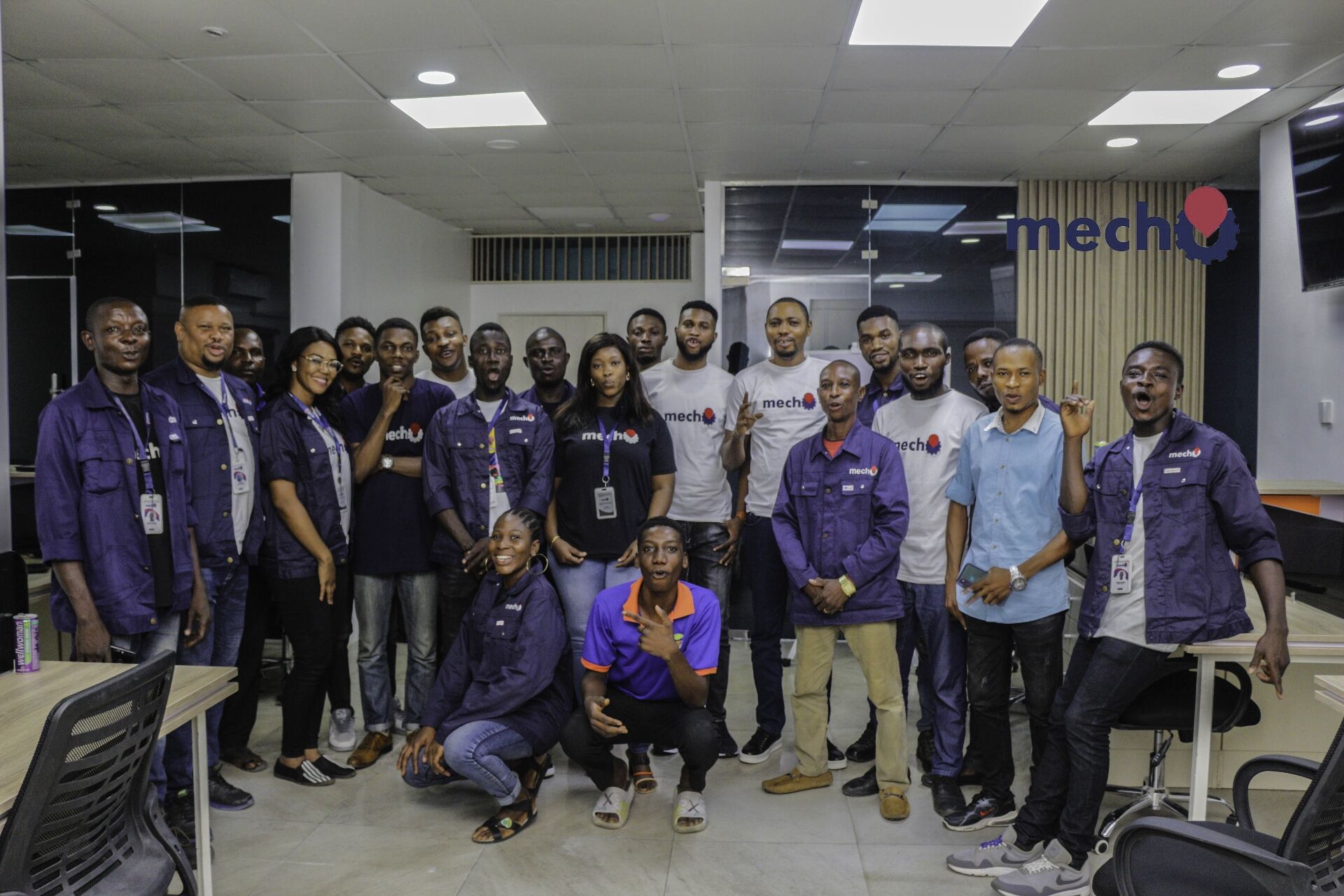
Join me to congratulate Mecho Autotech Ltd for raising  $2.15 million. Tekedia Capital and our Syndicate members congratulate Olusegun Owoade and Ayoola Akinkunmi for what they have done in this amazing company. Because of their equality, the round was oversubscribed by over 300%.

When Mecho pitched to our members last year, it took days for them to raise so much money that Mecho had to take only about 30%.  It was a very tough one because one of the most difficult issues I deal with here at Tekedia Capital is telling members that we received more money than we needed.  But it is a good problem to have as that shows that we have a process to discover great companies. Join Tekedia Capital Syndicate today and own a piece of the empires of the future.

Mecho Autotech is a robust and fully interactive technology platform that delivers seamless vehicle maintenance, inspection, and repair services via a robust network of certified mechanics and automobile technicians. Tekedia Capital has invested in two rounds of this business and we’re super-happy for its promises.

—-Press release

Mecho Autotech raises $2.15m seed investment to expand vehicle maintenance and repair services

 The round was oversubscribed by over 300% and is the largest investment to date for a vehicle maintenance startup in sub-Saharan Africa. Since launching in April 2021, Mecho Autotech has serviced over 2,000 vehicles for its B2B customers. 

LAGOS, February 2022 — Mecho Autotech (the Company), a Y Combinator-backed Nigerian vehicle repair and maintenance startup, announced today it has closed a $2.15 million seed investment. Future Africa, Hoaq Capital, Cathexis Ventures, V8 Capital, Silver Squid and Tekedia Capital participated in the round. The round was oversubscribed by over 300% and is the largest investment to date for a vehicle maintenance startup in sub-Saharan Africa.

Mecho Autotech will use the capital to expand its multi-channel service capacity, engineering team, and marketing budget for B2C acquisition. The Company operates a digital platform that connects B2B and B2C customers with both in-house and third-party mechanics. Mecho’s in-house capacity consists of workshops, known as Mecho Shops, and Mecho Mobile operations. To date, the Company has onboarded over 7,000 third-party mechanics to the platform with workshop and mobile operations.

To address the large and difficult task of servicing corporate fleets, Mecho has built three Mecho Shops across Lagos and will continue to expand this capacity. Since launch in April 2021, the Company’s B2B customers include some of Nigeria’s largest corporate fleets including Uber partner Moove, Toloram Group, and UAC Group with several other notable SLAs in progress.

In addition to the growing B2B revenue base, Mecho has expanded into service for B2C customers with the launch of its B2C app in January. The Company aims to grow in B2C via a subscription service model and individual service requests with a target of 25,000 customers this year.

Moreover, Mecho is developing a spare parts value chain which has already served over 100 third-party mechanics and several large ticket inventory purchases for B2B customers.

Africa’s automotive repair and maintenance industry is highly fragmented, undercapitalized, and fraught with poor service outcomes due in part to misaligned incentives. Nigeria has over 12 million registered vehicles, and owners spend an average of $650 per year on maintenance and repairs. Approximately 90% of Nigeria’s car market consists of used vehicles with only 5% of car sales financed. Despite the sheer number of used cars on Nigeria’s roads which require check-ups to prevent breakdowns, regular vehicle maintenance is uncommon. Existing services providers, the majority of whom are not formally trained and lack sufficient tools and equipment, are often inefficient and provide inconsistent service quality.

“When you consider the state of Nigeria’s used cars and our roads, car maintenance isn’t optional. We want to automate high-quality vehicle repair and maintenance for Nigerians by making it easy, convenient, and affordable. We aspire to build a maintenance culture in Nigeria and beyond to keep roads and people safe,” said Olusegun Owoade, Mecho Autotech CEO/co-founder.

“At Future Africa, our thesis is to back founders solving hard problems in large markets. With over 12 million cars on our roads and more on the way, leveraging technology to bring order to vehicle maintenance and repair is overdue. We are delighted to work with the Mecho Autotech team as they brilliantly execute on building out the vehicle repair value chain across Africa and create new and decent highly skilled auto repair jobs.,” said Iyinoluwa Aboyeji, Future Africa, Founder and General Partner.

ABOUT MECHO AUTOTECH 

Mecho Autotech is a multi-channel platform for auto repair and maintenance in Nigeria.  The Company is on a mission to foster a vehicle maintenance culture in Nigeria to keep roads and passengers safe. Founded in 2021 by Olusegun Owoade and Ayoola Akinkunmi, Mecho Autotech offers repair and maintenance services to both businesses and consumers through in-house and third-party service capacity which has passed rigorous assessments.  The Company has both workshop and mobile service capabilities.

When consumers download the Mecho Autotech app, they enter their vehicle’s unique identification number (VIN) or basic vehicle information. Based on the vehicle’s specifications, the Mecho Autotech algorithm calculates a routine vehicle maintenance program and subscription fee which can be paid monthly, quarterly, or annually. Mecho offers mobile service to meet a customer at their own location, if preferred. Customers can also go to a Mecho Autotech workshop or partner garages for service. For business customers, Mecho Autotech can manage fleet-wide needs with flexibility to request repairs on demand.

The Mecho retail app is available on both iOS and Android. Find out more at https://www.mechoautotech.com.

A quick look at financing options for startups

0

Every business/startup requires funds from sources other than the founder, if not at the beginning, then somewhere during the life cycle of the business. It could be funds needed for the purchase of inventory and equipment, Operating capital, scaling, expansion, and so on.

The major drawback of loans and why many founders do not explore this option is first the requirement of substantial collateral and a good credit record. Taking a loan can also mount undue pressure on the business since one is expected to make periodic repayments whether or not the business is making a profit. There is also the issue of the interest rates and other terms and conditions to be fulfilled.

Due to this, most startups will bootstrap, source funding from friends and family, get some early investors, and seek grants where possible. There is always a wide option, even though some first-time founders dread the topic of fundraising. Some of the most popular are angel investors and venture capitalists.

Here is a quick explanation. Angel Investors are high net worth individuals who pull out funds from their deep pockets to finance the startup. It requires conviction in your product or service because the angel investor needs to be sure that the funds he is injecting into your business will not go down the drain. It could be a one-time injecting of funds, or a regular (predetermined) injecting of funds to carry the company to profitability. There could also be a predetermined lock-in period of investments, depending on the regulations of the country where the startup is based.

Venture capital comes from companies or groups that raise funds to fund startups that meet their requirements. They could be focused on a sector or group of sectors. Even if the startup is young, they can get venture capital if they have a valid solution to take to the market and a strong team behind the wheels.

Whatever source you are getting the funds from, here are some financing options you could be considering while fundraising.

Equity Financing: Raising funds through equity means you would be bringing the investors in as co-owners of the startup. By contributing to the business capital, they will share in the business risks as well as profits. Your equity partners could be friends, venture capitalists, private equity investors, or angel investors.

As a rule, you should involve legal experts when using the equity option, and ensure to do a proper valuation of your business.

Convertible debts: This is a loan an investor makes to a company using an instrument called a convertible note. The note will state the amount invested, the interest rate, and the maturity date for the principal and interest to be repaid. It is called a convertible note because the intent is that the loan converts to equity if and when the company does equity financing. There are a lot more details to the convertible note/debts, and the founder will be properly advised on this if he chooses to use it.

SAFE (simple agreement for future equity): This is similar to the convertible notes/debts but there is no interest on the sum invested, and there is no maturity date where it is to be repaid. However the safe can be converted. Both parties will usually work out the modalities of what they are willing to settle for.

There is another called Venture Debt. This involves a lender (usually specialized banks) offering a startup some working capital for specific projects. This option is open to startups that do not have positive cash flows or significant assets to use as collateral but already have some venture backing.

Some other not-so-popular financing options are Crowdfunding or going through incubators. Founders will generally have to do some research and find the options that are best suited for the growth stage the startup has attained.