DD
MM
YYYY

PAGES

DD
MM
YYYY

spot_img

PAGES

Home Blog Page 5309

X-raying The Abuse Of Power In Africa

0

Even if I lack the locus standi to prosecute some persons or officials in our midst, I still strongly believe I’ve some amount of immunity to justify any scenario taking place within my territory.

In other words, most of us are naturally gifted with the initiative and prowess of putting up a judgment over any occurring drama or observation irrespective of our professions.

It could be recalled that in August 18, 2011, Justice Isa Ayo Salami of Nigeria was suspended as the President of the country’s Court of Appeal by the National Judicial Council (NJC) when the said body found him guilty of gross misconduct following his refusal to apologize to former Chief Justice of Nigeria (CJN), Justice Aloysius Katsina-Alu whom he accused of victimizing him for refusing to compromise the then gubernatorial election dispute in Sokoto State.

Subsequently, the Judicial body (NJC) abruptly turned round to recall the principal judicial officer and recommended him to the presidency for reinstatement without stating any reason for the urgent recall.

In its remark, the NJC said that it’s within its constitutional powers to recall and reinstate any justice of the Court of Appeal, or any court of competent jurisdiction, and does not require the President’s consent.

Come to think of it, if truly the presidential immunity was not required or that they don’t owe the presidency any reason whatsoever for the recall, why did they find it difficult to understand that the public opinion or view was of high importance in any action meant to be taken by the body?

More so, a few weeks earlier, the then Nigeria’s President, Dr. Goodluck Jonathan granted a presidential pardon to the convicted former Governor of Bayelsa State, Diepreye Alamieyeseigha and the ex-Managing Director of the Bank of the North, Mr. Shettima Bulama, among others based on the decision taken by the Council of State.

The bitter and controversial side of the story was that such a decision was taken without minding or considering the anticipatory reactions of the citizenry or the general public. This means that the action was taken out of personal interest.

The funniest part was that, Chief Alamieyeseigha was extricated while the United Kingdom (UK) was still seeking for his extradition to the (UK) to be tried for a crime he allegedly committed.

On the other hand, sometime ago, one of the banner headlines of The Punch Newspaper read, “Akpabio admits rigging primary election”. The inside of the Page 8 of the paper stated that the then Akwa-Ibom State Governor, Chief Godswill Akpabio, who is now the Minister of Niger-Delta Affairs, allegedly confessed that he manipulated the result of the 2007 People’s Democratic Party (PDP) Senatorial Primary election in the State by single-handedly replacing the winner with the name of his preferred candidate.

Based on what the said paper wrote, the then sitting governor said the manipulation was necessary in order to give the people of Ikono and Ini LGAs a sense of belonging. According to him, the people of the aforementioned LGAs were yet to produce a senator since 1960 till 2007. Consequently, his political equation yielded the emergence of Sen. Aloysius Etok who hails from the affected area.

Notwithstanding, even if the group in question was yet to produce a senator, did it call for rigging? Also, if truly that rigging was imposed as published, must it be confessed to the public hearing, thereby portraying impunity? That could best be described as impunity begotten by extreme immunity, which has hitherto been the case on the African continent.

Apart from the above anomalies, many similar phenomena have been lingering on the socio-political rostrum of most countries in Africa. Such a phenomenon has become a recurring decimal that one cannot just fathom the number of times it takes place in our polity on a daily basis. In recent times, it seems Nigeria has suddenly become the engine room of such anti-social act.

The public office holders or the political leaders in Africa, particularly Nigeria, should endeavour to live up to the expectations of their subjects. They ought to learn how to carry the entire public along in their respective scheme of works or obligations.

For sanity, or effective and efficient democratic system, to be actualized in the Nigerian State and that of other African nations, the rule of law or due process must be properly adhered to, by the concerned authorities. Hence, the congress/public opinion must not be left out before carrying out any action.

Nigeria as a country is obviously and indisputably of age, thus old enough to know her right from her left. Therefore, she must endeavour to tell herself nothing but the truth if we are sincerely determined to embrace the anticipated change.

Sixty one years as an independent nation, and over a century as an entity, is enough numbers that can guarantee a concrete existence as a people.
Meta Agrees to Pay $90m in Settlement for Tracking Users Offline

0

Meta’s private data problems keep coming around even when everyone thinks the social behemoth has got a break. Besides current cases emanating from tighter scrutiny by antitrust watchdogs, cases from the past keep resurfacing.

Earlier this week, Facebook agreed to a multimillion dollar settlement for a decade-old lawsuit. The 2012 suit said Facebook used plug-ins and cookies to track visits to third-party websites containing “like” buttons.

Meta agreed to pay $90 million to settle the lawsuit that would be one of the 10 biggest data privacy class action settlements ever if approved. The proposed settlement was filed late Monday and still requires court approval, according to court documents.

Meta has so many fresh antitrust concerns and has been fighting to keep its head up amid the drowning impact. Lately, GDPR, Europe’s data privacy watchdog, has been tightening its rules, making it more difficult for Facebook to harvest data for targeted ads.

The 10-year old lawsuit has dragged along many other cases that came along, prompting Facebook’s decision to move for settlement. Insider reports below that the events leading to the lawsuit involved improperly-collected data that took place about 12 years.

The 2012 lawsuit alleges that, between April 2010 and September 2011, Facebook violated privacy and wiretapping laws by using plug-ins to store cookies tracking users’ visits to third-party websites that contained “like” buttons. The social media site had users’ permission to track them while they were logged in but promised to stop when they logged out.

Besides the $90 million sum, which would be distributed among affected users, the settlement would require that Facebook delete data improperly collected on users through the use of this practice.

Meta did not immediately respond to Insider’s request for comment, but a spokesperson told Variety, “Reaching a settlement in this case, which is more than a decade old, is in the best interest of our community and our shareholders and we’re glad to move past this issue.” As part of the settlement, Meta denies any wrongdoing.

The lawsuit was dismissed in 2017 when a federal judge said the plaintiffs failed to show they had a reasonable expectation of privacy or that they suffered economic harm. In 2020, a federal appeals court revived the case, saying there is economic harm in such a situation. Facebook tried to have the Supreme Court take up the case, but it declined, allowing the federal appeals court’s decision to stand.

Last year, Facebook agreed to pay $650 million to settle a separate privacy lawsuit, this one alleging the company’s tagging feature violated an Illinois law prohibiting the collection of biometric data without prior notification and written consent. On Monday, Texas Attorney General Ken Paxton announced the state is suing Meta over Facebook’s now-defunct facial recognition program.

Two weeks ago, Meta threatened to pull out of Europe over the decision of regulators to halt the social media giant from transferring data from European users to the United States. These unending cases are stifling Meta’s chances at growth. The company started the year at nearly $1trillion valuation, but has lost about $250 billion, taking its valuation to around $600 billion.

Oxford University,  i mere nke oma n’asusu Igbo

0

Poor UNN and Abia State University. Now the politicians have another reason to travel to the UK to study, and possibly leave both behind. Yes, have you studied Igbo in Oxford? Lol. Congratulations Oxford, all of us are coming to study Igbo.

Seriously, I congratulate Oxford even as I continue to thank Google. Google is driving most of the core developments in Igbo Language since Prof FC Ogbalu and co worked on the 1978 Igbo Convention, and pushed for Igbo Izugbe with the evolution of modern Igbo alphabets (Mkpuru Edemede Igbo) to 36. I was still in primary school when we added “ch”.

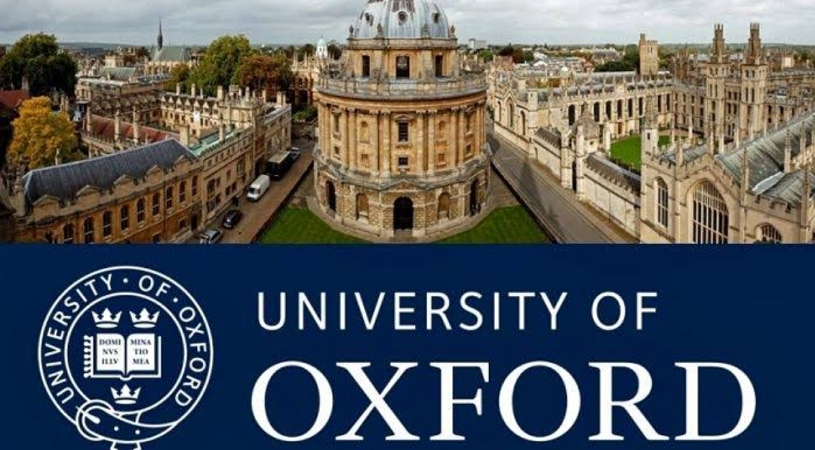
Just recently, the University of Oxford, England introduced the teaching of the Igbo language as a course in its institution. The University inducted Mr. Emmanuel Ikechukwu Umeonyirioha as the first official Igbo lecturer in the University. The University of Oxford is known to have offered modern languages since 1724 with the Igbo language as its latest entry. Feeling ecstatic, Mr. Emmanuel took to his Twitter page to disclose this groundbreaking achievement.

In his words, “It is official that I am the first official Igbo language lecturer at the number one university in the world, the University of Oxford. Our induction happened today by Mario Sadoux, head of modern language programs, University of Oxford language center. This became possible in the account of the James Currey society. This is the first time the Igbo Language will be taught at the University. History has been made. I am so happy and grateful for this opportunity. I promise to make the Igbo language and culture known to the world”.

Any “c” written in Igbo without “h” is not Igbo Nzugbe as “c” cannot exist in Igbo without “h”. So, you have “ch” like Chioma. My senior Igbo teacher in secondary school, Papa Iyke, was unforgivable for such a mistake; 

More so, they restructured the translation of English to Igbo and vice versa. For example, to translate “The man is a fox”, figuratively, to Igbo, you do not write that the man is “nk?ta ohia” which is a direct Igbo name for fox. Rather, you write that the man is a tortoise because while the English know fox as a cunning animal, the equivalent animal in Igbo is tortoise. So, you say the man is “mbe”, Igbo name for tortoise.

Oxford,  i mere nke oma. Adi m njikere ikuziri. Enyere m akara A n’asusu Igbo na WAEC (Oxford, you have done well. I am available to teach. I made A in Igbo in WAEC)

University of Oxford Adds Igbo Language to Special Curriculum


University of Oxford Adds Igbo Language to Special Curriculum

3

Just recently, the University of Oxford, England introduced the teaching of the Igbo language as a course in its institution. The University inducted Mr. Emmanuel Ikechukwu Umeonyirioha as the first official Igbo lecturer in the University. The University of Oxford is known to have offered modern languages since 1724 with the Igbo language as its latest entry. Feeling ecstatic, Mr. Emmanuel took to his Twitter page to disclose this groundbreaking achievement.

In his words, “It is official that I am the first official Igbo language lecturer at the number one university in the world, the University of Oxford. Our induction happened today by Mario Sadoux, head of modern language programs, University of Oxford language center. This became possible in the account of the James Currey society. This is the first time the Igbo Language will be taught at the University. History has been made. I am so happy and grateful for this opportunity. I promise to make the Igbo language and culture known to the world”.

Ever since the news broke out, congratulatory messages have been pouring in especially from Nigerians commending Dr. Emmanuel for such a great feat and also acknowledging Oxford University for deeming it fit to add the Igbo language to their special curriculum. The Igbo Language, culture, and tradition seem to be gaining massive recognition lately. A few years ago, BBC worldwide service and BBC Africa became the first international broadcaster to set up an Igbo language service. Also last year the Igbo community recorded a remarkable achievement as the Igbo Apprenticeship system ” Igba Boi” was approved by Harvard Business School London as proposed by erudite Professor Ndubisi Ekekwe. There seems to be no stopping for the Igbo community as some of its sons relentlessly continue to project their culture and tradition on the world map.

The feeling of knowing that the Igbo language is now being studied at Oxford University is unquantifiable. UNESCO in 2012 predicted that the Igbo Language might become extinct in the next 50 years. This achievement will not only preserve the proposed “dying language” but it will give rise to the Igbo language being spoken in Europe not just by Nigerians In Diaspora but Europeans inclusive. This is indeed a huge step to sustain the dying Igbo Language.

I would not fail to acknowledge the Late Professor Chinua Achebe who through his books projected the Igbo language to the world. He once stated that writing in English, the language of the imperialist conquerors of Nigeria didn’t really pass his message ideally. Achebe’s stated goal was to create a “new” and more African English. He integrated Igbo words and phrases, proverbs, folktales, and other elements of communal storytelling into the narrative to record and preserve African oral traditions and to subvert the colonialist language and culture.

Now that the Igbo Language has gained global recognition, this should be a wake-up call to schools in Nigeria especially those in the Southeast region. There should be proper advocacy to encourage the promotion and speaking of Igbo Language amongst school children. According to research, it states that an average child enters the classroom with about 6,000 vocabularies in their mother tongue. When the child has no background knowledge of the mother’s tongue, proper comprehension of the language can pose a challenge. It is important to note that when a language dies, future generations lose a vital part of the culture that is necessary to fully understand.

How To Make Yourself Valuable In The Workplace

0

No one is indeed indispensable, anyone can become unnecessary, sacked, or not needed. But then there are those who when they are not around, things won’t just go right. With the high rate of unemployment and how competitive the labor market is, one needs to note that making themselves indispensable at work is an ideal way to ensure job security and also be very much needed in the place of work. An employer would not hesitate to sack an employee who he finds incompetent in the place of work.

One must understand that being indispensable doesn’t necessarily mean that the employer must have a soft spot for you, it entails you putting in the required efforts and skills necessary to be valued in the workplace.

There are so many ways how you can make yourself indispensable in the workplace, but I will be focusing on four (4) of them

Go Beyond Your Expectations: Not everyone is willing to go beyond their expectations and this can be very risky in the workplace because it puts their position in jeopardy. Even though an employee has been assigned to perform a specific role in the workplace, they shouldn’t perform only the role required of them If they want to remain valuable. One secret to being indispensable in the workplace is to accept extra responsibilities. This will not only show that you are hardworking, but it will also show that you are dedicated to the company. Most of the time, it is not everything that the manager will dictate, as someone who is industrious and efficient, the manager expects you to go outside your way to ensure that you bring about progress in the workplace.

Keep Your Skills Up-To-Date: It is not enough that the skills that got you the job will be relevant in the next five years. The world is rapidly evolving, one needs to move with the pace so they won’t be stagnant. As technology evolves, so must professionals. Without even stating it, most bosses expect their employees to keep their professional skills up to date. Staying abreast of the latest developments in your industry can show continuous improvements and help you become a more efficient and effective employee. Asides from updating your skill, your educational degree is also not left out. Furthering higher such as getting a master’s degree can make you indispensable and also get you promoted in the workplace. I know a story of a young man who was frustrated that he never got promoted in his workplace while his colleagues were promoted to bigger positions. He later discovered that most of his colleagues furthered their studies that earned them promotions. Those who had just a bachelor’s degree went ahead to get a master’s degree. Some employers are not lenient to keeping employees who refuse to upgrade, they lay them off right away.

Proffer Solutions And Generate New Ideas: Most managers would not want to work with employees who are solely dependent on them for everything. Once something goes wrong in the workplace, rather than looking for a way to fix it, they would always run to the manager to complain. Such employees do not last in the place of work, because they are often seen as being incompetent. An employee who looks for ways to improve any area of their role or beyond in the workplace is usually indispensable. A manager values those who proffer solutions and bring ideas in the workplace which often lead to progress. One secret to note is this, to be indispensable in a workplace, always think of ideas and proffer solutions that can greatly improve your job role and the set goals of the organization. Not bringing any solution is often interpreted by the manager as being dormant.

Be Adaptable: Being adaptable is a very vital skill to survive in the labor market. Once you are adaptable to changes in the workplace, it gives the impression that you are committed to the job. Showing your adaptability can demonstrate that you are willing to take on new responsibilities or roles. For example, if your company introduces new software that all employees must use, show that you are enthusiastic about learning how to use it.

Final Thoughts

Being indispensable in a workplace is very possible although nothing is guaranteed. Becoming indispensable to your organization certainly won’t be easy. It takes hard work, commitment, and unflinching dedication. You need to acquire the right knowledge, develop critical skills, and form strong bonds with those you work with.