
DD
MM
YYYY

PAGES

DD
MM
YYYY

spot_img

PAGES

Home Blog Page 5317

What Do Nigerian Corporate Intrapreneurs Want?

0
HYDERABAD, INDIA - DECEMBER 2010: Indian and American employees work out of the Facebook offices in Hyderabad, India, December 1, 2010. The offices were recently opened in September 2010, and are presently hiring new employees. (Photograph by Lynsey Addario/Getty Images)

In the previous analysis, Our analyst shared ideas gleaned from the perspectives of Lagos professionals on how to identify corporate intrapreneurs. This article contributes to the conversation by concentrating on what intrapreneurs demand from their bosses and managers.

Favourable Innovation Climate and Technical Excellence Incentives. Many professionals are dealing with a hostile environment for innovation and/or a lack of technical excellence incentives. Businesses appear to have yet to realize that employees’ attitudes toward intrapreneurship can be seen through creativity and innovation. The correct incentives, according to InnovationTools.com, can include giving innovators the time and space they need, allowing them to be creative and daring, having the right mix of varied people on innovation teams, and creating connections and relationships.

Motivation and Emotional Balance.  Because of a lack of motivation, emotional tiredness, and burnout, their creativity and inventiveness are hampered. Managers must motivate them and maintain emotional equilibrium in order for them to think critically and creatively. Emotions are intertwined with everything employees must do, while factors such as instincts, impulses, needs, incentives, and thoughts, among others, guide future behaviour and serve as motivators. Intrinsic or extrinsic motivation are both possible. According to Mallow, the most powerful source of motivation is the desire for self-actualisation, which is a condition of self-fulfilment in which people reach their full potential in their own unique way.

Participative decision-making style. They are having difficulty making some decisions since they are unable to influence corporate decision-making. Giving them unrestricted time to tackle problems in small, high-functioning teams could be a fantastic opportunity for them to solve problems creatively without the constraint of corporate hierarchy or control, which can hinder inventive exchanges. When organizations display a high level of dedication to employee involvement in decision-making, intrapreneurialism thrives.

Being appreciated.  Employees desire to be recognized or rewarded for their hard work. They want any extra effort to be recognized, especially when their efforts result in a positive outcome for the company. According to a Forbes article, the top three reasons for people leaving their jobs were a dislike for their employer, a lack of empowerment, and irritation with internal politics. These factors must also be considered by businesses. The level to which an employee perceives a direct relationship between the effort he or she puts in and successful performance on the employee’s appraisal and evaluation system, to which he or she perceives a direct relationship between a good performance appraisal and rewards, and whether the company is offering the right reward are critical in developing intrapreneurship spirits, according to the expectancy model for entrepreneurial behaviour.

Companies that embrace intrapreneurship thrive

There are advantages and disadvantages to fostering an intrapreneurship culture, but the advantages outweigh the disadvantages. Google is one of the firms that has benefited from intrapreneurship to promote employee empowerment and innovation. Evidence has shown that there is a link between strategic intrapreneurship practice and bank innovation in Nigeria, most notably in Access Bank, Eco Bank, First Bank of Nigeria, Guaranty Trust Bank (GTB), United Bank of Africa (UBA), and Zenith Bank, all of which are located in Lagos State, whereas companies in the telecommunications industry lack appropriate strategies to support intrapreneurship activities despite having retention strategies for employees who have shown entrepreneurial tendencies.

Our analyst’s proposition is that: to compete faster and more innovatively, Nigerian businesses must create internal entrepreneurial programmes.
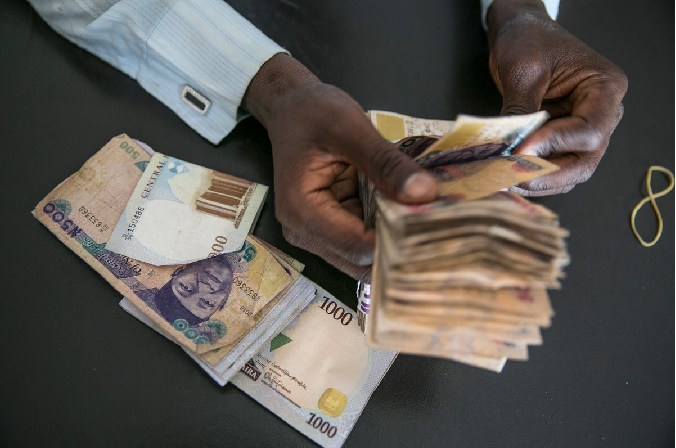

Pre-money valuation: what is your business worth pre-funding?

0
Naira

Since the start of your big idea, all you have done is invest time and personal resources to get your Minimum valuable product (MVP) out. You probably have had to call a few favors from friends and family to keep going. You have drawn on all of your savings and even called on family for financial support here and there.

Now it’s time to secure funding in exchange for some equity. How do you determine what your business is worth? How do you determine how much equity you should be giving in exchange for the funds you intend to raise?

If you have been following the series of posts we have had on funding, then you should be on the same page with this discussion. Ideally, most founders will give about 10-20% of their equity at the seed stage and another 20% during the Series A round. The question is 20% of what value exactly?

After raising funds and scaling to your hundreds and thousands of users and clients, it is pretty easy to get a proper valuation of your business. All you need to do at that point is consider the amount of money you have raised and the amount of equity you’ve given up for it.

What proves to be a headache is evaluating the worth of your business when all you have invested in your savings, time, efforts (and of course that of family and friends). How do you properly value all of these without over-valuing or under-valuing your business?

Your company’s pre-money valuation is a subjective assessment of your company’s worth, and this means that what you think your company is worth, may not align with what investors believe. It is, however, possible to reach a valuation that stakeholders will agree as being close to the actual value of the company.

Here are some pointers for you.

Examine the valuable assets you have pre-fundraising. If you have some tangible or intangible assets before fundraising, you should value them and also consider them. The website, the applications, physical assets like gadgets and devices, etc.

Examine your financial potential as a business, that is your revenue model, and how long it will take the business to get profitable. Also put a figure to the company’s annual revenue, whether it is a profit or loss at the moment. The idea is to get a holistic picture of the company’s financial health.

To get an objective perspective on things, you should consult an expert to use your revenue model and current financial revenue to make accurate forecasts on your finances. Investors are more likely to take your valuation seriously if an expert has had a hand in it, because of objectivity and experience.

Consider your current userbase and product adoption. A company is likely to be better valued than another if its product has already been accepted and adopted in the market, then when the product has not made an entrance into the market; all other things are considered equally.

For more perspective, you should also check out the valuation of businesses similar to yours at the time they raised funding, and while doing this, factor in inflation and other things that may have changed.

The goal is to raise enough funds without over-diluting ownership while keeping the investors pleased with the deal they got. Strive to stay as objective as possible while trying to get a favorable valuation for your fundraising sojourn. One thing that could put investors off is overvaluation, and even if it manages to skip their notice and they invest, you can expect a market correction to take place soon, and that would be even worse for your business.

Ndubuisi Ekekwe To Speak as Chief Guest in India’s E-Summit 3.0

0

Our partnership in #India continues to deepen. Tomorrow, I will serve as the Chief Guest in the E-Summit 3.0 which is parading some of the most prominent Indian technology and startup founders. It promises to be an amazing event, and I look forward to speaking with the innovators and young scholars.

Ndubuisi Ekekwe

Lead Faculty, Tekedia Institute


Fate Of Nigeria’s Higher Education: The Role Of Unions And Government (II)

0

First, governments at all levels must ensure that heads of the institutions in question, to include vice-chancellor, rector, and provost for universities, polytechnics and colleges of education, respectively, are strictly appointed via merit instead of mere favouritism which is usually the case. Astute administrators, or individuals of note, ought to be appointed to serve in such capacities rather than engaging a mere benchwarmer.
Sometimes, the poor state of these schools is partly attributed to the kind of person piloting their affairs. In most cases you would observe that a vice-chancellor, for instance, would spend several years on seat, but end up not implementing any consequential project throughout his/her five-year tenure.

This aspect of misappropriation of funds is, for quite some time now, being harboured as a culture in most existing higher citadels of learning across the federation.

Similarly, the concerned quarters must ensure that only qualified individuals are employed as lecturers; engaging unqualified teachers in the institutions have succeeded in causing untold harm to the future of the teeming students, particularly the undergraduates.

The wages of the lecturers must also be taken as priority by the governments and other concerned bodies, and those in privately-owned institutions should equally be treated as such.

Universities, being research-oriented institutions, cannot thrive under the ongoing Treasury Single Account (TSA) regime of the present administration in Nigeria. The education sector – especially higher institutions – deserves unalloyed financial autonomy, thus they ought to be exempted from such mechanism.

Since the initiative is targeted to curb corruption, the government can set up a formidable and reliable agency that would continually monitor how the schools are faring. If anyone is found culpable in the process, he/she ought to be brought to book without much ado.

It’s very pathetic and an eyesore that our universities are yet to commercialize their patents in an era where the society is expected to mainly depend on higher institutions as regards research works, tech-driven innovations and development.

The fact is, adequate funding of higher education, which has been taken aback for decades now, is the only way the government can make the affected institutions compete globally. There are absolutely no two ways about it.

Though the ongoing Tertiary Education Trust Fund (TETFUND) scheme is trying, a lot still needs to be done. Most times these funds are utilized on laboratory equipment that cannot be calibrated, or library materials such as books that are outdated, thereby making them serve as mere monuments or decorative materials as long as they last in the various benefiting institutions.

Taking into cognizance that funding shouldn’t be left for the government alone, the head of these institutions must be prepared to reach out to the relevant bodies in a bid for collaboration and endowment initiatives. This is why a well cerebral and smart individual is meant to be appointed to pilot the affairs of the citadels in question.

The Labour unions such as ASUU and NAAT, among others, on their part must endeavour to run an independent unionism at all times, rather than barely indulging in tokenism. The handwriting should invariably be clearly written on the wall for the concerned government regardless of the circumstance. Hence, they mustn’t spare the rot and spoil the child.

They ought to acknowledge that any foul play they engage in is to the detriment of their students’ future, and that of Nigeria at large. If you have a cause you are fighting for, concentrate on how to drive to the end instead of succumbing to baseless and unfounded threats in the long run.

This recessionary era is obviously the ripe time to get the funding of the Nigeria’s higher education right, because any procrastination would surely be at the expense of the anticipated economic turnaround.

New York Times Acquires Word Game Wordle

0

In a big announcement on Monday, the New York Times said it has acquired Wordle, a simple word guessing game, for an undisclosed price in the low-seven figures.

“As The Times looks to entertain more solvers with puzzles every day — especially during these anxious times — we’re thrilled to announce that we’ve acquired Wordle, the stimulating and wildly popular daily word game that has become a cultural phenomenon,” The Times said.

Wordle was created by a Reddit engineer, Josh Wardle, and launched in October as a free to play game. Wordle gives players just six guesses to determine a five-letter word that changes every day. It has soared in popularity in less than three months of its launch, attracting hundreds of thousands, then millions, of players.

Players of the game share their scores on social media along with screenshots of the game’s distinctive grid. Following The Times acquisition, the game will continue to be free to play for a while.

Wardle initially created the word game, which he named after his surname, for his partner, who he’d known was a fan of puzzle.

Wardle told the Guardian this month that he felt overwhelmed by the game’s viral success.

“It going viral doesn’t feel great, to be honest. I feel a sense of responsibility for the players. I feel I really owe it to them to keep things running and make sure everything’s working correctly,” he said.

On Nov. 1, the game had 90 players. Nearly two months later, the figure ballooned to 300,000, according to the release from The New York Times.

“The game has gotten bigger than I ever imagined,” Wardle wrote in a statement on Twitter. “I’d be lying if I said this hasn’t been a little overwhelming. After all, I am just one person, and it is important to me that, as Wordle grows, it continues to provide a great experience to everyone.”

Since the launch of The Crossword in 1942, The New York Times has seen its game business rise exponentially. In 2014, the newspaper platform introduced the mini crossword, followed by Spelling Bee, Letter Boxed, Tiles and Vertex. Together, its games have reached one million subscriptions, and were played in 2021.

The acquisition of Wordle will augment The Times’ growing games enterprise. Wordle has been praised for its simplicity. Times’ crossword editor, Will Shortz, described Wordle as “a great puzzle”, saying that “it doesn’t take long to play, which makes it perfect for our age when people have short attention spans.”

Jonathan Knight, general manager for The New York Times Games, said the game has done what so few games have done: It has captured our collective imagination, and brought us all a little closer together.

“As part of our portfolio of games, Wordle will have an exciting future with the help of a team of talented engineers, designers, editors and more, furthering the user experience,” he added.

Wardle said he’s proud that the game is ending up with New York Times, which has been part of its story from the beginning.

“If you’ve followed along with the story of Wordle, you’ll know that New York Times Games play a big part in its origins, and so this step feels very natural to me. I’ve long admired The Times’s approach to the quality of their games and the respect with which they treat their players. Their values are aligned with mine on these matters and I’m thrilled that they will be stewards of the game moving forward,” he said.