DD
MM
YYYY

PAGES

DD
MM
YYYY

spot_img

PAGES

Home Blog Page 5322

Tekedia Welcomes 41 Countries to Tekedia Mini-MBA, Tekedia CollegeBoost

0

Welcome to Tekedia Institute, I am truly honoured to welcome you. This is an academic festival which has shaped the perspectives of many, for good.. We graduated more people than any university in Africa last year. And we’re the most diverse academic community in Africa.

As you go through our courseware, you will see the African nativity of entrepreneurial capitalism and business systems. We’re a school from Africa and we’re proud of that heritage. We make that evident even as we deliver global viewports, driving that glocal playbook.

I welcome the world to the 7th edition of Tekedia Mini-MBA. Registration continues here

Welcome Tekedia CollegeBoost

Let me also welcome Tekedia CollegeBoost students from universities across Africa. I am yet to get one of those t-shirts though. Thank you all for believing in our mission to make those t-shirts. We welcome all students as you begin your journey at Tekedia Institute. This is Tekedia Institute, a home for schools, companies, students and professionals.

Schools, to get your students into Tekedia Institute, connect with Eyitayo Adeleke or email tekedia@fasmicro.com. He manages our campus programs across Africa. We designed a program for college students to introduce them to business education, taking into consideration that they’re students, and may be from different majors, outside business education. They like it.

We want your school here.

Thanks Tolu Alao for joining us at Tekedia Mini-MBA. And thanks for the kind words.

What to do before you start fundraising

0

You have achieved your milestone, decided how much funds you want to raise and what stage you want to hit next. What else do you need to do? Technically, nothing else. Most first-time founders will simply jump to the chase and start going after the investors, and probably spend long frustrating months getting refusals after refusals. Whatever else you have done, try to add these six things before you start the hunt.

Discuss with other startup founders who have recently raised funds. I have explained the importance of a good network system to fundraising. But your network should consist of other startup founders too with whom you can share experiences. Find out from them what their experience was like, what they learned from it, and what they would do differently now that they know better. You can also get some advice on determining what is the right sum to raise.

Speak to a legal expert. No matter how ready you think you are, a good way to set yourself up for success would be to get guidance from a legal expert (preferably one specialized in startups within your space). You need to know what to do from a legal standpoint. It is also necessary to know if you are required to apply for patents or get some form of Intellectual property (IP) protection before you go pitching to investors. Other startup founders might make a recommendation or two for you, based on the expert they worked with.

Research and pool sufficient data. This is something you would normally do before raising funds. Get the right metrics for presenting your company’s progress and growth potential. Know why you spend every money you spend, and why you need the injection of more funds.

Prepare your pitch. You know that you will need a compelling pitch deck that is both clear and concise. In as little time as possible, you should be able to explain who you are, what problem your company is solving, and why investors should care. If you want, you can refer to the earlier post on what a three-minute pitch should be.

Decide on the right investors and target them: Not all investors are interested in your kind of business, and even if they are, not all will align with your startup goals. To increase your chances for success, research the investors who have experience investing in your industry. Also, narrow it down to investors who have shown an interest in founders with similar backgrounds and missions as you.

Get experts to double-check your valuations. You may find your potential investors regarding you suspiciously if you get your valuation wrong. You need to be sure that you have neither undervalued nor overvalued your business. Another thing your investors will look at is the plan of how you want to spend the money you raise. Ensure to make the right projections for spending, operations, and the rest of them.

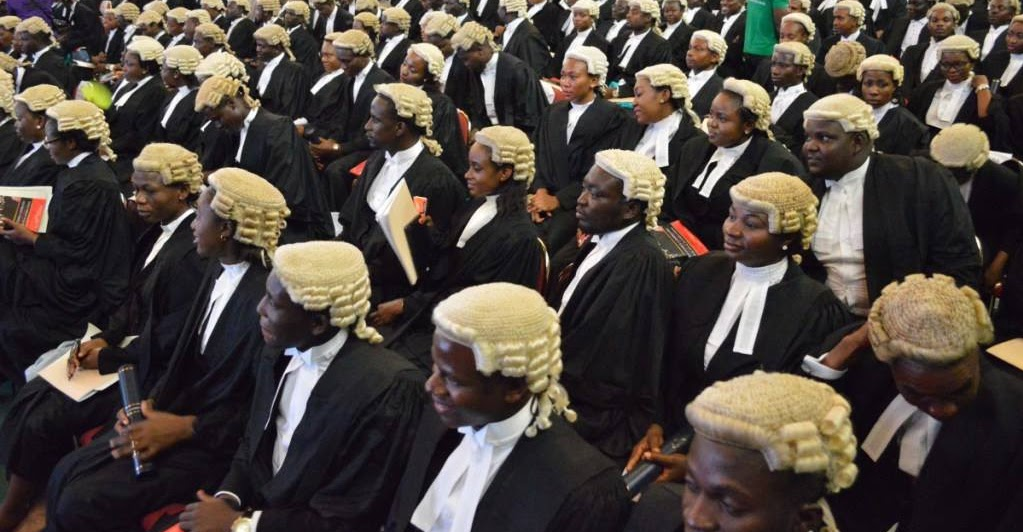
I will sue you!

0

Andy Gilman, a renowned English crisis management consultant said in one of his classes; The secret of crisis management is not good vs bad, it is preventing the bad from getting worse. This is what the art of good lawyering stands for. 

The phrase “I will sue you” has been hackneyed. People think rushing to court or threatening to sue somebody is a status symbol, or shouting at the slightest grievance, “I will report you to my lawyer” will make colleagues or friends dread them. 

The paradox is that lawyers, even courts, always advise individuals to avoid court rooms as much as they can. They should always look for a way to settle disputes, especially civil cases out of court because court cases ruin friendships, it ruins relationships, it ruins families and the process of getting justices from courts in most cases takes a lot of time and it is highly expensive. 

This is the reason for the provision of alternative dispute resolutions (ADR) in most legal systems of the world. It is statutory mandated that before a lawyer approaches the court for a civil matter on behalf of a client he should first advise the client for alternative means of settling the dispute out of court. Lawyers are expected to first do all they can to settle disputes or come into negotiations with both parties, it is only when the negotiations fail that the lawyers can approach the court and file the proceedings. 

People do not know that the job of a lawyer is more of prevention of (legal) crisis on behalf of his client rather than management of crisis. Even some lawyers (especially litigation lawyers) really don’t grasp the concept that the art of lawyering is crisis prevention rather than managing crisis when the crisis has taken place. A good doctor will always advise a patient on what to do so not to fall sick rather than waiting for the patient to fall sick so he can treat him; hence the old saying “prevention is better than cure”. 

This is the reason you need to consult a lawyer before going into any transaction. What the lawyer is trained for is to make sure that the transaction is (legally) watertight in your favor so there will be no loopholes in the transactions that would create legal problems for you in the nearest future.This is the art of prevention of legal crisis for the client rather than managing the crisis when it has occurred.

It is actually insane and stupid for you to engage in a transaction that worth millions or that would worth a lot and you want to do it yourself without engaging the services of a lawyer because you don’t want to pay the lawyer the percentage fee or you want to keep the money you ought to have paid the lawyer for yourself  and you are thinking it’s a smart move. That’s penny wise, pound foolish because when legal issues arises out of that transaction you are going to spend more, much above what you should have paid a lawyer, hence the reason why the lawyer is there to prevent the legal crisis and it make sure it never occur because it is better than managing the crisis for you.

Marginal Cost and Pricing Efficiency [Video]

0

In our Tekedia Mini-MBA journey, we will learn a lot about Cost, especially Marginal Cost and Pricing Efficiency. We have 3 Faculty members to drive that.  I am an old school teacher: you must take charge of your cost to find value in markets.

I studied cost and currency (thank you Diamond Bank which funded my doctoral program on banking and finance) and have written many working documents on the same.  I wrote the lead paper on single African currency for the African Union and co-authored many working papers for the World Bank.

I believe that you must experience the quality of Tekedia Mini-MBA. It goes for N90,000 or $170 and runs for 12 weeks. This is the best value in business education. Join https://school.tekedia.com/course/mmba7/

Classes begin tomorrow….

Rising Coup Attempts In Africa

0

Recently, there has been a surge in coup attempts in Africa. According to report, the African continent has recorded 21 coup attempts by the military to overthrow the incumbent government in Eight years. Data sourced from the global instances of coups shows that 38 percent of such attempts have been successful since 2015. Lately, I began to wonder why there have been incessant coup attempts in Africa. One thing I know is that citizens of a lot of African nations are tired of being ruled without any positive/meaningful change occurring.

Some have summoned the courage to take laws into their hands to topple the current government without much concern of its consequences. A few others no longer have to wait for elections again to vote these leaders out of power because they know that the system will be rigged, which will see them continue to sit in power. Most of the coups have mostly been recorded in Western and Central Africa. From 2020 Africa recorded a drastic increase in coup attempts and successes with 11 attempts and 6 successes.

According to statistics from 1950 till date, there has been a record total of 494 coup attempts in the world, of which a total number of 222 took place in Africa. One can hardly go a day without seeing news of a coup attempt carried out in Africa. Most coup attempts have been as a result of a lack of good governance. Africa has been ravaged with power-hungry and sit-tight leaders like Robert Mugabe, Yoweri Museveni, Muammar Gaddafi, Gnassingbé Eyadéma, etc, who all refused to adhere to the Constitution where power has to rotate. They had no intentions of handing over power, some even went to the extent of amending the Constitution to suit their selfish interest.

I feel most African citizens have been pushed to the wall enough and they have deemed it fit to fight for what belongs to them. I won’t be surprised if a coup attempt in one African country, inspires another African country facing a similar challenge to take a cue from, which might probably be the reasons for the recent coup attempts. Just like the case of the Haitian leader Jovenel Moise who was murdered through a coup, although this never happened in Africa, but some African nations have been spurred to replicate such act.

I have the inkling that more coup attempts will rise because it seems like there is no change in view for most of these corrupt African leaders. Also on the other hand, if carrying out a coup was an ideal solution to fight corruption, Africa would have been better off today, but there seems to be no significant change evident.

Most of these uniform men who topple a sitting government, only go there to end up as dictators with not much difference from the past leaders. They often adopt an authoritarian system of government ruling the people with absolute control. A case study of Nigeria, where previous governments that were toppled by coups never did anything positive. Rather they went there for their selfish interest and also looted funds impoverishing the lives of its citizens.

Almost all military coups in Africa improved nothing. On the reason why coups are increasing in Africa. A former chairman of the National human rights commission Mr. Chidi Odinkalu attributed the coups in Africa to a lack of credibility in elections on the continent. He stated that “elections are becoming laughable processes, more like a necessary ritual done just to fulfill all righteousness by which authoritarian regimes and dictators procure their continuance.

I cannot but agree with his statement because most elections in Africa, don’t reflect the will of the people and the AU and Ecowas have been silent on these issues. Most coup attempts have been fuelled by the failure of Ecowas and AU to condemn rigging of elections and illegal constitution amendments. Most African citizens have felt that since these big bodies have lost their authority to influence decisions to punish erring officials, then they will have to step in and do things their way.