DD
MM
YYYY

PAGES

DD
MM
YYYY

spot_img

PAGES

Home Blog Page 5332

Nvidia Topples Meta, Becomes 7th Most Valuable US Company

0
Nvidia chip

Meta, Facebook’s parent, has seen a significant drop in its market valuation since it reported nearly $1trn capitalization for the fourth quarter.

On Tuesday, the company’s shares dropped 2.1% to close at $220.18, making it 35% down this year and its lowest since July 2020. The drop has pushed Meta value below chipmaker Nvidia, which is now the seventh most valuable company in the US.

Not long ago Facebook was among the five most-valuable US companies, alongside Big Tech peers Apple, Microsoft, Amazon and Alphabet. However, Meta has since fallen to eighth, below Tesla, Berkshire Hathaway and now, for the first time, Nvidia.

On Tuesday, Meta’s market cap dropped to $599 billion, while Nvidia closed at $627 billion. Visa is next at $478 billion. The chip maker’s failure to purchase Arm did not affect its shares.

Nvidia announced overnight that it was ending its effort to buy chip technology firm Arm and would pay a breakup fee of $1.26 billion to Arm parent SoftBank. Nvidia scrapped the deal amid hefty regulatory challenges, including a probe in the U.K. and a lawsuit from the U.S. Federal Trade Commission.

Nvidia rose 1.5% on Tuesday to $251.08, and has been on a tear over the past two years, soaring over 300% since the start of 2020. The company has lost about 15% of its value since the start of the year as investors have sold out of risky tech stocks.

Nvidia, which reports fourth-quarter earnings next week, has been boosted by strong chip sales as its graphics processors are in high demand for artificial intelligence applications and advanced video games.

The company showed a drop in user numbers and warned about challenges ahead from Apple’s privacy changes. Meta’s first-quarter forecast missed estimates, sending the stock down a record 26% on Thursday.

Read also: Apple, TikTok and other factors threatening Meta’s existence 

Nvidia has recently made a bit of a come-back in terms of share price. The chipmaker made a whole bunch of cash in its final quarter of 2021, with gains up 50% year-on-year revenue, operating income up 91%, net income up 84% and massive margin gains.

Nvidia was founded in 1993 by three engineers: Jensen Huang, leather-clad company CEO; Curtis Priem, who retired from Nvidia in 2003; and Chris Malachowsky, who still works at Nvidia as a senior technology executive. The company has scaled through fierce competition with rivals such as Intel and TSMC to become now the seventh most valuable company in the US.

Meta still has a mountain of challenges to contend with as watchdogs around the world introduce strict rules around consumer privacy. The social media company has threatened to leave Europe if regulators enact rules that will stop it from sharing private data of users in Europe with the US. Though the rules are still under consideration, Germany and France said it will be a good thing if Meta makes its threat true.

Central Bank of Nigeria Launches RT200 FX Programme, Targets $200bn FX Inflow

2

In addition to other schemes it has created to boost dollar liquidity in Nigeria, the Central Bank of Nigeria (CBN) has announced the launch of “RT200 FX Programme”, targeting $200 billion in FX repatriation.

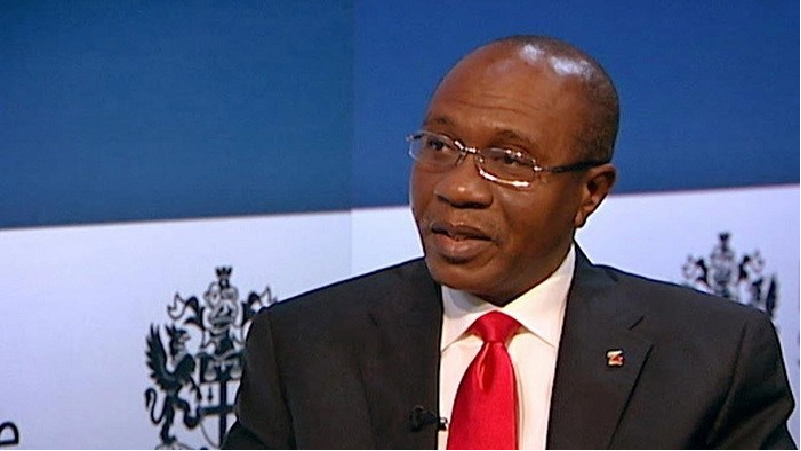
The CBN governor, Godwin Emefiele revealed the new program during the Bankers’ Committee press briefing on Thursday.

“After careful consideration of the available options and wide consultation with the Banking Community, the CBN is, effective immediately, announcing the Bankers’ Committee “RT200 FX Programme”, which stands for the “Race to US$200 billion in FX Repatriation,” he said.

Emefiele explained that the RT200 programme will be non-oil export-based with focus on the following five key anchors: Value-Adding Exports Facility, Non-Oil Commodities Expansion Facility, Non-Oil FX Rebate Scheme, Dedicated Non-Oil Export Terminal and  Biannual Non-Oil Export Summit.

“The RT200 FX Programme is a set of policies, plans and programmes for non-oil exports that will enable us attain our lofty yet attainable goal of US$200 billion in FX repatriation, exclusively from non-oil exports, over the next 3-5 years,” Emefiele said.

The CBN has been counting on diaspora remittances to boost dollar liquidity, trying its hands on many policies to encourage Nigerians living abroad to send money back home through regulated financial institutions.

The apex bank noted that through these schemes, particularly the Naira4Dollar scheme introduced early last year, there has been significant improvement in foreign currency inflow to Nigeria. Emefiele disclosed that diaspora remittances increased from an average of $6 million weekly in December 2020 to an average of more than $100 million weekly by January 2022.

The CBN governor blamed Naira’s significant depreciation on covid-19 and the plunge in oil prices.

“This is understandable because to the extent that COVID-19 led to significant job losses in many advanced economies, diaspora remittances also suffered commensurate reductions in inflows into Nigeria.

“All these factors jointly explain the heightened pressures on the currencies of major emerging market countries, including Nigeria,” Emefiele said.

Nigeria is oil based economy. The largest economy in Africa derives 90% of its revenue from oil export and thus was severely hit by covid’s headwinds that plummeted oil prices. At the receiving end of oil market’s turmoil is the naira, Nigeria’s currency, which has fallen below N575/$1 in the parallel market and below N440/$1 at the official window, forcing its repeated devaluation.

To stem the tide of insufficient dollar liquidity, the CBN has designed schemes geared at encouraging diaspora remittances. Although oil prices have started rebounding as economic activities reopen globally, the financial industry regulator is building on the programmes to foster a sustainable mechanism for adequate FX liquidity.

Emefiele said that enough lessons have been learnt from its policies on remittances and they can be applied in improving some aspects of the foreign exchange inflow into the country. This means that the CBN is looking to diversify its programmes to include other means of generating forex supply.

The CBN governor said forex inflow into Nigeria will now include four major sources; Proceeds from oil exports, Proceeds from non-oil exports, Diaspora remittances and?Foreign Direct/Portfolio Investments.

Is your product-market fit sustainable?

0

To win in markets, you need to have a great product-market fit. It is a spot where the frictions in markets and the “forces” (the products and services) you are creating to overcome them attain equilibrium.

[Bear with me for using big grammar. My grandmother, Lechi, truly liked them because it showed that I was learning in secondary school. How do you come back from school without saying something she could not understand, after all the school fees? ]

So, when Peloton, an experience exercise company, which helped people do exercise at home, was raking it at the peak of the pandemic, I wrote: “before you invest, think beyond Covid-fit to market-fit”. In other words, that product must not just do well during Covid pandemic, but also when normalcy returns.

Normalcy is fairly back and Peloton is crashing. According to CNBC, “the company said in a confidential presentation dated Jan. 10 that demand for its connected fitness equipment has faced a ‘significant reduction’ around the world due to shoppers’ price sensitivity and amplified competitor activity.”

This week, Peloton is replacing its CEO, updating the board and cutting  about 2,800 jobs, and may end up in the museum of also ran. Our prayers with the workers affected.

Is your product-market fit sustainable? Yes, do you have a moat to protect the castle?

Changes are afoot at Peloton. The exercise company announced it is replacing its CEO, cutting around 2,800 jobs and reconfiguring its board. Co-founder John Foley will be replaced as chief executive by Barry McCarthy, Spotify’s former CFO, and will become executive chairman. The layoffs include 20% of Peloton’s corporate positions, but do not affect its roster of instructors.

  • The company has been the subject of frenzied acquisition speculation, with Apple, Amazon and Nike all floated as potential buyers. Foley said the company is open to any deal that “could create value for Peloton shareholders.”

  • Laid-off employees will receive a complimentary 12-month Peloton subscription as part of their severance, Foley said in a press release about the changes.

  • Peloton employees are taking to LinkedIn to post about the layoffs.

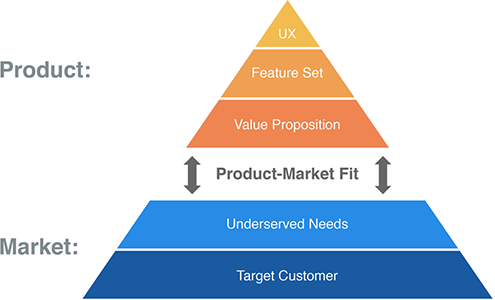
According to ProductPlan, “Product-market fit describes a scenario in which a company’s target customers are buying, using, and telling others about the company’s product in numbers large enough to sustain that product’s growth and profitability. According to entrepreneur and investor Marc Andreesen, who is often credited with developing the concept, product-market fit means finding a good market with a product capable of satisfying that market.”

The Product-Market Fit Pyramid framework was created by Dan Olsen

Beyond First-Mover Advantage to First-Scaler Advantage [video]

0

Questions from a member in Tekedia Mini-MBA:

In Technology-Market matrix diagram, especially, the rough sea quadrant – where both technology and market are moving fast,
1. should an organization ride on both tides?
2. what is your advice for a start-up in this scenario?

A first-mover advantage can be simply defined as “a firm’s ability to be better off than its competitors as a result of being first to market in a new product category”. The first scaler advantage is the advantage which comes to a firm for being  the first to become extremely popular and ubiquitous by scaling its services in a category.

But note this: the greatest companies in the world are known for one thing: great products. Interestingly, all great products are known by customers. That typically comes because they are well scaled. Extrapolate, you’re talking of  first-scaler advantage, a leverageable compounding competitive advantage which comes with economies of scale as a result of being the first company to achieve scale in that category and improve marginal cost, offering products at highest value and best optimized cost.

If you have a first-mover advantage and fail to scale, you will lose the competitive positioning to another company which comes and scales first. So, first-mover advantage is temporary because sustainable and durable monopoly requires enduring scale in product categories. If you cannot deliver that scale, forget your first-mover advantage.

This is my response. Sorry, I made two videos. Initially thought the first did not record.


Live session of Tekedia Mini-MBA begins this Saturday

0

The Live session of Tekedia Mini-MBA begins this Saturday. I will anchor it. Next week, our Faculty members from Access Bank Plc and SAP Africa will anchor the Tue and Thur respectively.

The upper week, two faculty members from Microsoft USA and Barry Callebaut Group Belgium will drive respectively. All details and Zoom links will be in the Board.  We’re truly honoured for the opportunity to co-learn with you all.

Welcome to the Institute.  We continue to welcome new members for this edition here.

Tekedia Institute offers Tekedia Mini-MBA, an innovation management 12-week program, optimized for business execution and growth, with digital operational overlay. It runs 100% online. The theme is Innovation, Growth & Digital Execution – Techniques for Building Category-King Companies. All contents are self-paced, recorded and archived which means participants do not have to be at any scheduled time to consume contents. Besides, programs are designed for ALL sectors, from fintech to construction, healthcare to manufacturing, agriculture to real estate, etc.

The sector- and firm-agnostic management program comprises videos, flash cases, challenge assignments, labs, written materials, webinars, etc by a global faculty coordinated by Prof Ndubuisi Ekekwe. It will run from Feb 7, 2022 to end May 7, 2022.