DD
MM
YYYY

PAGES

DD
MM
YYYY

spot_img

PAGES

Home Blog Page 5337

How Not To Love Nigeria

0
A Nigerian youth seen waving the Nigerian national flag in support of the ongoing protest against the unjust brutality of The Nigerian Police Force Unit named Special Anti-Robbery Squad (SARS) in Lagos on October 13, 2020. - Nigerians took to the streets once again on October 13, 2020, in several cities for fresh protests against police brutality, bringing key roads to a standstill in economic hub Lagos. Demonstrations organised on social media erupted earlier this month calling for the abolition of a notorious police unit accused of unlawful arrests, torture and extra-judicial killings. The government gave in to the demand on October 11, 2020, announcing that the federal Special Anti-Robbery Squad (SARS) was being disbanded in a rare concession to people power in Africa's most populous nation. (Photo by Benson Ibeabuchi / AFP) (Photo by BENSON IBEABUCHI/AFP via Getty Images)

The last time I checked, countless number of Nigerians claimed to be in love with Nigeria. But when critically and closely examined, you would observe they actually meant something contrary.

Sure, anyone can put up a claim as it pleases him/her, but sticking to the true meaning of the claim is a totally different ballgame.

In life, there are two major phenomena you must not take for granted; when you are truly in love, and when someone really loves you. You are bound to understand when your heart is wholly and sincerely attracted to a colleague, relative, associate, friend, or what have you.

On the other hand, you are required, at all times, to be aware of when someone cares about your happiness. If you take any of these factors for granted, you may live to regret it.

The truth is, life is controlled or governed by a four-letter word known as ‘Love’. This is why the Holy writ stipulates that it (love) is the rudiment of every commandment provided by the Creator.

This is so, because if you really love someone or vice-versa, any rule binding the relationship can easily be adhered to with ease. If you love someone with your whole heart, you can sacrifice anything whatsoever towards ensuring he or she does not lack happiness regardless of the circumstance.

Same is applicable to a pet in your household. If you love your pet passionately, you can do anything to keep it alive. A society isn’t left out when discussing love; if you care about the well-being of a society you belong to, you would never attempt to indulge in any act that would be to the detriment of the happiness of the society in question.

Let’s get it straight; if you are a citizen of any country, and you are of the view that you love it, you would always do things that would contribute to the uplift or welfare of the country.

At the moment in Nigeria, particularly in its socio-political domain, some politicians tend to showcase a façade that they truly care about the country, unknowingly to their unsuspecting followers or the onlookers that they are only interested in personal aggrandizement.

For instance, if the Nigeria’s President erred or erroneously implements a policy, rather than criticizing constructively, they would prefer to display an action that would end up causing more harm to the country.

The truth is that, if you candidly love a country, you would always think of the effect of your proposed criticism on the leadership of the country before tendering it.

First, we need to acknowledge there are some basic recipes that are expected to accompany any criticism. When you criticize, courtesy demands that you proffer a remedy to what is being criticized. The primary aim of every genuine criticism ought to be to correct an error or address any presumed anomaly.

So, if your interest truly lies on the well-being of the affected country, you would invariably focus on how to make amends, or the way forward, instead of constituting more troubles. When you criticize, you are expected to concentrate on the lapse, and not on the personality of the initiator of the policy/process being criticized.

A true lover of any country should be concerned about its uplift, not the other way round. In politics, the reverse is often the case; people claim to love their country but mean otherwise.

If you are a leader of a country and the development of the jurisdiction matters much to your person, you would never be propelled to initiate actions that would yield nothing but good governance.

In other words, you would willingly wish to carry out projects as well as initiate policies that would see to the betterment of the overall people of the country, and so does a good follower.

A good and genuine follower or stakeholder, as might be the case, is always interested in a way forward at all cost; he is tirelessly involved in issues of general interest rather than personal; he is invariably ready to sacrifice something toward ensuring that the concerned society becomes a better place to live.

He’s prepared at all times to compromise some attitudes for the sole interest of the society; above all, he always thinks of other members of the society in all his actions as well as concerned about what their reactions would be as regards any criticism he intends to come up with.

The bone of contention is that Nigeria is not interested in those who claim to love her, but those who genuinely strive relentlessly to ensure that her wellbeing is not tampered, or relegated to the background.

The country is only pleased with Nigerians who encounter sleepless nights while thinking of how to help the government usher in sound governance, which remains the sole dream of the electorate. Nigeria is interested in seeing people who wish to ‘die’ for the good of the country.

To this end, it’s needless to reiterate that anyone who keenly loves his or her country of origin/residence must be involved in activities that would assist the government to succeed.

President Muhammadu Buhari is probably yet to please the majority of Nigerians as the country’s leader, but it’s more imperative to note that anyone who means well for Nigeria cannot participate in anything that would witch-hunt the country, rather, would only be focused on how to make the said government succeed.

Hence, involving yourself in actions or causes that are aimed at generating upheaval or malice among the people is obviously how not to love a country, and Nigeria isn’t an exception.

The Benefits of Investing in Strategic Market Research for Businesses

0

After a succession of brainstorming sessions and scribbling, businesses emerge. It doesn’t end there, though. A data-driven decision-making structure is required for a business that will not fail in a short period of time. Only via strategic market research can this be accomplished. In today’s competitive corporate world, this is referred to as SMR. There’s no denying that having access to trustworthy, validated data is essential for effective decision-making at the strategic and tactical levels of any company model. The business-to-consumer approach is one of the most data-intensive. Adopters of the approach must often seek out information on current or potential customers.

This leads to the present trend of organizing structured data gathering, interpretation, and transformation into strategic insights for suitable decision making in line with the company’s already identified concerns at the corporate and operational levels. SMR functions similarly to a Google Map, indicating where transporters and passengers should or should not pass during peak traffic hours. It accomplishes much more in the commercial sector. SMR assists small and large enterprises in reaching the congestion point and examining demographic statistics, purchasing power, and behavioural patterns of important objects. There must be a clear goal for acquiring the data while doing so.

Identification of product or service types that potential customers would like to buy and that are profitable to the company that started it, determination of customer satisfaction level, and providing top managers with in-depth information about crucial factors that have an impact on the target market and current business climate are three major advantages of using SMR as a tool.

Despite the advantages, there are several misconceptions regarding how to use it. Many business owners assume that SMR is only useful when their companies are doing well, although it is necessary at all stages of development. Managers at the strategic level, on the other hand, frequently assume that providing entire knowledge about a situation is irrelevant. On the contrary, a lack of information has the potential to point concerned employees in the right direction.

What is the cost of performing a good one that will assist in making informed judgments if SMR has been well understood? Experts have suggested a variety of budget types. The most commonly used budgets are annual and project-based budgets. When you pick the annual option, you must set aside a specific amount of your money to undertake SMR when the situation occurs. The proportion fluctuates depending on the size of the organization and the industry sector.

The majority of businesses chose a percentage of their revenue between.02 and 1%. It’s also been suggested that allocating 50% or more of sales revenue to research isn’t a bad notion as long as the study is tailored to the company’s current demands without sacrificing the possibility of future ones. The project-based method, on the other hand, is a one-time action that determines how much money to spend on materials and people.

At Long Last, Senegal Wins African Cup of Nations

0

On Sunday, February 6, Senegal joined the list of other 15 African Cup of Nations (AfCON) winners, after defeating Egypt 4-2 on penalties in Olembe Stadium, Yaoundé Cameroon.

It was a moment the West African country has waited so long for, having got so close many times. It was Liverpool player, Sadio Mane, who kicked the winning ball from the penalty spot past Egyptian goalkeeper Mohamed Abou Gabal (Gabaski.)

Senegalese coach Aliou Cisse finally got a poetic justice. The former Teranga Lions player was the captain of the 2002 squad who lost to Cameroon in the final following a penalty shootout. Cisse missed his penalty. The loss was compounded in 2019 when Senegal lost to Algeria in the final.

Having lost in 2017 to Cameroun, Egypt was hoping to clinch its eighth title on Sunday, but was outplayed by Senegal who had 57% ball possession.

Mane, who was up against his Liverpool teammate, Mohammed Salah, missed a penalty that would have given Senegal the lead during regular time. It was a burden of guilt that could have hunted him for long had the penalty shootout ended in favor of Egypt.

“I won the Champions League and other trophies. But this is a special one for me. This is the most important,” Mane said.

Egypt was first to miss a penalty kick when Abdelmonem hit the post, giving Senegal a 2-1 lead. But the North Africans leveled up when Gabaski saved Bouna Saar’s kick. The game was left to be decided by Senegal when goalkeeper Edouard Mendy saved Egypt’s fourth kick by Lasheen. Salah didn’t get to take his kick after Mane sealed it for Senegal.

Senegal has been recently consistent in AfCON tournaments more than any other team, keeping the hope of fans high that someday the Teranga Lions will bring the trophy home. Cisse, who has been managing the team since 2015 was applauded for building a resilient national side, making a case for other African countries to give indigenous coaches a chance.

Though it took about eight years filled with waits and disappointed hopes, the result of Senegal’s last two-hour match has inspired overwhelming jubilation that has eclipsed the long wait and disappointments. The Senegalese president, Macky Sall, has declared Monday a public holiday, highlighting a vital lesson in resilience: once you win, it would no longer matter how many times you failed.

Tekedia Welcomes 41 Countries to Tekedia Mini-MBA, Tekedia CollegeBoost

0

Welcome to Tekedia Institute, I am truly honoured to welcome you. This is an academic festival which has shaped the perspectives of many, for good.. We graduated more people than any university in Africa last year. And we’re the most diverse academic community in Africa.

As you go through our courseware, you will see the African nativity of entrepreneurial capitalism and business systems. We’re a school from Africa and we’re proud of that heritage. We make that evident even as we deliver global viewports, driving that glocal playbook.

I welcome the world to the 7th edition of Tekedia Mini-MBA. Registration continues here

Welcome Tekedia CollegeBoost

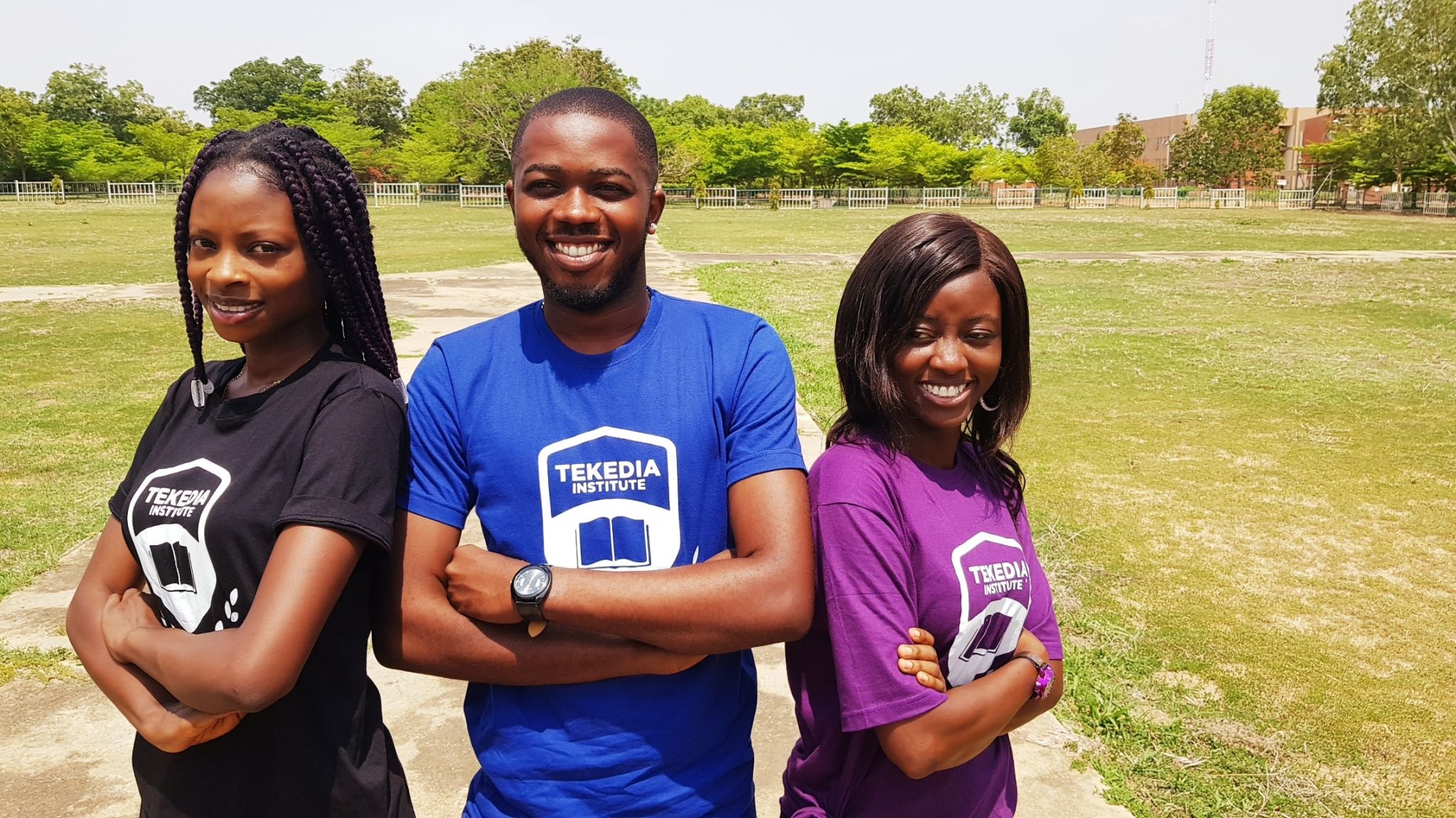
Let me also welcome Tekedia CollegeBoost students from universities across Africa. I am yet to get one of those t-shirts though. Thank you all for believing in our mission to make those t-shirts. We welcome all students as you begin your journey at Tekedia Institute. This is Tekedia Institute, a home for schools, companies, students and professionals.

Schools, to get your students into Tekedia Institute, connect with Eyitayo Adeleke or email tekedia@fasmicro.com. He manages our campus programs across Africa. We designed a program for college students to introduce them to business education, taking into consideration that they’re students, and may be from different majors, outside business education. They like it.

We want your school here.

Thanks Tolu Alao for joining us at Tekedia Mini-MBA. And thanks for the kind words.

What to do before you start fundraising

0

You have achieved your milestone, decided how much funds you want to raise and what stage you want to hit next. What else do you need to do? Technically, nothing else. Most first-time founders will simply jump to the chase and start going after the investors, and probably spend long frustrating months getting refusals after refusals. Whatever else you have done, try to add these six things before you start the hunt.

Discuss with other startup founders who have recently raised funds. I have explained the importance of a good network system to fundraising. But your network should consist of other startup founders too with whom you can share experiences. Find out from them what their experience was like, what they learned from it, and what they would do differently now that they know better. You can also get some advice on determining what is the right sum to raise.

Speak to a legal expert. No matter how ready you think you are, a good way to set yourself up for success would be to get guidance from a legal expert (preferably one specialized in startups within your space). You need to know what to do from a legal standpoint. It is also necessary to know if you are required to apply for patents or get some form of Intellectual property (IP) protection before you go pitching to investors. Other startup founders might make a recommendation or two for you, based on the expert they worked with.

Research and pool sufficient data. This is something you would normally do before raising funds. Get the right metrics for presenting your company’s progress and growth potential. Know why you spend every money you spend, and why you need the injection of more funds.

Prepare your pitch. You know that you will need a compelling pitch deck that is both clear and concise. In as little time as possible, you should be able to explain who you are, what problem your company is solving, and why investors should care. If you want, you can refer to the earlier post on what a three-minute pitch should be.

Decide on the right investors and target them: Not all investors are interested in your kind of business, and even if they are, not all will align with your startup goals. To increase your chances for success, research the investors who have experience investing in your industry. Also, narrow it down to investors who have shown an interest in founders with similar backgrounds and missions as you.

Get experts to double-check your valuations. You may find your potential investors regarding you suspiciously if you get your valuation wrong. You need to be sure that you have neither undervalued nor overvalued your business. Another thing your investors will look at is the plan of how you want to spend the money you raise. Ensure to make the right projections for spending, operations, and the rest of them.