DD
MM
YYYY

PAGES

DD
MM
YYYY

spot_img

PAGES

Home Blog Page 5348

What I Told A Portfolio Founder On Why He Cannot Deploy Blockchain Now

1

One of our fastest growing startups dropped this message which I have edited for brevity: “We are working on a roadmap for blockchain technology on our platform. We are using  blockchain as a mechanism to give customers authenticity, transparency and traceability…It will make a lot of sense in this modern world of technology adoption and it will make us stand out”.

I responded: “I hope that is not a distraction. You don’t have resources yet for that. You can record your goods well. Blockchain will not do magic if you can not provide the data. I will suggest you focus on execution with what you have now and hold on blockchain later”.

His response: “Well noted Sir”.

But honestly, I am not sure if I have provided the right guidance. It is a huge burden to use a simple paragraph to shape what founders are thinking, understanding that you can make a mistake. Typically, they take my perspectives very seriously and that makes whatever I share to be the best possible among options. This startup is growing very very well. I feel going into a new tech rebuilding will be a distraction. Also, blockchain despite the optimistic exuberance has not shown any major promise outside financial services [this startup is not a fintech] in Africa.

 In other words, blockchain, while promising, does not offer any compelling leverage which can compound to make this company better, immediately. So, instead of spending the scarce funds it has and distorting the execution rhythm we have by integrating blockchain, I want the team to stay focused on using the technology that we have at the moment which customers truly like and understand.

I do cite the IBM and Microsoft/Apple case study which we have in Tekedia Mini-MBA. IBM began the quest to build esoteric technologies with IBM Watson, quantum computers, etc, and filed the most yearly patents. But yet, 15  years away, IBM is worth about $120 billion while Apple hits close to $2.8 trillion and Microsoft $2.3 trillion.

Simply, too much tech has not helped IBM. But what seems to have worked is this: delivering great services to customers, irrespective of tech. So, if the tech cannot change that outcome, whatever it is called does not help! After all, the mission of firms is to fix frictions. Tech is just a component in the production process of creating the products and services.

I do not see how blockchain can change the game plan in a sector where users do not even embrace web and mobile apps, preferring phone calls and physical visits. But possibly, in 3 years, those can change, and then we can soup blockchain in the business. What do you think?

Comment on FB feed

I agree absolutely. Tech doesn’t solve every problem. In fact, in some cases, it further complicates the problem at hand to be solved.

Someone called me last week to help him deploy an event registration app for a major annual event coming up in his organisation. Previously, they had been using Google form to achieve the same objective and it had worked flawlessly.

So I asked him why he was considering dumping the Google form solution for an event reg web app. I further asked him for the challenge they were having with the Google form. He answered that they had no challenge using the Google form so far. Someone in the event planning committee just suggested an event reg web app. I guess the person was trying to introduce a more sophisticated approach to the process, which was unnecessary.

Just to be sure, I asked him for the objective he wanted the registration process to achieve. From his response, it was obvious that the Google form approach would achieve the objective faster and more efficiently.
The Mercantilist System and Pursuit of Market Frictions

0
hire

Since Adam Smith wrote his classic, in 1776, the Wealth of Nations, to upend the mercantilist system and set forward the basic foundations for modern classical economics, we have seen corporations come and go. The core pillars of productivity, and division of labour, have remained the tenets in the organization of firms which have succeeded in their missions of fixing market frictions. Across industrial sectors and market geographies, a free market system has provided the cement mortars for firms and nations.

Andrew Carnegie lived. John D. Rockefeller lived. Aliko Dangote is living. Bill Gates is living. Jeff Bezos is living.

These men are icons of their generations, pursuing the noble cause of entrepreneurial capitalism – aligning assets and knowledge to provide services where market fictions exist, between those that want products and those selling what they have. Corporations exist to simplify that interplay of demand and supply, and these entrepreneurs and others, thrived in providing solutions that eliminate frictions. They pursued different levels of innovations at scale, improving productivity, advancing specialization and deploying uncommon vision.

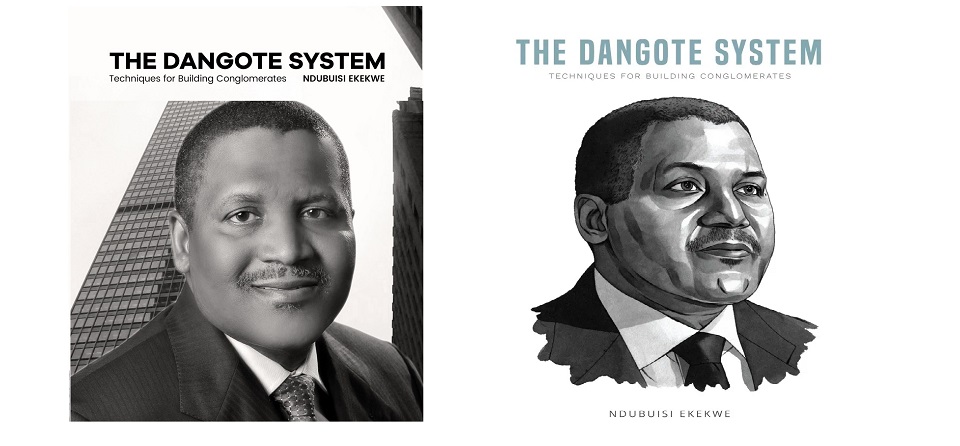
Continue reading in my book, “The Dangote System” here.

Beat Tekedia Mini-MBA Early Registration Deadline And Read Exclusive Book On Dangote

0

“Manufacture, don’t just trade. There is money in manufacturing even though it is capital intensive. To achieve a big breakthrough, I had to start manufacturing the same product I was trading on; which is commodities.” – Aliko Dangote

From ‘The Dangote System: Techniques for Building Conglomerates” by Ndubuisi Ekekwe, exclusive for Tekedia Mini-MBA early bird registrants. Beat the deadline which is today and read this book which has transformed the mindsets of many.

Register here and read this amazing book,

Nigerians, Where Is Nigeria Headed For?

0
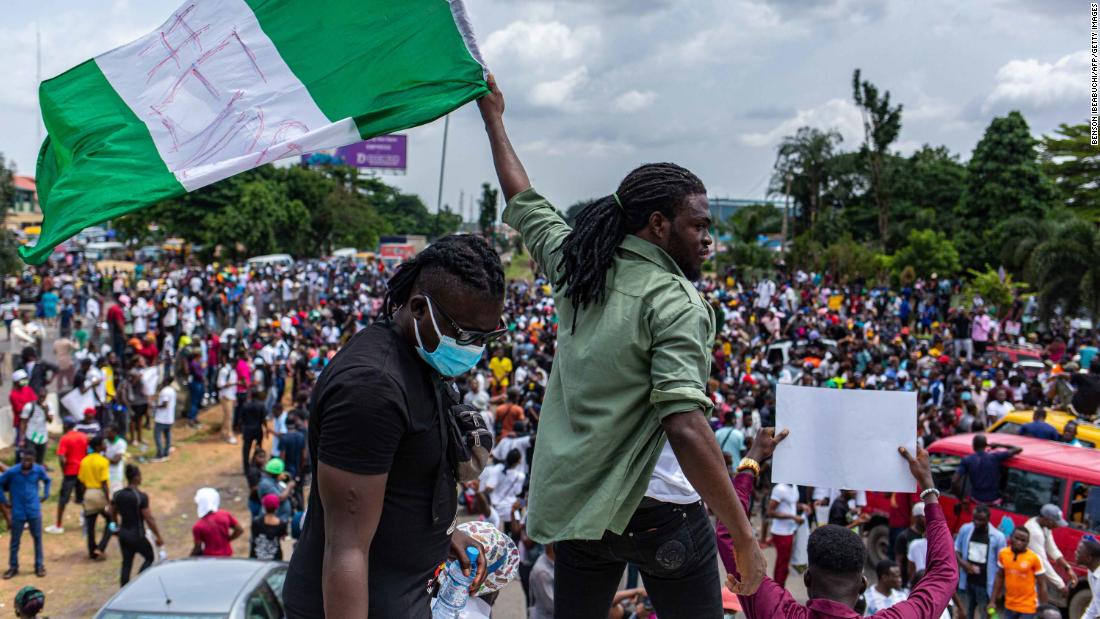
A Nigerian youth seen waving the Nigerian national flag in support of the ongoing protest against the unjust brutality of The Nigerian Police Force Unit named Special Anti-Robbery Squad (SARS) in Lagos on October 13, 2020. - Nigerians took to the streets once again on October 13, 2020, in several cities for fresh protests against police brutality, bringing key roads to a standstill in economic hub Lagos. Demonstrations organised on social media erupted earlier this month calling for the abolition of a notorious police unit accused of unlawful arrests, torture and extra-judicial killings. The government gave in to the demand on October 11, 2020, announcing that the federal Special Anti-Robbery Squad (SARS) was being disbanded in a rare concession to people power in Africa's most populous nation. (Photo by Benson Ibeabuchi / AFP) (Photo by BENSON IBEABUCHI/AFP via Getty Images)

It has ostensibly become imperative to come up with the aforementioned question or finding, towards ascertaining what the fate of Nigeria entails as we eagerly look into the future.

It is Ecclesiastes 3 in the Holy writ that advises mankind that “There’s time for everything” under the Sun. That very verse is trying to let us comprehend that whatever we intend to do, ought to be done at the apt time, else we will stand to regret our actions.

It’s on this premise I have thought it wise to tender this inquiry, having understood that this is the right moment for such a statement. This implies that my humble and candid question is seriously begging for not just an answer but a sincere one.

If we look inwards, we would observe that every dick and harry in the political corridor is tightening his or her seatbelt with a view to attracting the people’s support and encouragement as regards the awaited electioneering era in Nigeria.

In some quarters, some of these politicians have decided to go spiritual having perceived that physical means aren’t usually reliable. Please, don’t get my analysis twisted.

The truth of the matter is that the ongoing scenario has succeeded in blindfolding some Nigerians who had allowed themselves to be cajoled. It’s even more pathetic and saddening that some citizens of the country are still hell bent not to listen to words of wisdom that are persistently knocking at their respective doors.

Most times, people assert that I talk or write not unlike a prophet. The point is that I invariably ensure issues are deeply thought over by me before commenting on, or analyzing, them. This is simply because I have understood strongly that well thought actions are often headed in the right direction. So, each time I hide under this philosophy, people are compelled to believe that I’m a soothsayer.

The above question is not unconnected with the fact that anyone who belongs to any society or group must regularly be ready to ask him/herself the direction the association is heading to. Failure to come up with such a finding, I’m afraid, the group in question might fade off without the knowledge of the member in question.

We must, therefore, always be willing to ascertain the state or wellbeing of any society we find ourselves towards, enabling us to realize what we are expected to do in regard to the way forward.

Of course, no right thinking person would want his society, either immediate or wider, to be characterized by crisis. This is the reason we are all required to be careful and mindful of our thoughts and actions as they affect any society we are into.

In this case, we are solely concerned about Nigeria as an entity. It has become compelling for me to unequivocally state that I’m so displeased with some key personalities who the citizens or masses look up to. An elder statesman who refuses to be cautious of his actions at all times has as well refused to be recognized as one.

Nigeria can only get better when we have collectively agreed to make it so. No existing society gets better if its teeming subjects are not making any effort or moving in that direction. It is only by the common might of the members of a certain organization that such a group becomes stronger. In other words, a house divided against itself can never stand.

It’s the civic responsibility of the citizens to ask themselves where Nigeria is headed for at such a critical time like this when every rational individual is strongly concerned about the way forward.

It’s noteworthy that an outsider cannot do such a manner of thinking on behalf of Nigerians. It is the duty of the citizens to do the needful for themselves rather than allowing strangers to take actions on their behalf.

I must inform us that Nigeria will never forgive every stakeholder in the country if they failed to do what was expected of them. We must, therefore, not continue to sell our birthright for a mere pot of porridge yam.

We may have erred in the past, but the joy is that another time has obviously come for us to correct our mistakes. It suffices to say that a golden opportunity has eventually arrived to enable us to address all the wrongs we recorded in the past.

It’s pertinent to acknowledge that absolutely nothing should be for sale as far as elections are concerned. Your Permanent Voter’s Card (PVC), which remains your only power at the polls, is not for sale nor is your vote. This was strongly and clearly stated in my previous analysis on this platform.

More so, your conscience isn’t meant to be sold for any reason whatsoever. Above all, you aren’t required to sell your right or franchise. Hence, all our belongings need to be safeguarded with the last drop of our blood.

Fellow Nigerians, it’s obvious that Nigeria is currently passing through a trial. One thing we shouldn’t take for granted is the need to take a meaningful and sound step that ought to be emulated by generations yet unborn.

Nigerians must therefore learn to contribute meaningfully towards the uplift of the country, rather than being part of any movement that would bring it down. We must invariably be prepared to make good decisions; the decision-making process is our collective prerogative, hence mustn’t be allowed to be hijacked by any one or group.

Thus, it would be very reasonable for each of us to sincerely answer the above question if we are truly determined to get it right, moving forward. The future of the country lies in our hands, hence needs to be handled with absolute seriousness.

If we want Nigeria to be headed for the Promised Land, we must then be willing to contribute our quota wisely and genuinely.  

Court Declares Federal Government Nigeria’s Deduction from Federation Account To Fund Police Unconstitutional

0
The coat of arm of Nigeria

The Federal High Court sitting in Abuja has delivered a judgment prohibiting the Federal Government from deducting funds from the Federation Account to fund the Nigerian Police Force and other agencies not listed in the constitution to be funded through the federation account. 

Justice Ahmed Mohammed made the declaration while delivering judgment on suit No: FHC/ABJ/CS/511/2020 filed by the attorney general of Rivers State on behalf of the Rivers State Government against the Attorney General of the Federation (AGF) joining the  Accountant General of the Federation, Revenue Mobilisation, Allocation and Fiscal Commission (RMAFC) and the Minister of Finance to the suit,  on Wednesday, 26th of  January, 2022.

The court in her ruling stated categorically that the provisions of Section 4(1)(a) and (b) of the Nigeria Police Trust Fund (Establishment) Act 2019,  that requires the Federal Government to  deduct 0.05 per cent of any funds in the Federation Account and 0.005 per cent of the net profit of companies operating in the country to fund the police are unconstitutional as it conflicts with relevant sections of the constitution.

Accordingly, the Lord Justice stated that by the provision of Section 162(3) of the Constitution, no other entity, outside the three tiers of government is entitled to partake in the sharing of funds standing to the credit of the Federation Account. Based on this therefore, the said Section 4(1) (a) and (b) in the Nigeria Police Trust Fund Act is inconsistent with the provision of Section 162(3) of the  1999 Constitution as amended and therefore unconstitutional and void to the extent of its inconsistency.