DD
MM
YYYY

PAGES

DD
MM
YYYY

spot_img

PAGES

Home Blog Page 5348

Policies and procedures without enforcement

0

We have talked all about setting a structure for your business and putting policies and standard operating procedures as necessary for building a system that works with or without you. One thing that is as important as all of these is enforcing the policies and procedures that you have put in place.

So, what if you have a hundred and one policies that are only active in writing, and you have failed to enforce them. What do you think you are communicating to your staff? That anything goes, right? Without enforcement, your policies and procedures might as well be non-existent because they will not make any significant difference in your operations.

When policies are not enforced, you weaken the same business structure you are trying to create. if you have delegated a task, let the person get it done. Some business owners may delegate a task and still turn around to do it or delegate it to a second person because they do not trust that the first person will deliver it on time. When you give tasks, allow the person to do it and make it clear that there will be consequences for failing to deliver.

If you have a defined hierarchy of reporting, let it work. Stop butting in every step of the way. If not, you will end up having a structure on paper and not in reality. You will end up having so many staff and team leaders, and still doing everything on your own. This is a quick recipe for burnout. If people are paid to do a job, let them do it. It is the reason they were recruited anyway.

One reason why some business owners are reluctant to enforce policies and processes is that they always want to directly control everything. This could be a serious problem if not addressed. It not only affects the speed of delivery but also creates bottlenecks in your processes.

If you are the only one who controls orders and supplies, what do you think would happen when you are not around? Can the business still run in your absence?

I read a post some time ago that the boss kept keeping the staff away from core business processes, in the fear that they would steal his business idea and become his competitors. I thought it was quite laughable especially since there is hardly any business idea that does not already have a competitor. That is a wrong mindset because it keeps you at one spot, with a business that cannot run without you.

Your business is your baby but at some point, you should let that baby crawl away from you, walk without your assistance, run, grow and become all independent. You have to be able to see the bigger picture. Enforce every policy and procedure. The bigger picture should be a business that outlives you and still thrives.

WhatsApp Desktop Video Does Not Need To Beat Zoom To Be Successful!

1

Great comments by the community on the piece I wrote on WhatsApp Web and WhatsApp Desktop. Largely, the consensus from our community is this: “WhatsApp can’t beat Zoom at the game of video conferencing.” I had noted that the new WhatsApp Desktop app enables users to make calls from their laptops, creating a mini-alternative for Zoom. In other words, if most Zoom calls originate at WhatsApp (and LinkedIn), with this new feature and possible screen-show feature in future, WhatsApp Desktop could go after Zoom.

Our community does not think that WhatsApp has a chance. I agree, but note this : WhatsApp does not need to be as good as Zoom to be successful. The strategy is this: have the one oasis (the core WhatsApp which here is Chat) and try to offer many other features primarily  to reduce the churn, and keep your customers with you. So, provided WhatsApp video is good enough, even if not great, the company has won. Why? That “good enough” can keep say 30% of the users especially for a free product.

In other words, WhatsApp Desktop video does not need to be as great as Zoom to be a success. It simply needs to be good enough to keep many within its ecosystem. So, examining the whole construct that it has to “beat” Zoom may not be the right call. 

Video is Zoom’s one oasis, Chat is WhatsApp’s one oasis; but they will offer marginal features to make it easier for users to enjoy one thing: have many of the things in one place and save themselves the headache of installing and flipping apps. Interestingly, most users appreciate that. That is what WhatsApp is doing – stay here and never leave for another Zoom call. In short, feel free to uninstall Zoom as we have all in one place.

Comment on LinkedIn Feed

Comment: It’s easy to underestimate what WhatsApp could do following this new development.

How can we overlook the fact that WhatsApp has Everyday Utility Value and consequently, it has the users? The other platforms are only borrowing those users. As WhatsApp recaptures its daily users on PCs, businesses will chase after those users, whether they like it or not as businesses tend to gravitate around platforms with large user base.

In my comment on the previous post, I also pointed out that WhatsApp doesn’t need to beat the tier one enterprise communications space. You, however worded it much better “WhatsApp doesn’t need to be as good as Zoom to be successful”, it only needs to be WhatsApp at the PC level.

WhatsApp is not the one competing here, it’s only taking back its rightful place.

My Response: “WhatsApp has Everyday Utility Value and consequently, it has the users” – the morning begins at WhatsApp, not Zoom!

WhatsApp Goes After Emails, Zoom, via Updated WhatsApp Web and Desktop

WhatsApp Goes After Emails, Zoom, via Updated WhatsApp Web and Desktop

1

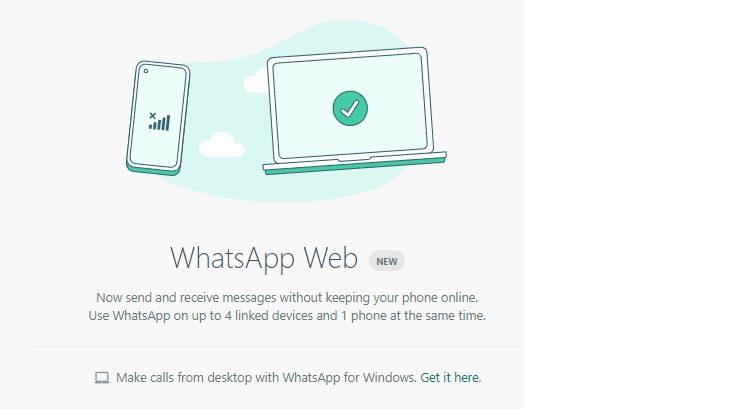
WhatsApp Web has evolved and this one is very consequential: simply, you do not need to have your phone linked anymore to chat via WhatsApp web. And if you install the WhatsApp Desktop, you will never need Skype for anything. Why? WhatsApp Web now supports advanced chatting and phone calls via your laptops and desktops.

The implication is huge: if you use WhatsApp Web or the desktop version, you can “wmail” – I am making that up for messages sent via WhatsApp Web or WhatsApp Desktop. By partially unbundling WhatsApp web from phone, Meta (yes, Facebook) is going after Zoom. This is a major disintermediation to the traditional email system provided you have the person’s WhatsApp contact. Most Zoom scheduling begins at WhatsApp; now, that video call can happen at WhatApp.

Expect them to offer slideshow support in the next coming months. Magically, everything Zoom and Microsoft Teams currently do will be available via your WhatsApp Desktop. The main difference now is that your phone sync to WhatsApp Web/Desktop is the logging you need in Zoom and Teams.

Possibly, WhatsApp web and WhatsApp desktop could offer a clear path for monetizing WhatsApp by Meta, at a deeper level. By moving things to the big screen, besides advertising, subscription is now evidently possible now for enterprise users who may need this service besides chats.
LinkedIn Comment on Feed

Comment 1: The competition has always been about who can keep customers on their platform longer. The more value users get on a platform, the longer they’ll stay. WhatsApp’s primary drawback was their overdependcy on the mobile application which was an advantage years ago, but has been hit by this new work-from-anywhere economy where users now want seamless transitions between all their devices wherever they choose to work from.

To point out though, WhatsApp is already being monetized through the Business APIs available for enterprises that allows them provide personalized and improved customer engagements:

Comment 2: That space is no longer a blue ocean where you go in and try things out, for Whatsapp to become a force there, it has to offer something better, with thrilling experience; right now it doesn’t feel like it’s close to doing that.

For Zuckerberg to play the subscription game at scale would be like swimming against the tide, because he made his name from freemium, which the world appreciated at the beginning, but now feels he’s constituting a good degree of nuisance. Nobody has ever satisfied people of the world, not even Jesus Christ.

Meta’s empire is already scary in its current state, so angling for mass adoption in market spaces where winners and laggards are more or less known, is not going to end in praises.

Zoom is the verb that owns the video call space at enterprise level, Microsoft and Google are having some shouts, others are in the also-ran league, and Whatsapp is coming to join the queue…

My Response: WhatsApp does not need to be as good as Zoom to thrive. The strategy is this: have the one oasis and try to be good in many things to reduce the churn, and keep your customers with you. So, provided WhatsApp video is good enough, that it is not great is irrelevant.

Comment 3: I do think, there is nothing possible, right?

But when considering going into a space, market, or ex ecosystem that is different from the very strategy that a company has laid, it is sometimes difficult or completely impossible, hence a complete overhaul of the existing design, strategy, or/and tactics might need to be done.

Following what Francis Oguaju said in his comment, I agree with him. The space is a Red ocean for WhatsApp. And with some features and the perception that Whatsapp has at hand, for me, it makes it impossible for me to believe it can compete in that space. It has to change a lot of things or completely change to make it possible for it.

I would leave the features to everyone’s information, which I believe we know.

Comment 4: I think WhatsApp is going after Telegram. With more than 500 million monthly active users, WhatsApp should be bothered by their obviously superior technology.

On Telegram, you can have video calls with an unlimited amount of people for an unlimited duration and the data consumption is very low.
Also, Telegram has always allowed users to connect an unlimited amount of devices to their accounts.

Telegram is cloud-based so you don’t lose your content even when you change your device. So you don’t get that ‘memory-full’ message that WhatsApp is notorious for.

Telegram is king o. It combines messaging with social excellently. I guess its only limitation is that it’s Russian.

Comment 5: The way a brand is positioned in the mind of users is very important.

WhatsApp can’t beat Zoom at the game of video conferencing; the brand was positioned to offer free chatting and data call services and that’s what we know her for.

Zoom on the other hand is premium video conferencing – I’ll subscribe to always have a team meeting for this service.

According to Prof. John Gourville, many innovations fail because consumers irrationally overvalue the old while companies irrationally over value the new, for new entrants to stand a chance they can’t be just better, they must be nine times better.”

The bar is high because old habit die hard and requires a lot to shake users out of old routines.

GoogleMeet should be asked how market? by WhatsApp before rolling this playbook.

Google to Invest $700m in Airtel India

0
Airtel Nigeria

Global interest in India’s digital economy has continued to birth investments from the big names in the tech industry. Google, Amazon, Facebook, Apple and others are either setting up companies in India or putting money in companies of Indian origin.

In 2020, Google announced $10 billion investment fund for India’s digital economy, and that’s besides previous investments it had made. The $10 billion fund opens a new chapter in Google’s India investment spree, and many companies in the internet market are set to benefit.

As part of its $10 billion commitment to India, Google will invest $700 million in Indian telecom operator Airtel, tightening its grip on the world’s second largest internet market, TechCrunch has reported.

Google said it will invest $700 million to acquire a 1.28% stake in Airtel, the second largest telecom operator in India with over 300 million subscribers, and pour up to $300 million more to explore multi-year commercial agreements with the telco.

The two firms said they will work to build on Airtel’s extensive offerings to cover a range of Android-enabled devices to consumers via “innovative affordability programs.” The companies also said they will explore partnerships with smartphone makers to “bring down the barriers of owning a smartphone across a range of price points.”

“Airtel is a leading pioneer shaping India’s digital future, and we are proud to partner on a shared vision for expanding connectivity and ensuring equitable access to the Internet for more Indians,” said Sundar Pichai, chief executive of Google and Alphabet, in a statement.

“Our commercial and equity investment in Airtel is a continuation of our Google for India Digitization Fund’s efforts to increase access to smartphones, enhance connectivity to support new business models, and help companies on their digital transformation journey.”

Friday’s announcement comes at a time when Airtel and Vodafone have been scrambling for ways to repay billions of dollars they owe to the Indian government. Vodafone gave away over 35% ownership to New Delhi earlier this month, making the Indian government its largest shareholder.

Vodafone and Airtel compete with Jio Platforms, run by Asia’s richest man Mukesh Ambani. Jio Platforms has amassed over 400 million subscribers in India, thanks to its cut rate voice calls and data offerings. Google invested $4.5 billion in Jio Platforms in 2020. Facebook and nearly a dozen more firms backed Ambani-controlled firm that year.

Airtel said on Friday that it will explore “larger strategic goals” with Google and “potentially” co-create India-specific network domain use cases for 5G and other standards. The companies also plan to collaborate on “shaping and growing” the cloud ecosystem in India, they said. Airtel, which already serves over 1 million small and medium-sized businesses with its enterprise connectivity offering, said Friday’s announcement will “help accelerate digital adoption.”

“Airtel and Google share the vision to grow India’s digital dividend through innovative products. With our future ready network, digital platforms, last mile distribution and payments ecosystem, we look forward to working closely with Google to increase the depth and breadth of India’s digital ecosystem,” said Sunil Bharti Mittal, Chairman of Bharti Airtel, in a statement.

With over 600 million internet users — and just as many yet to come online — India is one of the last great growth markets for American technology groups. Both Google and Facebook ran programs in the past decade to bring internet connectivity to tens of millions of Indians.

Tekedia Mini-MBA Double With BusinessDay Newspaper

0

There is no better deal in business education: you master the secrets of business and read the news around markets. Yes, Tekedia Institute and Africa’s finest business journalism, BusinessDay, will help you become all-round-business-ready. Go to BusinessDay and register today.

From Feb 7, we will begin the excursion for 12 weeks. My first zoom class is titled “The Innovation of Firms and Building Category-King Companies”. It promises to be amazing.

Tekedia Institute offers Tekedia Mini-MBA, an innovation management 12-week program, optimized for business execution and growth, with digital operational overlay. It runs 100% online. The theme is Innovation, Growth & Digital Execution – Techniques for Building Category-King Companies. All contents are self-paced, recorded and archived which means participants do not have to be at any scheduled time to consume contents. Besides, programs are designed for ALL sectors, from fintech to construction, healthcare to manufacturing, agriculture to real estate, etc.

The sector- and firm-agnostic management program comprises videos, flash cases, challenge assignments, labs, written materials, webinars, etc by a global faculty coordinated by Prof Ndubuisi Ekekwe. It will run from Feb 7, 2022 to end May 7, 2022.