DD
MM
YYYY

PAGES

DD
MM
YYYY

spot_img

PAGES

Home Blog Page 5359

India Opens A $10.2bn Incentives Program to Attract Chipmakers

0

India is intensifying efforts to accelerate its digital economy plan, opening the door wider for diverse investors in the tech industry.

As part of this effort, India has thrown an investment banquet for global chipmakers with 760 billion rupees ($10.2 billion) in incentives. The pandemic ushered in a global chip shortage that has sparked a race between semiconductor companies to expand production. With the increase in semiconductor companies around the world, India, like many other countries, is setting itself up for the industry players to embrace.

The chip program, with its variety of incentives, was approved by Modi’s cabinet Dec. 15 and began accepting applicants on Jan. 1. It covers up to half the initial costs of setting up chipmaking hubs in the country, including those for front-end processes involving wafer fabrication. The Indian government will cooperate with state authorities to build high-tech industrial parks equipped with clean water, abundant power and logistics infrastructure, according to Nikkei.

It added that in addition, India will provide assistance for back-end chip facilities, which handle assembly and testing. It also will support chip-design startups and nurture more talent to build a comprehensive semiconductor industry in the country.

While the program seems attractive, and has the potential to bring chipmakers to India, Nikkei pointed out in the report below, other factors that may hinder it, given that India had been here before.

India’s attempt in the past to attract top chipmakers had only a few players expressed strong interest. One option for the country this time may be to focus first on back-end processes, so it can build a rapport with industry leaders before diving into the more technologically sophisticated front-end processes.

“The response so far has been very good,” Ashwini Vaishnaw, India’s minister of electronics and information technology, told Bloomberg TV after the package was announced. “All the big players, all the significant players, are in talks with Indian partners. Many of them are directly wanting to come and set up their units here.”

Vaishnaw predicted that in two to three years, several semiconductor plants will start production and a display panel plant will be nearing completion.

Rhandir Thakur, the head of Intel’s foundry operations, tweeted later that he was glad “to see a plan laid out for all aspects of the supply chain: talent, design, manufacturing, test, packaging & logistics.”

“Intel — welcome to India,” Vaishnaw responded. Though the exchange triggered speculation that Intel looks to form a new chipmaking hub in India, the company said it has no new plans in the country to announce at this time.

Despite the buzz, doubts exist over whether monetary incentives alone will be enough to bolster India’s chip supply. The only markets in Asia to establish a domestic chip industry that includes front-end manufacturing are Japan, Taiwan, South Korea, Singapore, Malaysia and mainland China.

India has said that securing the land, water, electricity and talent needed to operate chipmaking facilities will be a national priority. But its past attempts to attract major foreign chipmakers often fell through over one of these elements, like opposition from residents over land use, or temporary changes to state labor rules.

Labor relations can be a challenge in India. Hon Hai Precision Industry, also known as Foxconn, and Wistron — both Taiwanese assemblers of iPhones — have been mired in worker protests over labor conditions in the country.

Revisiting Nigeria’s Death Sentence Proposal For Hate Speech

0

As days unfold, it seems every political leader in Nigeria is deeply concerned about how all sorts of deviant acts would be tactically flushed out of the country’s system in its entirety.

This is perhaps the reason different forms of bills pertaining to criminality or social deviance won’t cease to flood the country’s various lawmaking chambers, both at the federal and state levels.

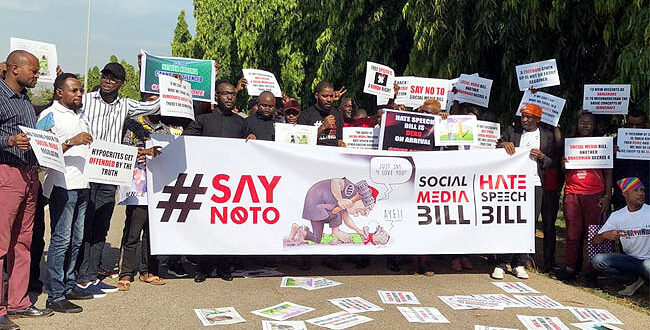
A few years back, in the National Assembly (NASS), there was a certain bill on the floor of the hallowed chamber that’s targeted at ending every kind of ‘hate speech’, which was the order of the day mainly on the new media platform otherwise referred to as the social media. It’s being sponsored by the Spokesman of the Red Chamber, Senator Aliyu Abdullahi.

The bill, which sought establishment of an ‘Independent National Commission for Hate Speech’ that would enforce hate speech laws across the country as well as advise the federal government in that regard, if passed into law, shall grant a ‘not less than five-year jail term or a fine of not less than N10 million, or both, for offenses such as harassment on the grounds of ethnicity or racial contempt.

Among other prescriptions captured in the amazing bill, it further advocates that upon conviction, hate speech offenders ought to face the hangman’s noose; meaning literally that a convicted culprit shall be facing a death sentence by hanging. The particular clause that sought capital punishment actually concerns hate speech that resulted in the death of someone.

The bill, if eventually signed into law, would unequivocally be in disagreement with Section 39 (1) of the Nigerian 1999 Constitution, as amended, that allows freedom of expression. The said section empowers Nigerians to freely hold opinions as well as receive and impart ideas cum information without interference. Hence, the NASS probably was equally thinking of how to amend this very section.

Criminalizing an activity – free speech – that showcases the true mark of any democratic terrain was enough indication that the people elected to represent Nigerians had abruptly turned against their collective existence. The truth is that, the so-called hate speech does not in any way deserves to be tagged a criminal act let alone warranting a death sentence.

It’s mind boggling that that was happening at a time every bloc across the globe, particularly the United Nations (UN), was seriously condemning prescription of capital punishment as a penalty for any kind of conviction whatsoever.

It came at an era when rational thinkers consider such a type of sentence as barbaric and archaic; at a period various civil societies are advocating life imprisonment as the greatest punishment to be served by any court of law irrespective of the nature of the offense.

The reason life sentence should be preferred to that of death has overtime been made clear. One might be erroneously sentenced, thus if such person is serving a life imprisonment, the judgment could be revisited in the long run when an authentic alibi, or as may be the case, is eventually tendered to the court that convicted him/her. Hence, it’s retrogressive for any legislature to advocate capital penalty in this 21st century.

Besides, it’s baffling to acknowledge that till date, the legislators are yet to sponsor a bill that would prescribe the hangman’s noose upon conviction as regards a case involving looting.

It’s indeed amusing, to assert the least, that this set of elected officers Nigerians look up to is still finding it difficult to align with the popular notion that looters ostensibly deserve capital punishment if convicted.

Why would someone who indulge in an act (looting) that could render thousands of Nigerians jobless and equally results in untimely death of several others be allowed to walk freely and boldly on the streets, but one who expresses his/her feelings or opinions toward the country’s leaders, or public servants in general, would be meant to serve a death sentence?

How do we reconcile this? If your thought is as good as mine, then you will agree with me that the bill in question was simply controversial, hence doesn’t merit a second hearing let alone passing it. We appreciate that it was eventually stepped down by the lawmakers.

Time has obviously arrived for Nigeria’s political leaders to start placing priorities in all their doings concerning governance. It’s not anymore news that their continuous misplacement of ‘scale of preference’ virtually in their everyday activity remains one of the basic reasons they often move aback when expected to drive ahead.

The collective yearnings of the people shouldn’t be shortchanged for their individual interests. Hence, the quest of the people who constitute the majority in the country shouldn’t be swept under the carpet.

I’m also using this medium to urge Nigerians as a people to be much focused whenever they are seeking governance. They ought not to allow their personal hatred for a certain public servant to override their collective quest for good leadership.

It’s more disturbing when realized that even the leaders seemingly don’t like themselves, thus on a daily basis, display speeches that bear hatred in the name of acting in opposition.

As much as I’m in support of the NASS’ dogged move to eradicate the so-called hate speech among Nigerians, it’s also worth noting that such a movement isn’t meant to erode the fundamental rights of the people. 

The Career Lessons from Joseph: “Remember me … mention me to Pharaoh”

1

He was sold by his brethren, and later found himself in a jail with servants of Pharaoh. They dreamt and he interpreted their dreams, a pro bono service which he used to showcase his abilities. But he did one critical thing: he told one of the servants to remember him when he finally gets out of jail.

Then Pharaoh had a dream and was troubled. None of his astrologers and thinkers could help. And one of the jailed servants, now free, told Pharaoh: “Now there was a young Hebrew man with us there…he interpreted our dreams for us… And it came to pass, just as he interpreted for us, so it happened”. Pharaoh sent for Joseph, and he helped his master.

Some lessons here: 

(1) Joseph did a pro bono (not paid) and showcased his skills.

(2) Joseph was very clear and told the servant to remember him. That request was clear and definite: “But when all goes well with you, remember me and show me kindness; mention me to Pharaoh and get me out of this prison.”

This is the deal: until people could recommend you in your absence, the promotion may not come. Joseph was recommended before the king while he was still in jail because he did a great job, and he also spoke for the person to put good words for him.

How many times have you asked your colleagues to put “some nice words” when necessary for you, besides them just thanking you for a job well done? Happy Sunday.

Reference: Genesis 40 and 41

Comment on LinkedIn Feed

Comment #1: The Bible has countless lessons. This is a professional trend that is still used a lot today- recommendation.

I tell people that one of the things I value most is trust. I want my yes to be yes. I ensure that the task which I have committed to do is done.

What I am doing is simple, I am building reputation which would eventually make ways for me.

Like Joseph, I will be more outspoken about asking for recommendations. Even linkedIn has it :)

Thanks for sharing this Prof. Ndubuisi Ekekwe

Comment #2: Joseph was recommended because he delivered value, the recommendation would have been worthless if he had nothing to offer. In other words, value attracts value.

You can be a plumber or mechanic but still have influential and wealthy people as friends, how? Just by doing a fine job when called in by one of them, and from there – they keep recommending you to those in their circles, because your quality of work is peerless. Before you know it, you start attending functions and events meant for the super rich, because you a great guy.

The world really doesn’t have much need of mediocres and those who cannot be linked with anything worthwhile, it is extremely difficult to help anyone who cannot do anything well, do not be that person.

Congrats TAP for Making YC Winter 2022

1

Join me to congratulate Africa’s largest micro-transaction fintech company, Touch and Pay Technologies Ltd (TAP), for making the YCombinator Winter 2022 program. TAP has more than 1.5 million users and powers Lagos contactless Cowry card system. With TAP, you have peace of mind with zero-leakage. Very proud of Ogo, Kabir, Olamide and Mike for what they have accomplished through innovation and flawless execution. I am always with the best #team. Congrats Team, more wins in 2022.

Preparing JumiaPay To Boost Jumia Group

1

Jumia is having a tough winter in New York. But it has a promise ahead. There are many latent opportunities in Jumia. If they unlock them, great things will happen. 

There is a great playbook: “spin off” JumiaPay and embed “Buy Now Pay Later” in it . Then do three other things with JumiaPay. 

JumiaPay has many latent leverageable factors which could compound in the 13 countries Jumia currently does business. It has to be the double play which Jumia will feed on. 

How many fintechs are in 13 African economies with millions of users and still worth with the parent company less than $800 million? Only JumiaPay – and that should change. Yes, JumiaPay alone is worth more than $1 billion. Jumia, think differently; you have all the pieces already.

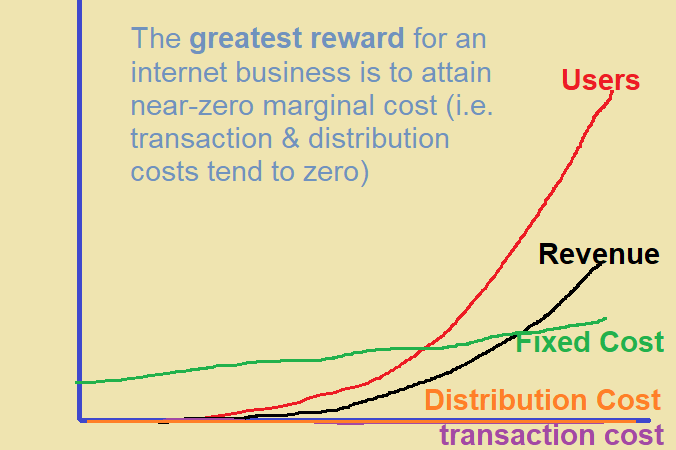
The Mastery of Marginal Cost is the Mastery of Digital Business Growth


Comment on LinkedIn Feed

Personally, I think Jumia (eCommerce) hasn’t really found Product Marketing Fit to be honest. Jumia still rides the narrative that it’s the ‘Amazon of Africa’ and some investors still see it as a way to get exposure to Africa’s growing internet economy. My concern is that Social Commerce (WhatsApp and Instagram sellering) is slowly eating the eCommerce market, and people may not be aware of this yet.

JumiaFood’s is also another huge play, and it’s growing too, 2million deliveries a quarter is definitely impressive. I believe that when companies build at scale, they must capitalize on their advantages – this is why Microsoft Teams came after Slack but still dominates that market – Microsoft had too many inherent advantages to capitalize on. If JumiaPay is their salvation, they must capitalize on it.

One of my concerns is that we’re getting to see this because Jumia is public, only God knows what’s happening at some of our privately run VC funded tech firms bleeding capital like blood. We need to balance chasing growth with core fundamentals.

P.s: Don’t go public if your fundamentals aren’t right yet.