DD
MM
YYYY

PAGES

DD
MM
YYYY

spot_img

PAGES

Home Blog Page 5379

Charles Molapisi Becomes the New CEO of MTN South Africa

0

Charles Molapisi has become the new CEO of MTN South Africa after Godfrey Motsa stepped down on January 1, ending his five years relationship with the telecom giant.

Molapisi has been serving as group chief technology and information officer (CTIO) since January 2019. He has been with the MTN group since 2009 and previously ran the group’s Zambian business for over three years and also worked for MTN in Nigeria in various roles for almost seven years. Before that he spent six years at Telkom South Africa.

“I would like to take this opportunity to thank Godfrey Motsa for the role he has played over the years in the Group, firstly as VP of SEA and then CEO of MTN SA. The changes we are announcing today are about enhancing the structures needed to execute on our Ambition 2025 strategy and delivering on our medium-term guidance,” MTN Group President and CEO Ralph Mupita said in a statement.

In December, MTN announced that Motsa would be leaving the company after five years but gave no details of why he was stepping down. The well-respected CEO joined MTN in 2016 – first as VP of South and East Africa (SEA) and then as CEO of SA.

Motsa joined MTN after spending ten years at rival Vodacom. He was previously MD of both Vodacom Lesotho and Vodacom Congo, and then Chief officer of Vodacom’s consumer business unit.

The announcement led to a domino effect of changes with Molapisi’s previous role as group CTIO being filled by Mazen Mroue, who is currently COO of MTN Nigeria and will move over to group CTIO on February 1, 2022. Mroue’s successor at MTN Nigeria is due to be announced sometime this month.

MTN said that Serigne Dioum will become group chief fintech officer on February 1, 2022. Ebenezer Asante will also assume the new role of SVP of markets, with overall responsibility of the group’s three regions – West and Central Africa (WECA), the Middle East and North Africa (MENA), and South and East Africa (SEA). While Yolanda Cuba (VP of SEA) and Ismail Jaroudi (VP of MENA) will remain on the executive committee and report to Asante.

The three Ingredients to be proved for there to be conviction for the crime of Murder

0

On our previous post, we highlighted that for their to be a conviction for murder or for an accused person to be convicted for the crime of murder, the prosecution must established three conditions beyond every reasonable doubt or the prima facie case of murder must be established against the accused by satisfying these three conditions beyond all reasonable doubt. This was the conditions that was unable to be prima facie established against those accused of killing the young lad, Sylvester Oromoni Jr, hence the reason why they were exonerated.

We would go deep into those conditions today; ie  the three essential ingredients of murder which a prosecution must prove beyond all reasonable doubt in order to secure conviction against the accused; they are as follows: Firstly, the prosecution must prove beyond all reasonable doubt that the victim died. This condition is usually not in dispute as medical reports are presented to show that the victim of the crime died hence the reason for the trial. If death is yet to happen to the victim then there won’t be any case.

Secondly, the prosecution must prove that the death of the victim resulted from the action or inaction of the accused. This means that the prosecution must prove beyond every atom of doubt that the victim in question died as a result of what the accused did or what the accused failed to do.

Finally, the prosecution must also prove beyond every reasonable doubt that the said action or inaction of the accused was intentional and with the knowledge that death or grievous bodily harm was its probable or foreseeable consequence. This simply means that it must be proved that although the deceased died as a result of what the accused did, the action of the accused was intentional, with the intent of killing the victim or causing grievous bodily harm to the victim.

Intents or intentions (which is called mensrea in legal parlance) is very crucial in criminal trials. It is what determines wether the accused be convicted for murder or for manslaughter. When the prosecution fails to prove that the action of the accused person is intentional to cause the death of the victim the accused will be convicted for manslaughter instead of murder. 

It should be known that in criminal trials, the standard of prove is “beyond reasonable doubt”, this simply means that the prosecution must prove that the accused committed the crime beyond every atom of doubt that the blind will see and the deaf will hear that the accused person truly committed that crime (visible to the blind and audible to the deaf) and it is usually the person who alleges that another person commits a crime that has the onus to prove that the accused person really committed the crime in question.

These three ingredients of murder work hand in hand and the prosecution must be able to prove all those conditions beyond every atom of doubt before the judge/jury can convict the alleged criminal. The three conditions must be proved and it’s always the second and the third ingredients that’s always in contest; linking  the accused person to the death of the victim or proving beyond all reasonable doubt that it was the act of the accused that caused the death of the deceased and that the accused had the intent  to kill the victim.

2023 is another CHANCE for Nigeria

0

As the season of politics begins, let us reflect on the promises of Nigeria. Some like us who received the best from Nigeria feel extremely unhappy about the state of things. I graduated when banks used to use stadiums (hello, TBS Lagos) to do employment tests because halls could not accommodate their needs.

My humble self received my first job offer nine months before graduation. The job offered a driver, a Mercedes Benz, a furnished 3-bedroom flat and a great pay. That was Bourdex Telecoms, to work with Canadian expats. I left that one for another. And others came. Even when I picked the bank, I had to enter the plane, the very first time, to excuse myself from Schlumberger that I was not coming. My alma mater FUTO was a center where companies were coming to hire the best months to graduation. That was Nigeria. The offer from the university was there as a backup!

So, as the political shows begin, the pundits must ask tough questions. This nation used to be super-amazing. We all became big boys because we earned GREAT money. People bought good cars just 3 months into new jobs out of universities. Whatever Obasanjo was doing was working, at least from my view!

In Alade Avenue in Ikeja, my nickname  was Chairman for doing something simple: buy mamaput for Area Boys who used to be at the Alade Av//Fela’s family house junction every pay day.

Fellow citizens, do not allow tribe, religion, division, etc to cloud your imagination for voting the right person. The TV pundits must do their jobs and present where these men and women stand. If we vote for the right people the good days will return. 2023 is another CHANCE.

Who Destroyed The Naira?

0

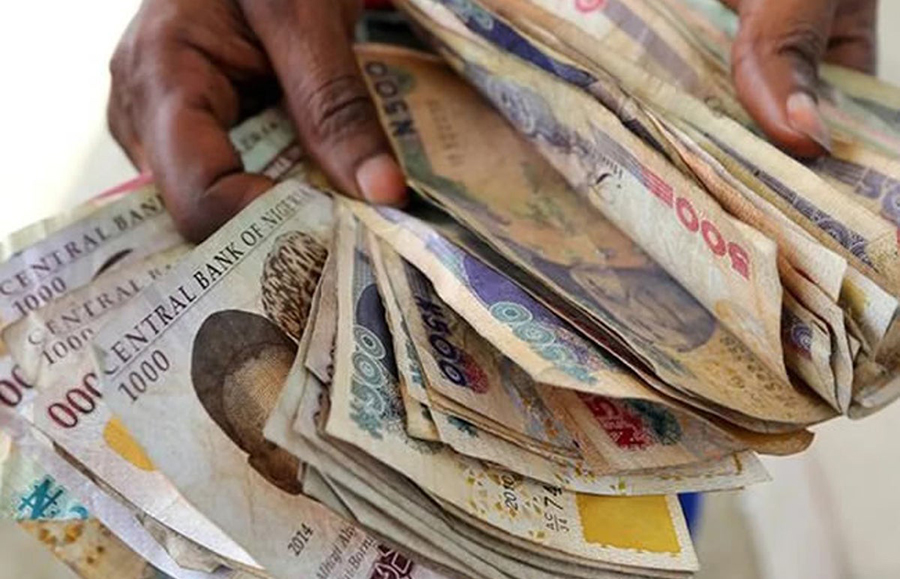
The last time I checked, the Nigeria’s currency, Naira had suffered a seemingly unpredicted destruction, though the identity of the destroyers was significantly unknown.

It’s noteworthy that this critique was informed by the compelling need for every Nigerian to comprehend fully the overall nomenclature of the masked destroyers.

Currently, the worth of the Naira per a US dollar is over #500 in the parallel market as against its official exchange of #413. Though it isn’t only Nigeria that is confronting the US dollar presently ravaging her once respected currency and local economy, it’s pertinent to acknowledge that the ongoing misfortune of the said currency didn’t abruptly emerge. It suffices to assert that the destruction was apparently a foreseen circumstance.

Going down the memory lane, it would be recalled that from 1972 to 1985, the official worth of Naira per a US dollar was between #0.66 and #0.89 involving a consistent slight fall and rise. From 1986 to 1992, it was worth between #2.02 and #9.91 involving a steady fall.

Subsequently, from 1993 to 1999, its worth was between #17.30 and #21.89, involving an onward apparent constant exchange rate after an initial decrease. Similarly, from 2000 to 2009, it was between #85.98 and #145, which involved an outrageous continuous fall. Then, recently from 2010 to 2015, we witnessed a steady fall from #150 to #171. And in 2016, it declined to #198 per a US dollar, witnessing a free fall.

The bone of contention is that from the onset, excluding the initial point when it was ostensibly steady, there has been a continuous fall of the value of the Naira when compared to the US dollar.

Hence, having painstakingly perused the above comprehensive chart, I have succeeded in disabusing us of the notion that the fall of the exchange rate of the Naira, either at the official market or parallel market, commenced in recent times. Needless to say that naira had suffered an untold hardship from genesis till this moment.

But if you take a closer glance at the above analysis, you would observe that it was during the democratic era that the Naira’s value fell outrageously, although the origin of its downward depreciation could be traceable to 1986 or thereabouts. In view of this assertion, one may be challenged to ascertain the reason for such anomaly.

The answer is simple. Any democratic leadership, compared to military regime, is usually synonymous with loose principles or policies. This implies that the former often ends up overlooking the invariable nonchalant or lackadaisical attitudes of its citizenry, which is definitely not a wholesome practice in any society that intends to grow economically. Most times, sustaining a certain policy requires a non-human face. Read my lips!

Looking beyond the history, currently it’s obvious that the value of the Nigeria’s currency, Naira is diminishing on a daily basis as if it’s being relentlessly and endlessly pursued by a hidden monster.

The ongoing phenomenon unarguably is categorically not unconnected with the recent stiff measures taken by the nation’s apex bank – the Central Bank of Nigeria (CBN).

It’s no longer news that a few years back, foreign exchange for importation of various commodities into the country was banned by the Mother bank. This severe approach made people, particularly importers, to divert their attention to only the various illicit Bureaux De Change (BDCs) situated across the nation.

Consequently, the CBN ordered the closure of all the existing branches of the BDCs in Nigeria, and thereafter stated that, it could not continue selling foreign currencies directly to them (the BDCs).

Owing to the above sanctions, the various seekers of foreign exchange (forex) shifted their entire attention to the parallel market, thereby causing an alarming increase of the demand for forex at the market. This is no doubt the sole reason a US dollar is being unofficially sold at almost #600.

However, the question remains, who destroyed the Naira? Unequivocally, the currency in question was dastardly molested and destroyed by some unscrupulous elements in Nigeria as a result of their selfish interests.

Bfree, Nigerian Ethical Credit-Recovery Startup Raises $1.7m to Expand Services

0

Recently, digital loan companies took the center stage of Nigeria’s private data watchdog, National Information Technology Development Agency (NITDA), who found some of the lenders, who use ‘shaming’ as a debt-recovery technique, guilty of invading and violating the privacy of borrowers. Sokoloan was fined N10 million last year.

The development exposed a friction in the burgeoning digital loan market, especially in Nigeria. How can digital lenders recover their money without violating people’s privacy?  A company has found an answer to the question, and is now raising millions of dollars to expand its services around the world.

Bfree, a Nigerian credit management fintech, which uses data provided by the lenders to build the user profiles of defaulters, running their data through an algorithm to predict their behavior and recommend the best way to collect debt, has raised $1.7 million in a pre-Series A round to expand into new markets where new digital lending apps are springing up.

Investors include 4Di Capital, Octerra Capital, VestedWorld, Voltron Capital, Logos Ventures among other angel investors.

The latest round brings the total capital raised by the Lagos-based startup to $2.5 million, since it started operation in August last year. The startup raised $800,000 in a seed round last May.

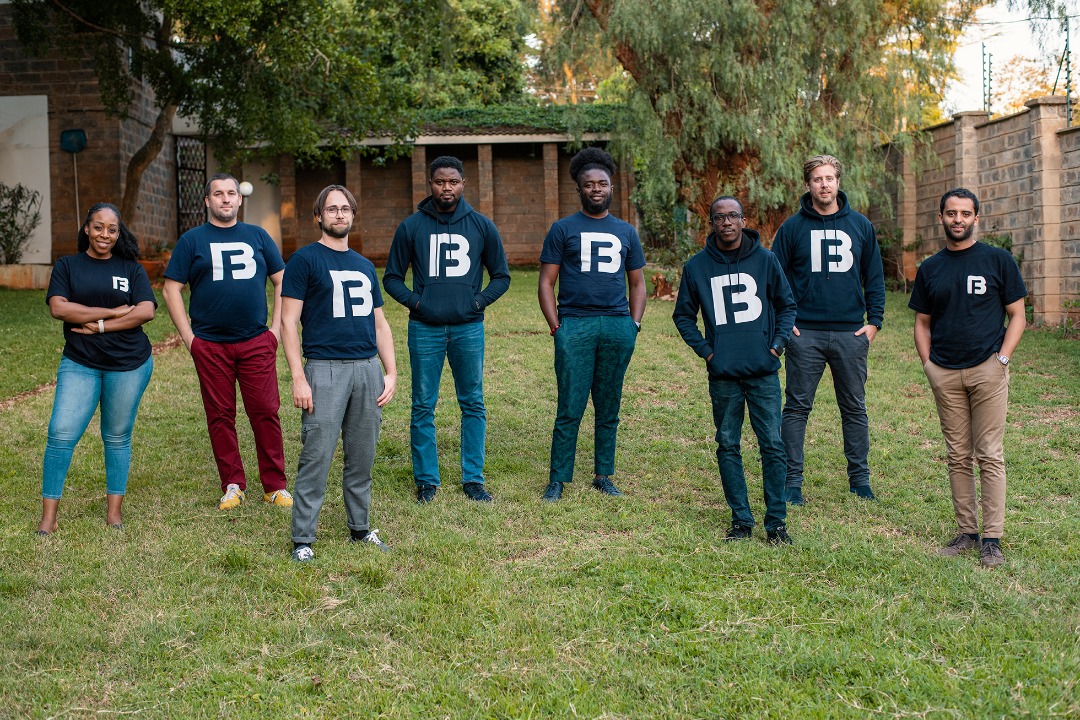
Founded by Chukwudi Enyi (COO), Moses Nmor (CPO) and Julian Flosbach (CEO), Bfree is growing rapidly as ethical tech-based debt-collection tools. This means exploring new markets following the acceleration of digital loans. The market is buoyed by the huge number of underserved people shut out of loan services by traditional financial firms.

“We are going into markets with large populations, credit deepening and an underdeveloped regulatory environment, where a behavioral collection approach is likely to work,” Bfree co-founder and CEO Julian Flosbach told TechCrunch.

“We saw that there was like a little bit of a breach in the value proposition of lenders — they are good at giving out loans, but the aftersales services of the credit market didn’t work as collections processes were inefficient and not user friendly,” said Flosbach.

Bfree has found 16 new markets which include Ghana, India, Uganda, Brazil, Colombia, Mexico, Russia, Poland, Pakistan and Indonesia. The startup is now recruiting massively as it sets up operations in the new markets.

Flosbach told TechCrunch that Bfree employs the use of ethical debt collection standards and works closely with defaulters for tailor-made settlement options, with the end-goal of increasing the repayment rate and customer satisfaction.

By applying ethical debt collection standards, Bfree ensures the privacy of customer information during the process, explore flexible repayment options and do not lead to unnecessary penalties like lateness fees and debt-shaming.

Per TechCrunch, Bfree is currently working with 30 credit institutions, including digital lenders, micro-finance institutions and banks. The startup uses a two-way method, depending on a customer’s risk. It either directs them to a self-service platform, where borrowers set new payment plans using their phone number, or follows up on debt balance through automated communication (chatbots, callbots or IVR technology) or direct calls.

Using the ethical debt collection standards, Bfree has so far followed up with 1.1 million defaulters to date, and is currently handling around 800,000 customers, a majority of them in Nigeria. Flosbach said it anticipates the startup to be handling 1.4 million profiles by the end of next month.

Bfree’s ethical debt collection now presents a solution that will end the controversial method of debt-shaming, which has seen digital loan firms calling and texting friends and family members on the contact list of their borrowers.