DD
MM
YYYY

PAGES

DD
MM
YYYY

spot_img

PAGES

Home Blog Page 5383

French Watchdog Fines Google, Facebook €210 Million for not Making Cookies Refusal Easy

0

Europe has continued to tighten its grip on antitrust, holding the Big Tech responsible on issues that had been previously ignored. With almost each month passed, a member of the Big Tech gets served a fine for violating an antitrust rule which has kept getting updated to cover emerging innovations.

To this end, France’s data privacy watchdog, Commission Nationale de l’Informatique et des Libertés (CNIL), on Thursday, fined Google and Facebook (yes, Meta) a combined €210m. The fine came after the duo was found guilty of manipulating cookies to their own advantage.

Google received €150 million while Facebook got a €60 million share of the fine for hampering users’ ability to stop the companies tracking their online activity. The CNIL said the companies make it difficult for internet users to refuse cookies.

“When you accept cookies, it’s done in just one click,” said Karin Kiefer, CNIL’s head of data protection and sanctions. “Rejecting cookies should be as easy as accepting them.”

The CNIL, like the European GDPR, (general data protection regulation) has prioritized user privacy in its antitrust regulation, making consumers’ ability to reject cookies a serious issue.

The watchdog said the facebook.com, google.fr and youtube.com websites deliberately made it difficult for users to refuse cookies. “Several clicks are required to refuse all cookies, as opposed to a single one to accept them,” it said about Facebook.

Reacting to the fine, a Google spokesperson they will work with the regulator “in light of this decision.”

“People trust us to respect their right to privacy and keep them safe. We understand our responsibility to protect that trust and are committing to further changes and active work with the CNIL in light of this decision,” the spokesperson said.

A spokesperson for Facebook’s parent company, Meta, said: “??We are reviewing the authority’s decision and remain committed to working with relevant authorities. Our cookie consent controls provide people with greater control over their data, including a new settings menu on Facebook and Instagram where people can revisit and manage their decisions at any time, and we continue to develop and improve these controls.”

The CNIL said the companies had three months to comply with its orders, including making it easier for French users to decline cookies, or face extra penalty payments of €100,000 for every day of delay.

Per The Guardian, the CNIL strengthened consent rights over ad trackers in 2020, saying websites operating in France should keep a register of internet users’ refusal to accept cookies for at least six months. It also said internet users should be able to easily reconsider any initial agreement concerning cookies via a weblink or an icon that should be visible on all pages of a website.

Facebook’s ad sales had been severely impacted by updated Apple’s iOS privacy policy, which gives iPhone users the choice to stop Facebook from tracking them for targeted ads. The privacy policy update, which came into force mid-last year saw Facebook’s ad sales decline greatly as only about 25% of iPhone users choose to allow tracking.

The CNIL rule means that Facebook will likely lose more in ad sales as consumers are given the choice to easily decline cookies.

“Tekedia Mini-MBA is a Fantastic Program for Self Development” – Toyin F Sanni

0

A masterpiece on the African Continental Free Trade Agreement (AfCFTA) by an African business leader, Toyin F Sanni – Business Leader Gamechanger Investment Banker, only at Tekedia Mini-MBA.

Tekedia Institute >> learn from the best

Join here


Perfection of title in land transactions in Nigeria

0

There’s the ignorance that when a buyer of a landed property pays for the property and the deed of assignment is executed and the title documents change hands and it’s been transferred from the seller to the buyer then the transaction is complete. Albeit, the transaction is still inchoate and very much incomplete save and except the title document has been duly perfected.

Perfection of title is the completion of the acquisition of interest, transfer of title and ownership vested in the land. It is the active step taken by parties to the transaction to complete the transaction by registering the title document with the appropriate state land registry where the land is situated.

There are three active steps taken in perfection of title in land transactions in Nigeria; it starts from the obtaining of the Governor’s consent or approval, to stamping the documents and the final step is registration with appropriate land registry.

According to the Land Use Act, the Governor holds in trust every land in the state and for every transaction on a land to be complete and valid, the consent of the Governor who is the grand landlord of the state must first be obtained and his approval on the transaction must be duly gotten in writing. A land transaction that is yet to be approved by the Governor of the state where the land is situated is yet to be complete (in the case of the Federal Capital Territory, the FCT minister is the one in charge of the land and his consent must be obtained for the land transaction to be valid).

Once the Governor’s consent has been obtained (or the FCT minister in the case of the FCT), the next step is the stamping of the land transaction document and payment of stamp duties. You pay the appropriate state or federal revenue collectors for the transaction documents to be stamped. The stamp duty charge is usually 2-3% of the value of the transaction depending on the state.

The third and final stage is to register the documents with the state land registry where the land is located. This process is to be followed step by step as none of the stages can come before the other; the first step must be to obtain Governor’s consent or approval on the transaction then follows stamping of the documents and payment of stamp duties then you can take the documents to the land registry for registration. Once the documents have been registered, the title can be said to be perfected and the transaction will no longer be said to be inchoate.

According to s.62(1) of Lagos State Lands Registration Law, 2015, transactions on land or transfer of land title shall be deemed to be complete only after the deeds have been registered at the Land Registry of the state.

The Sorry State of Nigeria’s Education Industry

0
school kids feeding

The other day, a respected Nigerian reacted on his twitter handle, saying foreign education was never the bane of Nigeria’s foreign reserve or her economy in its entirety.

He went further to state that our forefathers including Dr. Nnamdi Azikiwe and Chief Obafemi Awolowo invested in foreign education, thus the practice shouldn’t be seen as an economic menace; rather, ought to be celebrated.

According to him, Nigerians and Nigeria needed to continually invest in foreign education with a view to bringing enhancement in the country’s educational system and its economy at large. In other words, Nigeria needs foreign education if she must grow.

I strongly sensed a lack of patriotism in his words; needless to say that the unpatriotic nature of most Nigerians, particularly the so-called stakeholders, remains the bane of Nigeria’s education industry.

The last time I painstakingly checked, without mincing words, the survival of any nation as a people depended solely on the health status of its educational sector. In line with this singular fact, the inevitable role of education in the development of any society has been vastly documented in a series of global academic journals.

Presently, Nigeria being widely regarded as the giant of Africa is unequivocally still uncertain where she’s headed regarding her educational system. Suffice to say that, her destination is yet to be known by the concerned citizenry. It is against this backdrop that the minds of many of our young ones are preoccupied with the intention of leaving the country for elsewhere for their respective academic pursuits.

It is no longer news that most educational programmes initiated by the Nigerian government, have ended up serving as mere siphons to transfer money to the bank accounts of the corrupt political officers and their allies.

To start with; since the commencement of the Universal Primary Education (UPE) in 1976, the programme has failed to perform effectively as anticipated as a result of lack of funds necessitated by corruption, among other related factors.

Furthermore, the Universal Basic Education (UBE) initiative launched by Chief Olusegun Obasanjo in Sokoto State precisely on 30th September 1999, which was intended to be universal, free and compulsory, has in the long run seemed incapacitated due to the ongoing troubling revelation of shortage of teachers as well as employment of half-baked tutors in our various schools, also attributed to the aforementioned socio-political cankerworm known as corruption.

These and a lot more similar programmes taking place in Nigeria’s educational sector have been hampered by corruption, thereby crippling the nation’s socio-economic system at large.

It’s obvious that most of the country’s school structures are currently in a dilapidated state, which shows that Nigeria has a weird value system whose revitalization requires only a candid measure.

Indeed, Nigeria is a society where priorities are considered to be less-important. For example, the monthly wages of the less/non – educated local government councillors serving in various political wards are far greater than that of university professors. Of course, something is apparently wrong with any society that doesn’t take its educational system seriously.

As the disgusting culture of corruption persists, the public tertiary institutions have been left to rot away. Some of the loans received from the World Bank and other related institutions towards the revitalization of the nation’s education industry, were rather used to purchase inconsequential equipment that could not be properly installed or sustained, and several institutions received irrelevant books and journals in this regard, thereby making the universities that were meant to be research-oriented centres seem not unlike mere hockey pitches.

Due to this anomaly, each year, the tertiary institutions in the country send-forth hundreds of thousands of half-baked graduates in different fields of endeavour to the nation’s labour market.

Sincerely, to restore the Nigeria’s economic sector, there is an urgent need to revitalize her education industry, and this measure can only be actualized by revisiting all the factors that currently affect the industry in question, such as lack of infrastructure, teaching facilities, social amenities, poor wages and incentives, substandard teaching curriculum, high tuition fees, just to mention but a few.

First and foremost, the governments at all levels must begin from the grass root. They ought to, as a matter of urgency, rehabilitate all the dilapidated technical colleges situated in various locations across the country as well as provide adequate facilities required to run the schools, and sufficient funds to sustain the said structures and equipment.

The truth is that the country’s anticipated technological development or enhancement shall remain a mirage if the grassroots are not properly addressed. There are no two ways about it. 


this piece is completed here.

Nigeria’s Digital Tax and the Twitter Ban

0

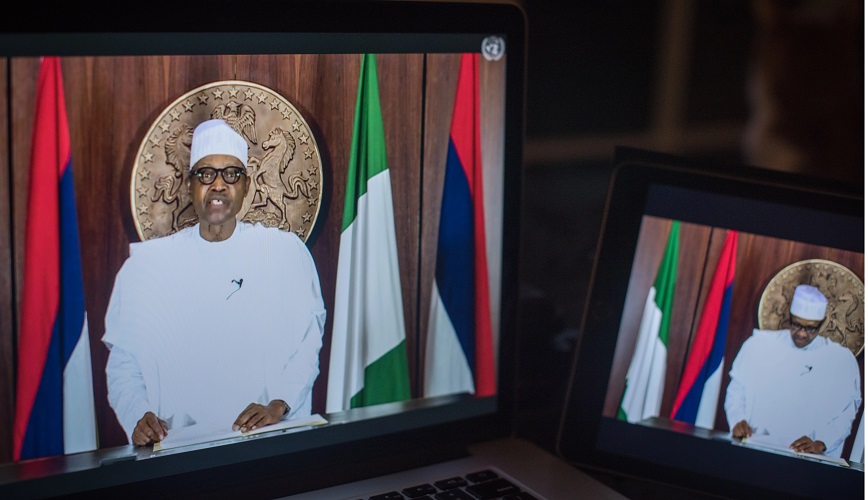
As part of its 2022 tax policy contained in the 2021 Finance Act, the federal government of Nigeria is moving to introduce digital tax. This means, non-resident companies (NRC) will be required to remit 6% of turnover from digital services provided to Nigerian customers.

An NRC is a company such as Twitter, Zoom and Amazon, not registered or incorporated in Nigeria but makes profits or income from Nigeria.

President Muhammadu Buhari’s administration has been working on a tax framework that will enable the government to tax multinational digital companies not registered in Nigeria.

Zainab Ahmed, minister of finance, budget and national planning, said on Wednesday during the public presentation of the 2022 approved budget held in Abuja, that the time for the digital tax has come.

The Finance Act, which was signed into law on December 31, 2021, empowers the FIRS to assess and charge on the turnover of the digital companies transmitting or operating in the country.

Ahmed said that section 4 of the Act made provisions for the taxation of e-commerce businesses by non-resident companies on a fair and reasonable turnover basis, set at 6% of turnover. That includes digital services provided through apps, trading platforms, online ads etc.

“This provision empowers FIRS to access non-resident firms to tax on Fair and Reasonable Turnover Tax Basis on turnover earned from digital services provided to Nigerian customers.

“Let me just note that such digital services include apps, high-frequency trading, electronic data storage, online advertising and several others. The rationale for this is to modernise the taxation of ICT and digital economy in line with current realities, and this is in conformity with the provisions of the national development plan of 2021,” she said.

The minister explained that the digital tax framework factored in the Finance Act requires digital NRCs to collect VAT from their Nigerian customers and remit to the FIRS.

“At section 30 of the Finance Act, designed to amend section 10 of VAT as well as section 31 and 14 of VAT, is in relation to VAT obligations of digital non-resident companies.

“The mechanism that will be used is to restrict VAT obligations mainly to digital non-resident companies who supply individuals in Nigeria, who cannot themselves self-account for VAT.

“If you visit Amazon, we are expecting Amazon to add a VAT charge to whatever transaction you are paying. I am using Amazon as an example. We are going to be working with Amazon to agree to be registered as a tax agent for the FIRS. So Amazon will now collect this payment and remit to FIRS, and this is in line with global best practice. We have been missing out on these revenue streams,” she said.

The new tax policy also made some exemptions. Ahmed said the Finance Act also considers reducing tax compliance orders on non-resident taxpayers who are not required to register for VAT in Nigeria.

“So they don’t really have to come and be registered companies in Nigeria. All they need is that arrangement with FIRS where they collect VAT on behalf of FIRS and remit to FIRS.

“And also, to clarify, that FIRS may appoint persons including non-resident companies for the purpose of VAT collection and to clarify again that appointed persons may collect and remit taxes to FIRS, pursuant to the relevant tax laws.

“The core rationale for this is to modernise the taxation of ICT and digital economy in line with the National Development Plan 2021-2025, to enhance administrative modalities for the taxation of non-resident taxpayers and also to reduce incompliance by non-resident payers to reduce the compliance burden,” she said.

Twitter ban

However, the digital tax presents a challenge that Nigerians are waiting to see how the government will handle it. Twitter has been banned since last year by Buhari’s administration. As part of the criteria for the app to be unbanned, the government has demanded that Twitter register its business and open an office in Nigeria in order to pay taxes.

Months have passed since the Nigerian government made the demands and there is no sign that Twitter has accepted the demand despite the government’s claim that the social media platform has agreed to its ultimatum.

Therefore, it is unclear what the digital tax policy will mean to the standoff. For the Nigerian government to enforce the digital tax on Twitter, the ban has to be lifted. Government’s determination to stand its ground on the Twitter ban will now mean losing millions of naira in taxes.