DD
MM
YYYY

PAGES

DD
MM
YYYY

spot_img

PAGES

Home Blog Page 5385

Toyota Dethrones GM As America’s Top Selling Automaker in 2021

0

The automobile industry has continued to witness unprecedented shifts as competition intensifies amidst emerging innovations and disruptions setting the market’s pace. For some companies, it means staying ahead, while for some others, it means losing their place in the market.

In the U.S., the electric vehicle market led by Tesla has eclipsed the progress of companies running gasoline vehicles. Tesla has been watching them from a league of its own, fight for the leadership of their outdating market. The gasoline auto companies have had to contend with the global push for cleaner energy, which has been increasingly discouraging the use of combustible engine vehicles.

However, amidst the push for cleaner energy and global chip shortage, the market has been bubbling, and in the most astounding way, it has produced a new leader.

Toyota Motor has dethroned General Motors as America’s top-selling automaker in 2021, marking the first time since 1931 that the Detroit automaker wasn’t the best-selling car company in the U.S.

It also marks the first time a non-domestic automaker has taken the top spot in America. CNBC reports, explaining why Toyota got ahead this time.

Toyota was able to manage supply chain issues better, allowing it to take away GM’s throne for the first time in 90 years. An ongoing shortage of semiconductor chips caused sporadic shutdowns of plants and led to record-low vehicle inventories in 2021.

GM said Tuesday it sold 2.2 million vehicles in the U.S. in 2021, down by 12.9% compared to the year earlier. Toyota, by comparison, said it sold 2.3 million vehicles in the U.S. last year, up by 10.4% compared to 2020. The difference in sales between the two automakers was 114,034 vehicles.

Jack Hollis, Toyota North America’s senior vice president of automotive operations, downplayed the company’s No. 1 ranking.

“Yes, we did surpass General Motors in sales,” he told reporters during a call Tuesday. “But to be clear, that is not our goal, nor do we see it as sustainable.”

GM has been the largest seller of vehicles in the U.S. since 1931, when it surpassed Ford Motor, according to data from industry publication Automotive News.

GM’s stock achieved a new 52-week high Tuesday of $65.98 a share before closing at $65.74 a share, up by 7.5%. The jump followed the automaker saying the chip shortage was easing and it increased production at the end of the year.

GM said its fourth-quarter production and wholesale deliveries were up significantly from the third quarter as supplies increased. Dealer inventory, including in-transit vehicles on their way to dealers, was 199,662 at the end of the fourth quarter, up from 128,757 cars and trucks at the end of the third quarter.

Toyota was able to achieve the milestone by increasing sales of both cars and trucks last year, despite a 25% decline in sales of its full-size Tundra pickup. Sales of its smaller Tacoma pickup increased by 5.7% to 252,520 units.

It was a rough sales year for GM due to the semiconductor chip shortage. Sales of its highly important Chevrolet Silverado pickup – its best-selling vehicle – were down by 10.8% to less than 530,000 units.

Aside from Ford, which sold 1.7 million vehicles through November, most major automakers are scheduled to report their fourth-quarter and 2021 total domestic sales on Tuesday. New light-duty vehicle sales are expected to be about 15 million in 2021.

Industry analysts and forecasters are mixed on their sales forecasts for 2022 due to the volatility in the market. They range from about 15.2 million vehicles to around 16 million vehicles or better.

GM North America President Steve Carlisle said the automaker plans to increase its sales and marker share next year, potentially regaining its sales title.

“In 2022, we plan to take advantage of the strong economy and anticipated improved semiconductor supplies to grow our sales and share,” he said in a release Tuesday.

You will need a Deed of Assignment on that property

0

A Deed of Assignment is a legal document that evidences a sale of land and transfers interest, right, ownership and title in a real property from the transferor (the seller) to the transferee (the buyer). This document (deed of assignment) is of high importance in landed property transactions and it’s considered a must for the transfer of ownership in land.

It is the legal document that records that a land owner or prior owner of a land who is the seller of the land have transferred all his title, ownership, interest and right on the land in question to the buyer. Without this document in land transactions, you have nothing, hence its reason of high importance and value in real estate law and real estate transactions.

A land owner or purported land owner who is selling a land and is against the buyer of the land having a deed of assignment on the land in question is a fraudster. Deed of assignment is the first check that authenticates the genuineness of a land transaction.

Deed of assignment can suffice also as a valid root of title (although it is said to be not a good root of title), be it as it may, it is a step in the right direction in favour of whosoever can provide or in possession of the document (deed of assignment) on a particular piece of land as It can serve as an evidential proof of ownership (albeit rebuttable) of that land. (To learn more of why deed of assignment is not a good root of title, read the article already published in this platform in that regard titled “Your land C f O does not prove that you own the land).

It should therefore be taken into consideration that a deed of assignment despite how important it is in a land transaction is not a good root of title save and except it has been duly perfected. It is still a worthless piece of paper and your ownership of the property which it evidences can still be contested by a third party.

Therefore, for you to make your deed of assignment valid and sacrosanct, you need to duly perfect it. Perfection of a title document or deed of assignment is the registration of that legal document with the appropriate land registry where that land is located or situated. Without perfection of the deed of assignment, the legal document is worthless and of no value because the transaction is still incomplete or inchoate.

From now onward, whatever landed property transaction you get yourself involved in, make sure to get a deed of assignment on that property as it is the proof that title, interest, rights and ownership on that land have changed hands from the previous owner (the seller) to you the buyer and when you obtain a deed of assignment on the property also make sure it is duly perfected if not the deed of assignment will be valueless as an unperfected deed of assignment is a worthless piece of legal document and it’s of no importance.

N/B: Always get a lawyer involved in your dealings.

As A Startup, Launch With A Niche Purpose

0

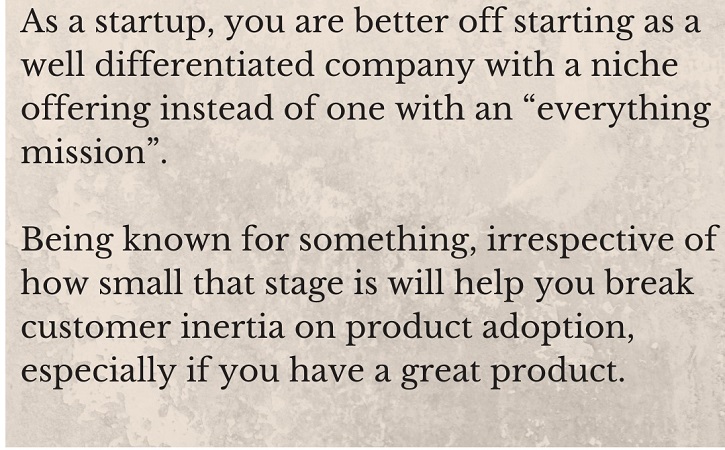
As a startup, you are better off starting as a well differentiated company with a niche offering instead of one with an “everything mission”. Being known for something, irrespective of how small that stage is will help you break customer inertia on product adoption, especially if you have a great product.

Of course, over time, you can broaden your products to the mainstream domains. But at the early phase, have a clear niche purpose to attract differentiated early adopters who will propel you into the future.

Simply, it is easier to be a category-king than a sector-king. Yes, you cannot do everything on day 1.

Revisiting The Nigeria-China Currency Swap Deal

0

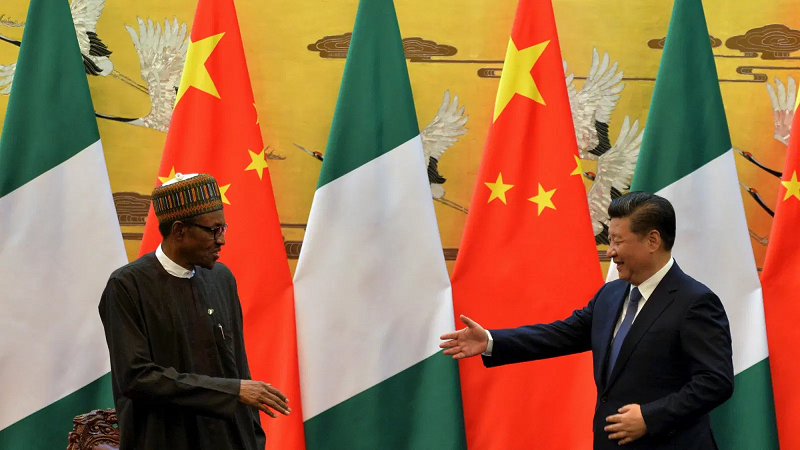
It could vividly be recalled that a few years ago, Nigeria and China under the watch of President Muhammadu Buhari graciously entered into a 2.5 billion dollar worth currency swap deal.

It’s noteworthy that a currency swap deal allows two institutions to easily exchange payments in one local currency for equivalent amounts in order to facilitate bilateral settlements and provide liquidity support to financial markets.

Recently, the Godwin Emefiele-led Central Bank of Nigeria (CBN) and the Yi Gang-led People’s Bank of China (PBC) commenced the execution of the $2.5bn currency swap deal. The bilateral pact was meant to allow both sides to swap a total of 15 billion Renminbi (RMB) for 720 billion naira, or vice-versa, in the next three years.

The business relation, whose duration could be extended by mutual consent, made Nigeria to become about the fourth country on the African continent to have such a deal with China, following Ghana, South Africa and Zimbabwe.

It’s worthy of note that the transaction was primarily aimed at providing adequate local currency liquidity for Nigeria and Chinese industrialists and other businesses towards reducing their hurdles in the search for a third currency such as the US dollar, Euro or Pounds sterling, as the case might be.

The then CBN’s Acting Director on Corporate Communications, Mr. Isaac Okorafor explained that, henceforth, the Chinese businesses would get naira liquidity and the Nigerian businesses would, in reciprocation, acquire RMB liquidity under the agreement.

According to him, the deal would improve the speed, convenience and volume of transactions between both countries. It would equally assist them in their foreign exchange reserves management, enhance financial stability and promote broader economic cooperation among them.

Mr. Okorafor further highlighted that the bilateral pact “will make it easier for Nigerian small and medium enterprises and cottage industries to import raw materials, spare-parts and machines. To facilitate their imports, they can get RMB facility from Nigerian banks without being exposed to the difficulties of seeking other scarce foreign currencies”.

It was imperative to acknowledge that an economic deal of this kind is usually accompanied with numerous merits. The swap pact as it stood had the potential of boosting Nigeria’s foreign reserve, thus assuring the stability of the country’s foreign exchange market.

Similarly, the deal was liable to elevate the outlook of the country’s currency, Naira, in the international sphere. It would in the process hold the naira in high repute in the global market, because the currency would be made available in the Chinese apex bank and other financial institutions domiciled therein.

Hence, it was meant to make the businessmen resident in China, not just Chinese nationals, to assess the naira with ease while transacting with their Nigerian counterparts.

As at then, I however stated that Nigeria needn’t sweep the likely demerits of the deal under the carpet. The bilateral policy might in the long run instigate Nigeria to demand more from China. This foreseen negative effect, which will consequently intensify importation, was supposed to be a factor of great worry to any concerned Nigerian considering what the implications would entail.

Just like my candid analysis on the recent move by the United Kingdom (UK). It’s not anymore news that recently the UK’s Export Finance Agency disclosed its intent to add naira to its list of pre-approved currencies, allowing it to provide financing for transactions with Nigerian businesses dominated in the local currency. The policy was summarily targeted to accept Naira as a legal tender in the British market.

Policies of such, though have the tendency of boosting the Naira in the international sphere, can pose more harm as the journey progresses. It was obvious that Nigeria had little, or perhaps nothing, to offer to China as regards exportation.

On the other hand, acknowledging that China was already as at then one of the leading global economies in the area of technology, it wasn’t sceptical that the Asian country had absolutely a lot to offer to Nigeria while discussing importation.

The above assertion was the reason I unequivocally made it clear that the citizens shouldn’t jubilate in haste regarding the bilateral relation. Although the CBN assured Nigerians that the 2015 ban on 41 commodities in regard to foreign exchange remains sacrosanct hence the swap deal wouldn’t make Nigeria emerge a dumping ground for the Chinese products, it was pertinent to notify the apex bank that if apt measure wasn’t taken, the assurance would hold no water in the nearest future.

We weren’t unaware that the parallel market otherwise known as black market, which is apparently harboured in Nigeria’s foreign exchange sector, was on a daily basis gaining momentum in the country. In view of this, the importers domiciled in the country could still have their way via the assistance of the unscrupulous currency speculators.

Since it’s not equally false that Nigeria’s various borders were still porous as at the time of this deal, it was an indication that if the RMB is eventually assessed by the importers through any available channel within their reach, the goods and services from the Chinese markets could easily be smuggled into the country.

I therein stated that as Nigerians celebrate over the seeming milestone, it was crucial to enjoin the Buhari-led government to concentrate more on diversifying the country’s economy, so China would have more to request from Nigeria rather than the reverse. The proposed measure was necessary, so that the bilateral deal wouldn’t lead to imbalanced transactions cum benefits.

Many years after the deal was struck, no good effects had reportedly been recorded in that regard, signifying that all the concerns raised by me and my likes weren’t out of place. 

Sugar Tax: Nigeria Introduces N10/Liter Tax on Non-alcoholic Beverages

0

Amidst growing outcry over multiple taxation in Nigeria, the federal government has introduced an excise duty of N10 per liter on all non-alcoholic, carbonated and sweetened beverages.

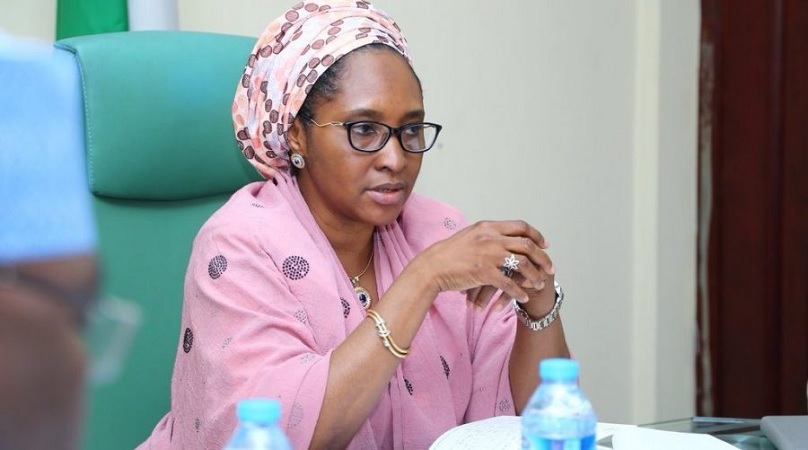
Disclosing this during the public presentation of the 2022 Appropriation Act yesterday in Abuja, Minister of Finance, Budget and National Planning, Zainab Ahmed, said the move is part of the government’s plan to generate revenue and  tackle the growing obesity and diabetes menace in Nigeria.

Excise duty is a form of tax imposed on locally manufactured goods.

The policy, known as ‘Sugar Tax’, had been advocated since last year by a coalition of non-governmental organizations called National Action on Sugar Reduction (NASR), who believe it is needed if the Nigerian government is to tackle diabetes and obesity. The Sugar Tax thus becomes part of the new Finance Act signed into law by President Muhammadu Buhari on December 31, 2021, which as it unpacks, reveals a pack of new tax laws that touch many sectors of the economy.

Ahmed said the 2021 Finance Act also raised excise duties and revenues for the health sector, and it introduces new digital taxes.

The Minister said the excise duty on soft drinks would discourage excessive consumption of sugar beverages which contributes to diabetes, obesity among others.

“There’s now an excise duty of N10/per liter imposed on all non-alcoholic and sweetened beverages; and this is to discourage excessive consumption of sugar in beverages which contributes to a number of health conditions including diabetes and obesity.

“But it is also used to revenues for health-related and other critical expenditures. This is in line with the 2022 budget priorities,” she said.

Tax has been an integral part of Buhari’s administration policy review. New tax policies which include upward review of VAT and Stamp Duty charges, were introduced last year. The federal government has continued to seek ways to generate more revenues through taxation, part of the reasons the Finance Act has to be reviewed.

However, every move by the federal government to impose additional tax on Nigerians, has come at the cost of more economic pains owing to Nigeria’s meagre disposable income. With more than 40 percent of Nigerians living below the poverty line, each of the new tax policies has been considered ‘insensitive.’

As expected, the ‘Sugar Tax’ was condemned.

Apart from consumers, manufacturers and distributors in the food and drinks sector are impacted by the Sugar Tax. Many started early enough to condemn the government’s move to introduce N10 tax on non-alcoholic beverages.

On December 14, 2021, the Organized Private Sector, OPS, made it known that it stands against the excise duty.

“It is instructive to note that Nigerian manufacturers have been contending with the dislocations caused by the pandemic and the recession that followed; they are also facing serious crisis resulting from liquidity challenges in the foreign exchange market, which is impacting adversely on the cost of production; in addition, they are faced with intense pressure arising from numerous structural bottlenecks that are creating sustainability challenges for investors, especially those in the SME segment.

“Also of concern is significant spike in the cost of raw materials, cost of fund, high import duty, elevated energy cost, prohibitive cost of transportation and high cost of logistics/shipping.

“We therefore, urge Government to jettison the idea of reintroducing the Excise Duty on carbonated drinks but continue to support and promote the industry to attain full recovery after the onslaught of the pandemic and position it to further accommodate the teeming unemployed Nigerian, particularly the youths,” Mr Taiwo Adeniyi, the OPS Chairman stated.

In addition to the high cost of goods and services, another angle to the pains of this Excise Duty was pointed out by the president of the National Union of Food, Beverage and Tobacco Employees, NUFBTE , Union, Mr. Lateef Oyelekan. He said: “Should this excise duty be imposed these companies would have no choice than to lay off workers.

“Some may have to reduce production line instead of expansion, while some may even close down permanently. It has happened in the past. At the end, Nigerians are the ones that will suffer.

“These companies are already looking outside Nigeria for alternate production of their products and would rather move to a more favourable business climate in the West Africa region.”

Oyelekan’s postulation was corroborated by the Fiscal Policy Partner and Africa Tax Leader at PwC, Mr Taiwo Oyedele.

“I will be more concerned about sectors like manufacturing because their cost is rising and they are not able to increase their selling prices because the purchasing power is low.

“If you impose a tax, because they want to survive, they have to cut down on employment and find a way to survive. In terms of inflation, when you impose maybe an excise tax, if the sector is able to pass it on to customers, it would be higher selling prices, leading to inflation.

“But if the products are very elastic, and you are afraid of losing the market, then you bear the costs and your margins will be low. If your margin is low, it means what you pay in company income tax will be less, and your shareholders will get less in dividends, affecting their own purchasing power as well. So, taxes, sometimes, have unintended consequences, which policymakers must always consider,” he said.

The Manufacturers Association of Nigeria (MAN), expressing its concern about the excise duty on soft drinks, warned in a report that it would be counterproductive.

According to the report titled; ‘key considerations against excise on non-alcoholic beverages’, the government might collect projected N81bn revenue from excise duty on carbonated drinks between 2022 and 2025, but lose N197bn within the same period from other taxes, such as Value Added Tax and Company Income Tax from the manufacturers of soft drinks.

The report also said that introducing excise duty would cause the beverage sub-sector of the food and beverage industry to lose up to N1.9tn in sales revenue between 2022 -2025, due to the imposition of the new taxes with simultaneous adverse effects on jobs and supply chain businesses.