DD
MM
YYYY

PAGES

DD
MM
YYYY

spot_img

PAGES

Home Blog Page 5388

The NDLEA arrest of the Instagram Skit Maker, De General: a quick look into their statutory functions

0

The National Drug Law Enforcement Agency was established (according to the establishment clause) to enforce laws against the cultivation, processing, sale, trafficking and use of hard drugs and to investigate persons suspected to have dealings in drugs and other related matters.

The S.3 of the NDLEA act clearly provides for their functions which amongst other things include detection and prevention of drug related crimes  and apprehension of drug criminals and other related offenses.

The act provides for life sentences for drug dealers i.e. sellers and cultivators of drugs  and drug traffickers. S.11 (a,b&c) of the act specifically provide thus: “Any person who without lawful authority:-

  1. Imports, manufactures, produces, processes, plants or grows hard drugs shall be guilty of an offence and liable upon conviction be sentenced to life imprisonment. or
  2. Exports, transports or otherwise trafficking hard drugs shall be guilty of an offence and liable upon conviction to be sentenced to life imprisonment. or
  3. Sells, buys, exposes or offers for sale or otherwise deals in or with hard drugs shall be guilty of an offence and liable on conviction to be sentenced to imprisonment for life.

The act also provides for the punishment of 15-25 years imprisonment for the offence of the use of drugs or the possession of hard drugs no matter how small is the amount you are caught with.

S.11(d) provides thus: Any person who without lawful authority knowingly possesses or uses hard drugs by smoking, inhaling or injecting the said drugs shall be guilty of an offense and upon conviction shall be imprisoned for 15-25 years term.  

The offense of the popular Instagram skit maker, De General who was arrested on the 12th day of January, 2022 bothers on the offense of possession and use of hard drugs without lawful authority, hence he will be charged with a lesser punishment since the amount of drug found on him at the time of his arrest didn’t qualify to classify him as a drug dealer or drug trafficker.

According to the official press release from the NDLEA, he was found with 14 grams of tramadol and 15 grams of cannabis. This is just a minuscule amount of drugs, he is to be classified as a drug user, not as the dealer and he will get a lesser punishment if charged to court.

Drug abuse is bad and it is criminalized by the government and it is advisable to stay away from drugs but we will not fail to point out the fact that the NDLEA is wasting taxpayers’ money going after the peasants in the food chain of drug trafficking and drug deals in Nigeria. 

In as much as their job description covers to detect and apprehend anybody in possession of drug no matter how small the drug is but they have got a bigger fish to fry and going after some Instagram celebrity and bursting into his home at the wee hours of the night with large numbers of heavily armed field agents only to find 14 grams of tramadol and 15 grams of cannabis is making the general public question their professionalism and they should be ashamed.

Be it as it may, the law says according s.11 of the NDLEA act, you are a criminal once you are caught with a drug without lawful authority despite the fact that you are just in possession of a meagre sum and you will be made to go away for it for at least 15 years.

Please folks, stay away from drugs.
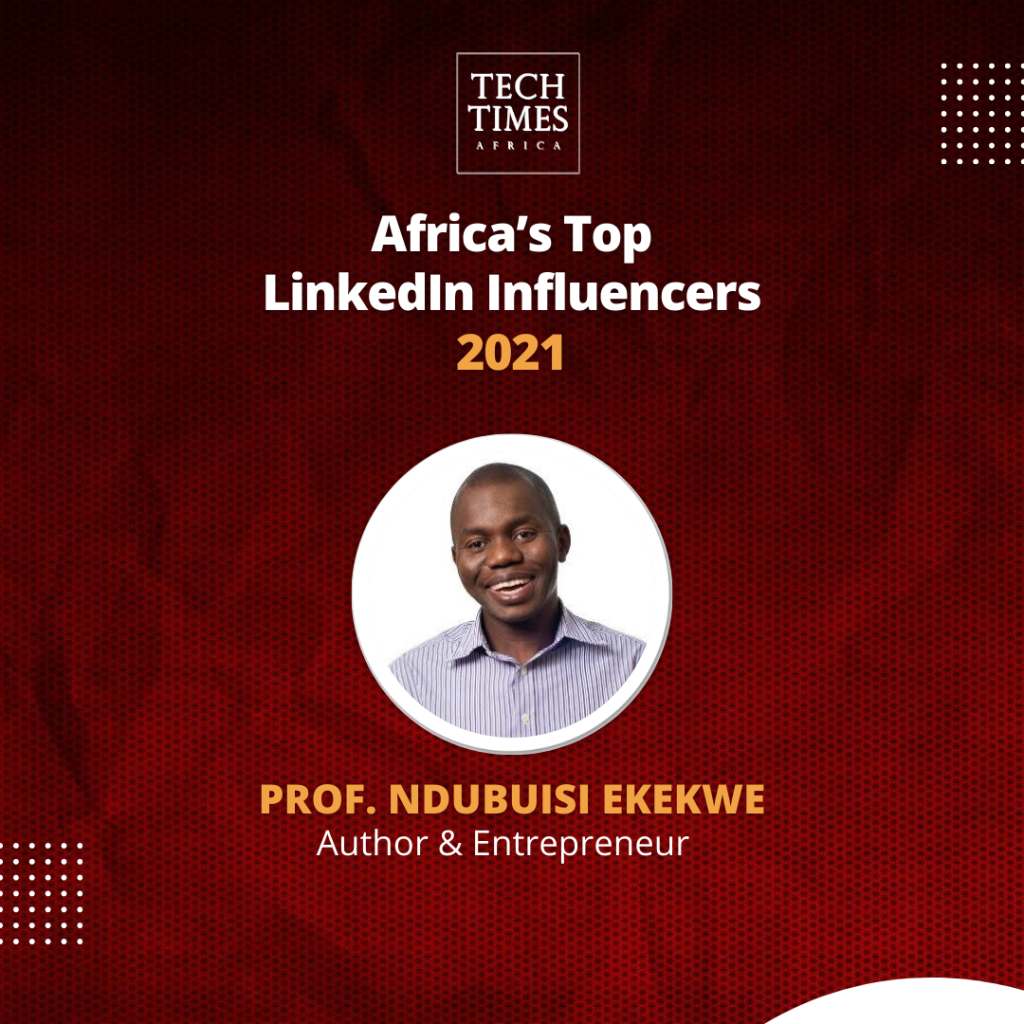
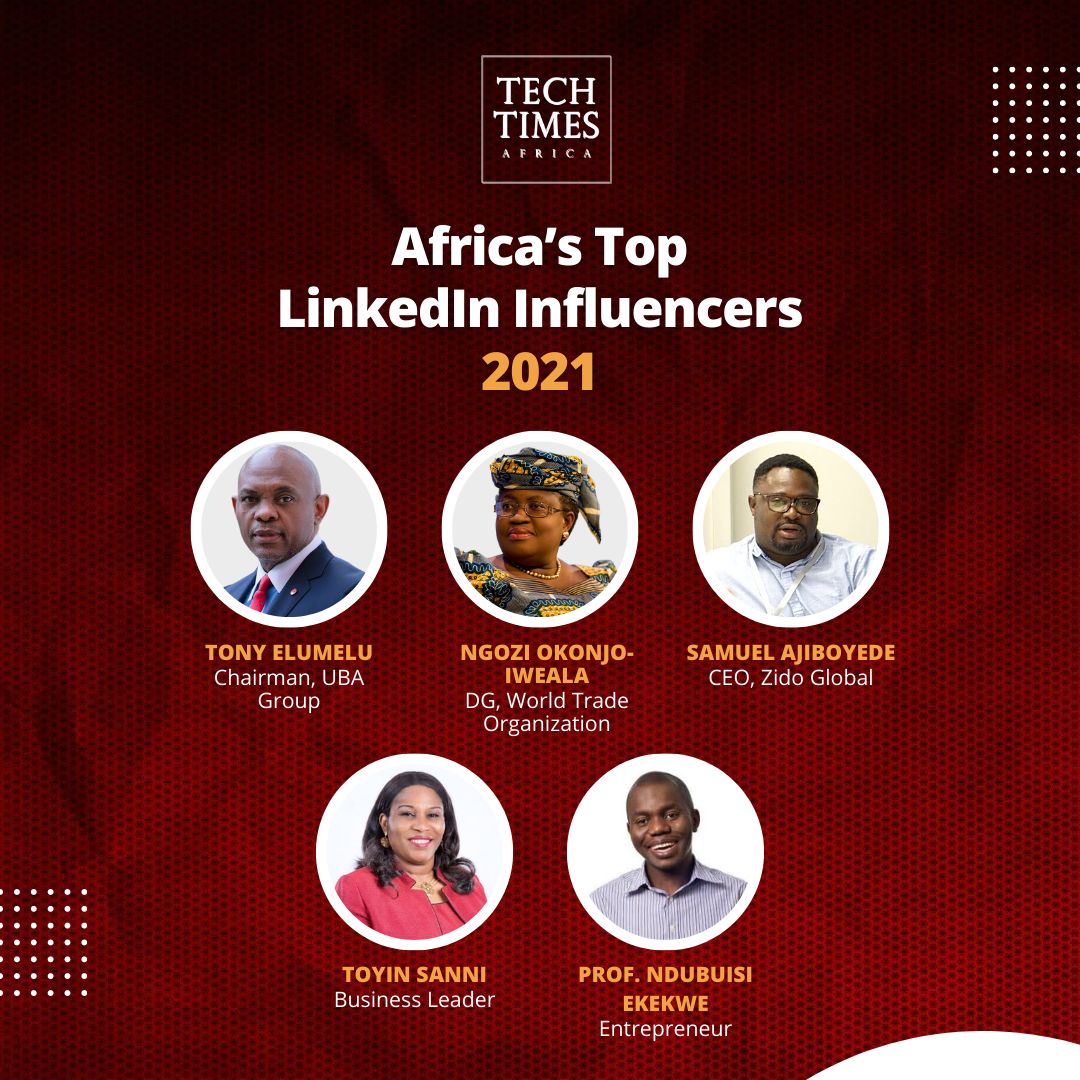
Tech Times Africa Recognizes Ndubuisi Ekekwe among “Africa’s Top LinkedIn Influencers 2021”

0

Thank you Tech Times Africa for recognizing this village boy from Ovim, Abia State, and having my face with those legends.  The fact is this: I write to be influenced because anything I do not understand, I come here and write. Wait hours, those who sabi will come and clarify.

“The Tech Times Africa Top LinkedIn Influencer Award is Africa’s largest and most prestigious accolades for the most influential personalities in the African LinkedIn community. The Award is designed to identify and recognize those outstanding personalities and project their achievements to the African society and the world at large.”

For all the global citizens who come to this feed, I say ‘THANK YOU”. And may I ask: if you are not following Ndubuisi Ekekwe, do it now and Follow. Let’s co-influence for progress, advancement, and peace!

Source: LinkedIn

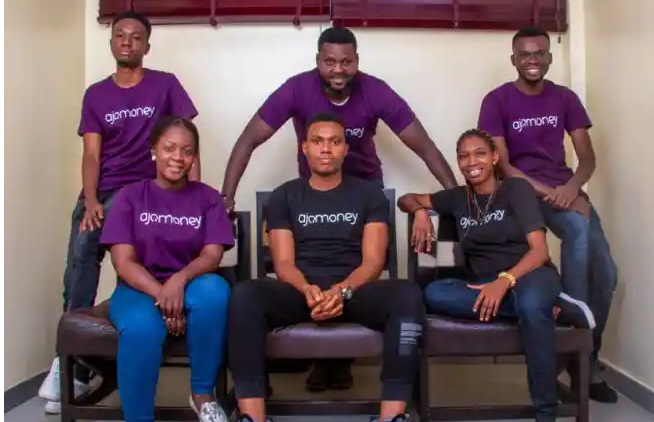
Attend AjoMoney Webinar On “Easy Access to Fund and Flexible Repayment at zero interest in 2022”

0

You are invited to this webinar organized by AjoMoney, a portfolio company. The Theme is “Easy Access to Fund and Flexible Repayment at zero interest in 2022”. Ajo Money has digitized the ancient African tradition of pooling funds together, and rotating payouts.

Yes, a group of trusted individuals agree to contribute a fixed amount into a fund at regular intervals with members receiving the fund in phases. This process continues until all members receive the sum of the money that has been deposited into the fund in turn.

Topic: Easy Access to Fund and Flexible Repayment at zero interest in 2022.

Date: Saturday, Jan 15 2022

Time: 12 noon WAT

Free registration for event link:

Bolt Raises $709mln At $8.4bln Valuation to Expand Services to New Markets

0

Ride-hailing startup, Bolt, has raised €628 million ($709 million), at a valuation of €7.4 billion ($8.4 billion) that will give it competitive edge and help it to expand to new markets.

The new investment round was co-led by Sequoia Capital, Fidelity Management and Research Company LLC, with Whale Rock, Owl Rock (a division of Blue Owl), D1, G Squared, Tekne, Ghisallo and other unnamed backers also participating.

In nearly a decade since it was founded, the Estonia-based company has onboarded many services such as shared cars and scooters, restaurant and grocery delivery, and Bolt Market – its 15-minute grocery delivery feature. The company has created a ‘super app’ that is holding its increasing businesses together.

“All of our business units are growing,” founder and CEO Markus Villig said in an interview this week. He explained that even its most mature business, ride hailing, is seeing double digit growth, while the newer businesses, being smaller, are expanding even faster. “The new trend of last year is that private cars are a bad thing and increasingly people want to use other forms of mobility,” he said, adding that Bolt is working on partnering with more city governments to build out its services as part of their updated transportation strategies.

In August last year, Bolt raised €600 million at a valuation of over €4 billion in a Series E also led by Sequoia. At that time, the company has a customer-base of 75 million people. In just four months after the previous round, the company has seen its customer-base adding 25 million more users from 45 countries and more than 400 cities.

But as the company grows, the need to provide top-rated services for its customers grows also. Bolt said it has made attracting and keeping drivers a major focus by paying out better commissions than its rivals.

“There is a massive lack of supply on these platforms, so we have focused on taking the most partner-friendly lowest commission,” Villig said. That has paid off well for Bolt, which has now seen monthly revenues more than double compared to sales pre-COVID, he added.

Bolt is planning to shift from its original target markets, where it has focused for years, to new markets in the West. Founded Taxify eight years ago, in Tallinn, Estonia, Bolt’s mission was to bring ride hailing to emerging markets and countries where other ride-hailing companies like Uber had yet to gain a strong foothold.

The strategy helped it to grow its market share in Africa and Eastern Europe. Now Bolt has learned that there is little difference between emerging markets and developed countries.

“We started off in Eastern Europe and Africa because those markets had a bigger need. They had lower car ownership, higher unemployment [making for a market with many freelance drivers]; it made sense,” said Villig. “But now we’ve learned that this model works everywhere, and it’s actually easier to grow in Western Europe because they are developed markets. We found if you can make this model work in really cheap, frugal markets, then once you go to London or Stockholm, it’s materially easier. And the unit economics are definitely better because the prices are higher.” It’s not a perfect system, though. Working in developed markets, he said, the trade-off is “more regulations,” and the limits that come with those.

In each market, one scaling strategy Bolt plans to use is diversification, offering multiple services within its super app.

“Offering multiple services within a single app not only helps Bolt bring in new customers and cross sell to them, but it does so with essentially zero marketing costs by putting all of the options and cross-promotions within a single app,” said Villig.

“Two elements that set us apart and are turning in our favor are the synergies and the shared costs between these verticals. Most of Bolt’s competitors are generally focused on one thing in each app, and we are not, so it’s easier and less expensive for Bolt to build more services off the back of each other. Now we are passing on those savings for customers,” he added.

With the shift in its scaling strategy and the newly raised fund, Bolt is expected to give Uber, Lyft and Doordash a run for their money as it expands to new markets.

Speaking on the round, Andrew Reed, a partner at Sequoia, told TechCrunch in a statement: “We’re excited to deepen our partnership with Markus and Bolt to further their mission to make urban travel affordable, sustainable and safe. At Sequoia, we believe in the global potential for technology and entrepreneurship and have been inspired by Bolt’s growth from Tallinn, Estonia to over 400 cities and 100 million customers across Europe and Africa. We’re eager to help them expand their footprint, increase their product offering and improve the quality of life in cities for the long term.”

Remaking Digital Conglomerates by US Federal Trade Commission

1

A US Court has approved for the Federal Trade Commission (FTC) to continue its high-voltage push to get Meta (yes, Facebook) to sell Instagram and WhatsApp. As a private citizen, I do not like what FTC is doing and these are my points:

  1. Without Meta’s investments in the then-fledgling Instagram and -WhatsApp, they would not have been where they are today. Meta’s resources made it possible for WhatsApp to scale when it eliminated the $1 subscription fee. Reversing the acquisitions will be evidently unfair to Meta. 
  2. Finding people who can buy WhatsApp may not be very easy since this product has one major challenge: monetizing it directly will be hard even though you can double play it with other products. Even on that, making good money from WhatsApp will kill the best value it offers!
  3. You cannot accuse Facebook of sharing people’s data and at the same time saying it is anti-competitive by not giving access to Vine and some companies.
  4. TikTok is the new king in town; you must look broadly to see where this is going when it comes to user engagements. This fight may not be necessary in years if Meta does not find a solution to TikTok.

As always, I still believe that you can only regulate companies like Meta because breaking them will not solve any long-term issue on competition: winner-take-all through network effect where the best becomes the dominant player because it has a positive feedback loop of more users, more data and better product. 

If you decide to break Facebook apart, one part will grow and dominate others. This is possible because of the positive continuum of network effect where the biggest keeps getting bigger and also better. I explained that in a recent piece in the Harvard Business Review. You can regulate Facebook but another company will come to take over its position because in this sector, it is winner-takes-all. Yes, the best wins.  Why? The scalable advantage improves with lower marginal cost.

So, if U.S. breaks Facebook, one of those pieces can emerge to fill that void. Or another product from say China or India can emerge and become the world’s leader. It is a web business running on the aggregation construct. They are not structured to have 20 banks in Lagos. You expect to have one popular social media in Lagos for a specific sector. That one leader is what matters. If you break, the one that is best will grow (and win) because network effect will make it easier to attract users to it.

This is my take: U.S. will not regulate Facebook or its web companies at the level many are expecting [I expect nothing to change except cosmetics reporting of violations] because it knows that Chinese competitors which are also well-funded will go after Facebook users across the globe. And even if U.S. regulates Facebook by breaking it, the best surviving part will grow to dominate over time because of network effect where the best gets better and bigger. We just have to agree that Facebook is an ICT utilities and I was very happy when my editors in Harvard allowed me to use that against the company. You negotiate with your utilities [ electricity, water] because you have no alternatives. That is where we are with Facebook.

Of course, the playbook of the FTC seems thus:  I do not want digital conglomerates where a holding company like Meta can control many winners in different categories like social connections (Facebook),  photo sharing (Instagram), and messaging (WhatsApp). If that follows, Google Android, Google Search, Gmail, etc will be visited soon. 

That could be a different look into the US anti-competition regulations. Yes, if they go on trial and Facebook opens how much it loses on WhatsApp, we can understand how giving a free product to billions makes it anti-competitive and a monopolistic empire.

But on pure competition ordinance, I do not think WhatsApp is anticompetitive  or monopolistic when the product is largely FREE.

Comment on LinkedIn Feed

Comment 1: The free market doesn’t breed negative monopolies, only government intervention does. If not, IBM would have crushed Apple during the 80s, Nokia would still retain its dominant position of the mobile phone market.

In a free market, the best product wins. It doesn’t matter if you have 100% share of the market. Once there’s a loophole, someone rushes in to fill that position and ends up taking some share off you. If you are not careful, they might end up taking all (ask Kodak).

The only thing governments that wants to foster innovation and competition should do is to remove all restraints they themselves imposes on new entrants. Even if the incumbents play the market once a new entrant surfaces, it should be left to consumers to decide whom they will trust.

Only consumers have the power to bestow monopoly privilege on companies. Anything else is from rent seekers and their bureaucrat facilitators.

Comment #2: Brilliant dissection as always Prof Ndubuisi Ekekwe . However I think the issue may be more than market dynamics. Yes it is ok from a pure play that companies can gain monopoly because they have worked hard to get there. But that raises the question of putting power into the hands of too few a people, whose motive may not be so clear. The larger issue that seems to be keeping governments awake (except of course the Nigerian government) relates to Power, Ethics & Politics. The Cambridge Analytics still comes to mind. How can we determine which humans we can entrust to have incredible technological power over large populations of people? Who holds them accountable and by what mechanism do we ensure that they “will do no evil”?

Why is the flow of capital directed towards acquiring more capital with technological innovation? The top 28 richest people in the world today can eradicate poverty for the entire human race in a single generation. But they chose to build trillion dollar valuation companies that can go the moon and Mars.
There doesn’t seem to be easy answers here, at least I don’t have any….yet. However I do think the global tech companies should devote more resources to addressing some of the existential problems of humanity.

My Response: Great point. But you have not made a point why breaking Meta will address the issues you noted. Facebook was fined for sharing data which brought “Cambridge Analytics” and was also fined for not sharing data with Vines. Since the GDPR was put in place and FB locked its garden, many companies which used to depend on FB had collapsed. With no access to those data systems, their business models became a guesswork. Magically, FB could keep its data alone and make all the money.

Sure, I am not in support of everything FB/Meta does but reversing a sales done years ago is not fair. I do not want to have a world like that because people would be afraid of succeeding in future to avoid antagonizing government!