DD
MM
YYYY

PAGES

DD
MM
YYYY

spot_img

PAGES

Home Blog Page 5391

The Lesson from Indomie Noodles and Winning in Dangote World

3

The Dangote Group is legendary for acquiring, developing and unleashing capabilities across many domains in markets. Through those capabilities, it has won markets and territories. Interestingly, anyone can replicate those playbooks.

In this piece,  I explain how the makers of Indomie noodles used the same strategy the Dangote Group has been using for decades to win. And at the end of the day, they defeated Dangote Noodles.

When Dangote Noodles came and unleashed its competitive high-voltage playbooks, Dufil Prima Foods (makers of Indomie) did not blink.

Why? Those things Dangote Group does, from internal electricity generation to logistics, have been done in the noodles business by Prima, making it nearly impossible for more efficiencies to be extracted.

With no left inefficiency which Dangote could exploit to improve quality and reduce price, Indomie Noodles held its ground when the competition came. Yes, Indomie won – and Dangote Group later sold its noodle business to the makers of Indomie.

Big lesson: accumulating and compounding capabilities will not just help you unlock new markets but will also help to defend your territories. It is irrelevant if the new competitor is Dangote Group.


Climate Change and Insights from Nigeria’s Mitigation and Adaptation Paths in 6 Years

1

Since 2015, when political and corporate leaders agreed on a series of steps to make the planet habitable for all living things, Nigeria and other countries have been viewed as places where climate change has a significant impact. This is mostly based on people’s and industries’ efforts to produce and consume tangible and intangible products and services.

According to one recent report, Nigeria is ranked 47th among countries that have lost millions of dollars in purchasing power parity. When losses per unit of GDP were assessed in 2021, using data from 2000, it ranked 89th.  With the ongoing effects of climate change, both leaders can no longer conduct business as usual, which frequently results in financial and human losses. This is one of the reasons why interested parties meet on a regular basis to discuss climate change issues and demands.

The debates resulted in the creation of a number of policy and implementation tools. Nigeria has participated in and continues to participate in a number of national and international programs and initiatives, from agreements to implementation. One of the most important implications of the Paris Agreement is countries’ understanding that nationally determined contributions are required to meet long-term climate change commitments.

In 2017, Nigeria ratified its NDCs and further established her role model for the rest of Africa in 2021 by submitting an ambitious updated NDCs. With the updated version, Nigeria’s economy-wide mitigation targets have been raised to 47 percent and unconditional emissions reductions of 20 percent by 2030, respectively, with the amended version. Apart from that, Nigeria has demonstrated a strong willingness to link NDCs with green recovery. According to our analysis, Nigeria has been attempting since 2015 to integrate several climate change policy measures that were included in earlier policy papers and strategic plans with new ones produced and implemented by the present administration [President Muhammadu Buhari’s Government].

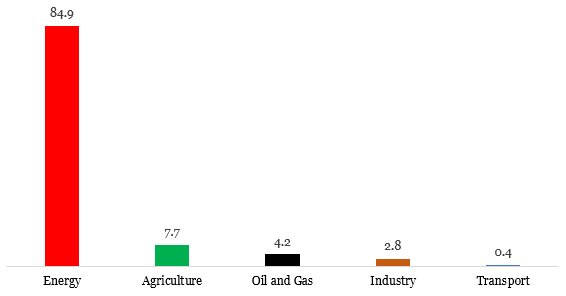
Exhibit 1: Mitigation Projects by Sector between 2015 and 2021[in percentage]

Source: Nationally Determined Contributions Registry, 2021; Infoprations Analysis, 2022

A critical analysis of the Nationally Determined Contributions Registry by our analyst indicates that 695 projects have been created by the government. These projects cut across agriculture, energy, industry, oil and gas, and transport. According to our analyst, these sectors have over the years been identified as the most vulnerable to climate change effects. Analysis further reveals that 5 of the 695 projects are adaptation-focused, signifying the government’s readiness and interest in ensuring an enabling resilient environment for people and businesses. Six hundred and ninety of the projects are mitigation-oriented projects.

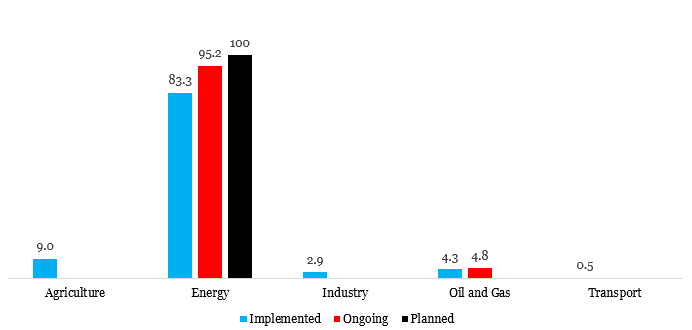
In terms of implementation, the energy and agriculture sectors received a significant number of projects between 2015 and 2021. A total of 537 and 58 projects were developed for energy and agriculture, respectively. With 28 and 19 projects, oil and gas and industry closely followed. Analysis also reveals that the transport sector had 3 projects. Analysis of the projects based on ongoing and planned types shows that 29 projects have been penciled down for the energy sector, while 20 projects are being worked on as at the time of the analysis. The oil and gas sector has a project as an ongoing one.

Exhibit 2: Status of the Projects across Sectors [in percentage]

Source: Nationally Determined Contributions Registry, 2021; Infoprations Analysis, 2022

Temporary Monopoly of First-Mover Advantage And Why Greatness Comes via First-Scaler Advantage

0

Most in the business world talk of first-mover advantage;  a company’s capacity to assume better competitive advantages as a result of simply being the first company to introduce a new product within a specific sector or category. First-mover advantage offers temporary monopoly – the blue ocean – since as a pioneer, you are simply alone in that category at the early stage.

But note this: the greatest companies in the world are known for one thing: great products. Interestingly, all great products are known by customers. That typically comes because they are well scaled. Extrapolate, you’re talking of  first-scaler advantage, a leverageable compounding competitive advantage which comes with economies of scale as a result of being the first company to achieve scale in that category and improve marginal cost, offering products at highest value and best optimized cost.

If you have a first-mover advantage and fail to scale, you will lose the competitive positioning to another company which comes and scales first. So, first-mover advantage is temporary because sustainable and durable monopoly requires enduring scale in product categories. If you cannot deliver that scale, forget your first-mover advantage.

While first-mover advantage is treasured (a clear sign of innovation), becoming a great company requires first-scaler advantage. In our class note in Tekedia Mini-MBA, I provided many cases on how Apple pursues a business model of first-scaler over first-mover advantage.

Before the iPhone, there was Blackberry. Before the iPod, there was the Walkman. Before the Apple Watch, there was Pebble. The list goes on. Largely, Apple does not pioneer many categories but it has an enviable way of coming later through superior product engineering to scale really fast and take over.

In this 2022, do not just be in the habit of looking for new categories to pioneer. Consider if you can massively scale a known promising category! 

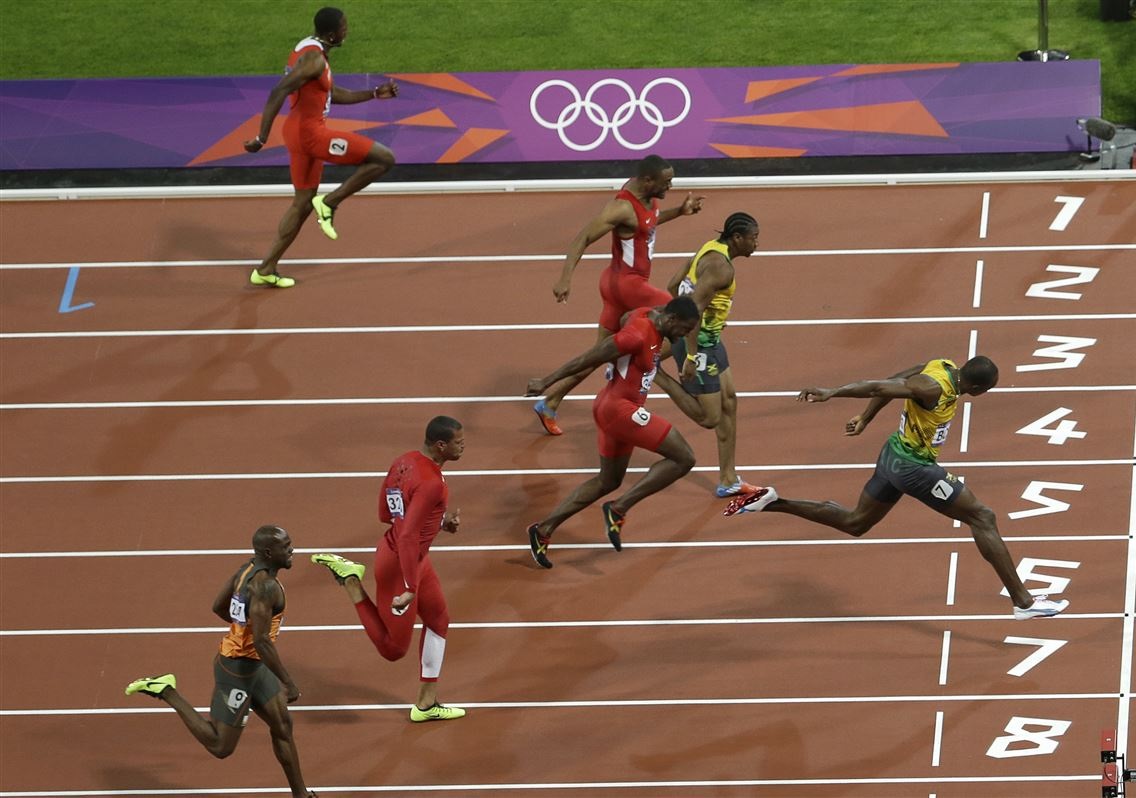
Yes, Usain Bolt does not usually have great kickoffs, but most times, he is always the guy who takes the medals. He has a great ability to scale-first on speed during the race, outperforming those who started first.

Adapt or go out of business

0

One of the features of living things is irritability which biologists explain as the ability to respond to stimuli. In animals, it could be recoiling into a shell during the dry season to conserve moisture. In humans, it could be the opening of the sweat pores during the hot season to let sweat out. In business, this feature is called adaptability.

Every founder, every entrepreneur, every business owner starts out with an assumption or group of assumptions. You assume the customer has a problem. You assume that you have a solution that will address the problem. You assume that the customer would be willing to pay a certain price for that solution. You assume that you will break even in a year. You assume that you will become profitable in two years. You assume that your idea is novel enough to get investors to break their safes and give you all their monies.

Assumptions! Assumptions! Assumptions!

Often the service you go in thinking you are going to render is not the service you end up doing. It will change based on customer needs.

As soon as you get started, the scales will begin to fall off one after the other and you will come face to face with the reality. How ready or prepared are you to adapt to whatever reality the business reveals to you? What if you don’t break even in a year? What if it takes 10 years before you get any form of funding? What if the market rejects your product? Are you ready to change strategy but remain focused on the goal? Or will you close shop at the first sign of reality?

This is what we call adaptability. It is the reason we always emphasize that your business plan is not cast in stone. A lot of things could and probably would change. This does not mean that you should completely change your business direction at any and every sign of a divergence in the reality. It means that you should stay flexible.

If you get to the market and discover that although the customer needs your solution, he is not ready to pay your market price, what would you do? Will you stick to that price and start retargeting a high-income section of the market? Or would you go back to the production room and find a way to beat down the cost of production to get a better price? Or would you go for more aggressive marketing?

What if the customers’ reality shows that what you thought to be a problem worth solving, is something the customer does not even see as a problem? What if the customer/market has another problem that requires immediate solving? Are you ready or able to change your strategy?

To be fair, it is easier for service-based businesses to be flexible and make modifications as they go. For product-based businesses, a lot has often gone into production already and this makes it more difficult to make a sudden change. Even then, the product-based business has to remain flexible and adaptable, changing to suit changes in the market needs and preferences.

Be ready to close up your sweat pores when the business weather gets chilly, and open them up when it gets hot. If you will remain in business, you should be prepared to make modifications and adapt at every stage of the business.

IPOB Bans the Nigerian National Anthem in South East region

0

In the recent press release by the Indigenous People of Biafra (IPOB), amongst other things, one of the highlights is the outright ban of the Nigerian National anthem in schools and public gatherings in the region and ban of cows which are said to be Fulani cows in the region. In a press statement made by Mr. Chika Edoziem, The Head of Ipob  Directorate of State he succinctly stated; “Beginning from Monday, January 3, 2022, no more Nigerian national anthem in all schools in Biafraland. Our children must no longer be reminded daily that they are under oppression by singing the national anthem of the oppressor”.

This press release which said to be long overdue by the supporters of the movement, others who are against the modus operandi of how the members of the IPOB are going about the struggle for self determination stated that the above press release is tantamount to an act of treasonable felony. Treasonable felony is a capital offense in most nations of the world including our country Nigeria and some are worried that the top leaders of the movement may attract the wrath of the government again.

Treason is an act to depose or levy war against the sovereign nation and to forcefully compel changes of policy in government, forcefully take over government  or to intimidate or overrun the parliament and it is usually punished with life imprisonment or death sentence.

The antagonist of the IPOB modus operandi chastised the leaders of the movement saying that the Nigerian National anthem is a symbol of unity, a national heritage and an identity, a code of conduct that every Nigerian should abide by and live by. The Nigerian National anthem is said to serve as an eternal representation of the core values and spirit of our Founding Fathers (the heroes’ pasts) and everyone who calls our country home thereafter. It has the same significance with the Nigerian flag, Nigerian currency, the coat of arms and every other national symbol of unity. Every one, who calls Nigeria home and is living within the geographical demography mapped out as Nigeria is to abide by these symbols of national unity and respect these symbols of identity; save and except that region have officially and legally  broken away from the country Nigeria, if not every act which undermines the national symbols of unity of Nigeria is tantamount to treasonable felony (so they said).

Be it as it may, this piece by reporting this news is not in by any means advocating against agitation for independence and self governance, the reporter is fully in support of every region of Nigeria who yearns for independence to achieve freedom, an average human believes that people have the right to self determination, to determine if they still want to be part of a union or they want to go their way. We can’t keep lying for ourselves with the narratives of “one Nigeria” when the one Nigeria union is clearly not working out.

Although, the antagonist of the IPOB modus operandi claims that the outright ban of the national anthem by the member of the indigenous people of Biafra is an act of treason and it attracts a heavy punishment in Nigeria, it is for our readers and an average Nigerian  to form their opinion about how the whole situation is turning out.