Some weeks back (first week of December 2021 to be precise) I was at a developer event at the Landmark event center in Victoria Island. Characteristic of me, I got to the event in a Bolt ride, paid the driver with a bank transfer, and literally walked into the event hall with about N100 in cash with me. Since I didn’t plan to follow public transportation on my way home, not having enough cash with me didn’t seem like an issue.
At some point during the event, I realized the face mask I was wearing had a little cut on it, and I needed to get a new one, if you’ve been to Landmark, you’ll notice some guys who always stand at the entrance selling/hawking facemasks for anyone who wants to buy. Finding where to buy the facemask wasn’t a problem, the problem was I didn’t have cash with me, there was no active ATM inside Landmark, and the “POS lady” according to some of the guards there was not around. I used the N50 with me to pay a small “korope“ bus to take me to the closest Zenith Bank ATM, and as usual with most ATMs, I withdrew money in N1000 denominations. Considering the fact that most “ Korope“ may not agree to collect N1000 from you for a N50 journey based on issues around “finding change” I eventually had to walk from the ATM back to the event center under the hot sun.
Why am I bringing this up? One is I wasn’t very happy with the whole cashless policy initiative that day, and two is there is still a huge problem around small-scale payments and effective payment reception nodes that nobody has been able to effectively solve.
FINANCIAL INCLUSION
One of the biggest buzzwords in the fintech space today (after crypto and Web3) is financial inclusion. Everybody is seemingly pushing for financial inclusion whether they really are or not. Even crypto firms who are built around a technology the majority (80%+) of the population do not understand are also pushing the same narrative. (Note: Don’t misquote me, most crypto firms are pushing economic inclusion which is great and also commendable, but the idea that someone who has no bank account and digital payment footprint would be onboarded into the financial ecosystem first via a crypto wallet (a technology I personally spent hours learning about) is pretty ludicrous).
The narrative around financial inclusion and its underlying motives are also pretty clear; according to data from EfinA more than 55% of Nigeria’s population isn’t banked. On the surface that seems reasonable, the Central Bank of Nigeria has a National Financial inclusion Strategy document it uses to guard and influence its mandate to bolster financial inclusion in Nigeria, its previous goal was to reach 70% financial inclusion by 2020, it fell short of that mark and is now planning to reach 95% financial inclusion by 2024. While these are clear, I personally believe looking solely at the number of banked and unbanked individuals purely as a measure of financial inclusion may be a little cryptic. The key reason for this is simple; having a bank account does not necessarily mean a person is financially included.
According to Wikipedia, “Financial inclusion is defined as the availability and equality of opportunities to access financial services. It refers to a process by which individuals and businesses can access appropriate, affordable, and timely financial products and services. These include banking, loan, equity, and insurance products”. Based primarily on this definition, it is unlikely the majority of Nigerians today are financially included.
While having a digital store of value (Bank account) is a key step towards achieving financial inclusion, in most cases, most people do not get beyond that point of having a digital store of value. There are many other features of being financially included which are; access to reliable savings, credit, investment opportunities, etc. While banks offer these services to their users, they do so primarily to corporates, HNWI (High Net Worth Individuals), or people with a steady source of income to minimize risk (Access Bank Payday loans, Sterling Bank Spectre loans, etc.). Fintech’s like Bamboo, Chaka, Rise, PiggyVest, Cowrywise, Fairmoney, Carbon, etc. are literally built around helping retail users and SMEs access financial services that were once out of their reach because they didn’t drive a BMW to the banking hall to take a loan, or their surname wasn’t Dangote. New financial models designed around accessing user banking data (Mono, Okra) and using credit scoring algorithms from firms like (Indicina) have all resulted in a credit led society where SMEs no longer have to submit their birth certificate, credentials, car, wife, father’s chieftaincy title, and the tail hair of a hungry white lion just to collect a bank loan.
Firms like Piggyvest have not only made savings easier and more profitable, they’ve also made it cool, trendy and culture smart as against something only boring people do (or a stylish way for the bank to collect ‘’holding fees” from the money in your account if it isn’t in a fixed deposit).
The strategy behind these fintech players is largely to onboard users who are already banked (to some extent) and offer them financial services that their banks do not see them as profitable (or safe) enough to offer to.
MEASURING FINANCIAL INCLUSION
How many or what percentage of people have a bank account is a poor and unclear measure of financial inclusion by any means. A good number of people use their bank accounts as collection accounts (accounts that collect money digitally (Bank transfers etc.) and are immediately liquidated into cash to be used by the account owner).
When I was in the university, my bank account was a collection account; I received money in it, and almost immediately withdrew everything in cash, calling me financially included may have sounded right, but it wouldn’t be 100% accurate. While agent banking is a good thing, beyond the surface, agent banking is really feeding our cash economy (and need for cash) as against our digital and financial ecosystems. True digitization occurs when I walk into a restaurant, have a nice meal, and pay with a digital payment tool (Card, USSD, Bank transfers, etc.) and no cash has to leave my hands to interact with the merchant yet value is exchanged.
Bank Financial Inclusion Metrics
EFinA employs an extremely detailed survey-based model to ascertain and measure financial inclusion annually.
While it is very possible that banks already do this internally, if a bank (or the Central Bank) wanted to accurately measure its Financial Inclusion metrics, beyond the number of bank accounts, it could measure four things;
Bank account balance hold rate: This is defined as the average time it takes for a bank account to hold money before 80% or more of its monetary holdings are completely liquidated. This is a measure of how much a bank account receives in a single credit; what is 20% of that amount; how long it took for that account to get to 20% of that amount. An account with less than 3 -6 days as its holding rate is definitely a collection account. Banks do not make any serious money from collection accounts, and a collection account holder is not financially included.
Multiple Bank Accounts: Although I would assume this metric is subjective (I have heard a Group Executive at FirstBank say more than 50% of their users bank with them exclusively), I also think it’s a good indicator of financial inclusion. A good number of Nigerians have more than one phone number, even those who use iPhones tend to have another phone where they store a secondary backup line (or a line they use for a separate purpose).
If you use digital payment methods frequently you will know the value of having more than one bank account. While there are times your card transaction may fail and it has nothing to do with your bank (the switch may be down, the acquirer bank may have an issue, or the Payment Terminal in question may be having a network challenge), the first person you will always blame when a transaction fails is your bank. If you’re in a tight corner when that happens, you want to be able to switch to another bank card and retry the transaction as against going around cursing your bank (which will really not change anything). I think multiple bank accounts are a good indicator of how financially included a person may be. This doesn’t mean a user cannot have multiple bank accounts and still be excluded, but Multiple ACTIVE bank accounts come across to me as a good indicator of financial inclusion.
Kuda Bank is a Digital Bank that is somewhat targeted at Millennials and enjoys their patronage. Based on regulation, Kuda Bank (as a Microfinance Bank) cannot generate BVNs for its users, in other words, Kuda cannot target people without Bank accounts, their target market will constantly be people who are already banked. Kuda presently has 2million+ users. A good indicator that those 2million people are likely somewhat financially included.
Transaction volume: If a retail bank account is doing less than 5 transactions (transfers, Bills Payment, ATM/POS Payment/withdrawals) a month, that account holder is in no way financially included. I have had months where I used up my 25 free Kuda Bank transfers. In fact, as at the time of this writing (29/12/21), I only have 6 free transfers left on Kuda Bank, and Kuda isn’t my main spending account. How many transactions a Bank account is pushing out is a very good measure of how financially included the holder of that account is, and a good measure of how financially included the bank in question is.
RETAIL cross-sell: Another important (albeit less clear) metric a bank can use to measure financial inclusion is its retail cross-sell; how many other services besides just holding money does a bank offer its users. Today, lending from Banks is actually a better proposition than it was some years back, banks now offer lending solutions to users in their ecosystem without requiring them to sell their soul and bring the receipt as collateral, banks also have better (or more friendlier) interest rates than most (if not any) fintech. Measuring how many solutions a bank is able to cross-sell to its RETAIL users is also a very good measure of how financially included its users are. Emphasis on Retail users because bank corporate users in a good number of cases have a lot of complimentary bank solutions sold to them beyond holding money in an account. Cross-sold solutions to Retail users could be valued on a scale (from most significant to less significant), with selling airtime, buying electric power as least significant to credit, savings, and the likes as most significant.
Being able to properly map these metrics internally may give a clearer picture to Banks and the Central Bank of Nigeria of who is banked and who is really financially excluded, and properly inform the Inclusion strategy to be utilized by the responsible institutions.
Payment Service Banks
While it is common for most people to criticize the CBN, I believe the Central Bank of Nigeria as an institution has done a lot to advance the local payments system and bolster financial inclusion in Nigeria. Today, the Nigerian Banking system is one of the best in the world – no joke – Bank of America (The second biggest bank in America by assets) announced automatic bank account name validation in October last year (2021), a service Nigerian banks have been offering their users for years now.
There are many reasons I respect the CBN, chief of which is I work for an entity regulated by them, so I have to – in my best interest off course. I do however have some reservations concerning the strategy behind PSBs (Payment Service Banks).
On the surface I imagined the PSB license is the Central Banks’ attempt to bolster financial inclusion by utilizing the massive spread of Nigerian telco operators, however, giving the framework a deeper look (and reading the regulatory document behind it), unearths certain frictions. It is clear the Central Bank has no intention to deviate from its present bank-led model to favor the non-bank-led model to bolster financial inclusion.
While Kenya’s MPESA is an example of an innovative payment model and the ability of Mobile Money operators to bolster financial inclusion, MPESA is also a bloody Kenyan monopoly that nobody can properly compete with, MPESA is more powerful than a lot of Kenyan Banks. CBN doesn’t want this, and that is very well-intentioned, however designing a new system especially one that doesn’t rely heavily on cards as a payment token is what is key to achieving full financial inclusion. This is the promise of the eNaira (which I will get to soon) and what I assumed PSBs were about.
SMALL SCALE PAYMENTS; THE MTN PLAY
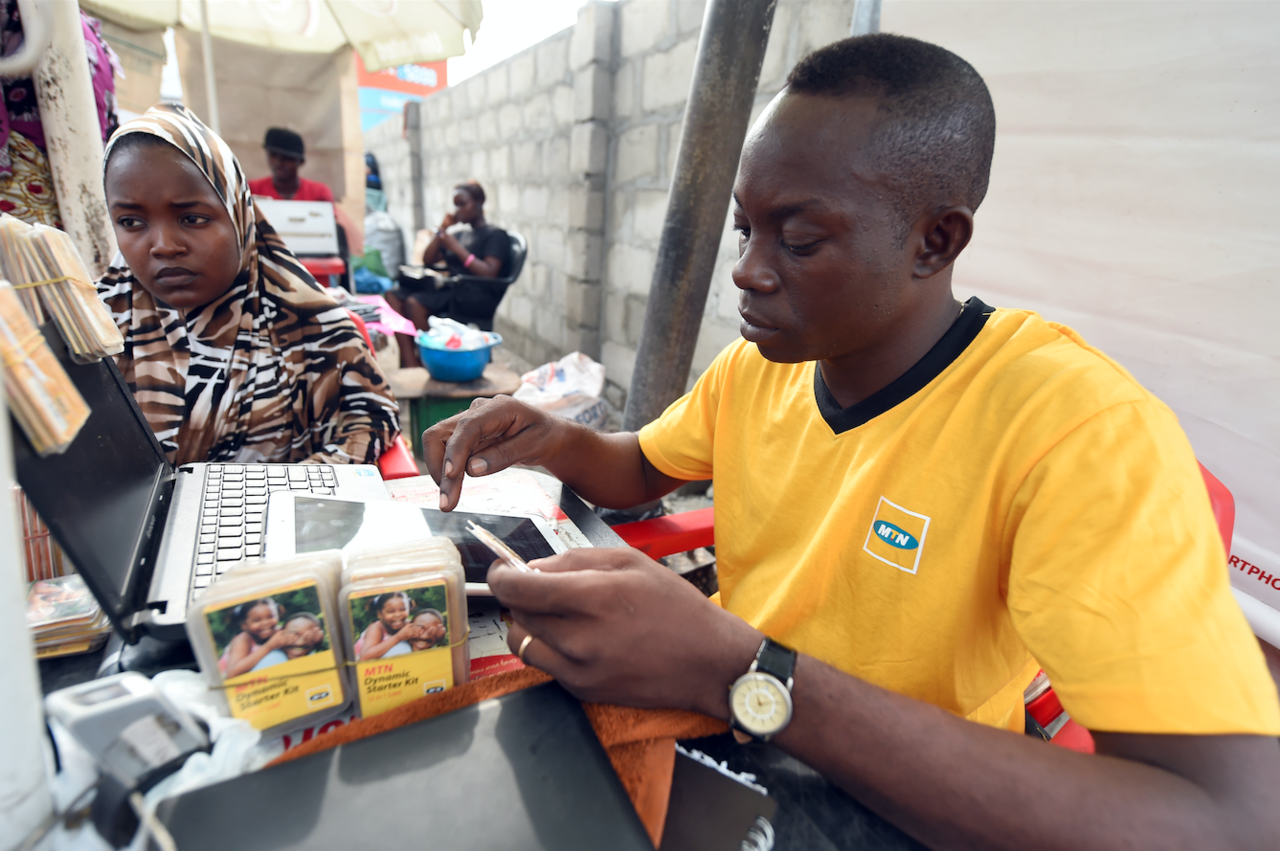
MTN in my opinion is the most powerful company in Nigeria. Power isn’t about revenue (which MTN also has), power is about the fact that MTN has more than 67.5 million customers of which at least 60% will spend a minimum of N100 to recharge their lines every month. While Dangote Cement is a great company (by Nigerian standards), Dangote Cement hopes you need to build a house, or build something, and the minute you’re done building, your relationship with them ends, you could also choose another competing product (think BUA, Lafarge, etc.). MTN on the other hand hopes you need to talk to someone (which is really an easier thing to hope for considering Nigerians like to talk), MTN also has a very good hold over its customers, while anyone can change their sim card and get a new one, losing the unique phone number that people use to reach and connect with you is not a very “glamorous” experience, so the majority of their users stay put.
As I’ve said in a previous article, one of the biggest challenges with bolstering financial inclusion is payment nodes (Payment reception points).
As of August 2021, there were about 686,577 deployed POS terminals in Nigeria, if we assume 30% of these are in the hands of Agent Banking players (which is not true, it’s more), then there are about 480,000 terminals left at Merchant locations, According to data from Businessday/NIBSS, as at September 2020, there were about 79.28 million active bank accounts in Nigeria, assuming 40% of these bank account holders own debit cards, our Terminal to Debit card ratio would be 66:1.
The number of people who receive payments in Nigeria is so much more than 680,000 (using the full number), in fact, according to the Nigerian Bureau of Statistics, there are approximately 41.5million SMEs in Nigeria (excluding the multiple unregistered merchants on your street i.e Mama Sikira and your local Aboki) and all these are reception points for digital payments that POS terminals will not be able to reach. POS Terminals on average cost about N90,000 (US$218.02), 300% more than Nigeria’s minimum wage.
Card transactions are also expensive and have too many break points (Payment Terminal, Card Network, Acquirer Bank, Issuer Bank, Switch, etc can fail and adversely affect the whole transaction). At 1.5%, paying a Merchant N15,000 (N225) doesn’t seem too bad, but paying N400 (N6) may not be too convenient for a small scale merchant, considering his profit margin from that transaction may be significantly affected.
As also highlighted in this article, the higher a person is on the economic ladder, the more likely they are to embrace digital payments, and the lower they are, the more likely they are to revert to cash. There is a huge need for an accessible payment node that is already (or can be) easily distributed across a variety of merchants to allow for easy reception of payments by small-scale merchants.
MTNs THEORETICAL PLAY
Disclaimer: This whole section is completely imaginary –no joke – there is no regulatory framework backing MTN to do any of this since MTNs PSB license doesn’t allow them do this (or even name their Payment Service Bank in any way that is affiliated with MTN). So if you’re more concerned with what can be practically done (from a regulatory point of view), you can skip this part.
MTN allows all MTN users with a mobile sim to have a digital wallet automatically onboarded on their sim cards – accessible in the SIM Toolkit option on both smartphone and feature phone devices. The play is you can fund that account by doing a direct NIP bank transfer from your bank mobile application to that account (that uses your mobile phone number as an account number). Tier 1 KYC limit will exist across the board for all account holders, those who have done an NIN registration get access to Tier 3 limit (hopefully NIMC should give MTN or other telcos access to that data). MTN also has some inherent data about its users that can also fill in for KYC. Who better to have the right KYC data on its users than the telcos who (given the right tools and a nice-looking police warrant) can track a user’s real-time location per time? If you perform a fraud, MTN can not only identify you, they can also locate you. Make this interoperable across all telcos and using an MTN payment wallet for fraud will be an exceptionally misinformed thing to do (i.e automatically weed out bad actors).
All MTN digital payments from say N5,000 below are free across board (for both merchants and individuals). Fintech Payment expert Adedeji Olowe has been advocating for this for a while now, the idea is to make payments below a certain amount free for small transactions to remove the cost barrier of adopting digital payment channels among the financially excluded (you would be charged if you tried to pay the same beneficiary twice as a way to dodge fees above N5,000). While MTN will likely absorb the NIP fees for transfers between its wallets (transfers outside its close wallet scheme or other interoperable telco wallets will attract normal NIP rates), this will likely increase the volume of transactions that will happen within its ecosystem.
MTN can choose to cover the cost of transactions by including a Data double play; A double play strategy I wrote extensively about last year here and here.
Beyond the fact that MasterCard processed more than US$6.3 trillion in transaction value in 2020 alone, and made about US$15.3 billion in annual revenue the same year, MasterCard also generates about US$4.7 billion in ‘other’ revenue streams. Its financial statement lists Data analytics and consulting fees amongst its revenue streams. MasterCard offers advisory services to retail banks globally on strategies to grow their digital banking strategies utilizing MasterCard’s “aggregated and anonymized“ transaction data.
If MTNs payment footprint for in-person payments increases significantly based on the no payment fee decision, MTN will be well suited to offer similar services to corporate clients locally as a way to bolster its bottom line and ameliorate for the ‘loss’ from free transfers. The lowest hanging fruit would be to use its payment footprint to provide data to lending companies to help them reduce the N617.3 billion credit gap for MSMEs in Nigeria.
MTN is also well suited to do this; with a business model properly shielded from the adverse effects of COVID, MTN is the second entity within Nigeria with a license to print money. The first being the Central Bank of Nigeria off course. For contextual purposes, CBN printed N1.06 trillion worth of Naira notes in 2020 alone, MTNs 2020 annual revenue was N1.3trillion (US$3.15billion). Let. That. Sink. In.
OFF RAMPS
MTN can pull a partnership arrangement with various Super-Agent networks in Nigeria, while using its over 230,000 MoMo agents as an effective off-ramp (taking money from digital to cash) for its payment wallet, allowing users move money to cash at a significant discount or free below a certain threshold. This will likely encourage previously excluded people to come on the grid, and as against always moving money to cash, keep money within their payment wallets and transact with them, since a good number of people will already have these payment wallets.
eNaira and its Small Scale Payments Play
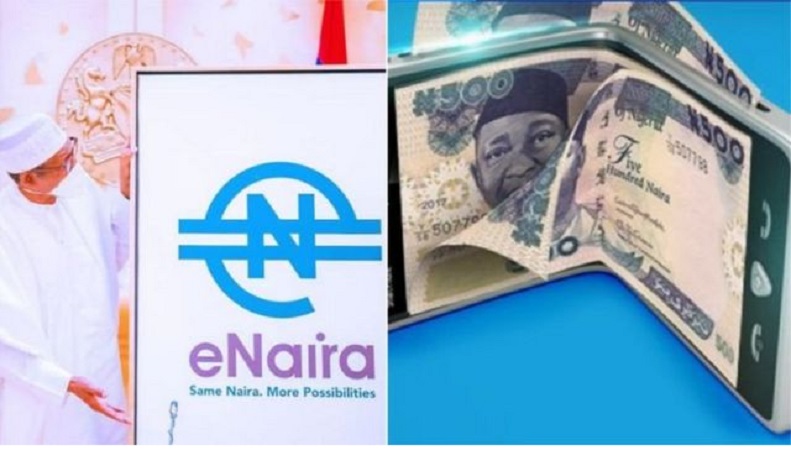
To be honest, I was a little bit skeptical about the Central Bank of Nigeria’s Digital Currency (eNaira) when it was first announced in August 2021. The reason being that its core use case wasn’t as clear as it needed to be. However, from a regulatory point of view (since the eNaira’s parent company (CBN) is the regulator itself), the eNaira is well suited to solve the small scale payments problem, and here’s why:
While I think the eNaira has poor brand affinity amongst the majority of consumers (young people who make up the majority of digital transaction users) partly because of the Central Banks belligerent approach to crypto, and a seeming distrust for the Government, I personally do not believe a product backed by the Central Bank of Nigeria should be underestimated in any way. An entity that has 23 DMBs (Deposit Money Banks), 876 MFBs (Micro Finance Banks), and a host of OFIs (Other Financial Institutions) kneeling at its feet waiting for instructions (whether they want to or not) is not an entity that should be underestimated in any way.
I am personally surprised by the way the Banks have taken it head on to advertise the eNaira considering how much of a risk it poses to their e-business divisions (N216.5 billion ( in 2020 revenues)*, and its relative risk to their floats regardless of the CBDC structure employed by the Central Bank. CBN is a quiet organization with a very big stick, you really don’t want to be in their bad books, ask Bamboo, Rise, Chaka, and your crypto fintechs.
.Unlike the theoretical MTN play above, the eNaira wallet isn’t native, and it has to be downloaded on a smartphone, or installed some way or the other on a feature phone device. The eNaira was touted as being free originally, however, a lot of talk about that hasn’t crystallized and eNaira wallet transactions will likely cost a fee (regardless of how small). If transactions below N5,000 on the eNaira wallet could be free, the Central Bank has a good chance of bolstering financial inclusion and getting previously excluded individuals to come on board. The eNaira wallet could also achieve off-ramp by partnering with SANEF Agents and giving some degree of preference to eNaira wallet holders, subsidizing Cash outs below a certain threshold, or making them free altogether. And since the Banks answer to the Central Bank, some integrations could go on at ATM stands that would permit eNaira wallet holders to perform say QR Scans at ATM locations to withdraw cash (possibly in smaller denominations) at cheaper or a subsidized withdrawal fee to encourage user adoption of the solution.
CONCLUSION
Innovation (especially in the African fintech space) is less about building cool and useful products as much as it’s about navigating an arduous regulatory environment and finding unique loopholes to capitalize on or permissible actions the apex regulator may turn a blind eye to considering it may be inconsequential or has little effect in the grand scheme of things.
I personally hope we and the businesses well-positioned to take on this space are able to build out a small scale payments solution so that the next time I’m at Landmark without cash (which will likely not repeat itself) and I need to buy a facemask or some small ticket item, I won’t need to trek 10minutes under the Hot Sun to go to a Zenith Bank ATM.
Inspired By The Holy Spirit