DD
MM
YYYY

PAGES

DD
MM
YYYY

spot_img

PAGES

Home Blog Page 5398

Symbiotic Relationship Between Banks and Fintechs in Nigeria?

0

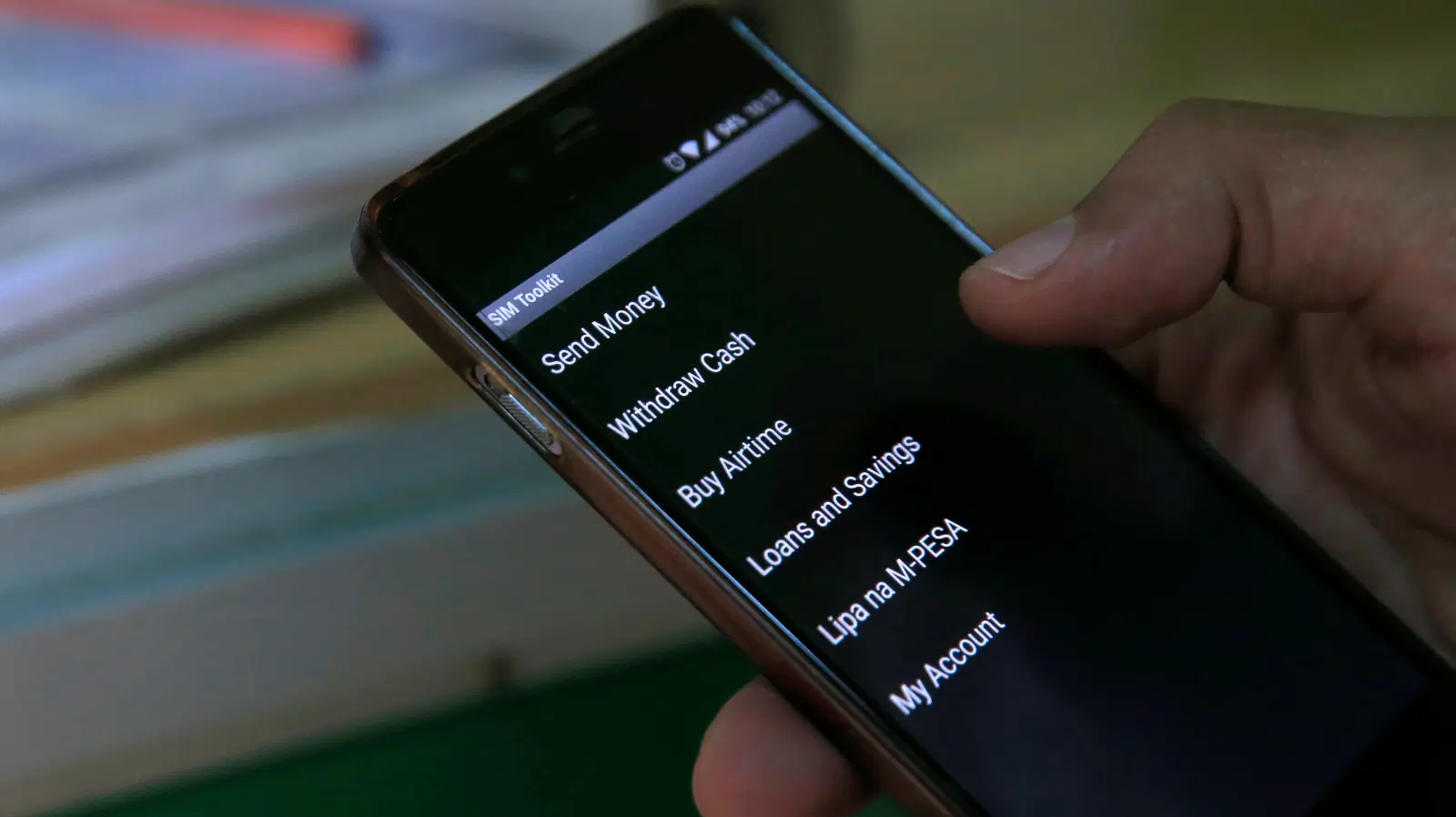
“The strategy behind these fintech players is largely to onboard users who are already banked (to some extent) and offer them financial services that their banks do not see them as profitable (or safe) enough to offer to,” Maro Elias posits in a piece in Tekedia.

What do you think is the grand playbook of fintech companies in Nigeria and Africa? Being marginal to banks or actually going to eat the cake which banks have been eating? But guess what: the profit levels of banks have not dropped since the effervescence we have seen in the fintech world.

And what could that mean? This could be symbiotic in the short-term for banks and fintechs. Do not ask me what happens in the long-term!

Who Solves the Small Scale Payment Problems in Nigeria (MTN, eNaira, etc)?

Startup Success: Timing May Be More Important Than The Idea

0
time clock

A study conducted about reasons startups fail showed that timing accounts for 42 percent of team successes or failures in any business, higher than any other factor. The timing was seen to be more important than execution, funding, team, and even the idea. More than every other factor, timing is most critical to the success or failure of any startup.

Let us discuss it.

The timing simply answers the question of whether the market is ready for what you are offering. Is the idea too early, too late, or just in time.

Picture this. If 100 years ago, someone brought a business producing electric blenders or mixers, to introduce to a community with no access to electricity, what do you think would be the fate of that business?

Is the idea valid? Yes.

Does it solve a real problem? Yes, people need to save time in cooking their foods.

Is the market ready for it? No. No one would spend money to build an electric food blender when he has no access to electricity. Simply put, that idea or innovation would be described as being way ahead of the times.

For a better perspective, there was an online streaming platform that started out in the 1990s but folded up after three years. In the 2000s, another online streaming platform came up and has survived till now – Netflix. What accounted for the failure of the first and the success of the second? Timing.

In the 1990s, internet broadband penetration was still low even in the United States of America, and even people who had access had to deal with low-quality connections. By contrast, the 2000s already had high internet broadband penetration in place and several other technological facilities. This singular difference alone accounted for the success of Netflix.

The ubiquity of the internet made for the success of a lot of digital or internet-based business ideas. It will remain on for a while, but we are gradually going to move into an age powered by Artificial intelligence and we will see a change in the nature of startups and their business ideas. In-vehicle manufacturing, we can already see a shift from fossil-fuel-powered vehicles to electric vehicles.

If you have a business that failed, I urge you to go back and take a second look. Ask yourself if that business idea stands a better chance in the next 10 years. Find out if there is a specific technological advancement that may help your business penetrate the market better, and probe to see if there are plans underway to bring that technology into the market.

My point is that the same idea that failed 20 years ago, could become a success today, and the business that fails today may have a better fate in the next couple of years. Your customers have to be ready to accept what you want to give them or you will not have a business for long. Every idea is valid but Timing can be everything about the success or otherwise of the business.

Nigerians and the Great Sugary Drinks Tax Dilemma

0

Soft drinks are consumed in huge quantities in both developing and developed continents. According to various statistics and experts, the market is worth several billion dollars. Nigeria’s market was worth US$1.63 billion in 2015, and is predicted to grow to US$9.5 billion (in retail prices) by 2025. With this performance, it is easy to predict that the market will continue to rise due to a variety of causes such as changing consumer lifestyles and the expansion of the entertainment industry.

While it is true that the Nigerian government does not anticipate the market to shrink due to the desire to see every person gainfully employed and raise government revenue, it is also true that the Nigerian government does not expect the market to shrink. However, the same government cannot stay apathetic while many citizens are dying as a result of increased consumption of the drinks, which has been related to a number of non-communicable diseases such as type 2 diabetes, cardiovascular disease, and cancer.

Having seen the extent to which people are developing these diseases and others, “the World Health Organisation (WHO) recommends a 20 percent tax on carbonated and other sugar-sweetened beverages (SSBs) to reduce the risk of people, especially the poor, coming down with illnesses from consumption because they usually cannot afford the cost of treatment.”

In order to adopt the global practice as suggested by the health organization, the Nigerian legislative house debated a bill for several months, which eventually became law in 2021 when President Muhammadu Buhari signed the Finance Act 2021. Since December 31, 2021, when the bill became law, mixed reactions have been trailing it. The law would further strain citizens’ socioeconomic status and have a significant impact on the beverage market, according to everyone from manufacturers to pressure groups and consumers. The proceeds of the levy should be utilized to solve underlying difficulties in the health sector, according to other parties.

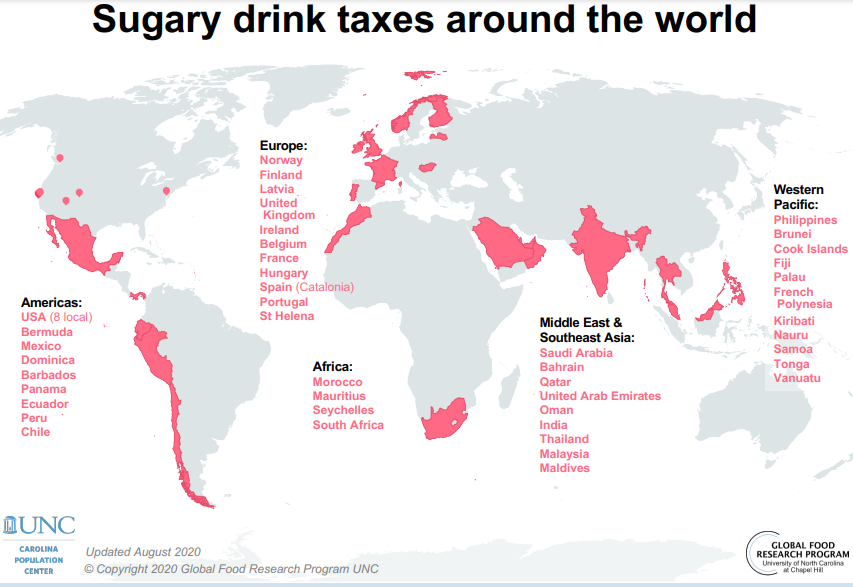
As the debate continues across virtual and physical platforms, it is instructive to know that Nigeria seems to be joining the global practice late. Our checks indicate that Morocco, Mauritius, South Africa and Seychelles had earlier joined countries in the developed and developing continents with the introduction of the tax [see Exhibits].

When the prevalence level and economic cost of the indicated ailments are examined, nothing should prevent Nigeria from implementing the tax, according to our expert. Patients with lung cancer, liver cancer, and liver cirrhosis spent an average of 510 152.62 (US$1415.13) [for an average of 49.2 days of terminal care], 308 950.27 (US$857.00), and 238 121.83 (US$660.53) for an average of 16.6 and 21.7 days of terminal care, respectively, according to a recent study.

In 2022, Think Different and Stimulate New Markets

0

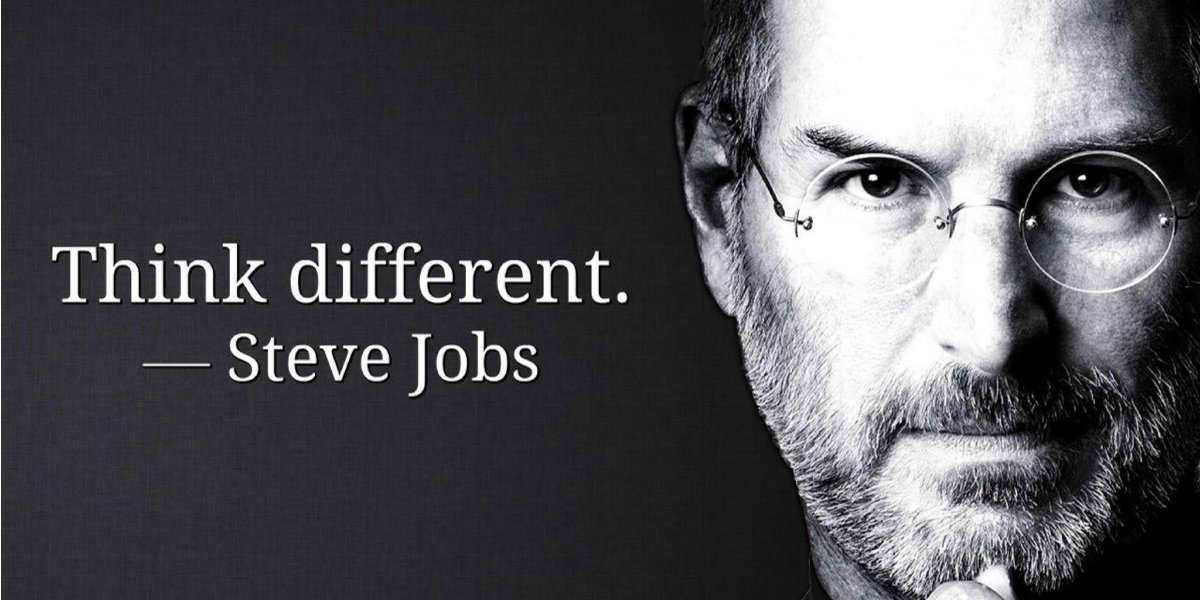
Steve Jobs, an Apple founder, was legendary for stimulating demand. He worked without surveys or focus groups. He was a genius. He developed a good design paradigm of working at the perception of customers, beyond their needs and expectations. He found glory and Apple triumphed with iPod, iPhone, iPad and more.

I call this Perception Demand because Mr Jobs used his vision to create new industrial sectors. He used his talent to launch the new dawns in the apps economy and the smartphone economy, at scale. Sure, Blackberry and Nokia might have been ahead, but he redesigned the sectors through his products.

African innovators, it is really important that the focus moves from the excitement on the technology to the value created in markets. We have to work on building products that bring perception demand.

By moving into perception demand, you have changed the basis of competition, creating fans out of customers. I never see Apple as a technically great company. It does not need to be to have success. The company is peerless in innovation from the lens of customers and that is what matters.

In 2022, think different. Stimulate your new markets.

Steve Jobs’ Perception Demand Construct, for Africa

French Watchdog Fines Google, Facebook €210 Million for not Making Cookies Refusal Easy

0

Europe has continued to tighten its grip on antitrust, holding the Big Tech responsible on issues that had been previously ignored. With almost each month passed, a member of the Big Tech gets served a fine for violating an antitrust rule which has kept getting updated to cover emerging innovations.

To this end, France’s data privacy watchdog, Commission Nationale de l’Informatique et des Libertés (CNIL), on Thursday, fined Google and Facebook (yes, Meta) a combined €210m. The fine came after the duo was found guilty of manipulating cookies to their own advantage.

Google received €150 million while Facebook got a €60 million share of the fine for hampering users’ ability to stop the companies tracking their online activity. The CNIL said the companies make it difficult for internet users to refuse cookies.

“When you accept cookies, it’s done in just one click,” said Karin Kiefer, CNIL’s head of data protection and sanctions. “Rejecting cookies should be as easy as accepting them.”

The CNIL, like the European GDPR, (general data protection regulation) has prioritized user privacy in its antitrust regulation, making consumers’ ability to reject cookies a serious issue.

The watchdog said the facebook.com, google.fr and youtube.com websites deliberately made it difficult for users to refuse cookies. “Several clicks are required to refuse all cookies, as opposed to a single one to accept them,” it said about Facebook.

Reacting to the fine, a Google spokesperson they will work with the regulator “in light of this decision.”

“People trust us to respect their right to privacy and keep them safe. We understand our responsibility to protect that trust and are committing to further changes and active work with the CNIL in light of this decision,” the spokesperson said.

A spokesperson for Facebook’s parent company, Meta, said: “??We are reviewing the authority’s decision and remain committed to working with relevant authorities. Our cookie consent controls provide people with greater control over their data, including a new settings menu on Facebook and Instagram where people can revisit and manage their decisions at any time, and we continue to develop and improve these controls.”

The CNIL said the companies had three months to comply with its orders, including making it easier for French users to decline cookies, or face extra penalty payments of €100,000 for every day of delay.

Per The Guardian, the CNIL strengthened consent rights over ad trackers in 2020, saying websites operating in France should keep a register of internet users’ refusal to accept cookies for at least six months. It also said internet users should be able to easily reconsider any initial agreement concerning cookies via a weblink or an icon that should be visible on all pages of a website.

Facebook’s ad sales had been severely impacted by updated Apple’s iOS privacy policy, which gives iPhone users the choice to stop Facebook from tracking them for targeted ads. The privacy policy update, which came into force mid-last year saw Facebook’s ad sales decline greatly as only about 25% of iPhone users choose to allow tracking.

The CNIL rule means that Facebook will likely lose more in ad sales as consumers are given the choice to easily decline cookies.