DD
MM
YYYY

PAGES

DD
MM
YYYY

spot_img

PAGES

Home Blog Page 5414

Visa Announces Plan to Incorporate Crypto to Facilitate Easy Payments

0

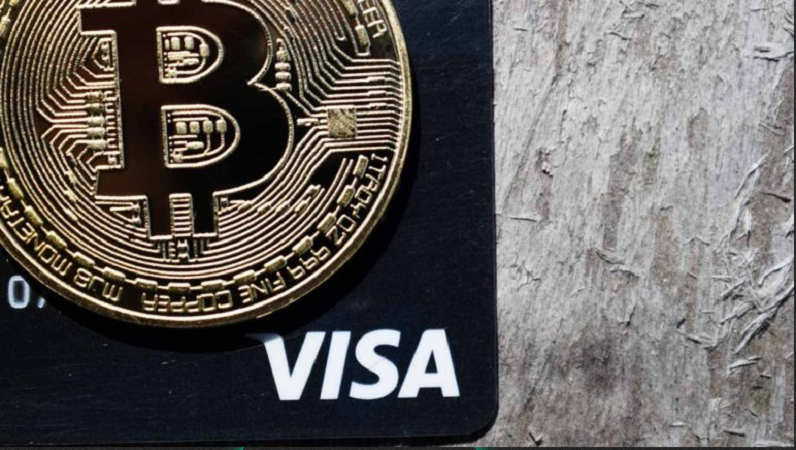
Visa is taking a new approach to its payment business that will involve incorporating cryptocurrency to facilitate cheaper and faster cross-border payments. This is coming a month after Amazon cut ties with Visa UK, over high cost of transaction fees.

In an interview with NDTV, Cuy Sheffield, Visa’s head of crypto, said the payments giant has partnered with about 60 leading crypto platforms “to launch card programs that make it easy for consumers to convert and spend digital currency at 80 million merchant locations worldwide.”

“We’ve built a lot of momentum in this space, and we’ll continue to support the crypto ecosystem in several ways,” he said.

In November, Visa suffered a huge blow following Amazon’s decision to no longer accept UK-issued Visa credit cards from Jan. 2022. Amazon said that technology advancement should be making payment processing fees reduced, instead of increasing it.

Visa’s rival, Mastercard, has been onboarding crypto firms to accommodate the effects of decentralized finance (DeFi), which has removed the cost emanating from intermediary fees on processed transactions. Visa appears to have learned a vital lesson from Amazon’s incident, and it is therefore speeding the pace to tag along the blockchain-powered crypto industry that is changing the world’s financial ecosystem.

“At Visa, the scale and scope of our work in crypto has grown dramatically. The number of people cross-functionally at Visa working on crypto in some capacity is now in the hundreds — up from just a handful of employees. And we’ve more than doubled our number of partnerships with crypto platforms in the last 18 months — up to 60 partnerships today,” Sheffield said.

He explained that Visa has partnered with more than 60 of the leading crypto platforms, like FTX, Blockfi, Crypto.com, Coinbase, and Binance, to launch card programs that make it easy for consumers to convert and spend digital currency at 80 million merchant locations worldwide.

“Crypto-linked cards make it easy for consumers to convert and spend digital currencies, without requiring coffee shops, dry cleaners, or grocery stores to directly accept crypto at the checkout,” he continued. “All the conversions from crypto to fiat happen instantly, behind the scenes. In-store, online, it’s as easy as a standard Visa transaction,” he said.

Visa announced the launch of its crypto advisory services in early December, which is expected to be available in territories where its payments services are available.

India is a huge market for Visa, but the government has been making moves to outlaw cryptocurrency, following China’s steps. The situation poses a big challenge to Visa’s crypto incorporation plan.

When asked if Visa’s crypto services will cover India, Sheffield said that “Visa aims to provide our crypto advisory services to clients globally wherever there is interest, and currently, we offer services in markets where the regulations permit such transactions.”

Sheffield said Visa will build on existing crypto momentum that it has garnered to serve its network booming with millions of merchants.

“At the end of the day, we want to serve as a bridge connecting the crypto ecosystem with our global network of 80 million merchant locations and more than 15,000 financial institutions,” he said.


The Egoras Business Model And Building A Quant Team

0

Let me share this as 2022 arrives.  It is largely to inspire and motivate young people to organize themselves and look for complementary skills as they seek opportunities in markets.

Egoras team began with a business model which originally struggled. They wanted to pivot to something new. But to do that, there were many unknowns: how can you offer interest-free loans and still make money? They invented inventory fees. To model the risk and potential returns, young people with understanding of calculus were brought in.

It is that season of business reviews. This one is one of the fastest growing startups in Nigeria today. Ugoji Harry and the whole team are doing an amazing job, for pioneering a new business model, and the customers have responded well. And in less than 6 months, it has grown from 4 staff to over 100. Egoras offers “Interest-Free Loans” backed by  physical or crypto assets within minutes; you only pay inventory fee.  Phones and accessories go for $0.37 per day; Refrigerators for $0.49 – $0.98, etc on fees.

They were to solve many equations which were largely: minimize risks while maximizing returns while keeping prices at a range that the market would like. With dozens of variables – asset type, asset age, asset value, income, etc- to feed into the model, the optimization equation was a good one for a master’s degree.

As the numbers were coming, they started pushing products to the market. Today, Egoras has a sweet spot, growing from 4 to over 100 team members in months. It will open in Enugu on the way to Onitsha, Aba, Osogbo, etc in coming months.

This is the lesson: you can code but can you solve the equations? Would you hire that brilliant math graduate to help? Ugoji Harry likes his engineers and he also admires the mathematicians who are building the models. Of course, he is happy that he has a good math teacher as an advisor!

Revisiting Buhari’s Executive Order 8 As Graft Increases

0

In his apparent bid to strengthen the ongoing war against graft and allied matters, on Monday, 8th October 2018, President Muhammadu Buhari graciously endorsed a new executive order.

The order, tagged Voluntary Offshore Assets Regularization Scheme (VOARS), was targeted to tackle money laundering and tax evasion taking place within the shores of Nigeria.

It’s noteworthy that an executive order is a directive issued by the president that manages the affairs of a federal government and which automatically possesses the force of law. It originated from the United States of America (U.S.A).

The major difference between a law and an executive order comes in how they are made. The former is required to go through the entire legislative process; it suffices to say that it must be approved by both chambers of the legislature as found in Nigeria and duly endorsed by the sitting president. By contrast, the latter does not have to pass through any of these procedures.

The legislative council isn’t meant to approve any executive order, nor can it overturn it. The worst it can do if it’s not pleased by the order, is to pass a law to cut funding for its implementation. But even then, the president has the constitutional power to veto such a proposed defunding law.

Executive orders are legally binding directives given by the president – as the head of the Executive Arm – to federal administrative agencies. They are generally used to direct the entities and its officials in their day-to-day thrive towards upholding the laws binding them, hence aimed at strengthening the viability of the affected laws, Acts or policies.

Fundamentally, an executive order is an official statement from the president about how the federal agencies he oversees are to use the resources and powers within their ambit. It falls under the broader umbrella of executive actions, which derive their power from the constitution, and it is the most formal executive action.

It’s therefore needless to state that the Nigeria’s 1999 Constitution, as amended, explicitly assigned the President the power to sign or veto the outcome of any legislation, command the country’s armed forces and other security apparatus, ask for the written opinion of any of his cabinet members when need be, convene or adjourn any Federal Executive Council (FEC) meeting, grant reprieves and pardons as well as receive ambassadors.

It’s noteworthy that orders from any court of competent jurisdiction constitutionally become binding and enforceable as law by the concerned court. In the same vein, in some circumstances, orders issued by any serving president equally carry the force of law. Hence, an executive order is deemed necessary when extant laws or policies become seemingly docile or inactive.

According to the Senior Special Assistant to President Buhari, Mr. Garba Shehu, by the Executive Order 8, Nigerian taxpayers who hold offshore assets and incomes are expected to – within a period of twelve months from the date it was endorsed – declare voluntarily those assets and pay accruable taxes on them. “When they do so, they should expect to derive certain specified benefits”.

He as well clarified that any taxpayer who takes advantage of this privilege would pay only a one-time levy of 35 percent on the total offshore assets and income as well as obtain immunity from prosecution for tax offences and violations related to offshore assets, among others.

Offshore assets are investment strategies domiciled outside the investor’s home country. They are assets or monies being kept in a territory other than one’s country of residence. Poorly regulated offshore domiciles historically have served as havens for money laundering, tax evasion, or to conceal illicitly acquired assets from law enforcement bodies in the investor’s country.

Mr. Shehu further hinted that failure of any defaulting taxpayer to comply with the 12-month privilege shall at the expiration of the scheme result in investigation and enforcement procedures concerning offshore assets anywhere in the world “pursuant to information now readily available through automatic exchange of information between Nigeria and foreign countries”.

To assert that the Executive Order 8 – likewise other allied ones earlier introduced – was a welcome development, is an understatement. It’s only a dummy that’s yet to realize that the two factors affected by the Executive Order 8 have overtime bedevilled Nigeria’s economy.

Aside from the fact that most individuals or entities who launder money cum other belongings are usually criminals, hence do so in order to conceal their ill-gotten wealth, those who genuinely acquired theirs have from the onset succeeded in not paying the taxes accruable to the assets involved. In other words, the latter equally deserved to be regarded as criminals.

As at the time the order in question was released, I vividly enjoined the Buhari-led government to tighten its seatbelt towards ensuring it was given all the required support. We can’t continue to beat about the bush when we are fully not unaware of the origin cum basis of our lingering economic plights. Therein, I equally urged the judiciary on its part to be helpful in ensuring that the prime purpose of the order was actualized.

It’s appalling that three years down the line, no one has been successfully prosecuted or convicted of these offences as contained in the Executive Order 8, after the 12-month ultimatum given to those concerned. Also, on a daily basis, incidence pertaining to graft is seemingly on the increase across Nigeria. One might then assert, who is then deceiving who?

No one ought to sit on the fence while we are fighting a monster that’s ravaging our common patrimony. 

What message does the Chinese takeover of Uganda’s Entebbe Airport send to us?

0

On Tuesday, 17th November 2015, the Ugandan government signed an agreement with the Chinese Export and Import Bank(Exim Bank) to borrow $207 million. The loan had a maturity period of 20 years. Now the country is about to lose one of its strategic assets, it’s only International airport, to the Chinese government. Was this a debt trap? Certainly one would conclude so.

For a country like Uganda whose GDP as of 2015 was just above $32 million, China definitely would have predicted that the country would not be able to attest for such a sum of cash over time. But is this the first of its kind? Certainly not. Countries like Maldives, Malaysia and Sri Lanka have also fallen to this debt trap, which China has been hauling for long. But what message does this send to the rest of Africa? At the verge of the 21st Century where third world countries are eager to develop their countries as their western counterparts, they need so much funding to achieve this, but yet don’t have the capital, so they go borrowing at which China is ever ready to lend a helping hand;

But what does it seek by passing out multiple dishes of loans? The Belt and Road Initiative was developed to deliberately foster this aid, the purpose was clear, trap weaker nations into a debt trap. Pakistan is also getting at the verge of this. The major fact about this initiative and the economy of a nation from a viewpoint is not clear. 

The Ugandan minister of health apologized for misuse of funds at an occasion, several others under probe, this is the result of ‘unrealized funds’. Are these funds actualized to the purpose they were meant for? Should a government run its economy based on international funding and loans? 

Definitely this is definitely not a good idea. African nations need to embrace diversification and openness to several areas of science and technology and learn from how the Saudis’ rose from a desert land into a flourishing country. With the show that the Chinese government is not willing to renegotiate the terms of the 2015 agreement, this is a clear sign that the Belt and Road Initiative was not drafted to help nations but to trap them in becoming captive under Chinese policies.

Farm365 Sets Target of Moving 3 million Kg of Veggies and Farm Produce in 2022

0

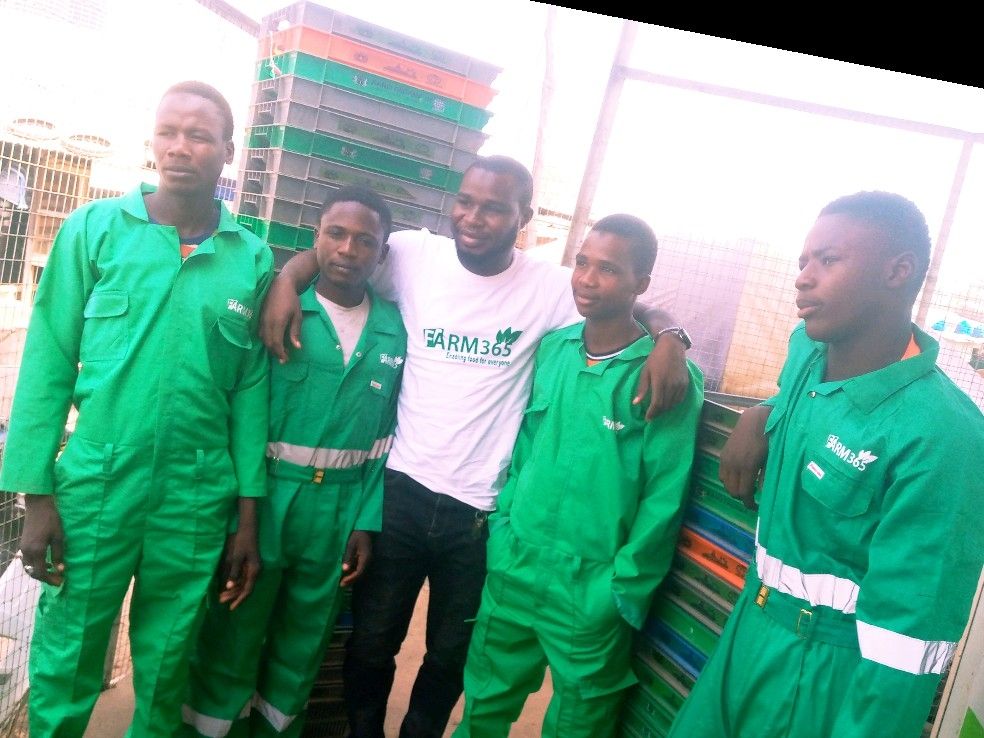
Tekedia Capital is proud to support and provide capital to Farm365 led by Abdulaziz Kabir. They began from Kano to Abuja and in January will expand to Lagos. They met the 2021 target of rescuing 400,000 kg of vegetables from going to waste. In 2022, the target is to do 3 million Kg, and ramp up to 2000 farmers!

If you run a hotel, restaurant, eatery, etc and looking for a team which sources veggies and produce directly from farms, talk to Abdulaziz Kabir and his “men on green” team including Bello Isyaku, Muhammad Zubairu Ahmad, Fareed Muhammad, Abdallah and Najib Yalli.

Tekedia Capital offers a specialty investment vehicle (or investment syndicate) which makes it possible for citizens, groups and organizations to co-invest in innovative startups and young companies in Africa and around the world. Capital from these investing entities are pooled together and then invested in a specific company or companies.