While family businesses control a significant portion of Africa’s economy, and are quite common across the continent, only a handful of them enjoy longevity. The survival rate of most African family businesses beyond the founder’s generation is extremely low.
Following in the path of a 2014 Forbes report, “The 10 Leading Family Businesses in Africa (forbes.com),” both the African Development Bank (AfDB) and Price Waterhouse Coopers (PwC) have equally provided reports in the past decade on the significance of African family businesses.
In the Forbes report, the 10 leading family businesses in Africa “cut across luxury goods to construction, agriculture, banking and retail.” These firms were also considered “the most successful African family businesses” having sustained the vision for decades and are poised to prosper for generations to come. Arranged in chronological order by country, the top-10 list included three from Kenya, two each from Nigeria, South Africa and Tanzania, and one from Uganda:
- Bidco Oil Refineries, Bhimji Depar Shah, Kenya.
- Ramco Group, Rambhai Patel, Kenya (founded by Rambhai Patel, an Indian immigrant who settled in Nairobi in the early 1940s).
- The Kenyatta Family Business, Mzee Jomo Kenyatta (Founder), Kenya.
- Dantata family, Alhassan Dantata, Nigeria.
- Ibru Organisation – Olorogun Michael Ibru, Nigeria.
- Remgro – Anton Rupert, South Africa.
- Pick n Pay – Raymond Ackerman, South Africa.
- Mohammed Enterprise Limited (METL)one of the largest industrial conglomerates in East Africa – Gulam Dewji, Tanzania.
- Bakhresa Group – Said Salim Bakhresa, Tanzania.
- Madhvani Group, Muljibhai Madhvani, Uganda.
Moving on to the AfDB report – Africa Investment Forum: Family businesses – an underestimated economic driving force, 12 November 2019, key highlights include:
Family businesses are rarely viewed as a sector which could influence economic growth, but the Africa Investment Forum is recognising them as important players on the continent. For the first time at a conference of this nature, families running business empires have been given a platform to share their views on how Africa’s unexplored wealth can benefit all who live here. The Elnefeidi Group, a family-owned business with more than 80 years of experience in various industries, is run by second and third generation members. It is one of the businesses that believes start-ups can help turn around the continent’s economies if they are supported and nurtured.
Finally, and most recently the PwC Press release on the “Africa Family Business Survey 2021,” highlights that:
African family businesses need to act now to ensure their legacy tomorrow Africa’s family business leaders are optimistic and ambitious about their growth and economic recovery for 2022. Although the overall outlook for family businesses is positive, business owners will need to address the challenges and opportunities that come with digital transformation, family governance and succession planning as well as addressing sustainable business practices.
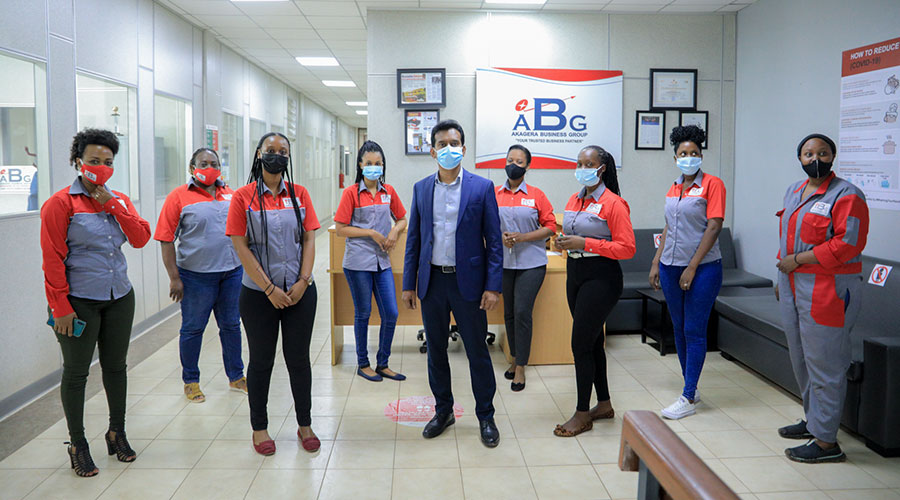
Akagera Business Group (ABG)
How it all started
It all started back in 1977, when two entrepreneurial minded Gorajia brothers were seeking a business opportunity in Bujumbura, Burundi. The two brothers came upon a car dealership. With a hardworking, determined, passionate and business minded personality, the Gorajia brothers (Balkrishna and Hargovind) were able to create the dealership into an automotive powerhouse, which till today stands as one of Burundi’s landmarks. As highlighted on the website of Toyota Burundi:
Toyota Burundi started back in 1977, when two entrepreneurial minded brothers Balkrishna G. Gorajia and Hargovind G. Gorajia bought small Toyota distributorship in Bujumbura, Burundi. With hard working, determined, passionate and business minded personality, the two Gorajia brothers were able to create the dealership into an automotive powerhouse, which till today stands as one of Burundi’s landmarks.
Building on the success of the dealership, manufacturing brands nominated Akagera Motors S.A.R.L as the exclusive distributor for those respective brands for the territory of Rwanda in 1997. As more business ventures were added to the business portfolio, Akagera Motors S.A.R.L was transformed to Akagera Business Group Ltd., in 2008.

The Business History and Profile
Akagera Business Group (ABG) was established in Kigali, Rwanda and diversified into nine different divisions dealing in automobiles, tires, batteries, lubricants, media, consumer goods, consumer electronics, car rentals, hardware, paints, design, construction, security and safety systems. Akagera’s nine divisions cut across Motors (since 1997); Hardware & Paints (2006); Auto Zone, Trading, and Media (all established in 2008); Car Rentals, and Electronics (both established in 2010); Design & Construction (2012); and Security & Safety Systems which was established in 2014.
Currently ABG has a presence in Burundi, Rwanda, South Sudan & Eastern Democratic Republic of Congo.
Closing Thoughts
Besides the African Conglomerates such as the Dangote Group, Mike Adenuga and Strive Masiyiwa in the Telecoms and related areas to mention just a few, there are equally other family business turned Conglomerates on the continent.
It also feeds the appetite for exploring the media Conglomerates with a view to establishing regional integration in this sector. Indeed an article in the Nigerian Guardian (10 December 2019) “Family business as influencer for economic growth,” highlighted that:
Family business, being one of the oldest forms of business organisations globally, is defined as a business in which two or more members of a family are involved, and the majority of ownership and control lies within the family.
However, some family businesses are large multinational corporations that operate in many countries such as Ford Motors, Nestle, Cadbury, and Mercedes Benz and a host of others, while indigenous family businesses that still exist that have passed through second generation also abound in Nigeria. A report by Africa Investment Forum, which recognises family businesses as important players on the continent, said the past decade had seen African family-owned companies grow quickly.
Overall, this piece has sought to highlight, via personal observations, the unreported world of indigenous family businesses in Africa taken from the purview of the Burundi-Rwanda nexus. The Group, ABG, which is the key feature, started out as an Auto dealership in 1997?— and two decades after the family business was conceived, it has gone on to add to its portfolio an Auto Zone in 2008 and Car rental two years later in 2010. In between these, the group had diversified its portfolio further. Hopefully, we would see another round of top-10 leading indigenous African family businesses as the 2022 approaches and as we tentatively, and cautiously emerge from the Covid-19 pandemic.